 The UK Chancellor of the Exchequer, Rachel Reeves, will present her annual Budget in late autumn. It will involve some hard economic and political choices. The government would like to spend more money on improving public services but has pledged not to raise taxes ‘on working people’, which is interpreted as not raising the rates of income tax, national insurance for employees and the self-employed, and VAT. What is more, government borrowing is forecast by the OBR to be £118 billion, or nearly 4.0% of GDP, for the the year 2025/26. This is a fall from the 5.1% in 2024/25 and is well below the 15.0% in 2020/21 during the pandemic. But it is significantly above the 2.1% in 2018/19.
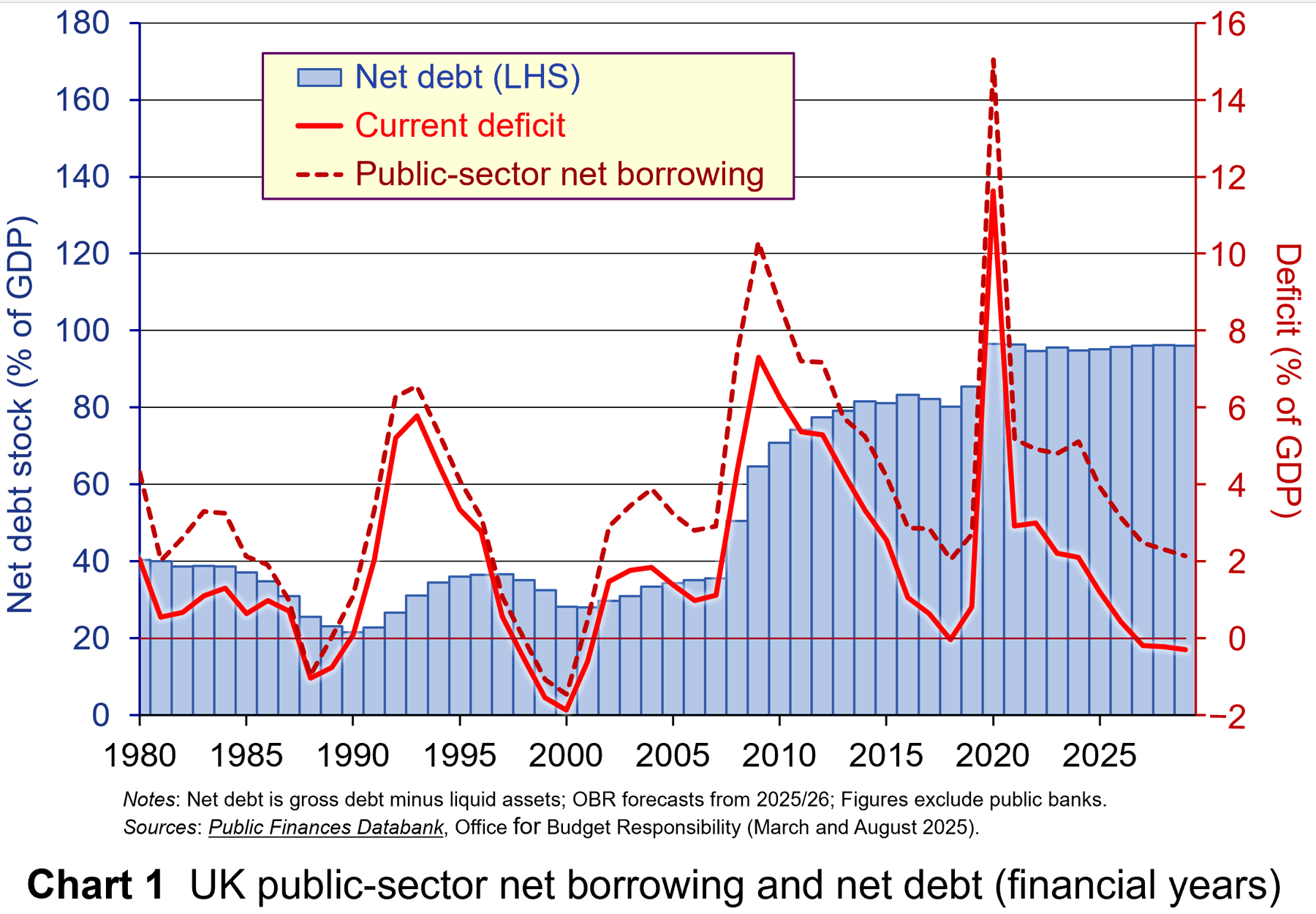 The government has pledged to stick to its two fiscal rules. The first is that the day-to-day, or ‘current’, budget (i.e. excluding investment) should be in surplus or in deficit of no more than 0.5 per cent of GDP by 2029/30 (or the third year of the rolling forecast period from the 2026/27 Budget). This allows investment to be funded by borrowing. The second rule is that public-sector net debt, which includes public-sector debt plus pension liabilities minus equity, loans and other financial assets, should be falling by 2029/30 (or the third year of the rolling forecast period from the 2026/27 Budget). The current budget deficit (i.e. excluding borrowing for investment) was forecast by the OBR in March to be 1.2% of GDP for 2025/26 (see Chart 1) and to be a surplus of 0.3% in 2029/30 (£9.9 billion). (Click here for a PowerPoint of the chart.)
The OBR’s March forecasts, therefore, were that the rules would be met with current policies and that the average rate of economic growth would be 1.8% over the next four years.
However, there would be very little room for manoeuvre, and with global political and economic uncertainty, including the effects of tariffs, climate change on harvests and the continuing war in Ukraine, the rate of economic growth might be well below 1.8%.
The March forecasts were based on the assumption that inflation would fall and hence that the Bank of England would reduce interest rates. Global pressure on inflation, however, might result in inflation continuing to be above the Bank of England’s target of 2%. This would mean that interest rates would be slow to fall – if at all. This would dampen growth and make it more expensive for the government to service the public-sector debt, thus making it harder to reduce the public-sector deficit.
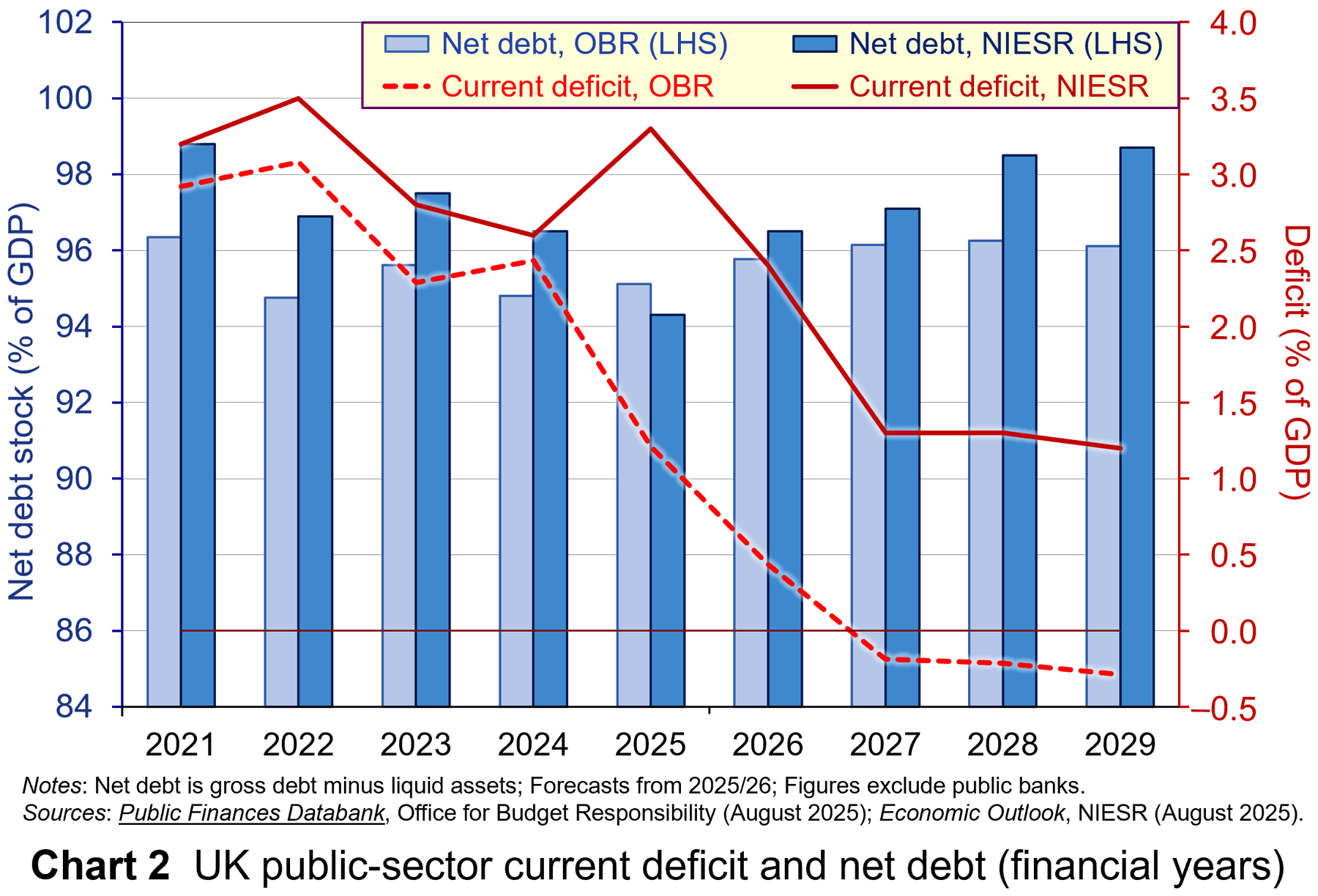 A forecast earlier this month by the National Institute for Economic and Social Research (NIESR) (see link below and Chart 2) reflects these problems and paints a gloomier picture than the OBR’s March forecast. The NIESR forecasts that GDP will grow by only 1.3 per cent in 2025, 1.2 per cent in 2026, 1.1% in 2027 and 1.0% in 2028, with the average for 2025 to 2023 being 1.13%. This is the result of high levels of business uncertainty and the effects of tariffs on exports. With no change in policy, the current deficit would be £41.2 billion in the 2029/30 financial year. Inflation would fall somewhat, but would stick at around 2.7% from 2028 to 2030. Net debt would be rising in 2029/30 &ndash but only slightly, from 98.7% to 99.0%. (Click here for a PowerPoint of the chart.)
So what are the policy options open to the government for dealing with a forecast current budget deficit of £41.2 billion (1.17% of GDP)? There are only three broad options.
Increase borrowing
One approach would be to scrap the fiscal rules and accept increased borrowing – at least temporarily. This would avoid tax increases or expenditure cuts. By running a larger budget deficit, this Keynesian approach would also have the effect of increasing aggregate demand and, other things being equal, could lead to a multiplied rise in national income. This in turn would lead to higher tax revenues and thereby result in a smaller increase in borrowing.
There are two big problems with this approach, however.
The first is that it would, over time, increase the public-sector debt and would involve having to spend more each year on servicing that debt. This would leave less tax revenue for current spending or investment. It would also involve having to pay higher interest rates to encourage people to buy the additional new government bonds necessary to finance the increased deficit.
 The second problem is that the Chancellor has said that she will stick to the fiscal rules. If she scraps them, if only temporarily, she runs the risk of losing the confidence of investors. This could lead to a run on the pound and even higher interest rates. This was a problem under the short-lived Liz Truss government when the ‘mini’ Budget of September 2022 made unfunded pledges to cut taxes. There was a run on the pound and the Bank of England had to make emergency gilt purchases.
One possibility that might be more acceptable to markets would be to rewrite the investment rule. There could be a requirement on government to invest a certain proportion of GDP (say, 3%) and fund it by borrowing. The supply-side benefits could be faster growth in potential output and higher tax revenue over the longer term, allowing the current deficit rule to be met.
Cut government expenditure
Politicians, especially in opposition, frequently claim that the solution is to cut out public-sector waste. This would allow public expenditure to be cut without cutting services. This, however, is harder than it might seem. There have been frequent efficiency drives in the public sector, but from 1919 to 2023 public-sector productivity fell by an average of 0.97% per year.
Causes include: chronic underinvestment in capital, resulting in outdated equipment and IT systems and crumbling estates; decades of underfunding that have left public services with crumbling estates, outdated equipment and insufficient IT systems; inconsistent, short-term government policy, with frequent changes in government priorities; bureaucratic systems relying on multiple legacy IT systems; workforce challenges, especially in health and social care, with high staff turnover, recruitment difficulties, and a lack of experienced staff.
 The current government has launched a Public Sector Productivity Programme. This is a a cross-government initiative to improve productivity across public services. Departments are required to develop productivity plans to invest in schemes designed to achieve cost savings and improve outcomes in areas such as the NHS, police, and justice system. A £1.8 billion fund was announced in March 2024, to support public-sector productivity improvements and digital transformation. Part of this is to be invested in digital services and AI to improve efficiency. According to the ONS, total public-service productivity in the UK grew by 1.0% in the year to Q1 2025; healthcare productivity grew 2.7% over the same period. It remains to be seen whether this growth in productivity will be maintained. Pressure from the public, however, will mean that any gains are likely to be in terms of improved services rather than reduced government expenditure.
Increase taxes
This is always a controversial area. People want better public services but also reduced taxes – at least for themselves! Nevertheless, it is an option seriously being considered by the government. However, if it wants to avoid raising the rates of income tax, national insurance for employees and the self-employed, and VAT, its options are limited. It has also to consider the political ramifications of taking unpopular tax-raising measures. The following are possibilities:
Continue the freeze on income tax bands. They are currently frozen until April 2028. The extra revenue from extending the freeze until April 2030 would be around £7 billion. Although this may be politically more palatable than raising the rate of income tax, the revenue raised will be well short of the amount required and thus other measures will be required. Although some £40 billion will have been raised up to 2028 (which has already been factored in), as inflation falls, so the fiscal drag effect will fall: nominal incomes will need to rise less to achieve any given rise in real incomes.
 Cutting tax relief for pensions. Currently, people get income tax relief at their marginal rate on pension contributions made by themselves and their employer up to £60 000 per year or 100% of their earnings, whichever is smaller. When people draw on their pension savings, they pay income tax at their marginal rate, even if the size of their savings has grown from capital gains, interest or dividends. Reducing the limits or restricting relief to the basic rate of tax could make a substantial contribution to increasing government revenue. In 2023/24, pension contribution relief cost the government £52 billion. Restricting relief to the basic rate or cutting the annual limit would make the relief less regressive. In such a case, when people draw on their pension savings, the income tax rate could be limited to the basic rate to avoid double taxation.
Raising the rate of inheritance tax (IHT) or reducing the threshold. Currently, estates worth more than £325 000 are taxed at a marginal rate of 40%. The threshold is frozen until 2029/30 and thus additional revenue will be received by the government as asset prices increase. If the rate is raised above 40%, perhaps in bands, or the threshold were lowered, then this will earn additional revenue. However, the amount will be relatively small compared to the predicted current deficit in 2029/30 of £41 billion. Total IHT revenue in 2022/23 was only 6.7 billion. Also, it is politically dangerous as people could claim that the government was penalising people who had saved in order to help the next generation, who are struggling with high rents or mortgages.
Increased taxes on business. The main rate of corporation tax was raised from 19% to 25% in April 2023 and the employers’ national insurance rate was raised from 13.8% to 15% and the threshold reduced from £9100 to £5000 per year in April 2025. There is little or no scope for raising business taxes without having significant disincentive effects on investment and employment. Also, there is the danger that raising rates might prompt companies to relocate abroad.
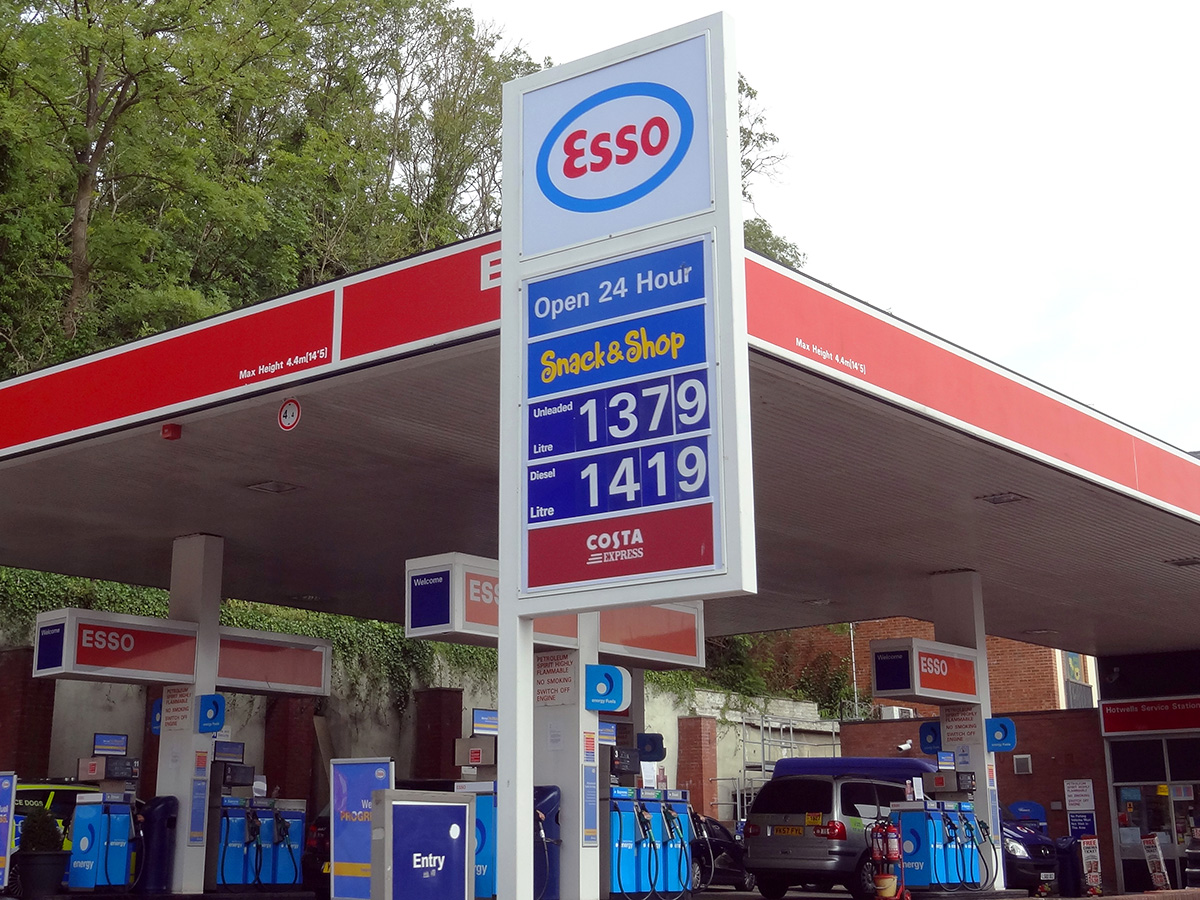 Raise fuel and/or other duties. Fuel duties raise approximately £24 billion. They are set to decline gradually with the shift to EVs and more fuel-efficient internal combustion engines. Fuel duty remained unchanged at 57.95p per litre from 2011 to 2022 and then was ‘temporarily’ cut to 52.95p. The rate of 52.95p is set to remain until at least 2026. There is clearly scope here to raise it, if only by the rate of inflation each year. Again, the main problem is a political one that drivers and the motor lobby generally will complain. Other duties include alcohol, tobacco/cigarettes/vaping, high-sugar beverages and gambling. Again, there is scope for raising these. There are two problems here. The first is that these duties are regressive, falling more heavily on poorer people. The second is that high duties can encourage illegal trade in these products.
Raising one of the three major taxes: income tax, employees’ national insurance and VAT. This will involve reneging on the government’s election promises. But perhaps it’s better to bite the bullet and do it sooner rather than later. Six European countries have VAT rates of 21%, three of 22%, three of 23%, two of 24%, four of 25%, one of 25.5% and one of 27%. Each one percentage point rise would raise about 9 billion. A one percentage point rise across all UK income tax rates would raise around £5.8 billion. As far as employees’ national insurance rates are concerned, the Conservative government reduced the main rate twice from 12% to 10% in January 2024 and from 10% to 8% in April 2024. The government could argue that raising it back to, say, 10% would still leave it lower than previously. A rise to 10% would raise around £11 billion.
Conclusion
The choices for the Chancellor are not easy. As the NIESR’s Economic Outlook puts it:
Simply put, the Chancellor cannot simultaneously meet her fiscal rules, fulfil spending commitments, and uphold manifesto promises to avoid tax rises for working people. At least one of these will need to be dropped – she faces an impossible trilemma.
Articles
- The Chancellor’s Trilemma
UK Economic Outlook: NIESR, Benjamin Caswell, Fergus Jimenez-England, Hailey Low, Stephen Millard, Eliza da Silva Gomes, Adrian Pabst, Tibor Szendrei and Arnab Bhattacharjee (6/8/25)
- Reeves must raise tax to cover £41bn gap, says think tank
BBC News, Lucy Hooker (6/8/25)
- Chancellor warned ‘substantial tax rises’ needed – as she faces ‘impossible trilemma’
Sky News, Gurpreet Narwan (6/8/25)
- Rachel Reeves needs to put up taxes to cover £40bn deficit, thinktank says
The Guardian, Phillip Inman (6/8/25)
- What’s the secret to fixing the UK’s public finances? Here’s what our panel of experts would do
The Conversation, Steve Schifferes, Conor O’Kane, Guilherme Klein Martins, Jonquil Lowe and Maha Rafi Atal (15/8/25)
- Why radical tax reform may be only way for Reeves to balance the books
The Guardian, Phillip Inman (21/8/25)
- Reeves and Starmer to prepare ground for tax rises in a difficult autumn budget
The Guardian, Jessica Elgot, Richard Partington and Eleni Courea (7/8/25)
- How much money does the UK government borrow, and does it matter?
BBC News (21/8/25)
- More pain for Reeves as government borrowing cost nears 27-year high
The Guardian, Phillip Inman (26/8/25)
Data
Questions
- Which of the options would you choose and why?
- Should the government introduce a wealth tax on people with wealth above, say, £2 million? If so, should it be a once-only tax or an annual tax?
- Research another country’s fiscal position and assess the choices their finance minister took.
- Look at a previous UK Budget from a few years ago and the forecasts on which the Budget decisions were made (search Budget [year] on the GOV.UK website). How accurate did the forecasts turn out to be? If the Chancellor then had known what would actually happen in the future, would their decisions have been any different and, if so, in what ways?
- Should fiscal decisions be based on forecasts for three of four years hence when those forecasts are likely to be unreliable?
- Should fiscal and monetary policy decisions be made totally separately from each other?
 In a blog in October 2024, we looked at global uncertainty and how it can be captured in a World Uncertainty Index. The blog stated that ‘We continue to live through incredibly turbulent times. In the past decade or so we have experienced a global financial crisis, a global health emergency, seen the UK’s departure from the European Union, and witnessed increasing levels of geopolitical tension and conflict’.
Since then, Donald Trump has been elected for a second term and has introduced sweeping tariffs. What is more, the tariffs announced on so-called ‘Liberation Day‘ have not remained fixed, but have fluctuated with negotiations and threatened retaliation. The resulting uncertainty makes it very hard for businesses to plan and many have been unwilling to commit to investment decisions. The uncertainty has been compounded by geopolitical events, such as the continuing war in Ukraine, the war in Gaza and the June 13 Israeli attack on Iran.
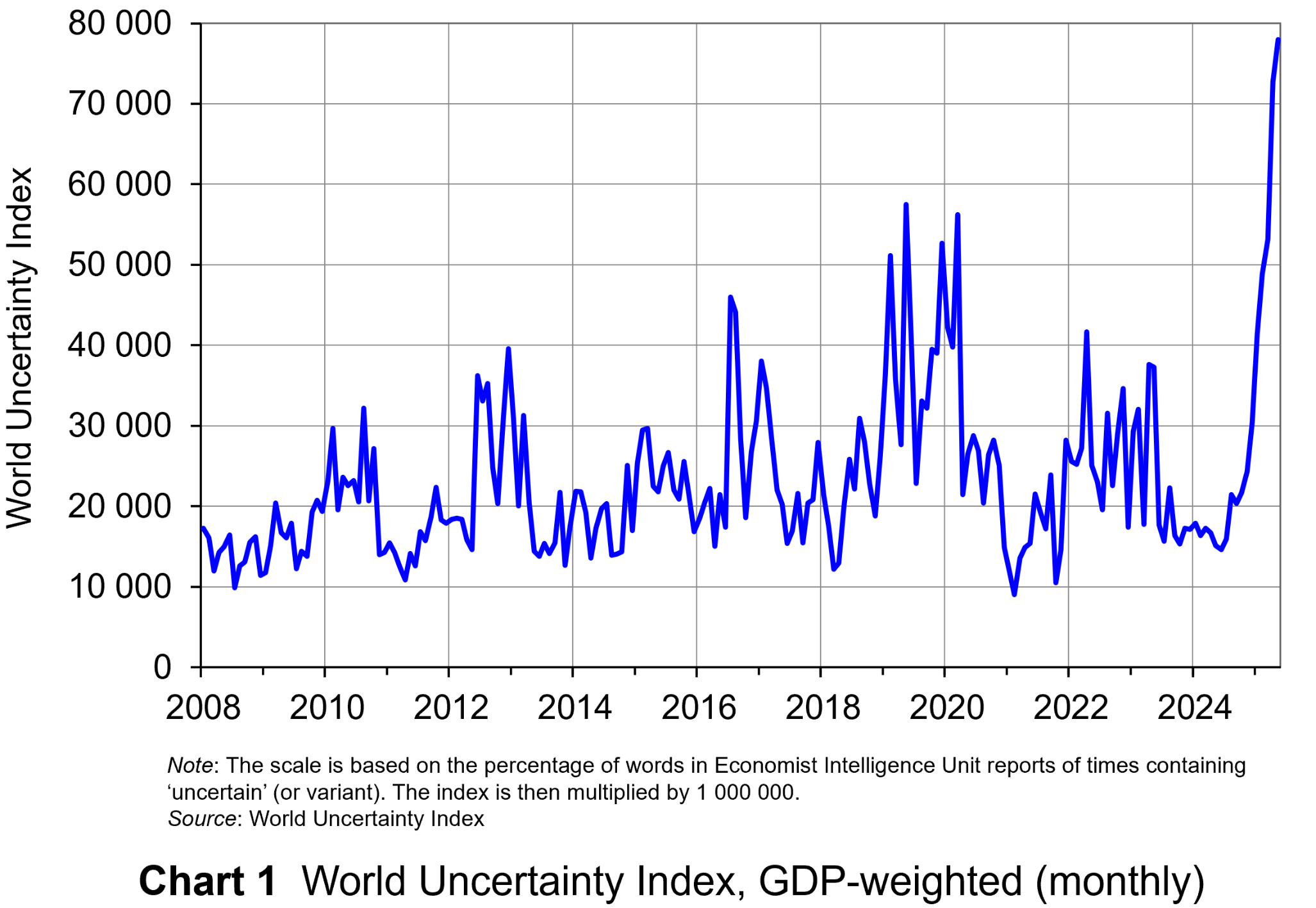 The World Uncertainty Index (WUI) tracks uncertainty around the world by applying a form of text mining known as ‘term frequency’ to the country reports produced by the Economist Intelligence Unit (EIU). The words searched for are ‘uncertain’, ‘uncertainty’ and ‘uncertainties’ and the number of times they occur as percentage of the total words is recorded. To produce the WUI this figure is then multiplied by 1m. A higher WUI number indicates a greater level of uncertainty.
The monthly global average WUI is shown in Chart 1 (click here for a PowerPoint). It is based on 71 countries. Since 2008 the WUI has averaged a little over 23 000: i.e. 2.3 per cent of the text in EIU reports contains the word ‘uncertainty’ or a close variant. In May 2025, it was almost 79 000 – the highest since the index was first complied in 2008. The previous highest was in March 2020, at the start of the COVID-19 outbreak, when the index rose to just over 56 000.
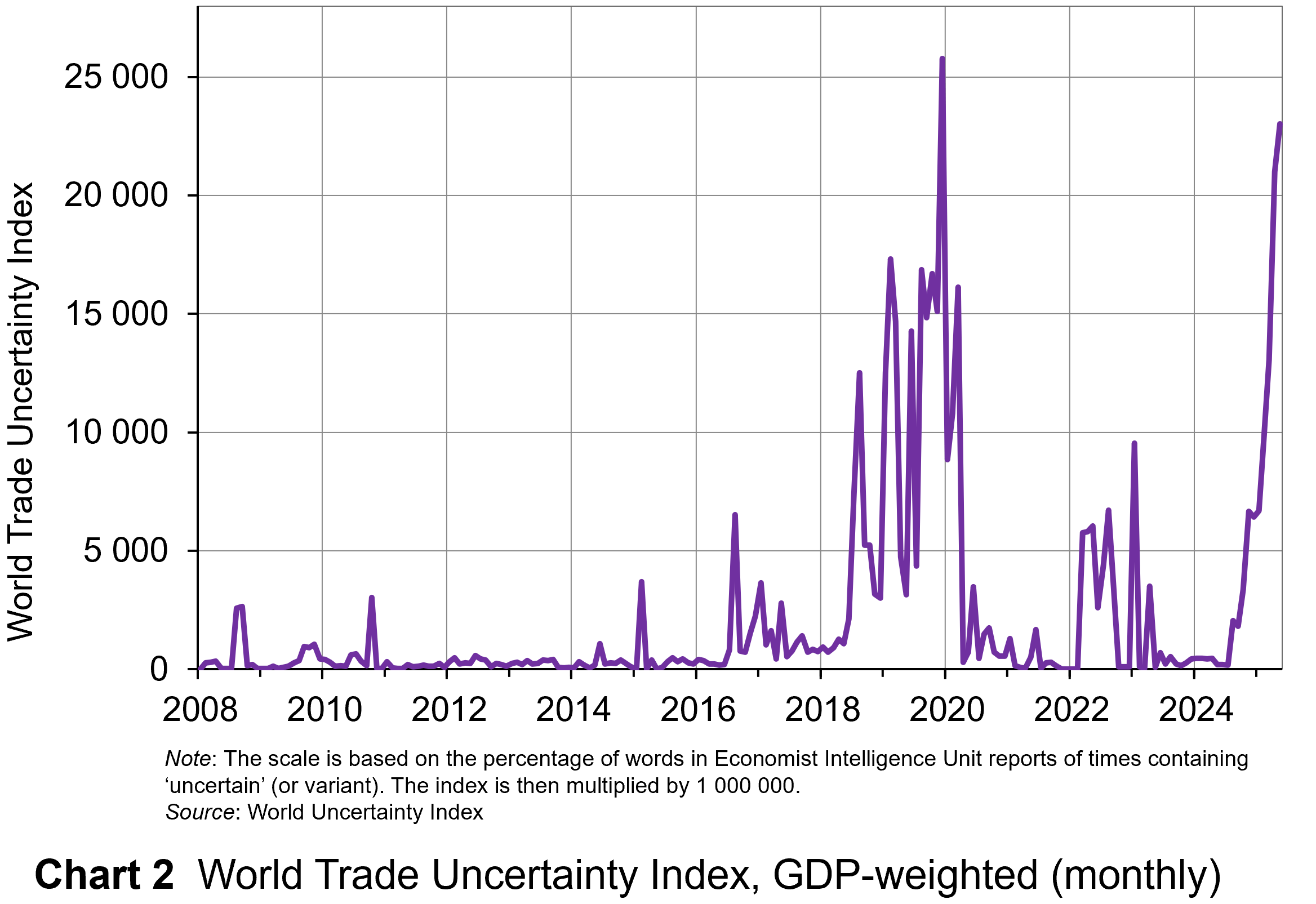 The second chart shows the World Trade Uncertainty Index (WTUI), published on the same site as the WUI (click here for a PowerPoint). The method adopted in its construction therefore mirrors that for the WUI but counts the number of times in EIU country reports ‘uncertainty’ is mentioned within proximity to a word related to trade, such as ‘protectionism’, ‘NAFTA’, ‘tariff’, ‘trade’, ‘UNCTAD’ or ‘WTO.’
The chart shows that in May 2025, the WTUI had risen to just over 23 000 – the second highest since December 2019, when President Trump imposed a new round of tariffs on Chinese imports and announced that he would restore steel tariffs on Brazil and Argentina. Since 2008, the WTUI has averaged just 2228.
It remains to be seen whether more stability in trade relations and geopolitics will allow WUI and WUTI to decline once more, or whether greater instability will simply lead to greater uncertainty, with damaging consequences for investment and also for consumption and employment.
Articles
- IMF World Economic Outlook: economic uncertainty is now higher than it ever was during COVID
The Conversation, Sergi Basco (23/4/25)
- Economic uncertainty hits new high
McKinsey, Sven Smit et al. (29/5/25)
- Trade tensions and rising uncertainty drag global economy towards recession
UNCTAD News (25/4/25)
- IMF Warns Global Economic Uncertainty Surpasses Pandemic Levels
The Global Treasurer (24/4/25)
- Britons ‘hoarding cash amid economic uncertainty and fear of outages’
The Guardian, Phillip Inman (10/6/25)
- America’s Brexit Phase
Foreign Affairs, Jonathan Haskel and Matthew J. Slaughter (10/6/25)
- Goldman Sachs’ CEO on the ‘Big, Beautiful Bill,’ Trump’s Tariffs and Economic Volatility
Politico, Sam Sutton (13/6/25)
- The Countries Where Economic Uncertainty Is Rising Fastest
24/7 Wall St., Evan Comen (9/6/25)
- Trump’s tariffs have finally kicked in, so what happens next?
The Conversation, Maha Rafi Atal (8/8/25)
Uncertainty Indices
Questions
- Explain what is meant by ‘text mining’. What are its strengths and weaknesses in assessing business, consumer and trade uncertainty?
- Explain how the UK Monthly EPU Index is derived.
- Why has uncertainty increased so dramatically since the start of 2025?
- Compare indices based on text mining with confidence indices.
- Plot consumer and business/industry confidence indicators for the past 24 months, using EC data. Do they correspond with the WUI?
- How may uncertainty affect consumers’ decisions?
 Economic growth is closely linked to investment. In the short term, there is a demand-side effect: higher investment, by increasing aggregate demand, creates a multiplier effect. GDP rises and unemployment falls. Over the longer term, higher net investment causes a supply-side effect: industrial capacity and potential output rise. This will be from both the greater quantity of capital and, if new investment incorporates superior technology, from a greater productivity of capital.
One of the biggest determinants of investment is certainty about the future: certainty allows businesses to plan investment. Uncertainty, by contrast, is likely to dampen investment. Investment is for future output and if the future is unknown, why undertake costly investment? After all, the cost of investment is generally recouped over several months or year, not immediately. Uncertainty thus increases the risks of investment.
 There is currently great uncertainty in the USA and its trading partners. The frequent changes in policy by President Trump are causing a fall in confidence and consequently a fall in investment. The past few weeks have seen large cuts in US government expenditure as his administration seeks to dismantle the current structure of government. The businesses supplying federal agencies thus face great uncertainty about future contracts. Laid-off workers will be forced to cut their spending, which will have knock-on effect on business, who will cut employment and investment as the multiplier and accelerator work through.
There are also worries that the economic chaos caused by President Trump’s frequent policy changes will cause inflation to rise. Higher inflation will prompt the Federal Reserve to raise interest rates. This, in turn, will increase the cost of borrowing for investment.
Tariff uncertainty
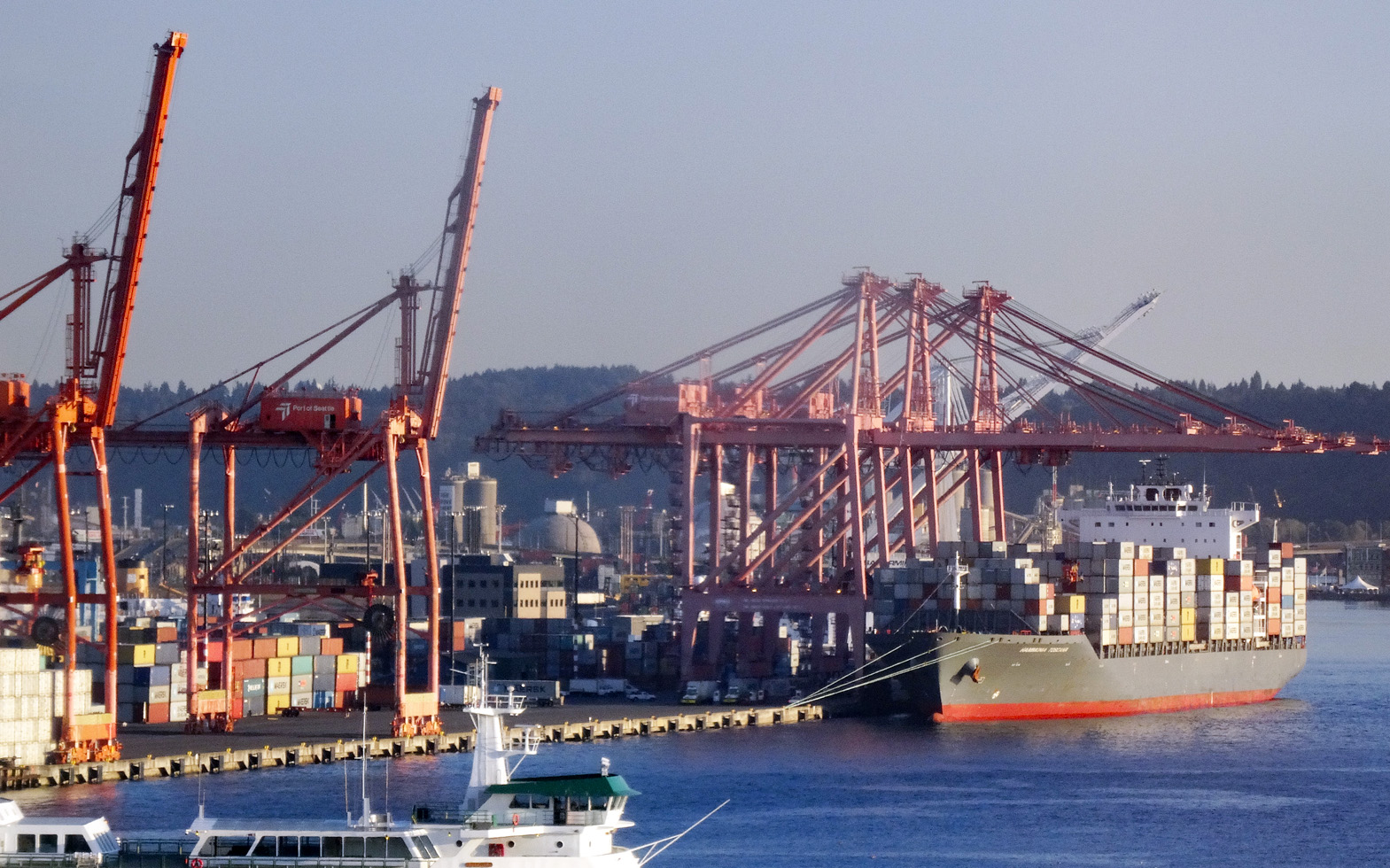 Perhaps the biggest uncertainty for business concerns the imposition of tariffs. Many US businesses rely on imports of raw materials, components, equipment, etc. Imposing tariffs on imports raises business costs. But this will vary from firm to firm, depending on the proportion of their inputs that are imported. And even when the inputs are from other US companies, those companies may rely on imports and thus be forced to raise prices to their customers. And if, in retaliation, other countries impose tariffs on US goods, this will affect US exporters and discourage them from investing.
For many multinational companies, whether based in the USA or elsewhere, supply chains involve many countries. New tariffs will force them to rethink which suppliers to use and where to locate production. The resulting uncertainty can cause them to delay or cancel investments.
Uncertainty has also been caused by the frequent changes in the planned level of tariffs. With the Trump administration using tariffs as a threat to get trading partners to change policy, the threatened tariff rates have varied depending on how trading partners have responded. There has also been uncertainty on just how the tariff policy will be implemented, making it more difficult for businesses to estimate the effect on them.
Then there are serious issues for the longer term. Other countries will be less willing to sign trade deals with the USA if they will not be honoured. Countries may increasingly look to diverting trade from the USA to other countries.
Video
Articles
- Trump’s erratic trade policies are baffling businesses, threatening investment and economic growth
Associated Press, Paul Wiseman, Anne D’innocenzio and Mae Anderson (6/3/25)
- The world is beginning to tire of Trump’s whiplash leadership
CNN, Stephen Collinson (6/3/25)
- US stocks slide and Nasdaq enters correction as chaos over Trump’s tariffs intensifies
CNN, John Towfighi (6/3/25)
- Trump’s Tariffs And Trade: Uncertainty, Chaos Or Brilliance?
Forbes, Mike Patton (6/3/25)
- How Trump’s second term might affect the market and your finances
The Conversation, Art Durnev (4/3/25)
- US corporate bond investors cautiously navigate trade war uncertainty
Reuters, Matt Tracy (6/3/25)
 This week in Trumponomics: Playing chicken with markets
Yahoo Finance, Rick Newman (8/3/25)
- Measuring fear: What the VIX reveals about market uncertainty
The FRED Blog, Aakash Kalyani (13/2/25)
- Trump shrugs off stock market slump, but economic warning signs loom
The Conversation, Conor O’Kane (17/3/25)
Data
Questions
- Find out what tariffs have been proposed, imposed and changed since Donald Trump came to office on 20 January 2025.
- In what scenario might US investment be stimulated by Donald Trump’s policies?
- What countries’ economies have gained or are set to gain from Donald Trump’s policies?
- What is the USMCA agreement? Do Donald Trump’s policies break this agreement?
- Find out and explain what has happened to the US stock market since January 2025. How do share prices affect business investment?
- Which sector’s shares have risen and which have fallen?
- Using the Data link above, find out what has been happening to the US Policy Uncertainty Index since Donald Trump was elected and explain particular spikes in the index. Is this mirrored in the global Policy Uncertainty Index?
- Are changes in the Policy Uncertainty Index mirrored in the World Uncertainty Index (WUI) and the CBOE Volatility Index: VIX?
We continue to live through incredibly turbulent times. In the past decade or so we have experienced a global financial crisis, a global health emergency, seen the UK’s departure from the European Union, and witnessed increasing levels of geopolitical tension and conflict. Add to this the effects from the climate emergency and it easy to see why the issue of economic uncertainty is so important when thinking about a country’s economic prospects.
In this blog we consider how we can capture this uncertainty through a World Uncertainty Index and the ways by which economic uncertainty impacts on the macroeconomic environment.
World Uncertainty Index
Hites Ahir, Nicholas Bloom and Davide Furceri have constructed a measure of uncertainty known as the World Uncertainty Index (WUI). This tracks uncertainty around the world using the process of ‘text mining’ the country reports produced by the Economist Intelligence Unit. The words searched for are ‘uncertain’, ‘uncertainty’ and ‘uncertainties’ and a tally is recorded based on the number of times they occur per 1000 words of text. To produce the index this figure is then multiplied up by 100 000. A higher number therefore indicates a greater level of uncertainty. For more information on the construction of the index see the 2022 article by Ahir, Bloom and Furceri linked below.
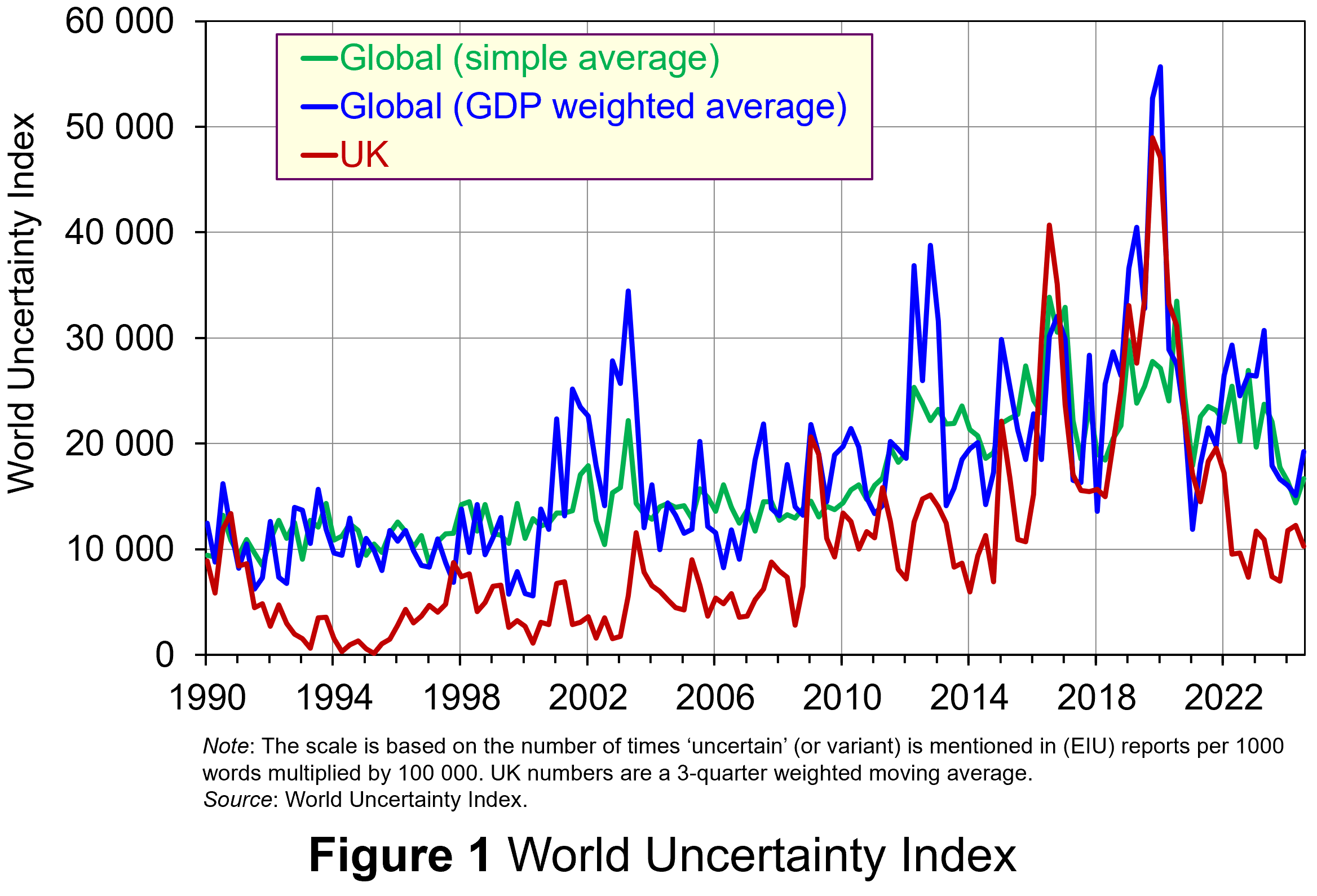 Figure 1 (click here for a PowerPoint) shows the WUI both globally and in the UK quarterly since 1991. The global index covers 143 countries and is presented as both a simple average and a GDP weighted average. The UK WUI is also shown. This is a three-quarter weighted average, the authors’ preferred measure for individual countries, where increasing weights of 0.1, 0.3 and 0.6 are used for the three most recent quarters.
From Figure 1 we can see how the level of uncertainty has been particularly volatile over the past decade or more. Events such as the sovereign debt crisis in parts of Europe in the early 2010s, the Brexit referendum in 2016, the COVID-pandemic in 2020–21 and the invasion of Ukraine in 2022 all played their part in affecting uncertainty domestically and internationally.
Uncertainty, risk-aversion and aggregate demand
Now the question turns to how uncertainty affects economies. One way of addressing this is to think about ways in which uncertainty affects the choices that people and businesses make. In doing so, we could think about the impact of uncertainty on components of aggregate demand, such as household consumption and investment, or capital expenditures by firms.
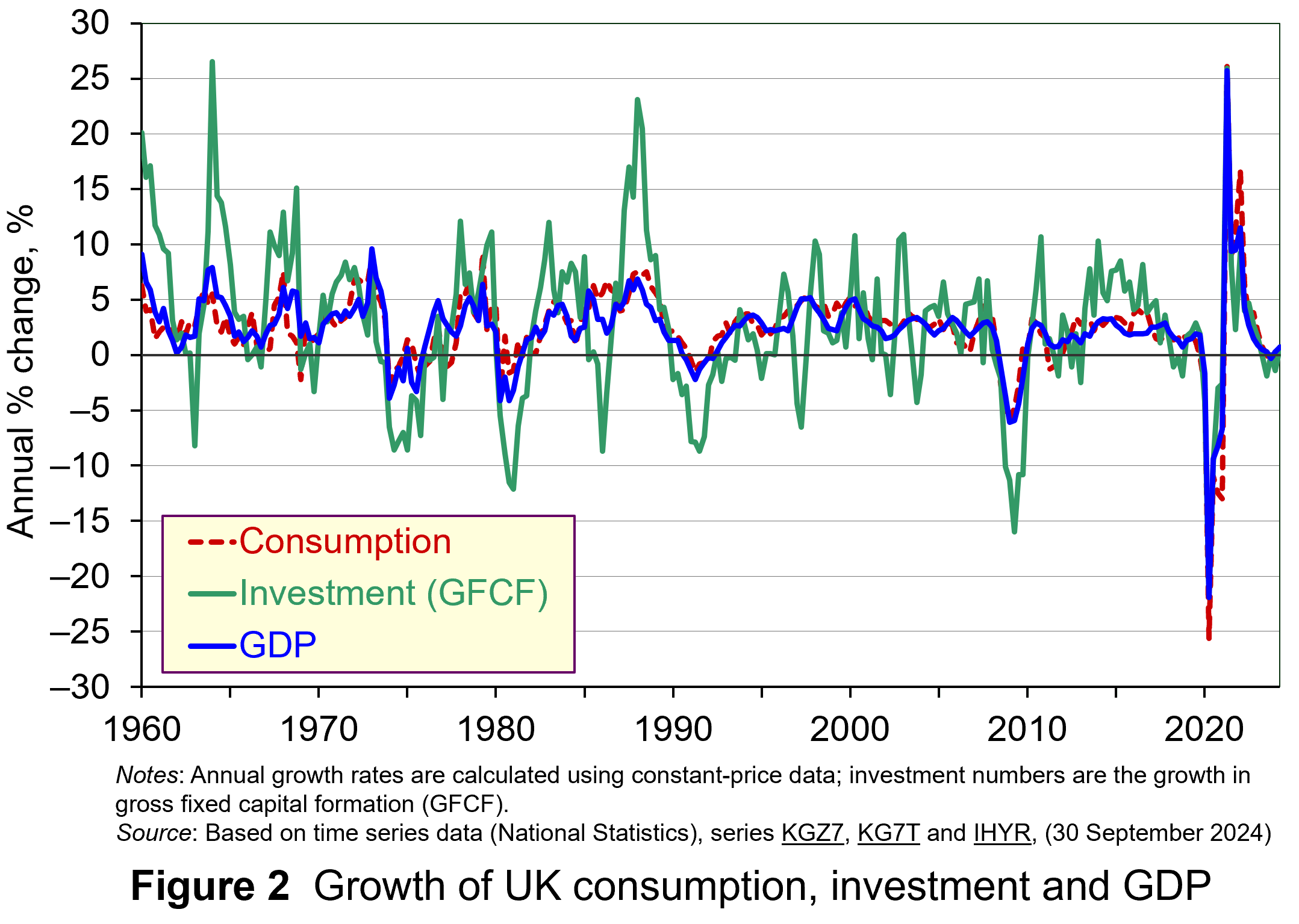 As Figure 2 shows (click here for a PowerPoint), investment is particularly volatile, and much more so than household spending. Some of this can be attributed to the ‘lumpiness’ of investment decisions since these expenditures tend to be characterised by indivisibility and irreversibility. This means that they are often relatively costly to finance and are ‘all or nothing’ decisions. In the context of uncertainty, it can make sense therefore for firms to wait for news that makes the future clearer. In this sense, we can think of uncertainty rather like a fog that firms are peering through. The thicker the fog, the more uncertain the future and the more cautious firms are likely to be.
The greater caution that many firms are likely to adopt in more uncertain times is consistent with the property of risk-aversion that we often attribute to a range of economic agents. When applied to household spending decisions, risk-aversion is often used to explain why households are willing to hold a buffer stock of savings to self-insure against unforeseen events and their future financial outcomes being worse than expected. Hence, in more uncertain times households are likely to want to increase this buffer further.
 The theory of buffer-stock saving was popularised by Christopher Carroll in 1992 (see link below). It implies that in the presence of uncertainty, people are prepared to consume less today in order to increase levels of saving, pay off existing debts, or borrow less relative to that in the absence of uncertainty. The extent of the buffer of financial wealth that people want to hold will depend on their own appetite for risk, the level of uncertainty, and the moderating effect from their own impatience and, hence, present bias for consuming today.
Risk aversion is consistent with the property of diminishing marginal utility of income or consumption. In other words, as people’s total spending volumes increase, their levels of utility or satisfaction increase but at an increasingly slower rate. It is this which explains why individuals are willing to engage with the financial system to reallocate their expected life-time earnings and have a smoother consumption profile than would otherwise be the case from their fluctuating incomes.
Yet diminishing marginal utility not only explains consumption smoothing, but also why people are willing to engage with the financial system to have financial buffers as self-insurance. It explains why people save more or borrow less today than suggested by our base-line consumption smoothing model. It is the result of people’s greater dislike (and loss of utility) from their financial affairs being worse than expected than their like (and additional utility) from them being better than expected. This tendency is only likely to increase the more uncertain times are. The result is that uncertainty tends to lower household consumption with perhaps ‘big-ticket items’, such as cars, furniture, and expensive electronic goods, being particularly sensitive to uncertainty.
Uncertainty and confidence
Uncertainty does not just affect risk; it also affects confidence. Risk and confidence are often considered together, not least because their effects in generating and transmitting shocks can be difficult to disentangle.
We can think of confidence as capturing our mood or sentiment, particularly with respect to future economic developments. Figure 3 plots the Uncertainty Index for the UK alongside the OECD’s composite consumer and business confidence indicators. Values above 100 for the confidence indicators indicate greater confidence about the future economic situation and near-term business environment, while values below 100 indicate pessimism towards the future economic and business environments.
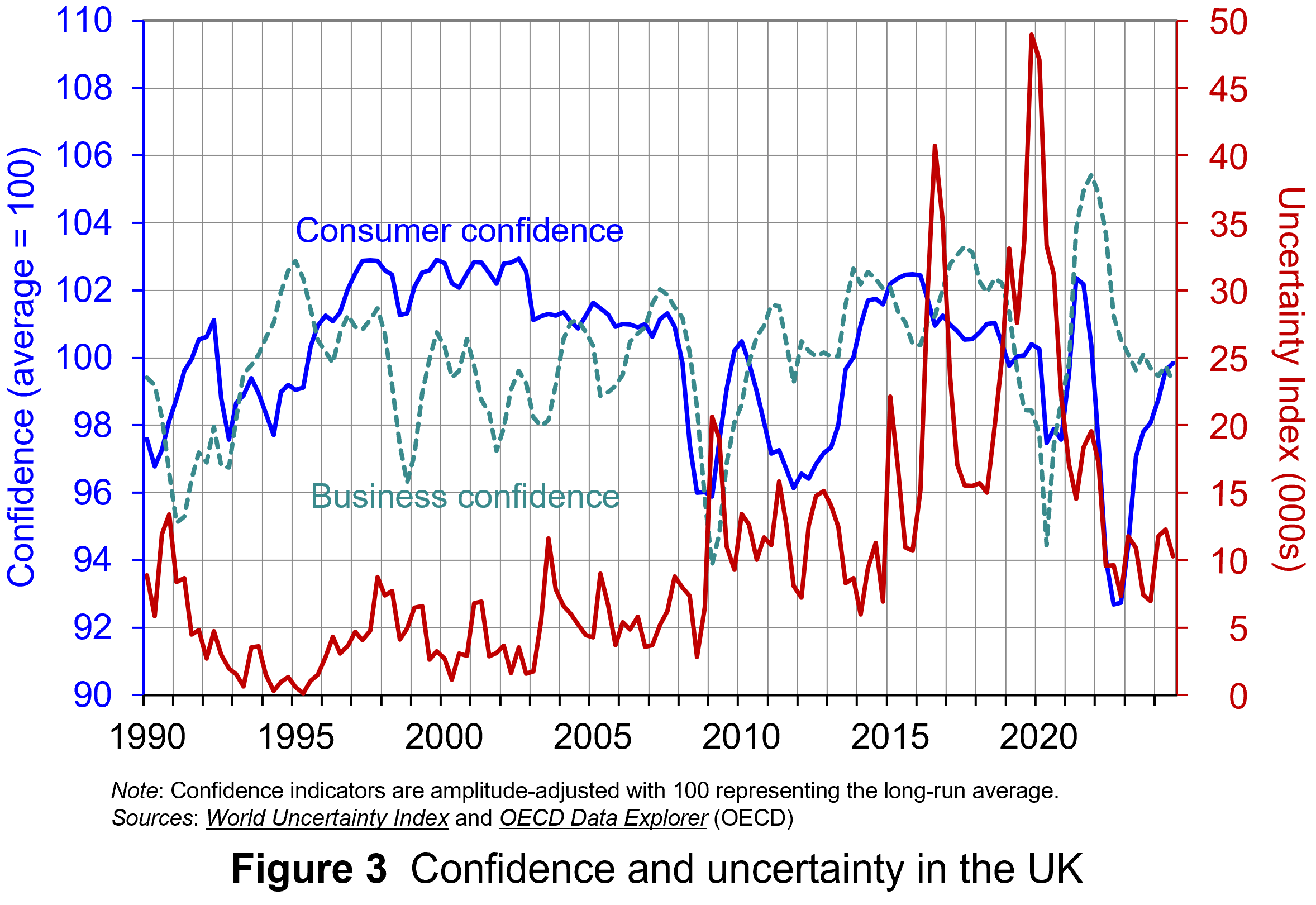 Figure 3 suggests that the relationship between confidence and uncertainty is rather more complex than perhaps is generally understood (click here for a PowerPoint). Haddow, Hare, Hooley and Shakir (see link below) argue that the evidence tends to point to changes in uncertainty affecting confidence, but with less evidence that changes in confidence affect uncertainty.
To illustrate this, consider the global financial crisis of the late 2000s. The argument can be made that the heightened uncertainty about future prospects for households and businesses helped to erode their confidence in the future. The result was that people and businesses revised down their expectations of the future (pessimism). However, although people were more pessimistic about the future, this was more likely to have been the result of uncertainty rather than the cause of further uncertainty.
Conclusion
For economists and policymakers alike, indicators of uncertainty, such as the Ahir, Bloom and Furceri World Uncertainty Index, are invaluable tools in understanding and forecasting behaviour and the likely economic outcomes that follow. Some uncertainty is inevitable, but the persistence of greater uncertainty since the global financial crisis of the late 2000s compares quite starkly with the relatively lower and more stable levels of uncertainty seen from the mid-1990s up to the crisis. Hence the recent frequency and size of changes in uncertainty show how important it to understand how uncertainty effects transmit through economies.
Academic papers
- The World Uncertainty Index
National Bureau of Economic Research, Working Paper 29763, Hites Ahir, Nicholas Bloom and Davide Furceri (February 2022)
- The Buffer-Stock Theory of Saving: Some Macroeconomic Evidence
Brookings Papers on Economic Activity, Christopher D Carroll (Vol 2, 1992)
- Macroeconomic uncertainty: what is it, how can we measure it and why does it matter?
Bank of England Quarterly Bulletin, 2013 Q2, Abigail Haddow, Chris Hare, John Hooley and Tamarah Shakir (13/6/13)
Articles
Data
Questions
- (a) Explain what is meant by the concept of diminishing marginal utility of consumption.
(b) Explain how this concept helps us to understand both consumption smoothing and the motivation to engage in buffer-stock saving.
- Explain the distinction between confidence and uncertainty when analysing macroeconomic shocks.
- Discuss which types of expenditures you think are likely to be most susceptible to uncertainty shocks.
- Discuss how economic uncertainty might affect productivity and the growth of potential output.
- How might the interconnectedness of economies affect the transmission of uncertainty effects through economies?
 In the third of our series on the distinction between nominal and real values we show its importance when analysing retail sales data. In the UK, such data are available from the Office for National Statistics. This blog revisits an earlier one, Nominal and real retail sales figures: interpreting the data, written in October 2023. We find that inflation-adjusted retail sales data reveal some stark patterns in the sector. They help contextualise some of the challenges faced by high streets up and down the UK.
The Retail Sales Index
Retail sales relate to spending on items such as food, clothing, footwear and household goods. They involve sales by retailers directly to final consumers, whether in store or online. Spending on services such as holidays, air fares and train tickets, insurance, banking, hotels and restaurants are not included, as are sales of motor vehicles. The Retail Sales Index for Great Britain is based on a monthly survey of around 5000 retailers across England, Scotland and Wales and is thought to capture around three-quarters of turnover in the retail industry.
Estimates of retail sales are published in index form. There are two indices published by the ONS: a value and volume measure. The value index reflects the total turnover of business, while the volume index adjusts the value index for price changes. Hence, the value estimates are nominal, while the volume estimates are real. The key point here is that the nominal estimates reflect both price and volume changes, whereas the real estimates adjust for price movements to capture only volume changes.
The headline ONS figures for May 2024 showed a rise by 2.9 per cent in the volume of retail sales, following a 1.8 per cent fall in April. In value terms, May saw a 3.3 per cent rise in retail sales following a 2.3 fall in March. Monthly changes can be quite volatile, even after seasonal adjustment, and sensitive to peculiar factors. For example, the poor weather in April 2024 helped to depress retail spending. It is, therefore, sensible to take a longer-term view when looking for clearer patterns in spending behaviour.
Growth of retail sales
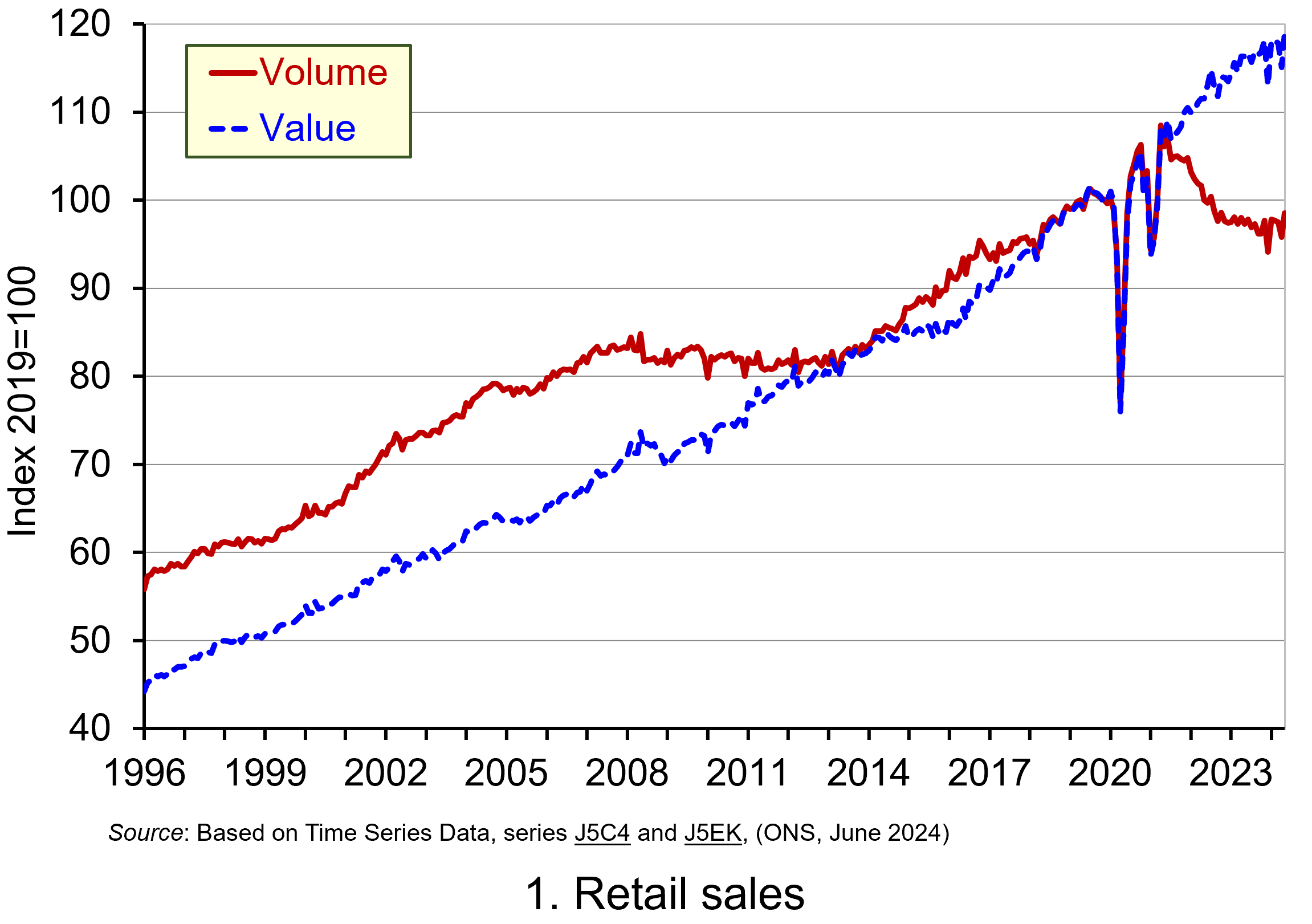 Chart 1 plots the monthly value and volume of retail sales in Great Britain since 1996. (Click here to download a PowerPoint of the chart). In value terms, monthly spending in the retail sector has increased by 169 per cent since January 1996, whereas in volume terms, spending has increased by 77 per cent. Another way of thinking about this is in terms of the average annual rate of increase. This shows that the value of spending has risen at an annual rate of 3.5 per cent while the volume of spending has risen at an annual rate of 2.0 per cent. This difference is to be expected in the presence of rising prices, since nominal growth, as we have just noted, reflects both price and volume changes.
Chart 1 helps to identify two periods where the volume of retail spending ceased to grow. The first of these is following the global financial crisis of the late 2000s. The period from 2008 to 2013 saw the volume of retail sales stagnate and flatline, with a recovery in volumes only really starting to take hold in 2014. Yet in nominal terms retail sales grew by around 14 per cent.
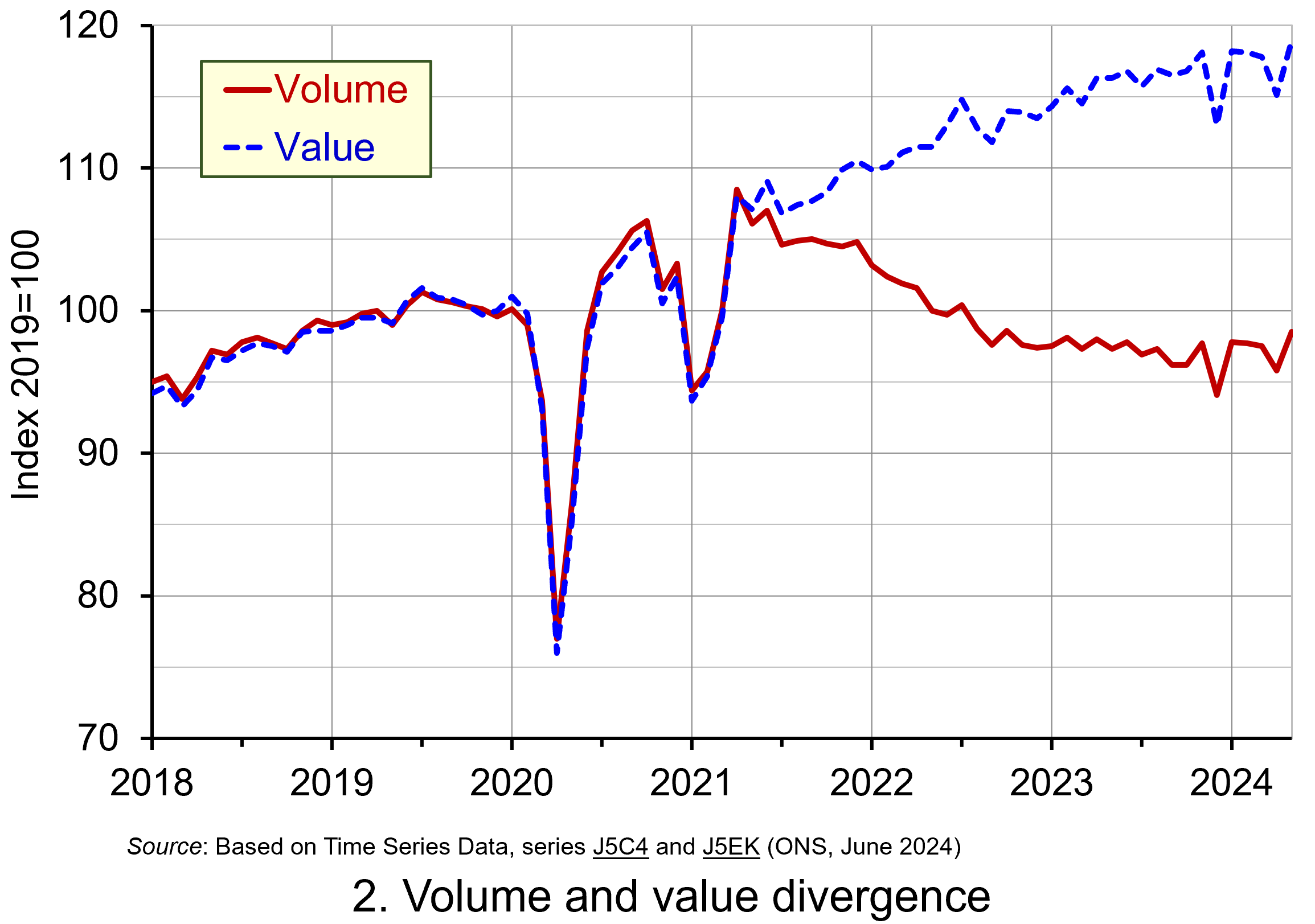 The second of the two periods is from 2021. Chart 2 helps to demonstrates the extent of the struggles of the retail sector in this period. It shows a significant divergence between the volume and value of retail sales. Indeed, between April 2021 and October 2023, while the value of retail sales increased by 8.0 per cent the volume of retail sales fell by 11.0 per cent.
The recent value-volume divergence reflects the inflation shock that began to emerge in 2021. This saw consumer prices, as measured by the Consumer Prices Index (CPI), rise across 2022 and 2023 by 9.1 per cent and 7.3 per cent respectively, with the annual rate of CPI inflation hitting 11.1 per cent in October 2022. Hence, while inflation was a drag on the volume of spending it nonetheless meant that the value of spending continued to rise. Once more this demonstrates why understanding the distinction between nominal and real is important. (Click here to download a PowerPoint of the chart).
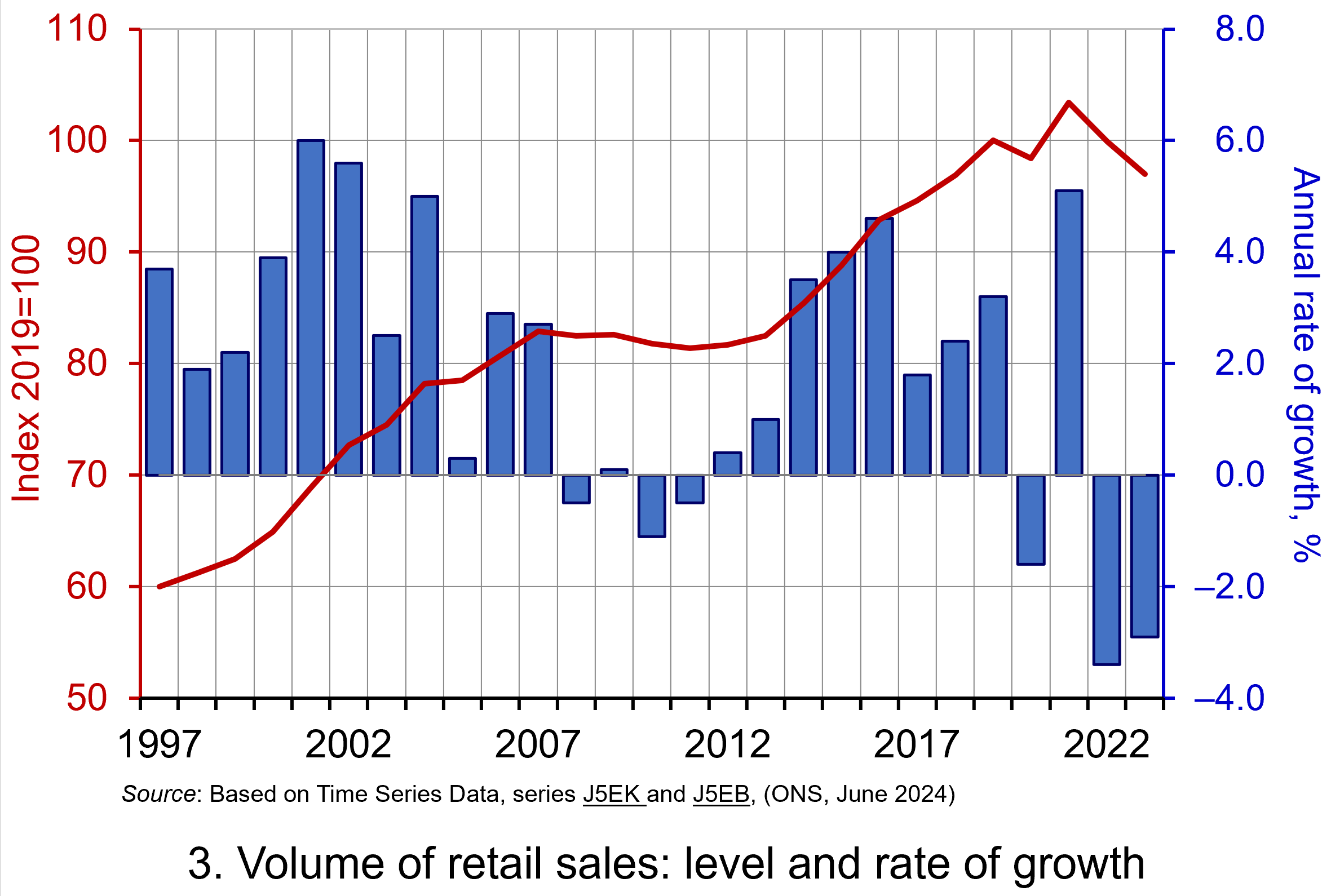 To illustrate the longer-term trend in the volume of retail spending alongside its volatility, Chart 3 plots yearly retail sales volumes and also their percentage change on the previous year.
The chart nicely captures the prolonged halt to retail sales growth following the global financial crisis, the fluctuations caused by COVID and then the sharp falls in the volume of retail spending in 2022 and 2023 as the effects of the inflationary shock on peoples’ finances bit sharply. This cost-of-living crisis significantly affected many people’s disposable income. (Click here to download a PowerPoint of the chart).
Categories of retail sales
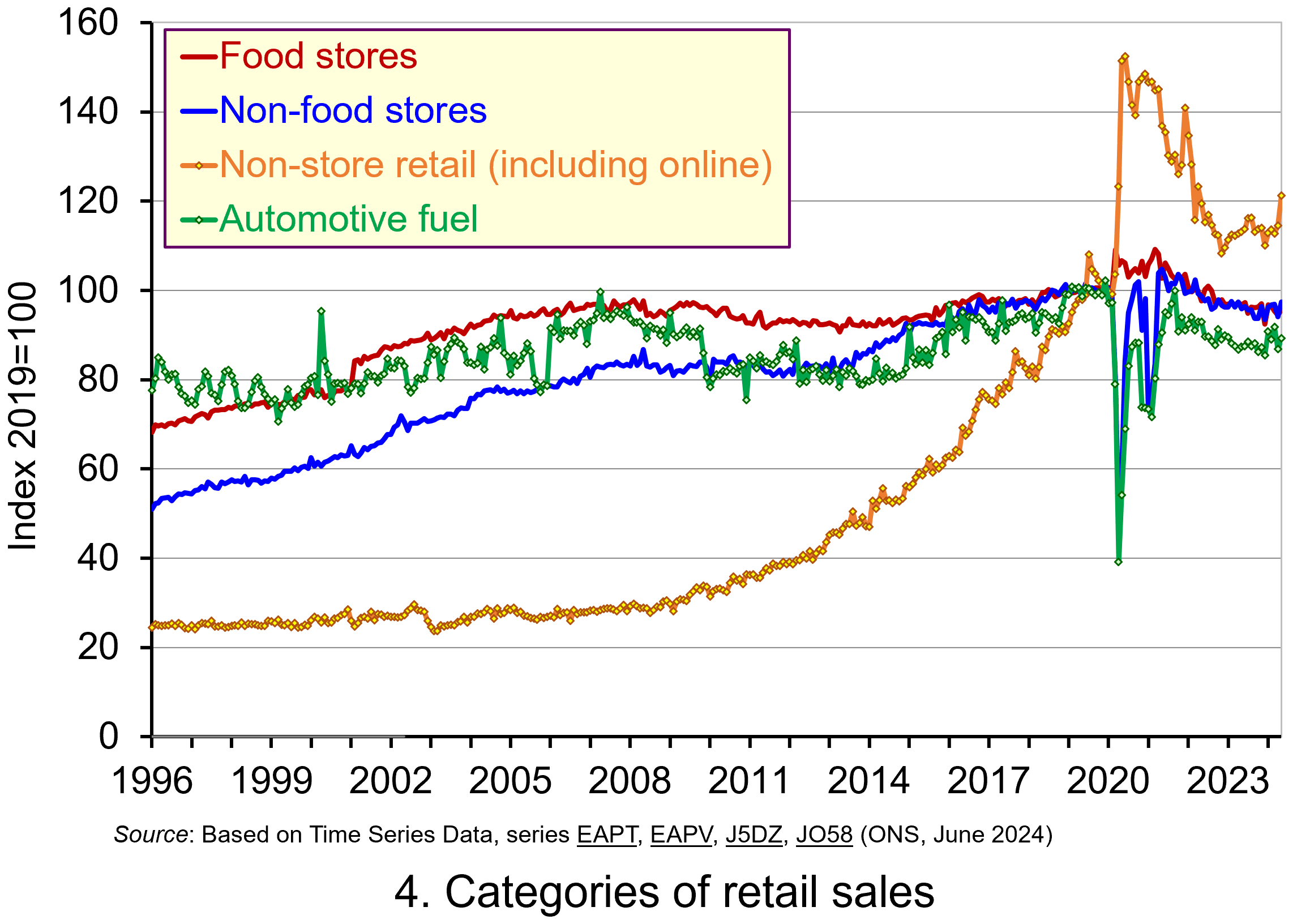 We conclude by considering categories of retail spending. Chart 4 shows volumes of retail sales by four broad categories since 1996. (Click here to download a PowerPoint of the chart). These are food stores, predominantly non-food stores, non-store retail and automotive fuel (i.e. sales of petrol and diesel “at the pumps”).
Whilst all categories have seen an increase in their spending volumes over the period as a whole, there are stark differences in this rate of growth. Perhaps not surprisingly, the most rapid growth is in non-store retail. This includes online retailing, as well as market stalls and catalogues.
The volume of retail spending in the non-store sector has grown at an average annual rate over this period of 6.3 per cent, compared with 2.6 per cent for non-food stores, 1.2 per cent for predominantly food stores and 1.0 per cent for automotive fuels. The growth of non-store retail has been even more rapid since 2010, when the average annual rate of growth in the volume of purchases has been 10.2 per cent, compared to 1.8 per cent for non-food stores, 1.0 per cent for automotive fuels and zero growth for food stores.
If we focus on the most recent patterns in the categories of retail sales, we see that the monthly volume of spending in all categories except non-store retail is now lower than the average in 2019. Specifically, when compared to 2019 levels, the volume of spending in non-food stores in May 2024 was 2.6 per cent lower, while that in food stores was 4.4 per cent lower, and the volume of spending on automotive fuels was 10.8 per cent lower. In contrast, spending in non-store retail was 21.2 per cent higher. Yet this is not to imply that this sector has been immune to the pressures faced by their high-street counterparts. Although it is difficult to disentangle fully the effects of the pandemic and lockdowns on non-store retail sales data, the downward trajectory in the volume of retail sales in the sector that occurred as the economy ‘reopened’ in 2021 and 2022 continued into 2023 when purchases fell by 3.5 per cent.
Final thoughts
The retail sector is an incredibly important part of the economy. A recent research briefing from the House of Commons Library reports that there were 2.7 million jobs in the UK retail sector in 2022, equivalent to 8.6 per cent of the country’s jobs with 314 040 retail businesses as of January 2023. Yet the importance of the retail sector cannot be captured by these statistics alone. Some would argue that the very fabric and wellbeing of our towns and cities is affected by the wellbeing of the sector and, importantly, by structural changes that affect how people interact with retail.
Articles
Research Briefing
Statistical bulletin
Data
Questions
- Which of the following is/are not counted in the UK retail sales data: (i) purchase of furniture from a department store; (ii) weekly grocery shop online; (iii) a stay at a hotel on holiday; (iv) a meal at your favourite café or restaurant?
- Why does an increase in the value of retail sales not necessarily mean that their volume has increased?
- In the presence of deflation, which will be higher: nominal or real growth rates?
- Discuss the factors that could explain the patterns in the volume of spending observed in the different categories of retail sales in Chart 4.
- Discuss what types of retail products might be more or less sensitive to changes in the macroeconomic environment.
- Conduct a survey of recent media reports to prepare a briefing discussing examples of retailers who have struggled or thrived in the recent economic environment.
- What do you understand by the concepts of ‘consumer confidence’ and ‘economic uncertainty’? How might these affect the volume of retail spending?
- Discuss the proposition that the retail sales data cast doubt on whether people are ‘forward-looking consumption smoothers’.