 On 25 November, the UK government published its Spending Review 2020. This gives details of estimated government expenditure for the current financial year, 2020/21, and plans for government expenditure and the likely totals for 2021/22.
The focus of the Review is specifically on the effects of and responses to the coronavirus pandemic. It does not consider the effects of Brexit, with or without a trade deal, or plans for taxation. The Review is based on forecasts by the Office for Budget Responsibility (OBR). Because of the high degree of uncertainty over the spread of the disease and the timing and efficacy of vaccines, the OBR gives three forecast values for most variables – pessimistic, central and optimistic.
 According to the central forecast, real GDP is set to decline by 11.3% in 2020, the largest one-year fall since the Great Frost of 1709. The economy is then set to ‘bounce back’ (somewhat), with GDP rising by 5.2% in 2021.
Unemployment will rise from 3.9% in 2019 to a peak of 7.5% in mid-2021, after the furlough scheme and other support for employers is withdrawn.
This blog focuses at the impact on government borrowing and debt and the implications for the future – both the funding of the debt and ways of reducing it.
Soaring government deficits and debt
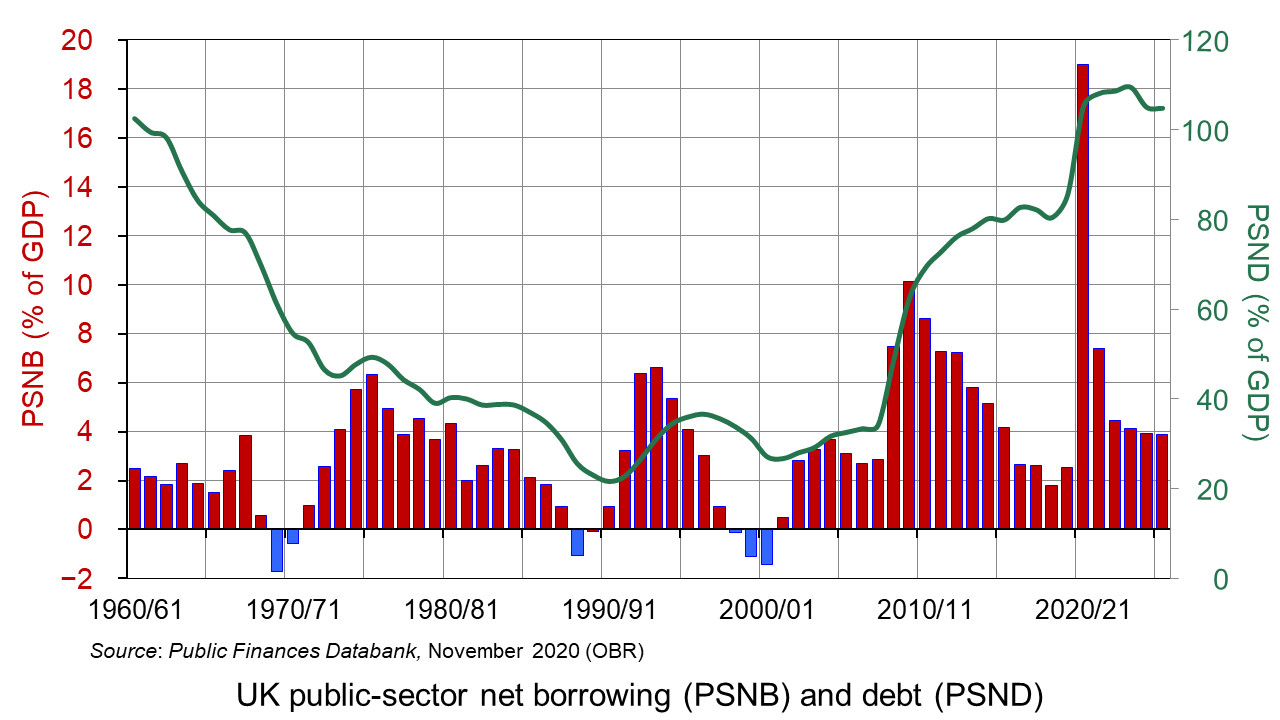
Government expenditure during the pandemic has risen sharply through measures such as the furlough scheme, the Self-Employment Income Support Scheme and various business loans. This, combined with falling tax revenue, as incomes and consumer expenditure have declined, has led to a rise in public-sector net borrowing (PSNB) from 2.5% of GDP in 2019/20 to a central forecast of 19% for 2020/21 – the largest since World War II. By 2025/26 it is still forecast to be 3.9% of GDP. The figure has also been pushed up by a fall in nominal GDP for 2020/21 (the denominator) by nearly 7%. (Click here for a PowerPoint of the above chart.)
The high levels of PSNB are pushing up public-sector net debt (PSNB). This is forecast to rise from 85.5% of GDP in 2019/20 to 105.2% in 2020/21, peaking at 109.4% in 2023/24.
The exceptionally high deficit and debt levels will mean that the government misses by a very large margin its three borrowing and debt targets set out in the latest (Autumn 2016) ‘Charter for Budget Responsibility‘. These are:
- to reduce cyclically-adjusted public-sector net borrowing to below 2% of GDP by 2020/21;
- for public-sector net debt as a percentage of GDP to be falling in 2020/21;
- for overall borrowing to be zero or in surplus by 2025/26.
But, as the Chancellor said in presenting the Review:
Our health emergency is not yet over. And our economic emergency has only just begun. So our immediate priority is to protect people’s lives and livelihoods.
Putting the public finances on a sustainable footing
Running a large budget deficit in an emergency is an essential policy for dealing with the massive decline in aggregate demand and for supporting those who have, or otherwise would have, lost their jobs. But what of the longer-term implications? What are the options for dealing with the high levels of debt?
1. Raising taxes. This tends to be the preferred approach of those on the left, who want to protect or improve public services. For them, the use of higher progressive taxes, such as income tax, or corporation tax or capital gains tax, are a means of funding such services and of providing support for those on lower incomes. There has been much discussion of the possibility of finding a way of taxing large tech companies, which are able to avoid taxes by declaring very low profits by diverting them to tax havens.
2. Cutting government expenditure. This is the traditional preference of those on the right, who prefer to cut the overall size of the state and thus allow for lower taxes. However, this is difficult to do without cutting vital services.  Indeed, there is pressure to have higher government expenditure over the longer term to finance infrastructure investment – something supported by the Conservative government.
A downside of either of the above is that they squeeze aggregate demand and hence may slow the recovery. There was much discussion after the financial crisis over whether ‘austerity policies’ hindered the recovery and whether they created negative supply-side effects by dampening investment.
3. Accepting higher levels of debt into the longer term. This is a possible response as long as interest rates remain at record low levels. With depressed demand, loose monetary policy may be sustainable over a number of years. Quantitative easing depresses bond yields and makes it cheaper for governments to finance borrowing. Servicing high levels of debt may be quite affordable.
The problem is if inflation begins to rise. Even with lower aggregate demand, if aggregate supply has fallen faster because of bankruptcies and lack of investment, there may be upward pressure on prices. The Bank of England may have to raise interest rates, making it more expensive for the government to service its debts.
Another problem with not reducing the debt is that if another emergency occurs in the future, there will be less scope for further borrowing to support the economy.
 4. Higher growth ‘deals’ with the deficit and reduces debt. In this scenario, austerity would be unnecessary. This is the ‘golden’ scenario – for the country to grow its way out of the problem. Higher output and incomes leads to higher tax revenues, and lower unemployment leads to lower expenditure on unemployment benefits. The crucial question is the relationship between aggregate demand and supply. For growth to be sustainable and shrink the debt/GDP ratio, aggregate demand must expand steadily in line with the growth in aggregate supply. The faster aggregate supply can grow, the faster can aggregate demand. In other words, the faster the growth in potential GDP, the faster can be the sustainable rate of growth of actual GDP and the faster can the debt/GDP ratio shrink.
One of the key issues is the degree of economic ‘scarring’ from the pandemic and the associated restrictions on economic activity. The bigger the decline in potential output from the closure of firms and the greater the deskilling of workers who have been laid off, the harder it will be for the economy to recover and the longer high deficits are likely to persist.
Another issue is the lack of labour productivity growth in the UK in recent years. If labour productivity does not increase, this will severely restrict the growth in potential output. Focusing on training and examining incentives, work practices and pay structures are necessary if productivity is to rise significantly. So too is finding ways to encourage firms to increase investment in new technologies.
Podcast and videos
Articles
- Initial reaction from IFS researchers on Spending Review 2020 and OBR forecasts
IFS Press Release, Paul Johnson, Carl Emmerson, Ben Zaranko, Tom Waters and Isabel Stockton (25/11/200
- Rishi Sunak is likely to increase spending – which means tax rises will follow
IFS, Newspaper Article, Paul Johnson (23/11/20)
- Economic and Fiscal Outlook Executive Summary
OBR (25/11/20)
- UK’s Sunak says public finances are on ‘unsustainable’ path
Reuters, David Milliken (26/11/20)
- Rishi Sunak warns ‘economic emergency has only just begun’
BBC News, Szu Ping Chan (25/11/20)
- UK will need £27bn of spending cuts or tax rises, watchdog warns
The Guardian, Phillip Inman (25/11/20)
- What is tomorrow’s Spending Review all about?
The Institute of Chartered Accountants in England and Wales (24/11/20)
- Spending Review 2020: the experts react
The Conversation, Drew Woodhouse, Ernestine Gheyoh Ndzi, Jonquil Lowe, Anupam Nanda, Alex de Ruyter and Simon J. Smith (25/11/20)
OBR Data
Questions
- What is the significance of the relationship between the rate of economic growth and the rate of interest for financing public-sector debt over the longer term?
- What can the government do to encourage investment in the economy?
- Using OBR data, find out what has happened to the output gap over the past few years and what is forecast to happen to it over the next five years. Explain the significance of the figures.
- Distinguish between demand-side and supply-side policies. How would you characterise the policies to tackle public-sector net debt in terms of this distinction? Do the policies have a mixture of demand- and supply-side effects?
- Choose two other developed countries. Examine how their their public finances have been affected by the coronavirus pandemic and the policies they are adopting to tackle the economic effects of the pandemic.
 With the imposition of a new lockdown in England from 5 November to 2 December and in Wales from 3 October to 9 November, and with strong restrictions in Scotland and Northern Ireland, the UK economy is set to return to negative growth – a W-shaped GDP growth curve.
With the closure of leisure facilities and non-essential shops in England and Wales, spending is likely to fall. Without support, many businesses would fail and potential output would fall. In terms of aggregate demand and supply, both would decline, as the diagram below illustrates. (Click here for a PowerPoint.)
The aggregate demand curve shifts from AD1 to AD2 as consumption and investment fall. Exports also fall as demand is hit by the pandemic in other countries. 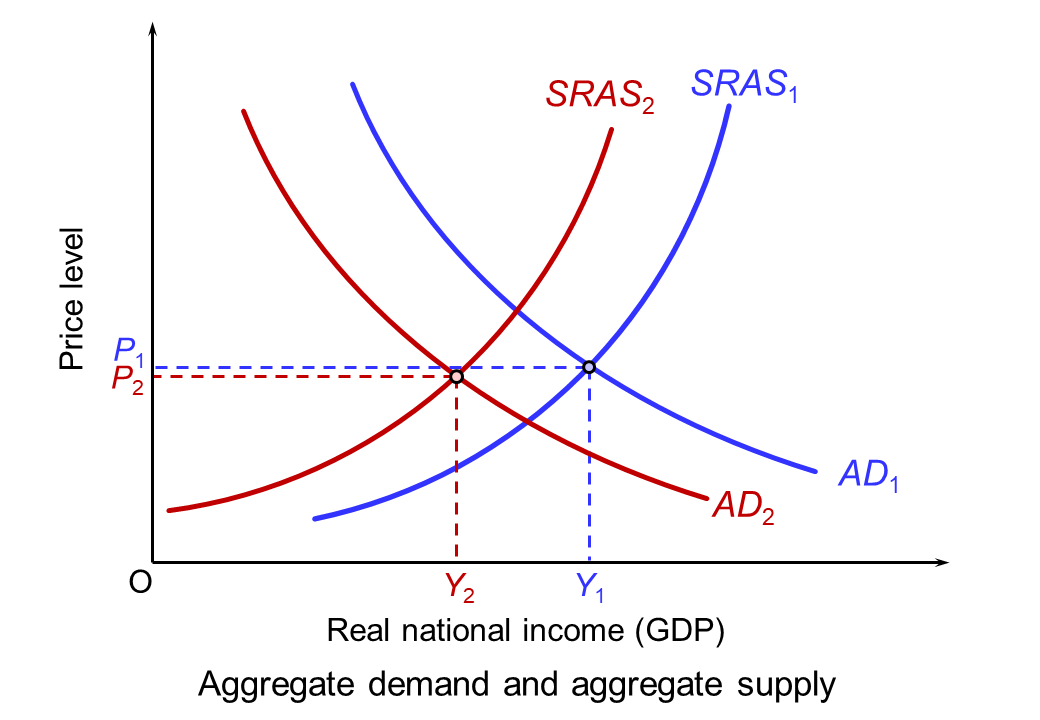 The fall in aggregate supply is represented partly by a movement along the short-run aggregate supply curve (SRAS) as demand falls for businesses which remain open (such as transport services). Largely it is represented by a leftward shift in the curve from SRAS1 to SRAS2 as businesses such as non-essential shops and those in the hospitality and leisure sector are forced to close. What happens to the long-run supply curve depends on the extent to which businesses reopen when the lockdown and any other subsequent restrictions preventing their reopening are over. It also depends on the extent to which other firms spring up or existing firms grow to replace the business of those that have closed. The continuing rise in online retailing is an example.
With the prospect of falling GDP and rising unemployment, the UK government and the Bank of England have responded by giving a fiscal and monetary boost. We examine each in turn.
Fiscal policy
 In March, the Chancellor introduced the furlough scheme, whereby employees temporarily laid off would receive 80% of their wages through a government grant to their employers. This scheme was due to end on 31 October, to be replaced by the less generous Job Support Scheme (see the blog, The new UK Job Support Scheme: how much will it slow the rise in unemployment?). However, the Chancellor first announced that the original furlough scheme would be extended until 2 December for England and then, on 5 November, to the end of March 2021 for the whole of the UK. He also announced that the self-employed income support grant would increase from 55% to 80% of average profits up to £7500.
In addition, the government announced cash grants of up to £3000 per month for businesses which are closed (worth more than £1 billion per month), extra money to local authorities to support businesses and an extension of existing loan schemes for business. Furthermore, the government is extending the scheme whereby people can claim a repayment ‘holiday’ for up to 6 months for mortgages, personal loans and car finance.
The government hopes that the boost to aggregate demand will help to slow, or even reverse, the predicted decline in GDP. What is more, by people being put on furlough rather than being laid off, it hopes to slow the rise in unemployment.
Monetary policy
At the meeting of the Bank of England’s Monetary Policy Committee on 4 November, further expansionary monetary policy was announced. Rather than lowering Bank Rate from its current historically low rate of 0.1%, perhaps to a negative figure, it was decided to engage in further quantitative easing.
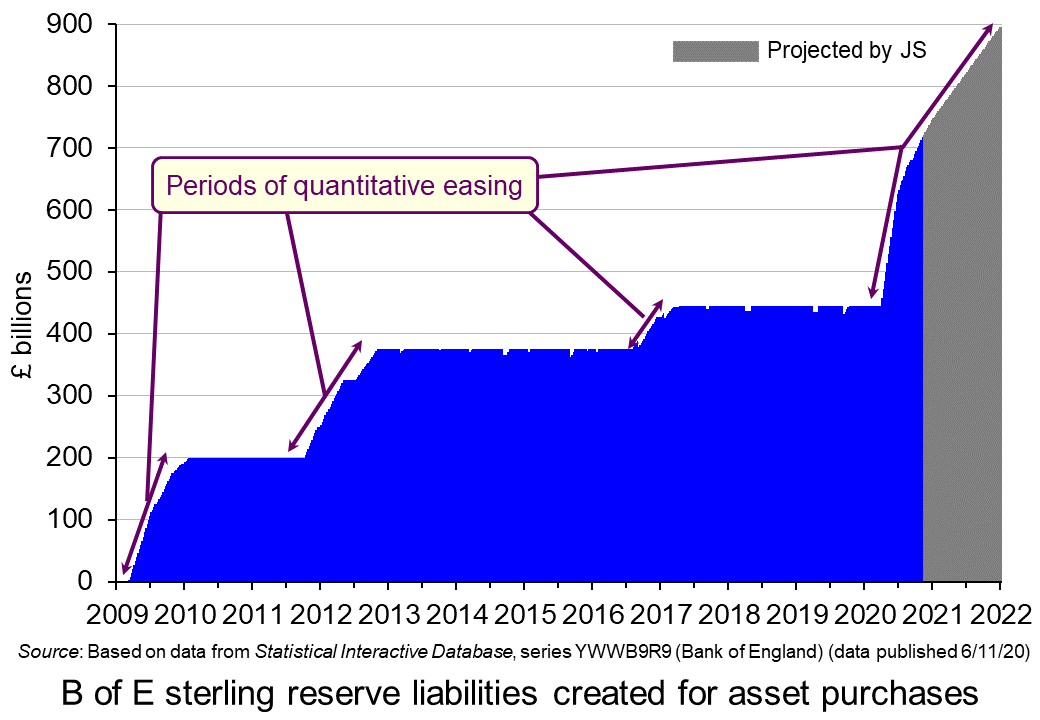 An additional £150 billion of government bonds will be purchased under the asset purchase facility (APF). This will bring the total vale of bonds purchased since the start of the pandemic to £450 billion (including £20 billion of corporate bonds) and to £895 billion since 2009 when QE was first introduced in response to the recession following the financial crisis of 2007–8.
The existing programme of asset purchases should be complete by the end of December this year. The Bank of England expects the additional £150 billion of purchases to begin in January 2021 and be completed within a year.
UK quantitative easing since the first round in March 2009 is shown in the chart above. The reserve liabilities represent the newly created money for the purchase of assets under the APF programme. (There are approximately £30 billion of other reserve liabilities outside the APF programme.) The grey area shows projected reserve liabilities to the end of the newly announced programme of purchases, by which time, as stated above, the total will be £895 billion. This, of course, assumes that the Bank does not announce any further QE, which it could well do if the recovery falters.
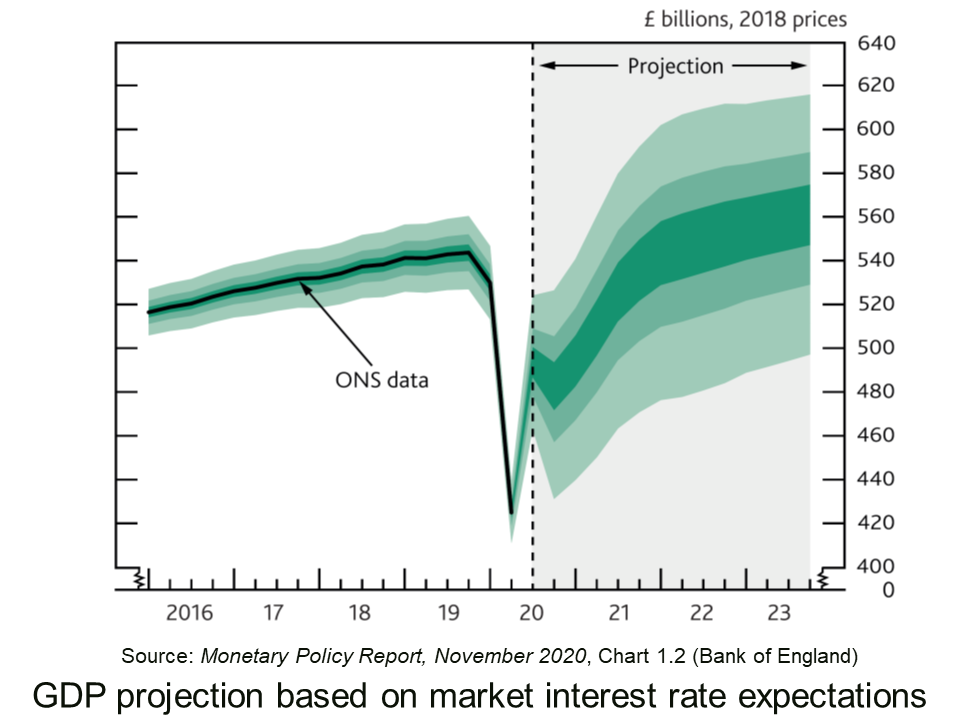
Justifying the decision, the MPC meeting’s minutes state that:
There are signs that consumer spending has softened across a range of high-frequency indicators, while investment intentions have remained weak. …The fall in activity over 2020 has reflected a decline in both demand and supply. Overall, there is judged to be a material amount of spare capacity in the economy.
Conclusions
How effective these fiscal and monetary policy measures will be in mitigating the effects of the Covid restrictions remains to be seen. A lot will depend on how successful the lockdown and other restrictions are in slowing the virus, how quickly a vaccine is developed and deployed, whether a Brexit deal is secured, and the confidence of both consumers, businesses and financial markets that the economy will bounce back in 2021. As the MPC’s minutes state:
The outlook for the economy remains unusually uncertain. It depends on the evolution of the pandemic and measures taken to protect public health, as well as the nature of, and transition to, the new trading arrangements between the European Union and the United Kingdom. It also depends on the responses of households, businesses and financial markets to these developments.
Articles
- Covid: Rishi Sunak to extend furlough scheme to end of March
BBC News (6/11/20)
- Furlough extended until March and self-employed support boosted again
MSE News, Callum Mason (6/11/20)
- Number on furlough in UK may double during England lockdown
The Guardian, Richard Partington (3/11/20)
- ‘We wouldn’t manage without it’: business owners on the furlough extension
The Guardian, Molly Blackall and Mattha Busby (6/11/20)
- Sunak’s abrupt turn on UK furlough scheme draws criticism from sceptics
Financial Times, Delphine Strauss (6/11/20)
 Coronavirus: Bank of England unleashes further £150bn of support for economy
Sky News, James Sillars (5/11/20)
- Bank of England boss pledges to do ‘everything we can’
BBC News, Szu Ping Chan (6/11/20)
- Savers are spared negative rates but the magic money tree delivers £150bn more QE: What the Bank of England’s charts tell us about the economy
This is Money, Simon Lambert (5/11/20)
- Covid-19 and the victory of quantitative easing
The Spectator, Bruce Anderson (26/10/20)
- Will the Bank of England’s reliance on quantitative easing work for the UK economy?
The Conversation, Ghulam Sorwar (9/11/20)
- With a W-shaped recession looming and debt piling up, the government should start issuing GDP-linked bonds
LSE British Politics and Policy blogs, Costas Milas (6/11/20)
Official documents
Questions
- Illustrate the effects of expansionary fiscal and monetary policy on (a) a short-run aggregate supply and demand diagram; (b) a long-run aggregate supply and demand diagram.
- In the context of the fiscal and monetary policy measures examined in this blog, what will determine the amount that the curves shift?
- Illustrate on a Keynesian 45° line diagram the effects of (a) the lockdown and (b) the fiscal and monetary policy measures adopted by the government and Bank of England.
- If people move from full-time to part-time working, how is this reflected in the unemployment statistics? What is this type of unemployment called?
- How does quantitative easing through asset purchases work through the economy to affect output and employment? In other words, what is the transmission mechanism of the policy?
- What determines the effectiveness of quantitative easing?
- Under what circumstances will increasing the money supply affect (a) real output and (b) prices alone?
- Why might quantitative easing benefit the rich more than the poor?
- How could the government use quantitative easing to finance its budget deficit?
 Back in June, we examined the macroeconomic forecasts of the three agencies, the IMF, the OECD and the European Commission, all of which publish forecasts every six months. The IMF has recently published its latest World Economic Outlook (WEO) and its accompanying database. Unlike the April WEO, which, given the huge uncertainty surrounding the pandemic and its economic effects, only forecast as far as 2021, the latest version forecasts as far ahead as 2025.
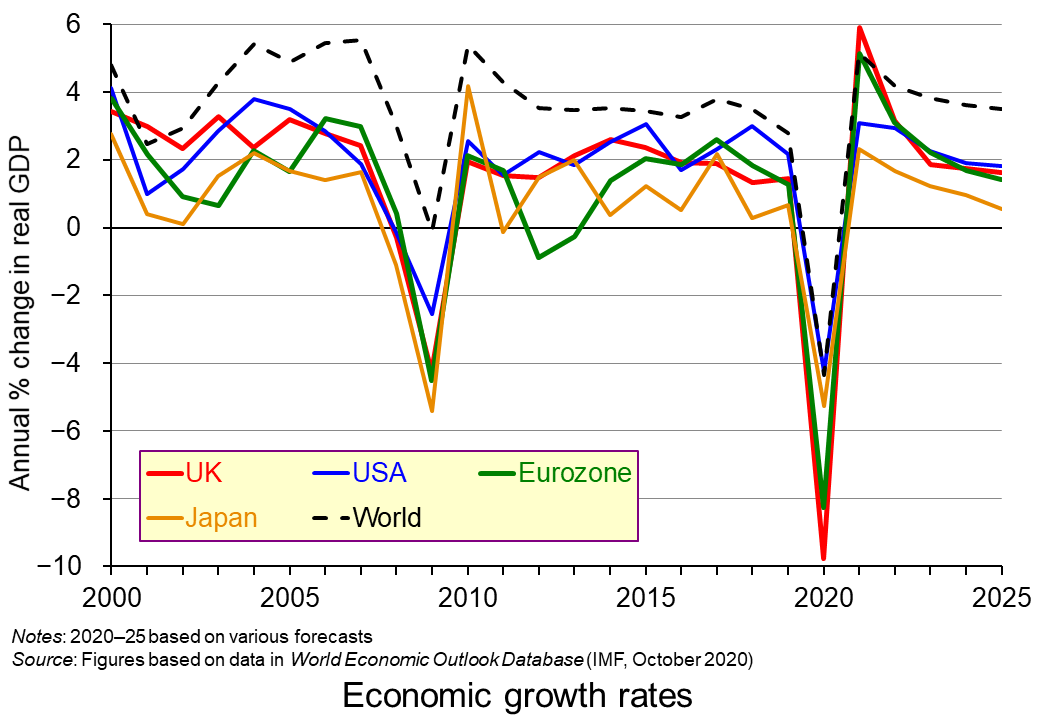 In essence the picture is similar to that painted in April. The IMF predicts a large-scale fall in GDP and rise in unemployment, government borrowing and government debt for 2020 (compared with 2019) across virtually all countries.
World real GDP is predicted to fall by 4.4%. For many countries the fall will be much steeper. In the UK, GDP is predicted to fall by 9.8%; in the eurozone, by 8.3%; in India, by 10.3%; in Italy, by 10.8%; in Spain, by 12.8%. 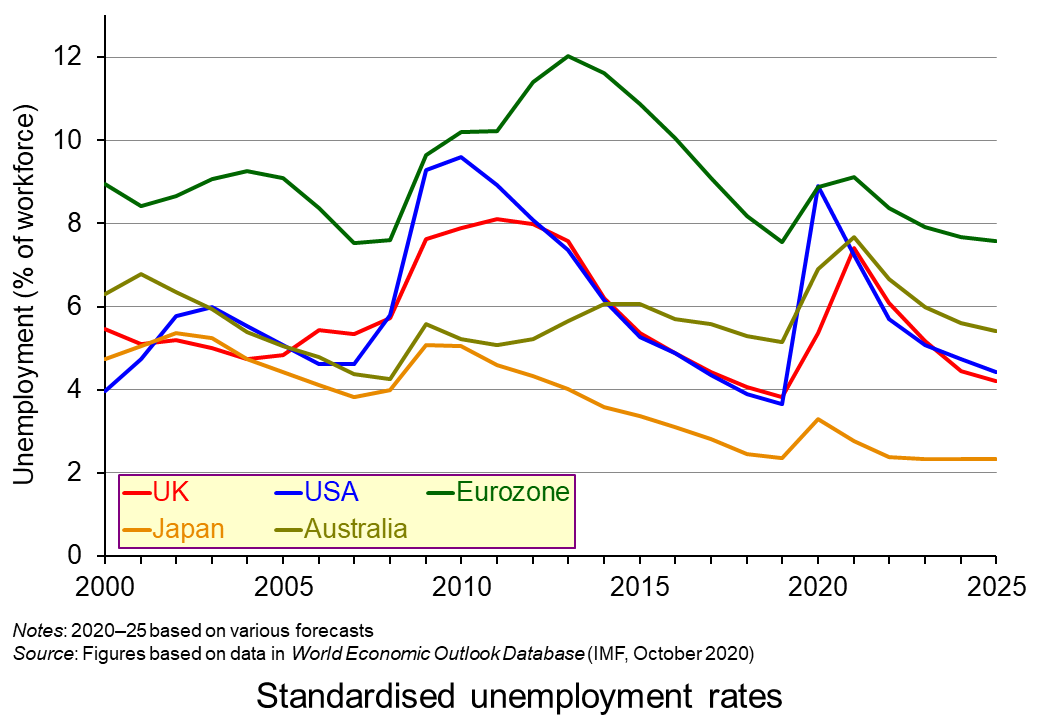 There will then be somewhat of a ‘bounce back’ in GDP in 2021, but not to the levels of 2019. World real GDP is predicted to rise by 5.2% in 2021. (Click here for a PowerPoint of the growth chart.)
Unemployment will peak in some countries in 2020 and in others in 2021 depending on the speed of recovery from recession and the mobility of labour. (Click here for a PowerPoint of the unemployment chart.)
 Inflation is set to fall from already low levels. Several countries are expected to see falling prices.
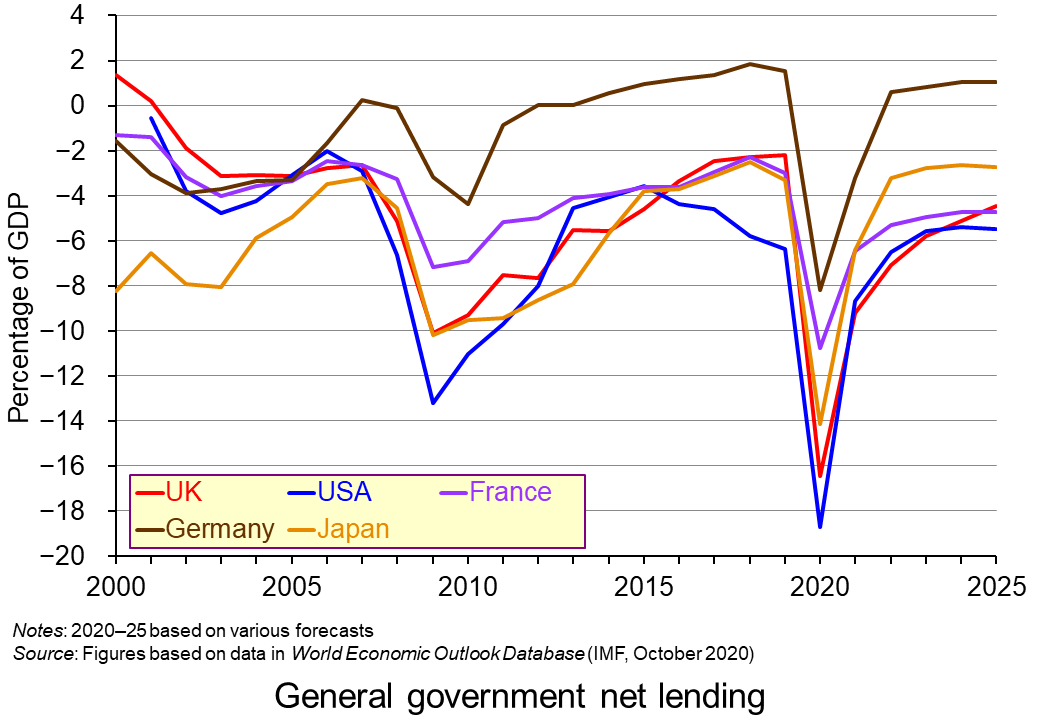
Government deficits (negative net lending) will be sharply higher in 2020 as a result of government measures to support workers and firms affected by lockdowns and falling demand. Governments will also receive reduced tax revenues. (Click here for a PowerPoint of the general government net lending chart.)
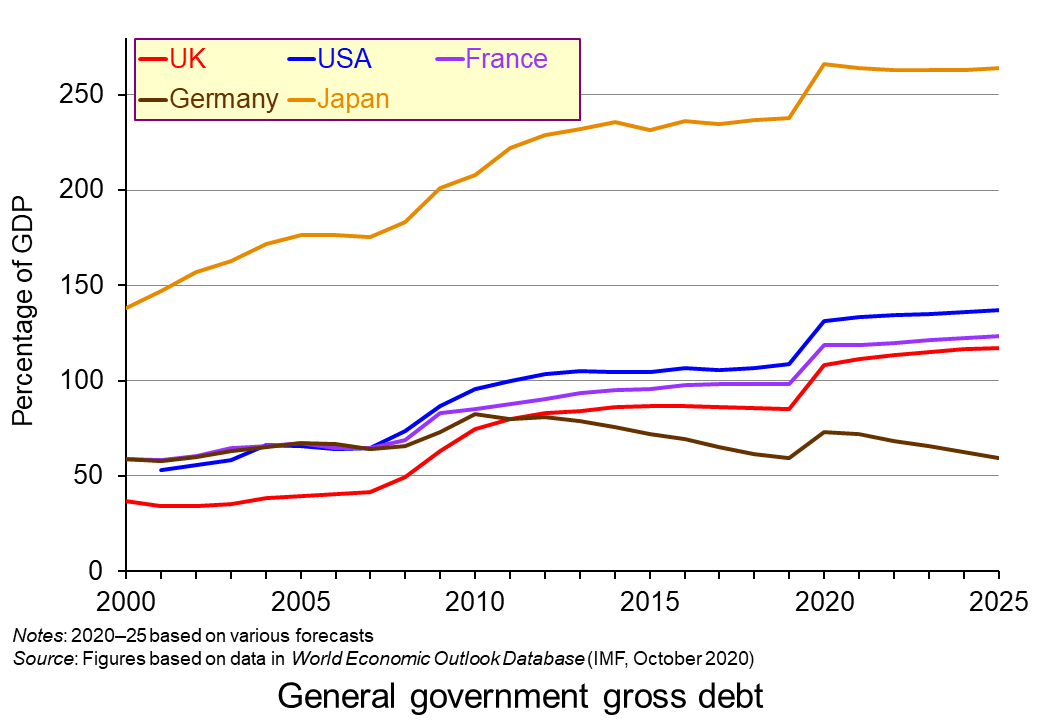 Government debt will consequently rise more rapidly. Deficits are predicted to fall in 2021 as economies recover and hence the rise in debt will slow down or in some cases, such as Germany, even fall. (Click here for a PowerPoint of the general government gross debt chart.)
After the rebound in 2021, global growth is then expected to slow to around 3.5% by 2025. This compares with an average of 3.8% from 2000 to 2019. Growth of advanced economies is expected to slow to 1.7%. It averaged 1.9% from 2000 to 2019. For emerging market and developing countries it is expected to slow to 4.7% from an average of 5.7% from 2000 to 2019. These figures suggest some longer-term scarring effects from the pandemic.
Uncertainties
 In the short term, the greatest uncertainty concerns the extent of the second wave, the measures put in place to contain the spread of the virus and the compensation provided by governments to businesses and workers. The WEO report was prepared when the second wave was only just beginning. It could well be that countries will experience a deeper recession in 2000 and into 2021 than predicted by the IMF.
This is recognised in the forecast.
The persistence of the shock remains uncertain and relates to factors inherently difficult to predict, including the path of the pandemic, the adjustment costs it imposes on the economy, the effectiveness of the economic policy response, and the evolution of financial sentiment.
With some businesses forced to close, others operating at reduced capacity because of social distancing in the workplace and with dampened demand, many countries may find output falling again. The extent will to a large extent depend on the levels of government support.
In the medium term, it is assumed that there will be a vaccine and that economies can begin functioning normally again. However, the report does recognise the long-term scarring effects caused by low levels of investment, deskilling and demotivation of the parts of the workforce, loss of capacity and disruptions to various supply chains.
The deep downturn this year will damage supply potential to varying degrees across economies. The impact will depend on various factors … including the extent of firm closures, exit of discouraged workers from the labour force, and resource mismatches (sectoral, occupational and geographic).
 One of the greatest uncertainties in the medium term concerns the stance of fiscal and monetary policies. Will governments continue to run large deficits to support demand or will they attempt to reduce deficits by raising taxes and/or reducing benefits and/or cutting government current or capital expenditure?
Will central banks continue with large-scale quantitative easing and ultra-low or even negative interest rates? Will they use novel forms of monetary policy, such as directly funding government deficits with new money or providing money directly to citizens through a ‘helicopter’ scheme (see the 2016 blog, New UK monetary policy measures – somewhat short of the kitchen sink)?
Forecasting at the current time is fraught with uncertainty. However, reports such as the WEO are useful in identifying the various factors influencing the economy and how seriously they may impact on variables such as growth, unemployment and government deficits.
Report, speeches and data
- World Economic Outlook, October 2020: A Long and Difficult Ascent
IMF, Report (October 2020)
- World Economic Outlook Databases
IMF (October 2020)
- “We Must Take the Right Actions Now!”—Opening Remarks for Annual Meetings Press Conference
IMF, Speech, Kristalina Georgieva, IMF Managing Director (14/10/20)
- Press Briefing: World Economic Outlook
IMF, Gita Gopinath, Chief Economist and Director of the Research Department, IMF; Gian Maria Milesi-Ferretti, Deputy Director, Research Department, IMF; Malhar Shyam Nabar, Division Chief, Research Department, IMF; Moderator: Raphael Anspach, Senior Communications officer, Communications Department, IMF (13/10/20)
Articles
Questions
- Explain what is meant by ‘scarring effects’. Identify various ways in which the pandemic is likely to affect aggregate supply over the longer term.
- Consider the arguments for and against governments continuing to run large budget deficits over the next few years.
- What are the arguments for and against using ‘helicopter money’ in the current circumstances?
- On purely economic grounds, what are the arguments for imposing much stricter lockdowns when Covid-19 rates are rising rapidly?
- Chose two countries other than the UK, one industrialised and one developing. Consider what policies they are pursuing to achieve an optimal balance between limiting the spread of the virus and protecting the economy.
 The LSE’s Centre for Economic Performance has just published a paper looking at the joint impact of Covid-19 and Brexit on the UK economy. Apart from the short-term shocks, both will have a long-term dampening effect on the UK economy. But they will largely affect different sectors.
Covid-19 has affected, and will continue to affect, direct consumer-facing industries, such as shops, the hospitality and leisure industries, public transport and personal services. Brexit will tend to hit those industries most directly involved in trade with Europe, the UK’s biggest trading partner. These industries include manufacturing, financial services, posts and telecommunications, mining and quarrying, and agriculture and fishing.
Despite the fact that largely different sectors will be hit by these two events, the total effect may be greater than from each individually. One of the main reasons for this is the dampening impact of Covid-19 on globalisation. 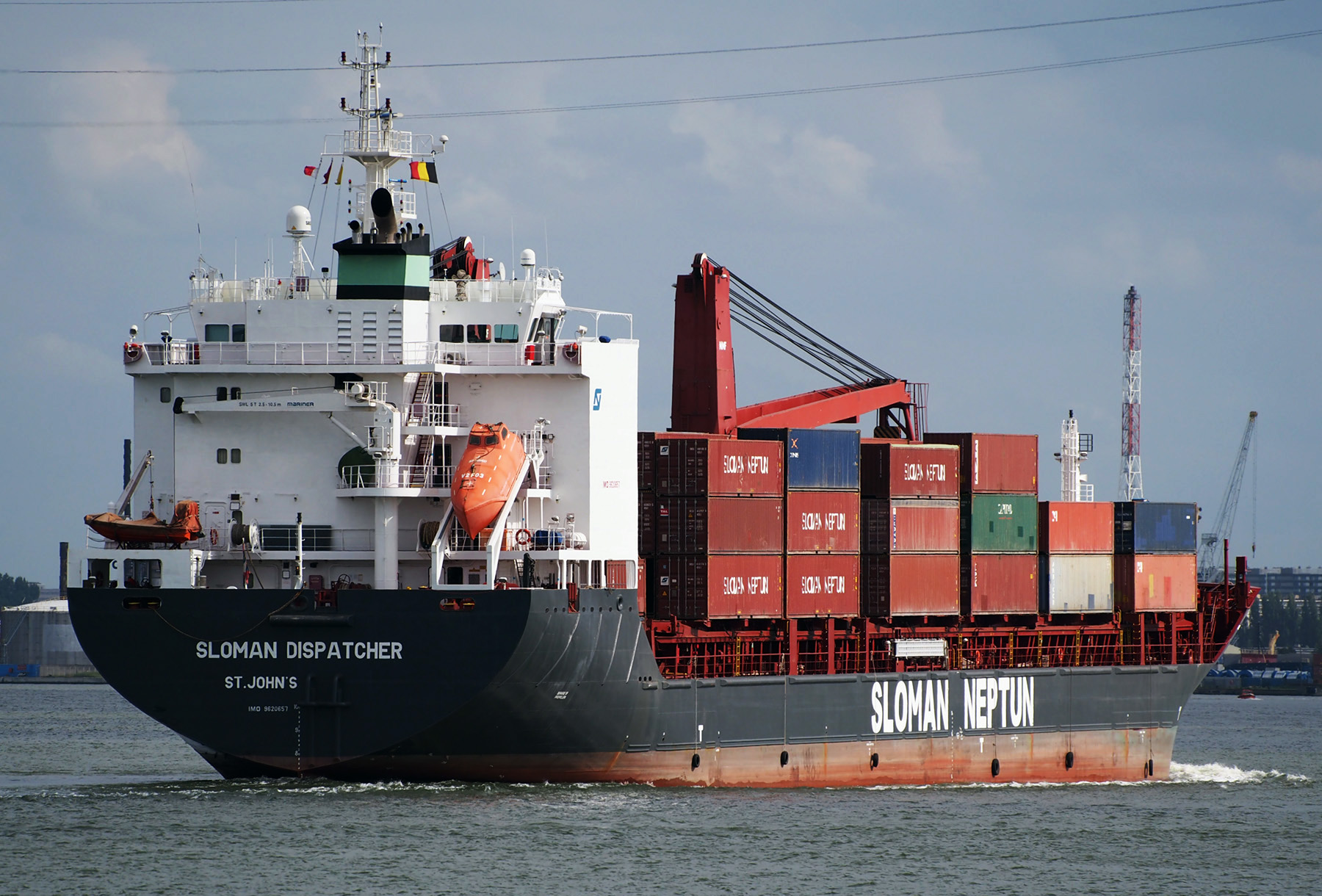 Travel restrictions are likely to remain tighter to more distant countries. And countries are likely to focus on trading within continents or regions rather than the whole world. For the UK, this, other things being equal, would mean an expansion of trade with the EU relative to the rest of the world. But, unless there is a comprehensive free-trade deal with the EU, the UK would not be set to take full advantage of this trend.
Another problem is that the effects of the Covid-19 pandemic have weakened the economy’s ability to cope with further shocks, such as those from Brexit. Depending on the nature (or absence) of a trade deal, Brexit will impose higher burdens on trading companies, including meeting divergent standards and higher administrative costs from greater form filling, inspections and customs delays.
Papers
Articles
Questions
- Referring to the LSE paper, give some examples of industries that are likely to be particularly hard hit by Brexit when the transition period ends? Explain why.
- Why have university finances been particularly badly affected by both Covid-19 and Brexit? Are there any other sectors that have suffered (or will suffer) badly from both events?
- Is there a scenario where globalisation in trade could start to grow again?
- Has Covid-19 affected countries’ comparative advantage in particular products traded with particular countries and, if so, how?
- The authors of the LSE report argue that ‘government policies to stimulate demand, support workers to remain in employment or find new employment, and to support businesses remain essential’. How realistic is it to expect the government to provide additional support to businesses and workers to deal with the shock of Brexit?
 In a little over a decade economies around the world have experienced two ‘once-in-a-lifetime’ shocks. First, there was the global financial crisis of the late 2000s, which saw an unsustainable expansion of banks’ balance sheets that resulted in a global economic slowdown. Now in 2020, a global health emergency has meant unprecedented falls in economic activity. In both cases, the public sector has been the economy’s shock absorber but this has had dramatic effects on its financial wellbeing. We consider here the effect on the UK public finances and reflect on their sustainability in light of the recent Fiscal Sustainability Report published by the Office of Budget Responsibility (OBR).
The COVID-19 pandemic saw the government initiate a range of fiscal interventions to support people and businesses. Interventions directly affecting public-sector spending included a series of employment support measures. These included the Coronavirus Job Retention Scheme, commonly referred to as the furlough scheme, the Self-employed Income Support scheme, a ‘Kickstart Scheme’ of work placements for universal credit recipients aged between 16 and 24 and a ‘Job Retention Bonus’ whereby employers can receive a one-off payment of £1,000 for every furloughed employee continuously employed from the cessation of the Job Retention Scheme on 31 October through to 31 January 2021.
Further spending interventions have included small business grant schemes, such as the Coronavirus Small Business Grant Fund, the coronavirus Retail, Hospitality and Leisure Grant Fund and the Coronavirus Local Authority Discretionary Grants Fund.
Meanwhile, taxation relief measures have included a business rates holiday for retail, hospitality and leisure businesses and a reduced rate of VAT of 5 per cent for hospitality, accommodation and attractions until 12 January 2021.
OBR’s central scenario
The OBR in its Fiscal Stability Report in July 2020 attempts to assess the wellbeing of the public finances not just in the short term but in the medium and longer term too. This longer-term perspective allows it to assess the sustainability of the public finances.
Its analysis is based on some key assumptions, including population growth and future demands on public services, but, understandably, the timing of this report has necessitated some key assumptions around path of the economy, including the extent to which the economy will experience scarring effects, also known as hysteresis effects. While the analysis does not incorporate the Chancellor’s measures announced in its summer statement on the 8 July, including the kickstart scheme, job retention bonus and the reduced rate of VAT, which would have a material effect on this year’s numbers, the OBR concludes that there would be less significant impact on its medium-term analysis.
In what it describes as its ‘central scenario’ the OBR forecasts that national output (real GDP) will fall by 12 per cent in 2020 before growing by 9 per cent in 2021 and 4 per cent in 2022. National output therefore reaches its pre-virus peak at the end of 2022. However, 20 quarters on from the pandemic shock in Q1 2020 output is estimated to be 3.2 per cent less than it would otherwise have been, while the cumulative loss of output is expected to be 6.4 per cent over the period. The cumulative loss of output in the 20 quarters following the financial crisis (Q2 2008) is estimated to have been 9.3 per cent of actual cumulative output.
While national output is expected to be permanently lower because of the pandemic, consistent with hysteresis, the forecast assumes that the longer-term growth rate is unaffected. In other words, there is not expected to be what some now refer to as ‘super hysteresis’, whereby the scarring effects have persistent effects on rates of capital accumulation, innovation and productivity, which therefore depress structural economic growth rates.
Meanwhile, the unemployment rate is expected to peak at 11.9 per cent in the final quarter of this year, before falling to 8.8 per cent in Q4 2021 and 6.3 per cent in Q4 2022. By Q4 2025 the unemployment rate is forecast to be 5.1 per cent, one percentage point higher than the OBR was forecasting at the time of the Budget in March.
Spending and receipts
Chart 1 shows shows the predicted paths of (nominal) public-sector receipts and expenditures as a percentage of (nominal) GDP. Receipts are expected come in at £740 billion this financial year (excluding the impact of the summer statement measures), some £133 billion lower than was forecast at the time of the March budget. This will amount to a 10 per cent fall in receipts in the financial year, driven by a much-shrunken economy. However, the fact that nominal GDP falls somewhat more means that the receipts-to-GDP ratio ticks up slightly. (Click here for a PowerPoint of the chart.)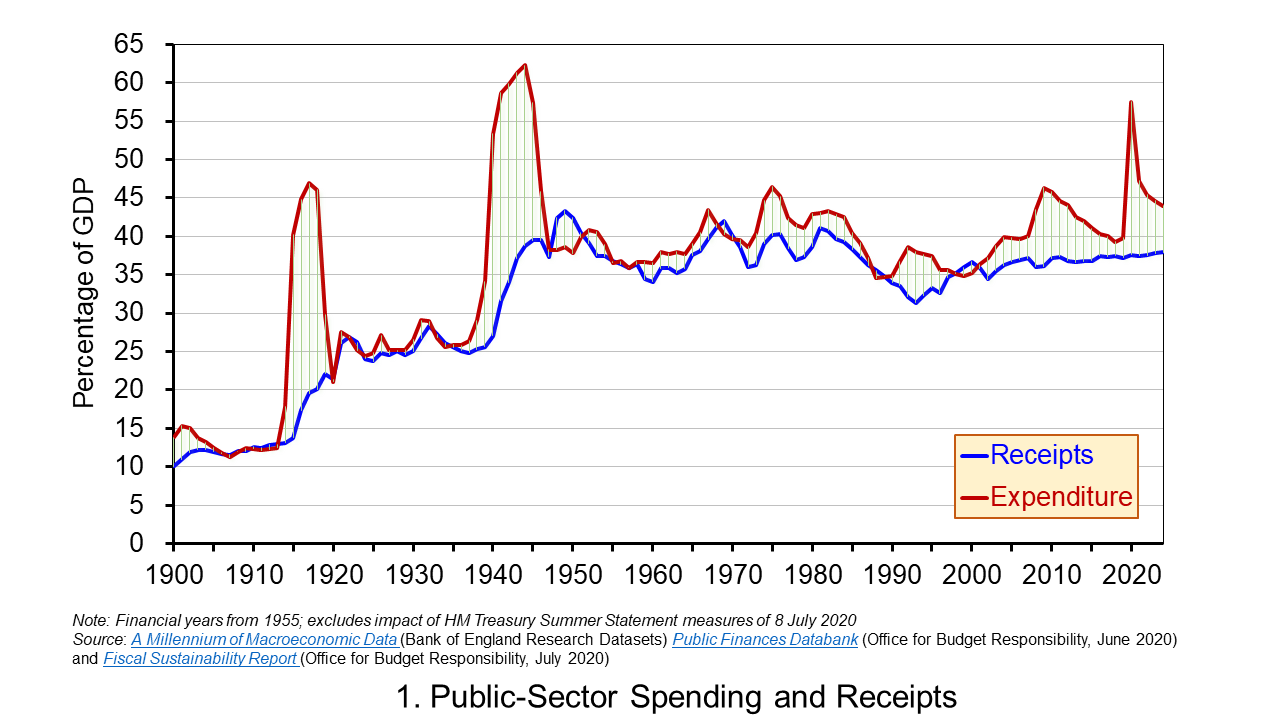
Public-sector spending is expected to be higher in 2020/21 than was forecast in the March by £135 million (excluding the summer statement measures) reflecting the COVID-19 interventions. This would result in spending rising to £1.06 trillion, a 20 per cent rise in the financial year. It would also mean that public-sector spending as a share of GDP rises to 54 per cent – its highest since 1945/46.
Going forward, in cash terms receipts are permanently lower than forecast because GDP is lower, though as a share of GDP cash receipts increase very slightly, but remain below what was expected at the time of the March budget. Spending in cash terms is expected to fall back by close to 8 per cent next financial year before increasing by 3 per cent per year up to 2024/25. This means that the spending-to-GDP ratio falls back to around 43 per cent by 2024/25, a couple of percentage points higher than was forecast back in March.
Deficits and debt
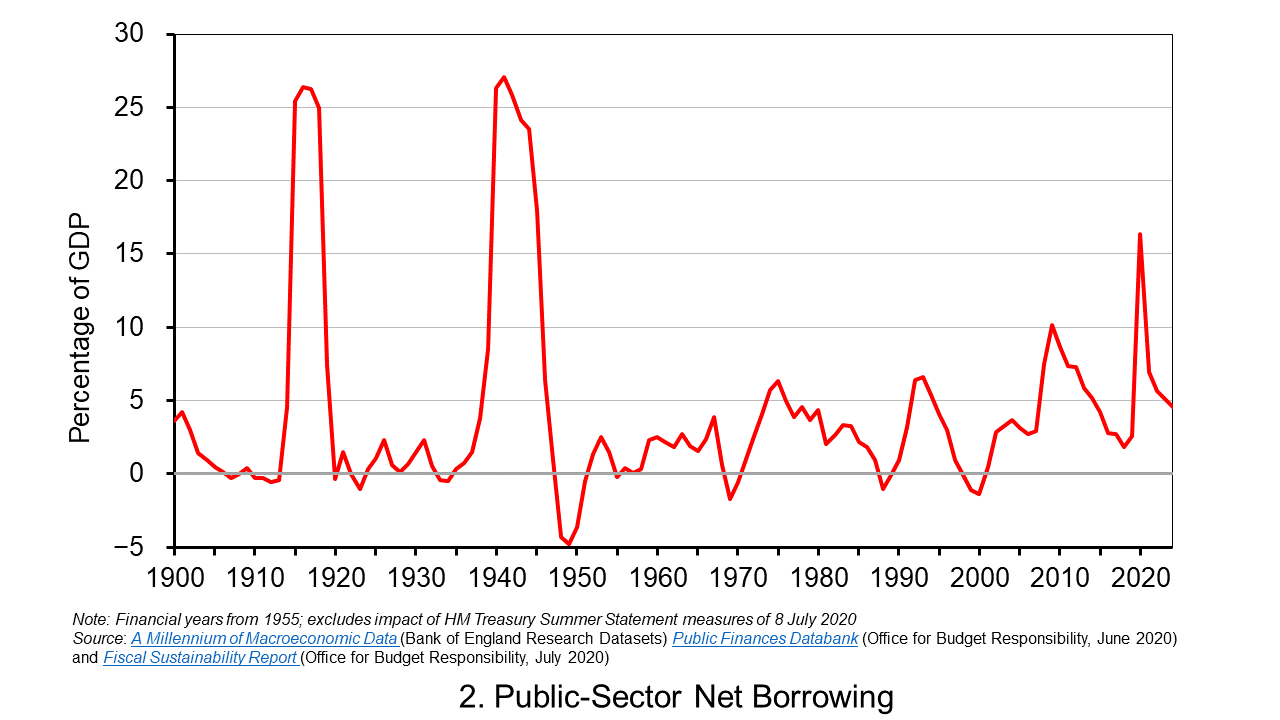
The difference between spending and receipts is known as public-sector net borrowing. While the extent of borrowing can be inferred by inspection of Chart 1, it can be seen more readily in Chart 2 which plots the path of public-sector net borrowing as a share of GDP.
The OBR is now forecasting a budget deficit of £322 billion (excluding the summer statement measures) in 2020/21 compared to £55 billion at the time of the March Budget. This would be equivalent to over 16 per cent of GDP, the highest since the Second World War. In a follow-up presentation on the Fiscal Stability Report on the 14 July the OBR suggested that the inclusion of summer statement measures could mean the deficit being as high as £375 billion, implying a deficit-to-GDP ratio of just shy of 19 per cent. (Click here for a PowerPoint of the chart.)
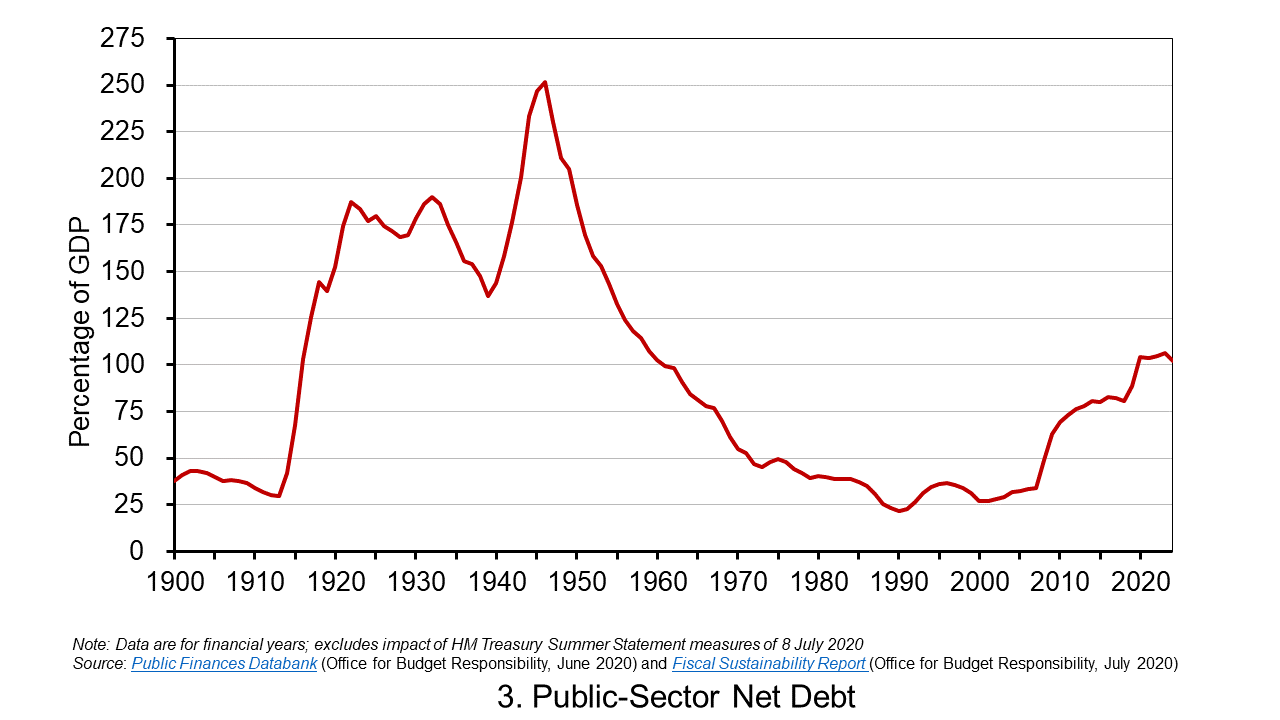
Deficits represent borrowing and are therefore a flow concept. The accumulated deficits over the years (minus any surpluses) gives total debt, which is a stock concept. The public-sector’s net debt is its gross debt less its liquid assets, principally deposits held with financial institutions and holdings of international reserves. This is also affected by Bank of England interventions, such as the Term Funding Scheme which enables banks and building societies to borrow funds at close to Bank Rate for up to four years. Nonetheless, the key driver of net debt-to-GDP ratio going forward is the persistence of deficits.
Chart 3 shows the expected path of the net debt-to-GDP ratio. The OBR expects this to exceed 100 per cent in 2020/21 for the first time since 1960/61. This reflects an increase in cash terms of the stock of net debt to £2.2 trillion, up from £1.8 trillion at the end of 2019/20, as well as a fall in GDP. By 2024/25 the net debt stock is expected to have risen to £2.6 trillion, £600 billion more than expected at the time of the March budget, with the net debt-to-GDP ratio still above 100 per cent at 102.1 per cent. (Click herefor a PowerPoint of the chart.)
Sustainability
The higher debt-to-GDP ratio raises longer-term questions about the sustainability of the public finances. The government is currently reviewing its fiscal rules and is expected to report back in time for the autumn budget. A key question is what debt-stabilising level might be considered appropriate. Is it the 102 per cent that the OBR is predicting at the end of 2024/25 (the medium-term horizon)? Or is it the 75 per cent that was being forecast for this point back in the March budget? This has profound implications for the fiscal arithmetic and, specifically, for the primary balance (the difference between non-interest spending and receipts) that the public sector needs to run.
If the government accepts a higher debt-to-GDP ratio as a ‘new norm’ that eases the fiscal arithmetic somewhat. However, some economists would be concerned about the economic consequences of larger public-sector debts, most notably so-called potential crowding-out effects on private-sector investment if upward pressure on interest rates was to materialise (see the news item MMT – a Magic Money Tree or Modern Monetary Theory?).
Even if the higher stabilising debt level was deemed appropriate, the OBR’s report analysis suggests problems in the government meeting this because it could still be running a primary deficit of 3.7 per cent of GDP by 2024/25. Therefore, even with interest rates expected to be lower than economic growth rates in 2024/25 (a negative growth-corrected interest rate) that enable governments to run primary deficits and yet maintain debt-to-GDP ratios, the debt-stabilising primary deficit for 2024/25 is estimated at only 3.2 per cent. All in all, this points to difficult fiscal choices ahead.
Articles
Questions
- What do you understand by the term financial wellbeing? What might this mean in respect of the government?
- What is meant by the fiscal arithmetic of government debt? Explain the factors that determine the fiscal arithmetic and the path of government debt?
- What is the difference between an increase in the size of a government deficit and an increase in the stock of government debt?
- Discuss the economic argument that, following the COVID-19 pandemic, government should avoid a return to an agenda of fiscal austerity ?
- What is the difference between the budget deficit, the primary deficit and the structural deficit?
- What are hysteresis effects? Discuss their relevancy in the design of the UK’s COVID-19 interventions.