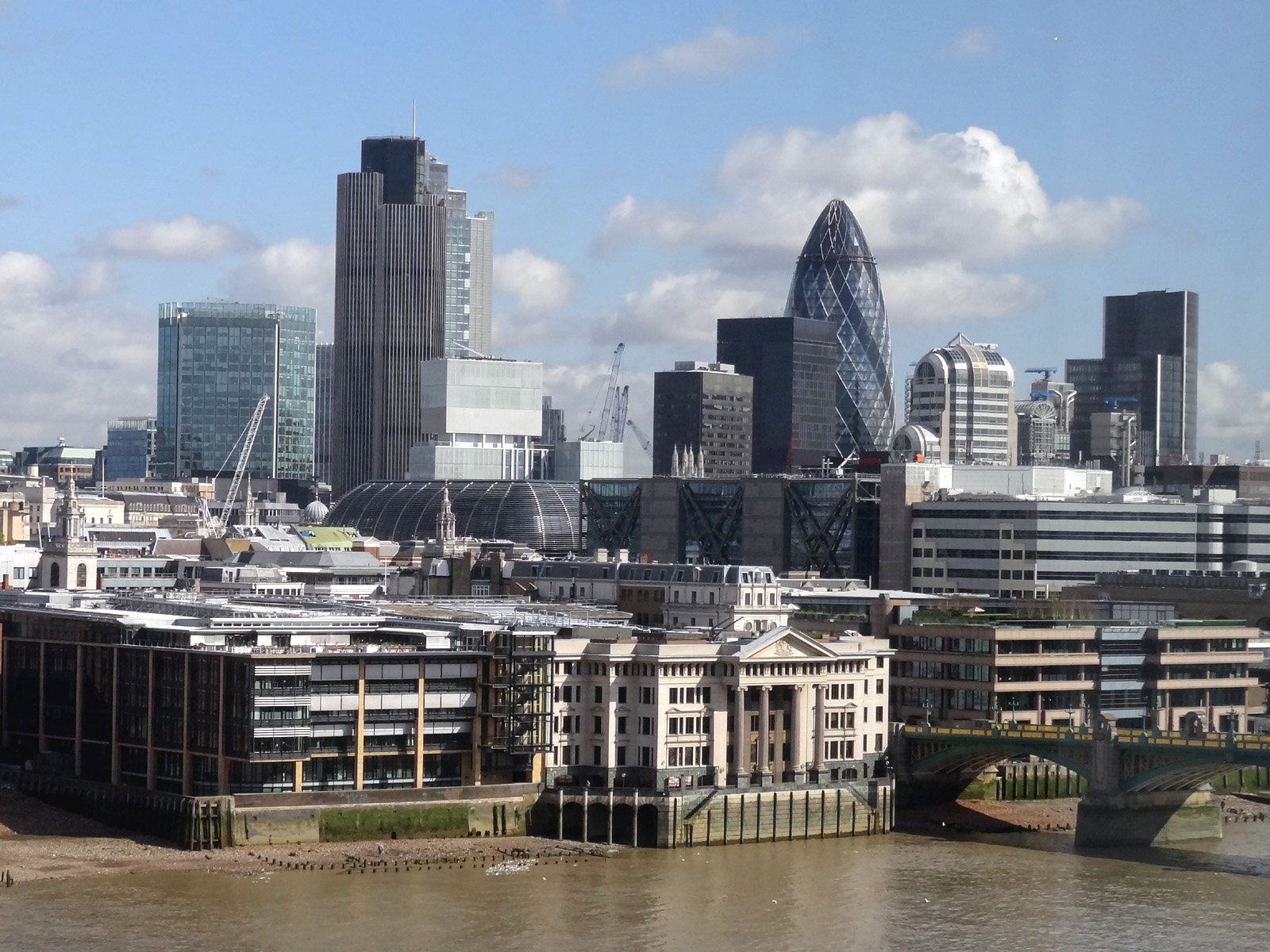
 With the financial crisis came accusations towards the banking sector that they had taken on too many bad risks. Banks were lending money on more and more risky ventures and this in part led to the credit crunch. Since then, bank lending has fallen and banks have been less and less willing to take on risky investments.
Small businesses tend to fall (rightly or wrongly) into the category of high risk and it is this sector in particular that is finding itself struggling to make much needed investments. All businesses require loans for investments and improvements and if the banking sector is unable or unwilling to lend then these improvements cannot take place.
Quantitative easing has been a key response across the world to the credit crisis to encourage banks to begin lending to each other and to customers. A new government backed scheme worth £20bn aims to increase bank lending to small and medium sized enterprises (SMEs). By guaranteeing £20bn of the participating banks’ own borrowing, lenders will be able to borrow more cheaply than normal. As the banks (so far including Barclays, Santander, RBS and Lloyds Banking Group) can borrow at a cheaper rate, they will therefore be able to pass this on to the businesses they lend to. Under this National Loan Guarantee Scheme (NLGS), businesses will be able to borrow at interests rates that are 1 percentage point lower than those outside the scheme. £5bn will initially be made available with subsequent installments each of £5bn to come later.
With the Budget looming, the Chancellor is keen to show that the government is delivering on its promise to give smaller businesses access to finance at lower interest rates. If this initiative does indeed stimulate higher lending, it may be a much needed boost for the economy’s faltering economic growth. Criticisms have been leveled at the scheme, saying that although it is a step in the right direction, it can by no means be assumed that it will be sufficient to solve all the problems. In particular, the NLGS is unlikely to provide much help for those small businesses that can’t get finance in the first place, irrespective of the cost of the borrowing. Furthermore some banks, notably HSBC, have chosen not to participate in the scheme, due to it not being commercially viable. The overall effect of this scheme will take some time be seen, but if it is effective, it could give the economy and the small business sector a much needed boost.
Banks to join credit-easing scheme Associated Press (20/3/12)
Credit easing: small businesses to get £20bn of guaranteed cheap loans Telegraph, Harry Wilson (20/3/12)
Bank lending scheme targets small businesses BBC News (20/3/12)
Move over Merlin, credit easing has arrived Independent, Ben Chu (20/3/12)
Credit easing injects £20bn into small firms Sky News (20/3/12)
UK launches small firm loan scheme, critics want more Reuters, Fiona Shaikh (20/3/12)
Osborne’s big plan: £20bn for small businesses Independent, Andrew Grice and Ben Chu (20/3/12)
George Osborne launches new scheme to boost lending to businesses Guardian, Larry Elliott (20/3/12)
Questions
- What is credit easing? Has the government’s previous credit easing had the intended effect?
- Why are small and medium sized enterprises normally seen as risky investments?
- Briefly explain the thinking behind this National Loan Guarantee Scheme.
- What are the criticisms currently levelled at this scheme? To what extent are they justified?
- Why has HSBC said that the scheme is not commercially viable for the bank?
- Explain why this scheme could provide a stimulus to the UK economy.
 Since Labour’s historic pledge to eliminate child poverty in a generation, poverty data has been at the forefront of political debates. The recession has created unemployment and has moved more people below the poverty line, at the same time as causing rising inequality
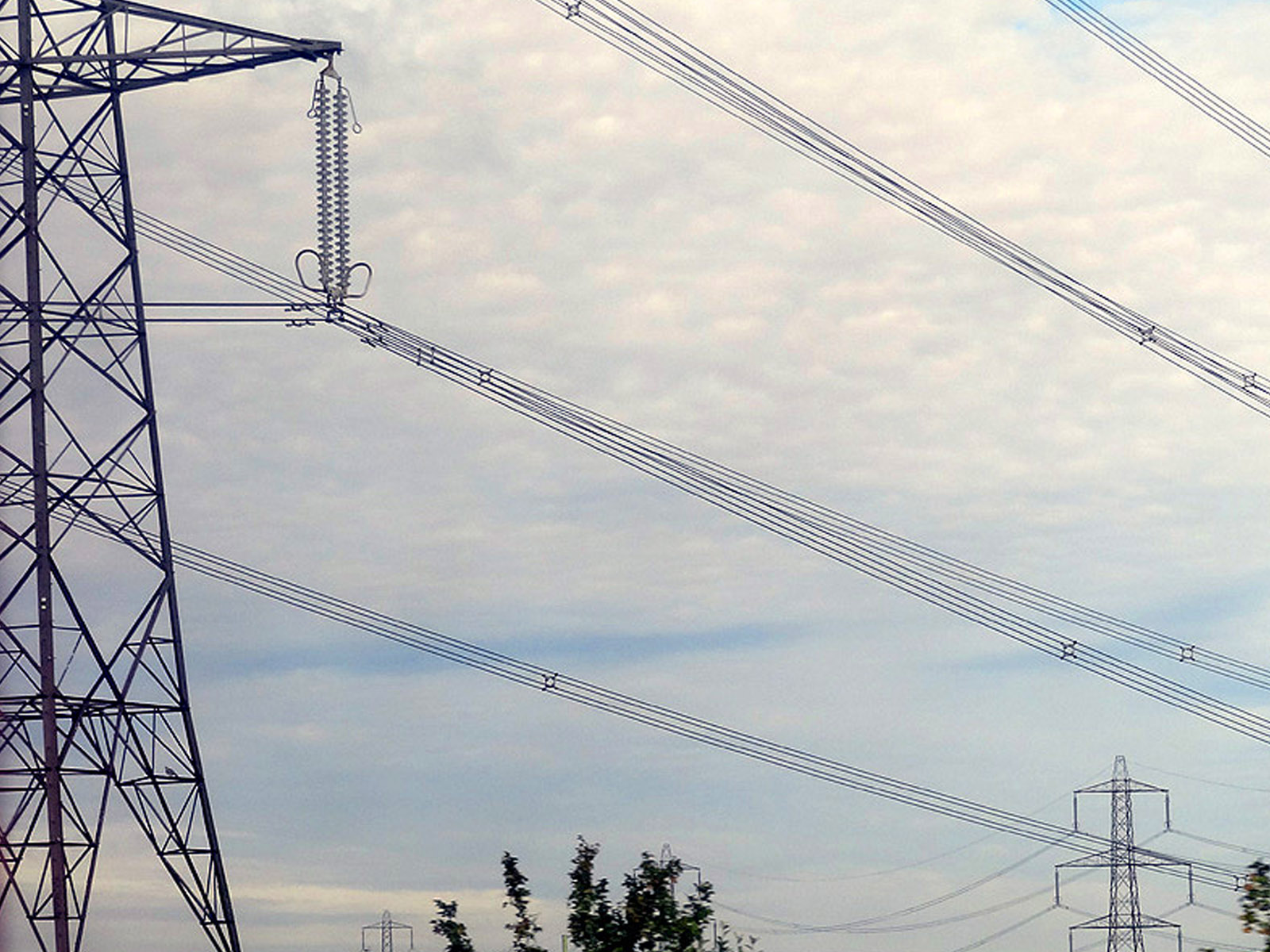
The causes of poverty are diverse and a recent government commissioned report has drawn attention to just one of the key factors that is pushing more families into poverty – energy bills.
Fuel poverty has become more of a concern with the cost of household bills rising and this has led to calls for more money to be invested in cutting energy bills. Fuel poverty has been redefined by Professor John Hills, the author of the report, to focus on those households with a low income and also with relatively high energy bills.
Fuel poverty is undoubtedly concerning from a moral point of view – indeed, knowing that some families are unable to afford to heat their homes causes disutility for others. However, there are also wider economic implications. If families are unable to provide heating, this may adversely affect their children’s ability to learn and complete their homework, thus negatively affecting their productivity today and arguable causing further problems in their future. While this may have little effect today, the cumulative effect on economic productivity could be substantial in the long run. Inefficiency for the macroeconomy is therefore a problem, as a child’s productive potential will not be fully realized. Furthermore, there are also health concerns, as the government notes – fuel poverty is linked to 2,700 deaths per year. Again, this creates a blight on society, but it also poses economic problems, not least due to the strain on the NHS.
Fuel poverty has long been identified as a problem that needs addressing and as the Secretary of State for Energy and Climate Change said:
‘Fuel poverty is a serious national problem and this government remains committed to doing all it can to tackle it and make sure that the help available reaches those who need it most.’
Action is already taking place to insulate the poorest homes, as a means of cutting their energy bills and the government’s ‘Warm Homes Discount’ aims to provide help to the lowest income households in paying their bills. However, there are concerns that more households will move into fuel poverty, as this new definition doesn’t include those slightly wealthier households who still have high bills or the poorer households with relatively low bills. With the economy still in a vulnerable state, the latest data showing further rises in unemployment and household bills becoming increasingly expensive, the issue of fuel poverty is unlikely to disappear any time soon. The following articles consider this issue.
Fuel poverty seen for 3 million households by 2016 Reuters (16/3/12)
Fuel poverty to rise to 8.5m, report warns (including video) BBC News, Damian Kahya (15/3/12)
Nine million will live in ‘fuel poverty’ in the next four years Independent, Simon Read (16/3/12)
Fuel poverty to rise sharply Telegraph, James Hall (16/3/12)
Call for urgent action on fuel poverty Financial Times, Sarah Neville (15/3/12)
Fuel poverty worse than estimated The Press Association (15/3/12)
3 million fuel-poor households by 2016, report claims Guardian, Mark King and Zammy Fairhurst (15/3/12)
Questions
- What are the causes of poverty?
- How has the definition of fuel poverty changed? Is the change a good one? Think about the equity and efficiency of such a change.
- The BBC News article says that government measures to alleviate fuel poverty could be regressive. What is meant by this and why could this be the case?
- What are the economic consequences of fuel poverty?
- We can estimate poverty by looking at the poverty headcount or the poverty gap. What is the difference between these two measures? Which one is a more accurate measure of poverty?
- Are there any other actions that you think would be effective in alleviating fuel poverty? Would they be cost effective?
- Why does Age UK fear ‘the current proposals to improve energy efficiency through the Green Deal and energy obligation schemes are a woefully inadequate response to one of the most serious issues facing our country today’?
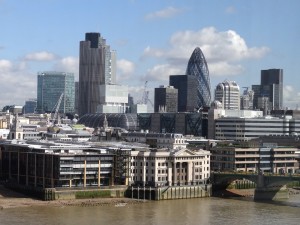 A negative outlook for the UK economy – at least that’s what Moody’s believes. The credit rating agency has put the UK economy’s sovereign credit rating, together with 2 other European nations (France and Austria) on the ‘negative outlook’ list.
The UK currently has a triple A rating and we have been able to maintain this despite the credit crunch and subsequent recession. However, with weak economic data and the continuing crisis in the eurozone, Moody’s took the decision to give the UK a ‘negative outlook’, which means the UK, as well as France and Austria have about a 30% chance of losing their triple A rating in the next 18 months.
Both Labour and the Coalition government have claimed this decision supports their view of the economy. Labour says this decision shows that the economy needs a stimulus and the Coalition should change its stance on cutting the budget deficit. However, the Coalition says that it shows the importance the Credit ratings agencies attach to budget deficits. Indeed, Moody’s statement showed no signs that it feels the UK should ease up on its austerity measures. The statement suggested the reverse – that a downgrade would only occur if the outlook worsened or if the government eased up on its cuts. The Coalition’s focus on cutting the deficit could even be something that has prevented the UK being put on the ‘negative watch’ list, as opposed to the ‘negative outlook’ list. The former is definitely worse than the latter, as it implies a 50% chance of a downgrade, rather than the current 30%.
The triple A rating doesn’t guarantee market confidence, but it does help keep the cost of borrowing for the government low. Indeed, the UK government’s cost of borrowing is at an historic low. A key problem therefore for the government is that there is a certain trade-off that it faces. Moody’s says that 2 things would make the UK lose its rating – a worsening economic outlook or if the government eases on its austerity plans. However, many would argue that it is the austerity plans that are creating the bad economic outlook. If the cuts stop, the economy may respond positively, but the deficit would worsen, potentially leading to a downgrade. On the other hand, if the austerity plans continue and the economy fails to improve, a downgrade could also occur. The next few days will be crucial in determining how the markets react to this news. The following articles consider this issue.
The meaning of ‘negative’ for Mr Osborne and the UK BBC News, Stephanomics, Stephanie Flanders (14/2/12)
Relaxed markets remain one step ahead of Moody’s move The Telegraph, Philip Aldrick (14/2/12)
George Osborne tries to be positive on negative outlook for economy Guardian, Patrick Wintour (14/2/12)
Moody’s wants it may cut AAA-rating for UK and France Reuters, Rodrigo Campos and Walter Brandimarte (14/2/12)
Moody’s rating decision backs the Coalition’s path of fiscal consolidation The Telegraph, Damian Reece (14/2/12)
Moody’s rating agency places UK on negative outlook BBC News (14/2/12)
Britain defends austerity measures New York Times, Julia Werdigier 14/2/12)
Questions
- What does a triple A rating mean for the UK economy?
- Which factors will be considered when a ratings agency decides to change a country’s credit rating? What similarities exist between the UK, France and Austria?
- Which political view point do you think Moody’s decision backs? Do you agree with the Telegraph article that ‘Moody’s rating decision backs the Coalition’s path of fiscal consolidation’?
- If a country does see its credit rating downgraded, what might this mean for government borrowing costs? Explain why this might cause further problems for a country?
- How do you think markets will react to this news? Explain your answer.
- What action should the government take: continue to cut the deficit or focus on the economic outlook?
- Why has the eurozone crisis affected the UK’s credit rating?
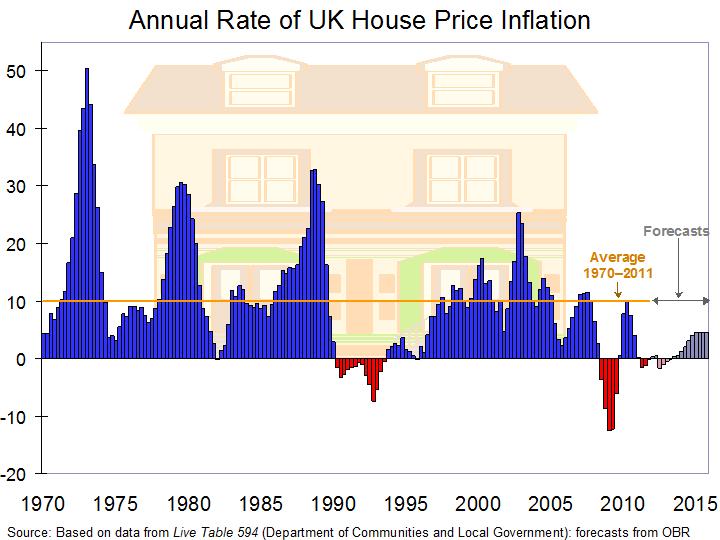 The housing market has long been seen as a crucial element in stimulating the British economy. For this reason various incentives had been introduced to encourage people to buy properties. (Click here for a PowerPoint of the chart.)
One such strategy was the stamp duty holiday. Stamp Duty Land Tax is paid by the purchaser of a property against a purchase price and the cost of it will rise through each price band. The stamp duty holiday meant that first-time buyers were free from the 1% stamp duty on homes that cost under £250,000. However, this holiday is due to end from March 2012, as according to the government, the holiday has been ineffective. Indeed, in the Autumn statement documents, the government said:
‘The government is publishing analysis showing that the stamp duty land tax relief for first-time buyers has been ineffective in increasing the number of first time buyers entering the market.’
The government has said that instead it will focus on other strategies that provide better value for money. Such schemes include a mortgage guarantee scheme and the FirstBuy scheme launched last year, both of which aim to help those struggling to finance the purchase of their first properties.
According to the Land Registry, property prices have fallen by over 1% over the past year, so fewer properties will face the stamp duty land tax, but this data does little to instill confidence in the housing market being the stimulus that the economy needs. By stimulating the housing market, construction jobs should be created and this in turn should create a much needed multiplier effect helping to boost other sectors within the economy. The following articles consider this latest development.
Stamp duty rush boosts January valuations Mortgage Strategy, Tessa Norman (11/2/12)
New deals for buyers as stamp duty holiday ends BBC News, Susannah Streeter (11/2/12)
Autumn Statement: Stamp duty concession to end BBC News (29/11/11)
First-time buyers boost mortgage market activity FT Adviser, Michael Trudeau (9/2/12)
When shared ownership turns sour Guardian, Rupert Jones (10/2/12)
Questions
- Why does the housing market play such a crucial role in the economy?
- What is the multiplier effect? How will new jobs in the construction industry help other sectors in the economy?
- Why has the stamp duty holiday been ‘ineffective’ in stimulating the housing market?
- How have the other schemes introduced by the government created incentives in the housing market?
- Why have January valuations improved? Use a demand and supply diagram to illustrate your explanation.
 Germany is the world’s fourth largest economy and Europe’s largest. Part of its strength has come from its exports, which last year increased by 11.4% to $1.3 trillion – the first time it had ever exceed the $1 trillion mark. Germany, however, is by no means the country with the largest export sector – that mantle was taken from them by China, whose exports rose 20.3% last year to reach $1.9 trillion.
At the same time as exports have been rising from Germany, imports have also increased, showing a recovery in domestic demand as well. Despite this, Germany’s foreign trade surplus increased slightly to €158.1 billion (from €154.9 billion).
However, in the last month of 2011, its export growth did slow – the fastest drop in nearly 3 years – and that is expected to signal the trend for 2012. As the eurozone debt crisis continues to cause problems, German exports have been forecast to grow by only 2% this year, with economic growth expected to be as low as 0.7%. This is a marked change from last year, where the Germany economy grew by some 3%. Help for the eurozone is unlikely to come form Europe’s second largest economy, France, where growth in the first 3 months of 2012 is expected to be zero and figures have shown a widening trade deficit, with issues of competitiveness at the forefront. The following articles look at Germany’s prowess in the export market and the likely developments over the coming year.
German exports drop is steepest in nearly 3 years Reuters (8/2/12)
German exports set record of a trillion euros in 2011 BBC News (8/2/12)
German exports broke euro1 trillion mark in 2011 The Associated Press (8/2/12)
Surprise drop in German industrial output Telegraph, Angela Monaghan (7/2/12)
French trade deficit hits high, competitiveness at issue Reuters (7/2/12)
French trade deficit casts shadow on campaign Financial Times, Hugh Carnegy (7/2/12)
German exports fall at fastest rate in three years, sparks fears over Europe’s bulwark economy Telegraph, Louise Armitstead (8/2/12)
Questions
- What is meant by a trade surplus?
- Briefly examine some of the factors that may have contributed to Germany’s rising exports throughout 2011.
- How has the eurozone debt crisis impacted the Germany economy and in particular the export sector?
- The articles that look at France refer to a growing trade deficit, with competitiveness being a key issue. What is meant by competitiveness and why is the French economy suffering from a lack of it?
- Does France’s membership of a single currency reduce its ability to tackle its competitiveness issues?
- Why is German growth expected to remain sluggish throughout 2012? Given that Germany is a member of the eurozone, what government policies are open to the government to boost economic growth?
- China has overtaken Germany as the largest exporter, with growth of 20.3% in 2011. What factors have allowed Chinese exports to grow so quickly?
 With the financial crisis came accusations towards the banking sector that they had taken on too many bad risks. Banks were lending money on more and more risky ventures and this in part led to the credit crunch. Since then, bank lending has fallen and banks have been less and less willing to take on risky investments.