 Sales during the weeks leading up to Christmas often make a significant contribution to retailers’ profits. For many consumers, it is a time to spend money on food, presents and decorations and this often means increased borrowing.
Data indicate that borrowing by consumers in the lead-up to Christmas increased by the biggest amount for almost 8 years: a figure of £1.5 billion. As a result, there were likely to have been many happy families at Christmas, with lots of gifts being exchanged. But what does this mean for the New Year? There are concerns about the increase we will see in consumer debt throughout 2016 and the number of borrowers who will, perhaps, be unable to repay their debts.
Could this significant increase in borrowing be a signal that we haven’t learnt from our past? This article from BBC News considers the borrowing data and their implications.
Borrowing jumped ahead of Christmas, Bank of England says BBC News, Brian Milligan (4/01/16)
Questions
- Is borrowing good or bad for the economy? Explain your answer.
- If borrowing is good for the economy, why are there concerns about the current level of borrowing?
- How will this higher level of borrowing affect aggregate demand? Use an AD/AS diagram to explain the impact this will have.
- Could this higher level of borrowing affect unemployment and inflation? In what ways?
- If interest rates had been higher, do you think the level of consumer borrowing would have been lower?
 As we saw in the blog post Down down deeper and down, or a new Status Quo?, for many countries there is now a negative rate of interest on bank deposits in the central bank. In other words, banks are being charged to keep liquidity in central banks. Indeed, in some countries the central bank even provides liquidity to banks at negative rates. In other words, banks are paid to borrow!
But, by definition, holding cash (in a safe or under the mattress) pays a zero interest rate. So why would people save in a bank at negative interest rates if they could get a zero rate simply by holding cash? And why would banks not borrow money from the central bank, if borrowing rates are negative, hold it as cash and earn the interest from the central bank?
 These questions are addressed in the article below from The Economist. It argues that to swap reserves for cash is costly to banks and that this cost is likely to exceed the interest they have to pay. In other words, there is not a zero bound to central bank interest rates, either for deposits or for the provision of liquidity; and this reflects rational behaviour.
But does the same apply to individuals? Would it not be rational for banks to charge customers to deposit money (a negative interest rate)? Indeed, there is already a form of negative interest rate on many current accounts; i.e. the monthly or annual charge to keep the account open. But would it also make sense for banks to offer negative interest rates on loans? In other words, would it ever make sense for banks to pay people to borrow?
Read the folowing article and then try answering the questions.
Article
Bankers v mattresses The Economist (28/11.15)
Central bank repo rates/base rates
Central banks – summary of current interest rates global-rates.com
Worldwide Central Bank Rates CentralBankRates
Questions
- What is a central bank’s ‘repo rate’. Is it the same as (a) its overnight lending rate; (b) its discount rate?
- Why are the Swedish and Swiss central banks charging negative interest rates when lending money to banks?
- What effect are such negative rates likely to have on (a) banks’ cash holdings; (b) banks’ lending to customers?
- Why are many central banks (including the ECB) charging banks to deposit money with them? Why do banks continue to make such deposits when interest rates are negative?
- Would banks ever lend to customers at negative rates of interest? Explain why or why not.
- Would banks ever offer negative rates of interest on savings accounts? Explain why or why not.
- How do expectations about exchange rate movements affect banks willingness to hold deposits with the central bank?
- What are the arguments for and against abolishing cash altogether?
 The Federal Reserve chair, Janet Yellen, has been giving strong signals recently that the US central bank will probably raise interest rates at its December 16 meeting or, if not then, early in 2016. ‘Ongoing gains in the labor market’ she said, ‘coupled with my judgement that longer-term inflation expectations remain reasonably well anchored, serve to bolster my confidence in a return of inflation to 2%.’ This, as for many other central banks, is the target rate of inflation.
In anticipation of a rise in US interest rates, the dollar has been appreciating. Its (nominal) exchange rate index has risen by 24% since April 2014 (see chart below).
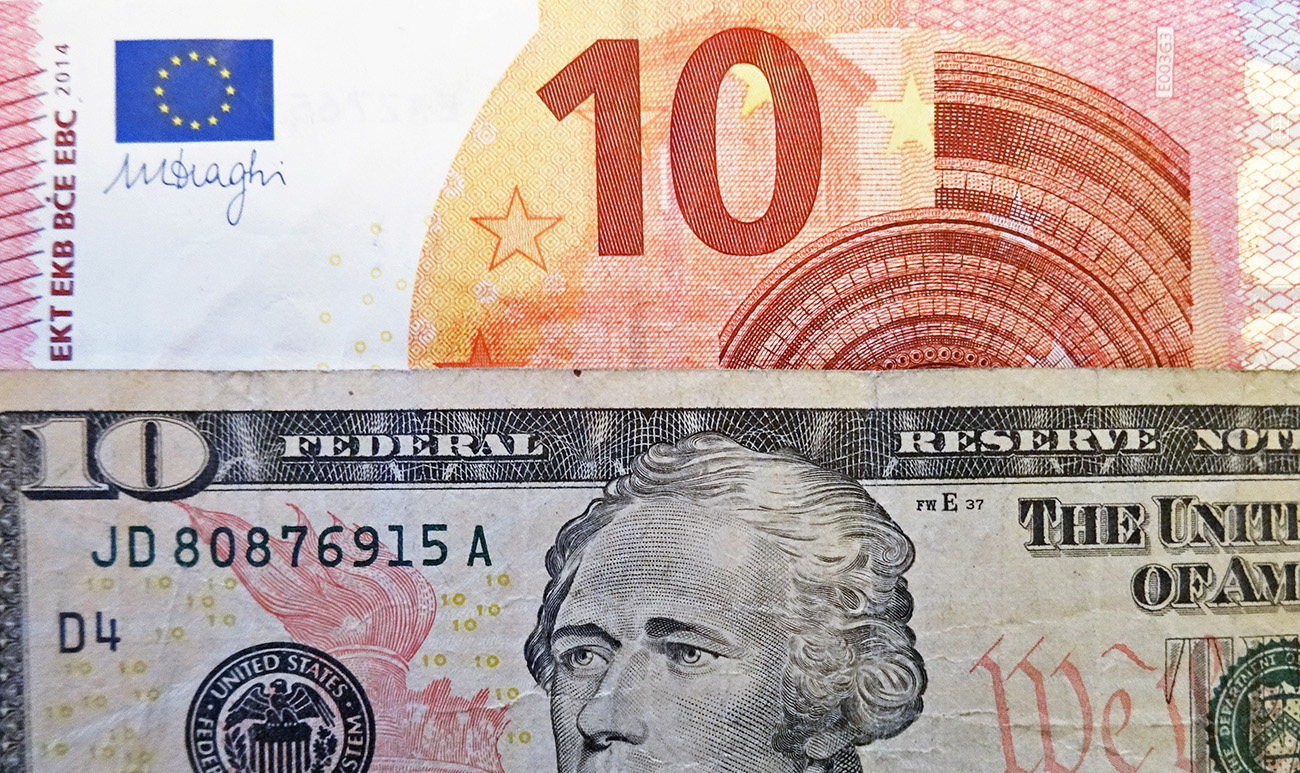
In the light of the sluggish eurozone economy, the ECB president, Mario Draghi, has been taking a very different stance. He has indicated that he stands ready to cut interest rates further and increase quantitative easing.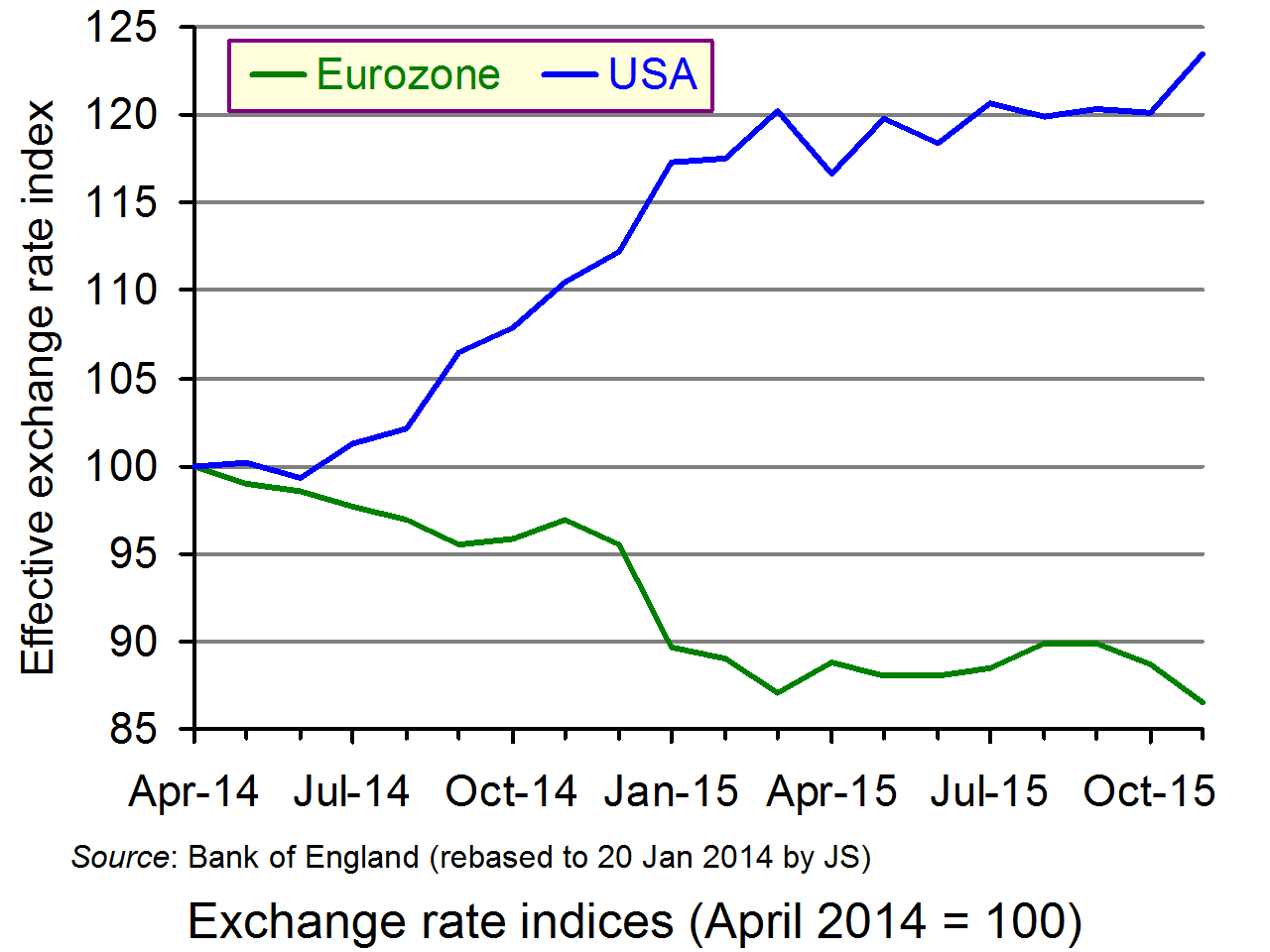 At the meeting on 3 December, the ECB did just that. It announced a further cut in the deposit rate, from –0.2 to –0.3 and an extension of the €60 billion per month QE programme from September 2016 to March 2017 (bringing the total by that time to €1.5 trillion – up from €1.1 trillion by September 2016).
Stock market investors had been expecting more, including an increase in the level of monthly asset purchases above €60 billion. Consequently stock markets fell. Both the German DAX and the French CAC 40 stock market indices fell by 3.6%. The euro also appreciated against the dollar by 2.7% on the day of the announcement. Nevertheless, since April 2014, the euro exchange rate index has fallen by 13%. Against the US dollar, the euro has depreciated by a massive 31%.
So what will be the consequences of the very different monetary policies being pursued by the Fed and the ECB? Are they simply the desirable responses to a lack of convergence of the economic performance of the US and eurozone economies? In other words, will they help to bring greater convergence between the two economies?
Or will the desirable effects of convergence be offset by other undesirable effects for the USA and the eurozone and also for the rest of the world?
|
|
| • |
Will huge amounts of dollar-denominated debt held by many emerging economies make it harder to service these debts with an appreciating dollar? |
| • |
How much will US exporters suffer from the dollar’s rise and what will the US authorities do about it? |
| • |
Will currency volatility lead to currency wars and, if so, what will be their economic effects? |
| • |
Will the time lags involved in the effects of the continuing programme of QE in the eurozone eventually lead to overheating? Already euro money supply is rising, on both narrow and broad measures. |
The following articles address these issues.
Articles
The Fed and the ECB: when monetary policy diverges The Guardian, Mohamed El-Erian (2/12/15)
European stocks slide after ECB dashes hopes of major QE expansion The Guardian, Heather Stewart and Graeme Wearden (3/12/15)
Mario Draghi riles Germany with QE overkill The Telegraph, Ambrose Evans-Pritchard (3/12/15)
How the eurozone missed its shot at a recovery The Telegraph, Peter Spence (3/12/15)
Yellen Signals Economy Nearly Ready for First Interest-Rate Hike Bloomberg, Christopher Condon (3/12/15)
Exchange rate data
Effective exchange rate indices Bank for International Settlements
Exchange rates Bank of England
Questions
- What would be the beneficial effects to the US and eurozone economies of their respective monetary policies?
- Explain the exchange rate movements that have taken place between the euro and the dollar over the past 19 months. How do these relate to the various parts of the balance of payments accounts of the two economies?
- Is it possible for the USA to halt the rise in the dollar while at the same time raising interest rates? Explain.
- Why are some members of the ECB (e.g. the German and Dutch) against expanding QE? Assess their arguments.
- What will be the impact of US and eurozone monetary policies on emerging economies?
- What will be the impact of US and eurozone monetary policies on the UK?
- Why did the euro appreciate after the Mario Draghi’s press statement on 3 December? What has happened to the dollar/euro exchange rate since and why?
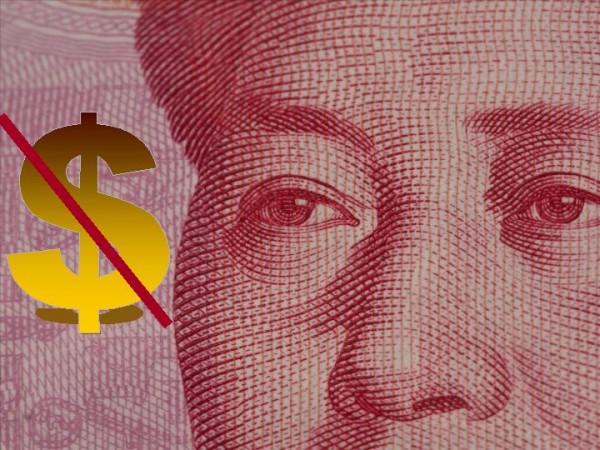 There is a select group of countries (areas) that have something in common: the USA, the UK, Japan and the eurozone. The currency in each of these places is one of the IMF’s reserve currencies. But is China about to enter the mix?
The growth of China has been spectacular and it is now the second largest economy in the world, behind the USA. It is on the back on this growth that China has asked the IMF for the yuan to be included in the IMF’s basket of reserve currencies. The expectation is that Christine Lagarde, the IMF’s Managing Director, will announce its inclusion and, while some suggest that the yuan could become one of the major currencies in the world over the next decade following this move, others say that this is just a ‘symbolic gesture’. But that doesn’t seem to matter, according to Andrew Malcolm, Asia head of capital at Linklaters:
“The direct impact won’t be felt in the near term, not least because implementation of the new basket won’t be until Q3 2016. However the symbolic importance cannot be overlooked…By effectively endorsing the renminbi as a freely useable currency, it sends a strong signal about China’s importance in the global financial markets.”
Concerns about the yuan being included have previously focused on China’s alleged under-valuation of its currency, as a means of boosting export demand, as we discussed in What a devalued yuan means to the rest of the world. However, China has made concerted efforts for the IMF to make this move and China’s continuing financial reforms may be essential. The hope is that with the yuan on the IMF’s special list, it will boost the use of the yuan as a reserve currency for investors. It will also be a contributor to the value of the special drawing right, which is used by the IMF for pricing its emergency loans.
Although the Chinese stock market has been somewhat volatile over the summer period, leading to a devaluation of the currency, it is perhaps this move towards a more market based exchange rate that has allowed the IMF to consider this move. We wait for an announcement from the IMF and the articles below consider this story.
Chinese yuan likely to be added to IMF special basket of currencies The Guardian, Katie Allen (29/11/15)
‘Chinese yuan set for IMF reserve status BBC News (30/11/15)
IMF to make Chinese yuan reserve currency in historic move The Telegraph, James Titcomb (29/11/15)
China selloff pressure Asia stocks, yuan jumpy before IMF decision Reuters, Hideyuki Sano (30/11/15)
IMF’s yuan inclusion signals less risk taking in China Reuters, Pete Sweeney and Krista Hughes (29/11/15)
Did the yuan really pass the IMF currency test? You’ll know soon Bloomberg, Andrew Mayeda (29/11/15)
Questions
- What is meant by a reserve currency?
- Why do you think that the inclusion of the yuan on the IMF’s list of reserve currencies will boost investment in China?
- One of the reasons for the delay in the yuan’s inclusion is the alleged under-valuation of the currency. How have the Chinese authorities allegedly engineered a devaluation of the yuan? To what extent could it be described as a ‘depreciation’ rather than a ‘devaluation’?
- Look at the key tests that the yuan must pass in order to be included. Do you think it has passed them given the report produced a few months ago?
- The weighting that a currency is given in the IMF’s basket of currencies affects the interest rate paid when countries borrow from the IMF. How does this work?
 It is now some seven years since the financial crisis and nearly seven years since interest rates in the USA, the eurozone, the UK and elsewhere have been close to zero. But have these record low interest rates and the bouts of quantitative easing that have accompanied them resulted in higher or lower investment than would otherwise have been the case? There has been a big argument about that recently.
According to conventional economic theory, investment is inversely related to the rate of interest: the lower the rate of interest, the higher the level of investment. In other words, the demand-for-investment curve is downward sloping with respect to the rate of interest. It is true that in recent years investment has been low, but that, according to traditional theory, is the result of a leftward shift in demand thanks to low confidence, not to quantitative easing and low interest rates.
In a recent article, however, Michael Spence (of New York University and a 2001 Nobel Laureate) and Kevin Warsh (of Stanford University and a former Fed governor) challenge this conventional wisdom. 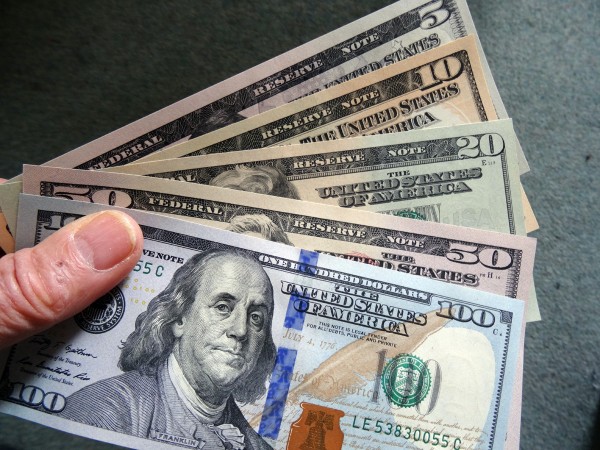 According to them, QE and the accompanying low interest rates led to a rise in asset prices, including shares and property, rather than to investment in the real economy. The reasons, they argue, are that investors have seen good short-term returns on financial assets but much greater uncertainty over investment in physical capital. Returns to investment in physical capital tend to be much longer term; and in the post-financial crisis era, the long term is much less certain, especially if the Fed and other central banks start to raise interest rates again.
“We believe that QE has redirected capital from the real domestic economy to financial assets at home and abroad. In this environment, it is hard to criticize companies that choose ‘shareholder friendly’ share buybacks over investment in a new factory. But public policy shouldn’t bias investments to paper assets over investments in the real economy.”
This analysis has been challenged by several eminent economists, including Larry Summers, Harvard Economics professor and former Treasury Secretary. He criticises them for confusing correlation (low investment coinciding with low interest rates) with causation. As Summers states:
“This is a little like discovering a positive correlation between oncologists and cancer and asserting that this proves oncologists cause cancer. One would expect in a weak recovery that investment would be weak and monetary policy easy. Correlation does not prove causation. …If, as Spence and Warsh assert, QE has raised stock prices, this should tilt the balance toward real investment.”
 Not surprisingly Spence and Warsh have an answer to this criticism. They maintain that their critique is less of low interest rates but rather of the form that QE has taken, which has directed new money into the purchase of financial assets. This then has driven further asset purchases, much of it by companies, despite high price/earnings ratios (i.e. high share prices relative to dividends). As they say:
“Economic theory might have something to learn from recent empirical data, and from promising new thinking in behavioral economics.”
Study the arguments of both sides and try to assess their validity, both theoretically and in the light of evidence.
Articles
The Fed Has Hurt Business Investment The Wall Street Journal, Michael Spence and Kevin Warsh (26/10/15) [Note: if you can’t see the full article, try clearing cookies (Ctrl+Shift+Delete)]
I just read the ‘most confused’ critique of the Fed this yea Washington Past, Lawrence H. Summers (28/10/15)
A Little Humility, Please, Mr. Summers The Wall Street Journal, Michael Spence and Kevin Warsh (4/11/15) [Note: if you can’t see the full article, try clearing cookies (Ctrl+Shift+Delete)]
Do ultra-low interest rates really damage growth? The Economist (12/11/15)
It’s the Zero Bound Yield Curve, Stupid! Janus Capital, William H Gross (3/11/15)
Is QE Bad for Business Investment? No Way! RealTime Economic Issues Watch, Joseph E. Gagnon (28/10/15)
Department of “Huh!?!?”: QE Has Retarded Business Investment!? Washington Center for Equitable Growth, Brad DeLong (27/10/15)
LARRY SUMMERS: The Wall Street Journal published the ‘single most confused analysis’ of the Fed I’ve read this year Business Insider, Myles Udland (29/10/15)
The Fed’s Loose Money, Financial Markets and Business Investment SBE Council, Raymond J. Keating (29/10/15)
How the QE trillions missed their mark AFR Weekend, Maximilian Walsh (4/11/15)
Financial Markets In The Era Of Bubble Finance – Irreversibly Broken And Dysfunctional David Stockman’s Contra Corner, Doug Noland (8/11/15)
Questions
- Go through the arguments of Spence and Warsh and explain them.
- Explain what are meant by the ‘yield curve’ and ‘zero bound yield curve’.
- What criticisms of their arguments are made by Summers and others?
- Apart from the effects of QE, why else have long-term interest rates been low?
- In the light of the arguments on both sides, how effective do you feel that QE has been?
- How could QE have been made more effective?
- What is likely to happen to financial markets over the coming months? What effect is this likely to have on the real economy?
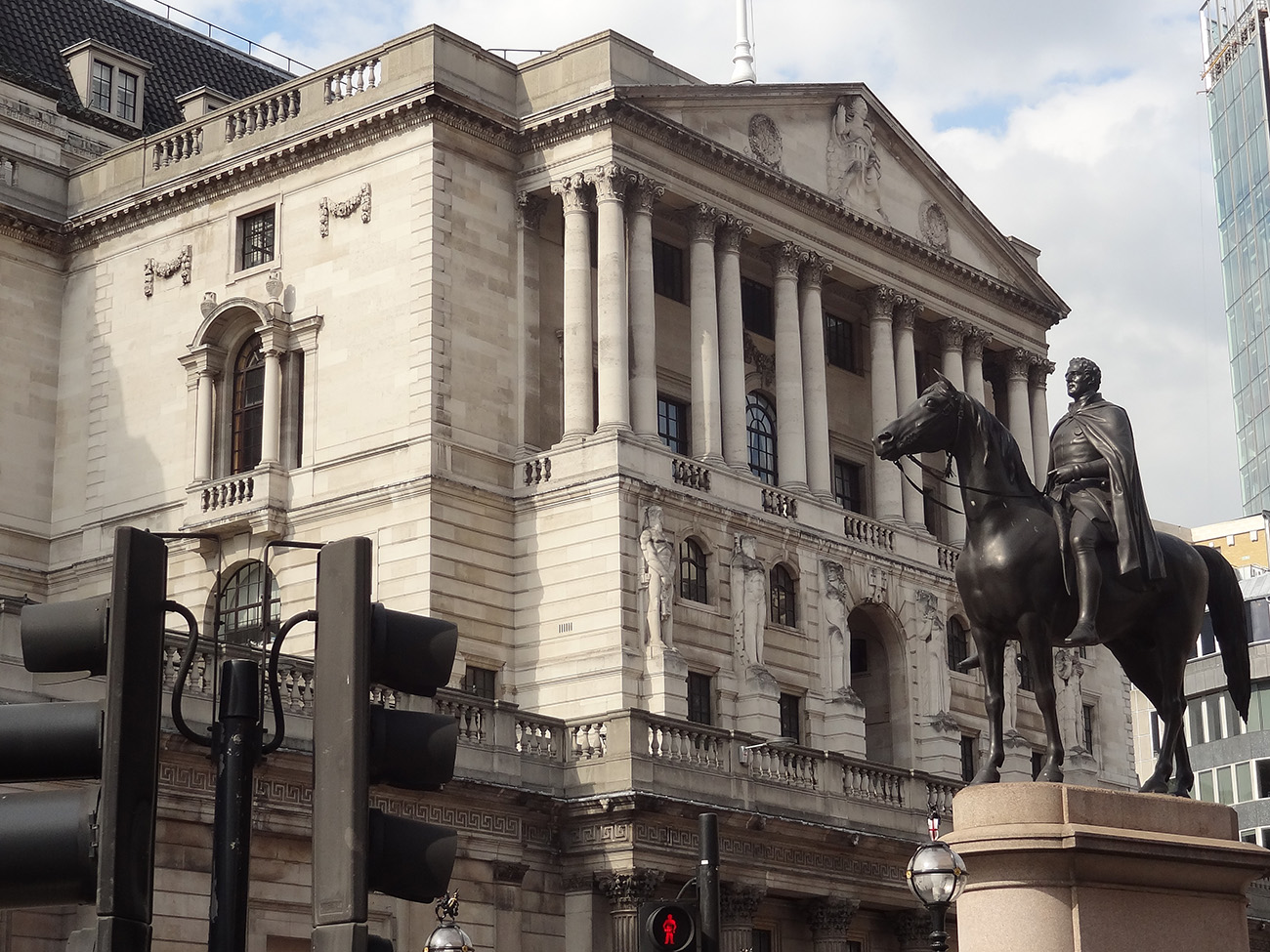 Sales during the weeks leading up to Christmas often make a significant contribution to retailers’ profits. For many consumers, it is a time to spend money on food, presents and decorations and this often means increased borrowing.