 Some of the largest companies around the world operate in multiple locations. This allows them to take advantage of wider markets, cheaper transport and of course, lower taxes. In many cases, we see companies selling in one country, but locating their Headquarters in another, where tax rates are cheaper and hence their tax bills are lower. Much criticism has been levelled at such companies, who are accused of not paying their fair share in tax. There has been a crackdown on these companies and the UK is playing a leading role in this tightening of tax laws. Google is the latest company to face a large payment in backdated taxes.
This is a company with a complex structure, which has involved Bermuda as a key location, with its zero rate of corporation tax and a Irish European base. Though locating its business in different countries is legal, it has now agreed to pay HMRC £130 million in back taxes from 2005, following a 6 year investigation. Google will also change its accounting system such that it pays more tax in Britain for sales in this country.
 Google may be the first in a line of companies making such changes to its accounting practices following a global drive to tackle the low levels of taxes paid by these large companies. This change in tax rules may bring welcome relief to government coffers, though criticisms remain about the ‘real’ figure that Google owes. As an example of this: in 2013, Google’s UK revenues were $5.6bn. Yet it only paid £20.5m in tax on its UK profits. The Head of Google Europe, Matt Brittin said:
“The rules are changing internationally and the UK government is taking the lead in applying those rules so we’ll be changing what we are doing here. We want to ensure that we pay the right amount of tax.”
Mr Brittin was clear in saying that these back dated taxes are not evidence that they had been paying too little tax in previous years. He confirmed that they were abiding by tax laws at the time and that tax laws are now changing and hence so will the amount of tax they pay. He continued:
“I think there was concern that international companies were paying only in respect of profits that they make and those were the rules and the pressure was to see us pay in respect of the sales we make to UK customers – and the same for other companies…So, we are making a change because we want to continue to comply with the rules and the rules are changing.”
As the push to tighten tax laws changes, with firms paying more tax on sales as well as profits, we may observe more companies changing their accounting structures. The OECD has taken a big step in simplifying international tax laws and the coming years will tell us just how big an impact this will have and whether companies such as Google will face tax bills in other European countries as well. The following articles consider this taxing matter.
Google agrees £130m UK tax deal with HMRC BBC News, Kamal Ahmed (23/01/16)
Google strikes £130m back tax deal Financial Times, John Gapper (22/01/16)
Google strikes deal with UK tax authority Wall Street Journal, Sam Schechner and Stephen Fidler (23/01/16)
Google agrees to pay HMRC £130m in back taxes The Guardian, Kevin Rawlinson (23/01/16)
Google tax labelled ‘derisory’ by Labour’s John McDonnell BBC News (23/01/16)
Google to pay £130 million UK back taxes, critics want more Reuters, Tom Bergin (23/01/16)
Google to pay UK £130m in back taxes The Telegraph (22/01/16)
Google says it will pay £130m in back taxes Independent, Adam Barnett (23/01/16)
Google ‘agrees’ to pay £130m in extra UK tax after outrage when it coughed up just £20m on UK sales of nearly £4bn Mail Online, Imogen Calderwood (22/01/16)
Google agrees to pay $185 million in UK tax settlement Bloomberg, Brian Womack (23/01/16)
Questions
- What is the difference between a tax on sales and a tax on profits?
- How can companies legally avoid tax? Do you think they have a moral duty to pay tax?
- If firms face higher rates of taxation, how will this affect their costs and profits?
- Why are the larger multinationals, such as Google more able to engage in tax avoidance schemes?
- Do you think the problem of tax avoidance is one of the negative consequences of globalisation?
- Is the criticism about the ‘low’ amount of taxes paid to HMRC justified?
- The OECD has taken a leading role in tightening international tax policy. Do you think this will negatively impact the competitiveness of the global market place?
- What are the costs and benefits to a country of having a low rate of corporation tax?
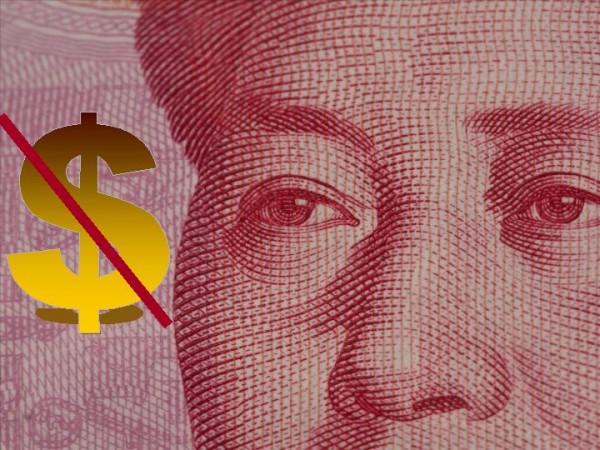 The Chinese economy was, for some time, the beacon of the world economy, posting strong growth and giving a much needed boost to demand in other countries. However, the weakening Chinese economy is now causing serious concerns around the world and not least in China itself.
China’s stock market on Monday 11th January closed down 5.3%, with the Hong Kong Index down by 2.8%. These falls suggest a continuing downward trajectory this week, following the 10% decline on Chinese markets last week. Today, further falls were caused, at least in part, by uncertainty over the direction of the Chinese currency, the yuan. Volatility in the currency is expected to continue with ongoing depreciation pressures and adding to this is continuing concerns about deflation.
The barrage of bad news on key economic indicators may well mean significant intervention by Chinese authorities to try to avoid its slowest growth in 25 years. However, there are also concerns about China’s ability to manage its economic policy, given recent events. IG’s Angus Nicholson said:
“Global markets are still in the grips of China fears, and it is uncertain whether the Chinese government can do enough to reassure global investors.”
Similar sentiments were echoed by Paul Mackel, head of emerging markets FX research at HSBC:
“Different signals about foreign exchange policy have wrong-footed market participants and we are wary in believing that an immediate calmness will soon emerge.”
Perhaps key to turning this downward trend on its head, will be the Chinese consumers. With a traditionally larger saving ratio than  many Western economies, it may be that this ‘cushion’ will give growth a boost, through the contribution of consumer spending. As we know, aggregate demand comprises consumption, investment, government spending and net exports (AD = C + I + G + X – M). Consumer spending (C) increased from 50.2% in 2014 to 58.4% in 2015, according to HIS Global Insight. A similar increase for 2016 would certainly be welcome.
As oil prices continue to fall and concerns remain over China’s weak economic data, we may well soon begin to see just how interdependent the world has become. Many economists suggest that we are now closer to the start of the next recession than we are to the end of the last one and this latest turmoil on Chinese stock markets may do little to allay the fears that the world economy may once again be heading for a crash. The following articles consider the Chinese turmoil.
Free lunch: China’s weakest link Financial Times, Martin Sandbu (11/01/16)
China’s stocks start the week with sharp losses BBC News (11/01/16)
China shares fall 5% to hit-three-month low The Guardian (11/01/16)
China’s resilient shoppers face fresh test from market headwinds Bloomberg (11/01/16)
China shares head lower again on price data Sky News (11/01/16)
U.S., European shares slip as China, oil woes continue Reuters, Lewis Krauskopf (11/01/16)
U.S. stocks drop as oil tumbles again Wall Street Journal (11/01/16)
China escalates emergency stock market intervention The Telegraph, Mehreen Kahn (05/01/16)
Questions
- How are prices and values determined on the stock market?
- Share prices in China have been falling significantly since the start of 2016. Has it been caused by demand or supply-side factors? Use a demand and supply diagram to illustrate this.
- Why has the volatility of the Chinese currency added further downward pressure to Chinese stock markets?
- With the expected increase in consumer spending in China, how will this affect AD? Use a diagram to explain your answer and using this, outline what we might expect to happen to economic growth and unemployment in China.
- Why are there serious concerns about the weak level of inflation in China? Surely low prices are good for exports.
- Should the world economy be concerned if China’s economy does continue to slow?
- To what extent are oil prices an important factor in determining the future trajectory of the world economy?
 As we saw in several posts on this site, last year was a tumultuous one for the Greek people and their economy. The economy was on the verge of bankruptcy; the Greek people rejected the terms of a bailout in a referendum; exit from the eurozone and having to return to the drachma seemed likely; banks were forced to closed at the height of the crisis; capital controls were imposed, with people restricted to drawing €60 a day or €420 a week – a policy still in force today; unemployment soared and many people suffered severe hardship.
To achieve the bailout, the Syriza government had to ignore the results of the referendum and agree to harsh austerity policies and sweeping market-orientated supply-side policies. This, at least, allowed Greece to stay in the eurozone. It held, and won, another election to seek a further mandate for these policies.
 But what are the prospects for 2016? Will it be a year of recovery and growth, with market forces working to increase productivity? Does 2016 mark the beginning of the end and, as prime minister Alexis Tsipras put it, “a final exit from economic crisis”?
Or will the continuing cuts simply push the economy deeper into recession, with further rises in unemployment and more and more cases of real human hardship? Is there a hysteresis effect here, with the past six years having created a demoralised and deskilled people, with cautious investors unable and/or unwilling to rebuild the economy?
 The article below looks at the rather gloomy prospects for Greece and at whether there are any encouraging signs. It also looks at the further demands of the troika of creditors – the IMF, the ECB and the European Commission’s European Stability Mechanism (ESM) – and at what the political and economic impact of these might be.
Greece’s economic crisis goes on, like an odyssey without end The Guardian, Helena Smith (4/1/16)
Questions
- Construct a timeline of Greece’s debt repayments, both past and scheduled, and of the bailouts given by the troika to prevent Greece defaulting.
- What supply-side reforms are being demanded by Greece’s creditors?
- What will be the effect of these supply-side reforms in (a) the short run; (b) the long run?
- Explain the meaning of hysteresis as it applies to an economy in the aftermath of a recession. How does the concept apply in the Greek situation?
- Discuss the alternative policy options open to the Greek government for tackling the persistent recession.
- Would it be better for Greece to leave the euro? Explain your arguments.
- “I cannot see how this government can survive the reforms. And I cannot see how it can avoid these reforms.” Is there any way out of this apparent impasse for the Greek government?
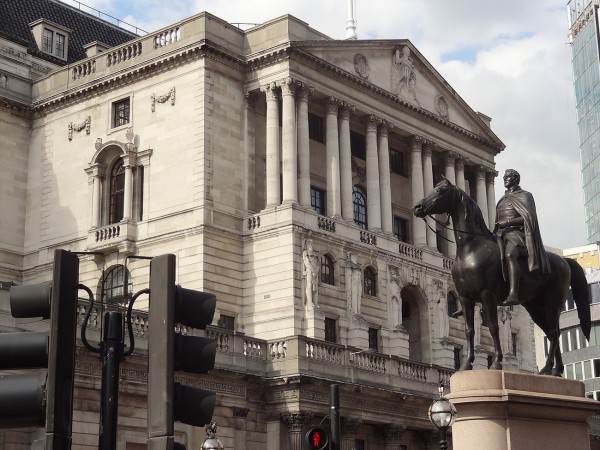 Sales during the weeks leading up to Christmas often make a significant contribution to retailers’ profits. For many consumers, it is a time to spend money on food, presents and decorations and this often means increased borrowing.
Data indicate that borrowing by consumers in the lead-up to Christmas increased by the biggest amount for almost 8 years: a figure of £1.5 billion. As a result, there were likely to have been many happy families at Christmas, with lots of gifts being exchanged. But what does this mean for the New Year? There are concerns about the increase we will see in consumer debt throughout 2016 and the number of borrowers who will, perhaps, be unable to repay their debts.
Could this significant increase in borrowing be a signal that we haven’t learnt from our past? This article from BBC News considers the borrowing data and their implications.
Borrowing jumped ahead of Christmas, Bank of England says BBC News, Brian Milligan (4/01/16)
Questions
- Is borrowing good or bad for the economy? Explain your answer.
- If borrowing is good for the economy, why are there concerns about the current level of borrowing?
- How will this higher level of borrowing affect aggregate demand? Use an AD/AS diagram to explain the impact this will have.
- Could this higher level of borrowing affect unemployment and inflation? In what ways?
- If interest rates had been higher, do you think the level of consumer borrowing would have been lower?
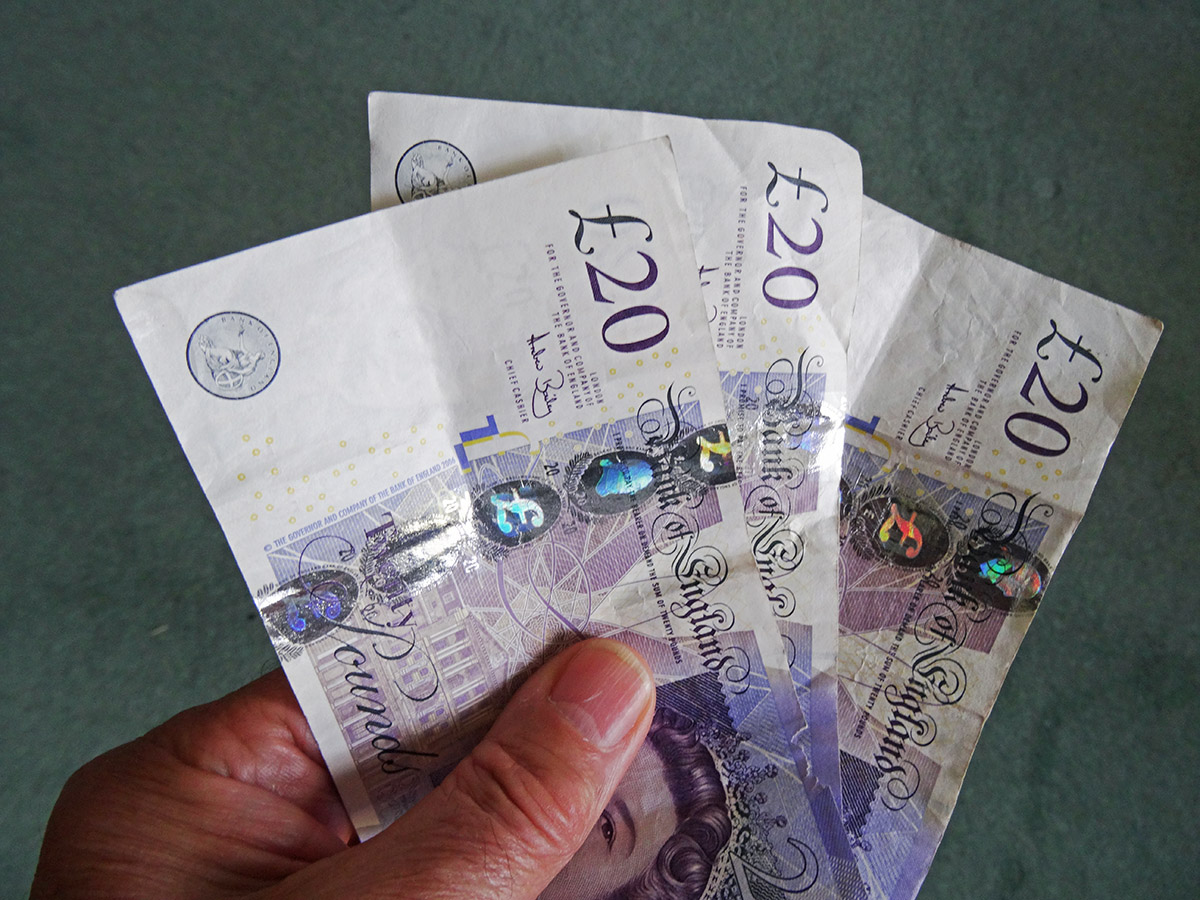 Google may be the first in a line of companies making such changes to its accounting practices following a global drive to tackle the low levels of taxes paid by these large companies. This change in tax rules may bring welcome relief to government coffers, though criticisms remain about the ‘real’ figure that Google owes. As an example of this: in 2013, Google’s UK revenues were $5.6bn. Yet it only paid £20.5m in tax on its UK profits. The Head of Google Europe, Matt Brittin said: