 Donald Trump is keen to lower US interest rates substantially and rapidly in order to provide a boost to the US economy. He is also keen to reduce the cost of living for US citizens and sees lower interest rates as a means of reducing the burden of debt servicing for both consumers and firms alike.
But interest rates are set by the US central bank, the Federal Reserve (the ‘Fed’), which is formally independent from government. This independence is seen as important for providing stability to the US economy and removing monetary policy from short-term political pressures to cut interest rates. Succumbing to political pressures would be likely to create uncertainty and damage long-term stability and growth.
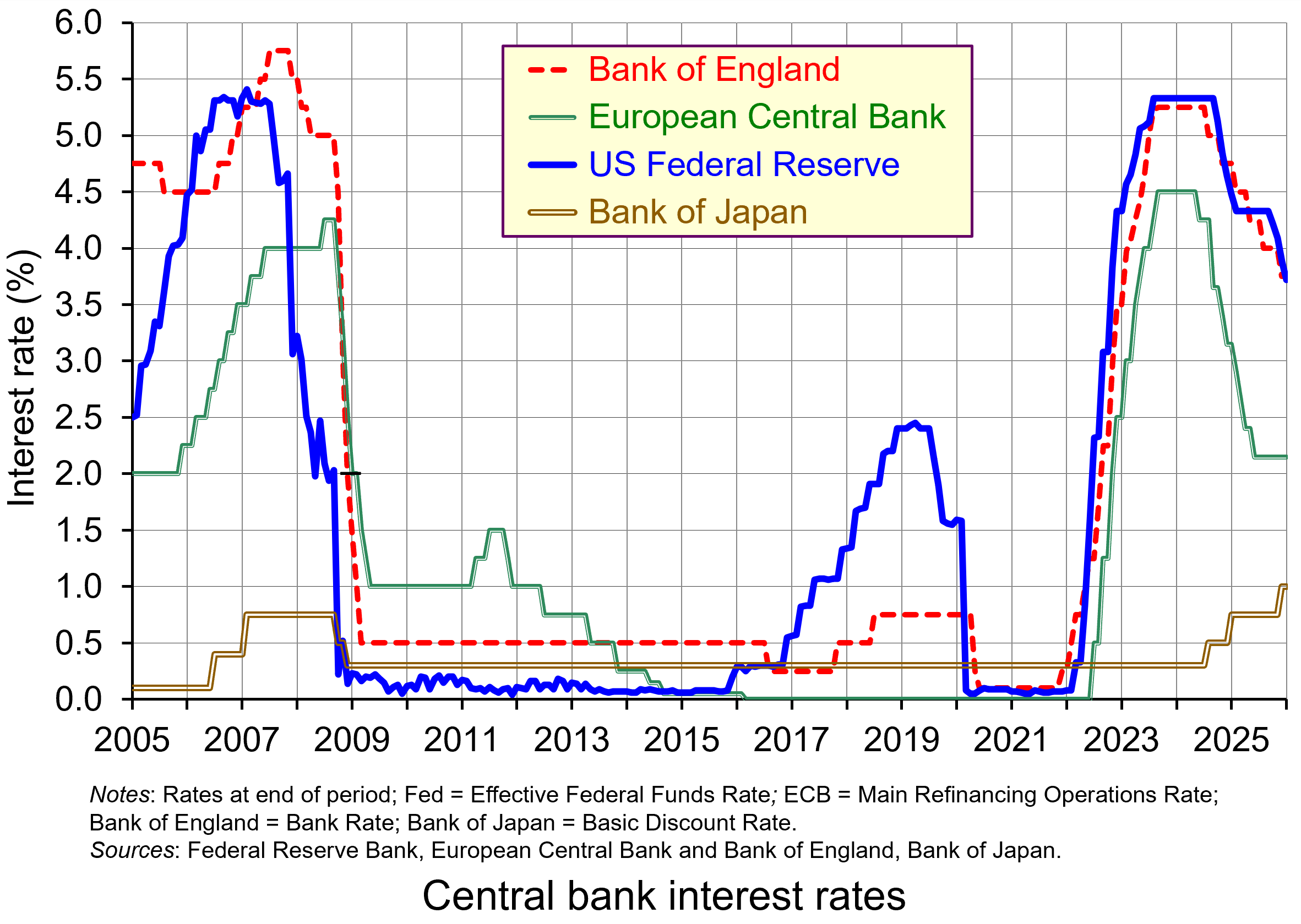
Yet President Trump is pushing the Fed to lower interest rates rapidly and despite three cuts in a row of 0.25 percentage points in the last part of 2025 (see chart below), he thinks this as too little and is annoyed by suggestions that the Fed is unlikely to lower rates again for a while. He has put great pressure on Jerome Powell, the Fed Chair, to go further and faster and has threatened to replace him before his term expires in May this year. He has also made clear that he is likely to appoint someone more willing to cutting rates.
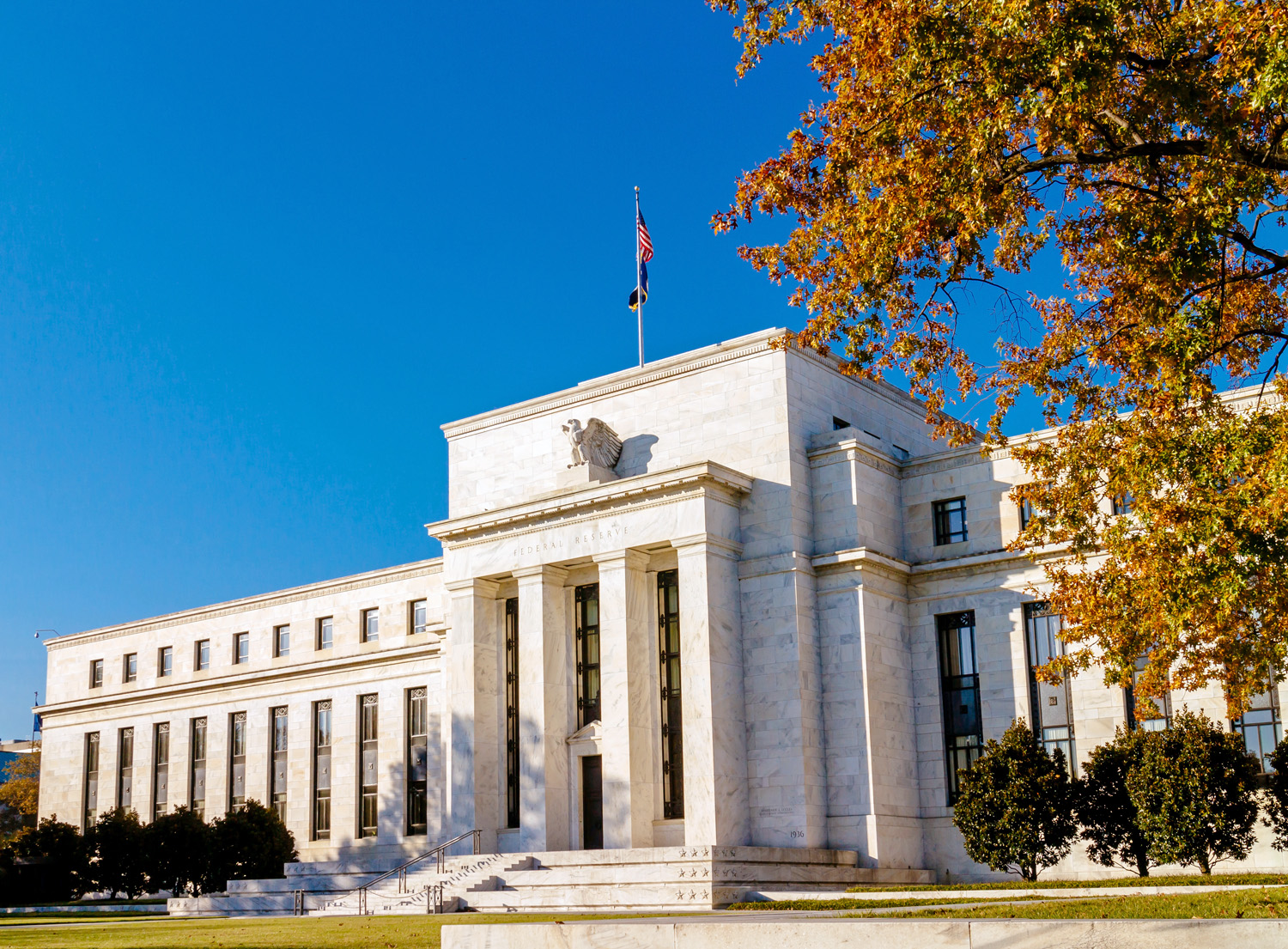
The Federal Reserve headquarters in Washington is currently being renovated. The nine-year project is costing $2.5 billion and is due to be completed next year. President Trump has declared that the project’s costs are excessive and unnecessary.
On 11 January, Federal prosecutors confirmed that they were opening a criminal investigation into Powell, accusing him of lying to Congress in his June 2025 testimony regarding the scope and costs of the renovations.
Powell responded by posting a video in which he claimed that the real reason that he was being threatened with criminal charges was not because of the renovations but because the Fed had ignored President Trump’s pressure and had set interest rates:
based on our best assessment of what will serve the public, rather than following the preferences of the President. This is about whether the Fed will be able to continue to set interest rates based on evidence and economic conditions – or whether, instead, monetary policy will be directed by political pressure or intimidation.
The Fed’s mandate
 The Federal Reserve Board decides on monetary policy and then the Federal Open Market Committee (FOMC) decides how to carry it out. It decides on interest rates and asset sales or purchases. The FOMC meets eight times a year.
The Fed is independent of both the President and Congress, and its Chair is generally regarded as having great power in determining the country’s economic policy.
Since 1977, the Fed’s statutory mandate has been to promote the goals of stable prices and maximum employment. Because of the reference to both prices and employment, the mandate is commonly referred to as a ‘dual mandate’. Its inflation target is 2 per cent over the long run with ‘well anchored’ inflationary expectations.
The dual mandate is unlike that of the Bank of England, the European Central Bank, the Bank of Japan and most other central banks, which all have a single key mandate of achieving a target of a 2 per cent annual rate of consumer price inflation over a particular time period.
With a dual mandate, the two objectives may well conflict from time to time. Moreover, changes in monetary policy affect these objectives with a lag and potentially over different time horizons. Hence, an assessment may have to be made of which is the most pressing problem. This does give some leeway in setting interest rates somewhat lower than if there were a single inflation-rate target. Nevertheless, the assessment is in terms of how best to achieve the mandate and not to meet current political goals.
Statement by former Fed Chairs and Governors
On 12 January, three former Chairs of the Federal Reserve (Janet Yellen, Ben Bernanke and Alan Greenspan), four former Treasury Secretaries (Timothy Geithner, Jacob Lew, Henry Paulson and Robert Rubin) and seven other top former economic officials issued the following statement (see Substack link in the Articles section below):
The Federal Reserve’s independence and the public’s perception of that independence are critical for economic performance, including achieving the goals Congress has set for the Federal Reserve of stable prices, maximum employment, and moderate long-term interest rates. The reported criminal inquiry into Federal Reserve Chair Jay Powell is an unprecedented attempt to use prosecutorial attacks to undermine that independence. This is how monetary policy is made in emerging markets with weak institutions, with highly negative consequences for inflation and the functioning of their economies more broadly. It has no place in the United States whose greatest strength is the rule of law, which is at the foundation of our economic success.
Response of investors
 What will happen to the dollar, US bond prices, share prices and US inflation, and what will happen to investment, depends on how people respond to the threat to the Fed’s independence. Initially, there was little response from markets, with investors probably concluding that President Trump is unlikely to be able to sway FOMC members. What is more, several Republican lawmakers have begun criticising the Trump administration’s criminal investigation, making it harder for the President to influence Fed decisions.
Even if Powell is replaced, either in the short term or in May, by a chair keen to pursue the Trump agenda, that chair will still be just one of twelve voting members of the FOMC.
Seven are appointed by the President, but serve for staggered 14-year terms. Four have been appointed by President Trump, but the other three were appointed by President Biden, although one – Lisa Cook – is being indicted by the Supreme Court for mortgage fraud, with the hearing scheduled for January 21. She claims that this is a trumped-up charge to provide grounds for removing her from the Fed. If she is removed, President Trump could appoint a replacement minded to cut rates.
The other five members include the President of the New York Fed and four of the eleven other regional Fed Presidents serving in rotation. These four are generally hawkish and would oppose early rate cuts.
Thus it is unlikely that President Trump will succeed in pushing the Fed to lower interest rates earlier than they would have done. For that reason, markets have remained relatively sanguine.
 Nevertheless, Donald Trump’s actions could well cause investors to become more worried. Will he try to find other ways to undermine the Fed? Will his actions over Venezuela, Cuba, Greenland and Iran, let alone his policies towards Ukraine and Russia and towards Israel and Gaza, heighten global uncertainty? Will his actions towards Venezuela and his desire to take over Greenland embolden China to attempt to annex Taiwan, and Russia to continue to resist plans to end the war in Ukraine or to make stronger demands?
Such developments could cause investor confidence to wane and for stock markets to fall. Time will tell. I think we need a crystal ball!
Videos
Articles
- Federal prosecutors open criminal investigation into the Fed and Jerome Powell
CNN, Bryan Mena (11/1/26)
- The Fed just gave a rare look at its $2.5 billion renovation — right before Trump’s tour
CNN, Bryan Mena (24/7/25)
- ‘A bone-headed move’: Trump’s shocking battle with Powell could badly backfire
CNN, Matt Egan (12/1/26)
- Why Powell is fighting back against Trump: The US economy is at stake
CNN, Bryan Mena (13/1/26)
- Fed chair Powell hits out at ‘unprecedented’ probe by US justice department
BBC News, Ana Faguy and Osmond Chia (12/1/26)
- Justice department opens investigation into Jerome Powell as Trump ramps up campaign against Federal Reserve
The Guardian, Callum Jones (12/1/26)
- Some Republicans speak out against DoJ investigation into Fed chair
The Guardian, Joseph Gedeon (12/1/26)
- Trump’s attempts to influence Fed risk 1970s-style inflation and global backlash
The Guardian, Richard Partington (12/1/26)
- Statement on the Federal Reserve
Substack, 14 signatories (12/1/26)
- Yellen says Powell probe ‘extremely chilling’ for Fed independence, market should be concerned
CNBC, Jeff Cox (12/1/26)
- Global central bankers unite in defense of Fed Chair Jerome Powell
CNBC, Holly Ellyatt (13/1/26)
- Trump attacks Powell again amid Fed independence fears: ‘That jerk will be gone soon’
CNBC, Kevin Breuninger (13/1/26)
- Former Fed chairs condemn criminal investigation into Jerome Powell
BBC News, Danielle Kaye (12/1/26)
- Fed: Towards a very divided Fed in the coming months and quarters
CPR AM, Bastien Drut (28/11/25)
- Treasury Yields Diverge as Powell Probe Rekindles Fed Independence Risk
Investing.com, Khasay Hashimov (12/1/26)
- Instant View: Investors react as Trump-Fed feud escalates
Reuters (12/1/26)
- Fighting the Fed, Trump tries credit easing by decree
Reuters, Mike Dolan (13/1/26)
- Trump’s attacks on the Federal Reserve risk fuelling US inflation and ending dollar dominance
The Conversation, Emre Tarim (13/1/26)
Questions
- What are the arguments for central bank independence?
- What are the arguments for control of monetary policy by the central government?
- Assess the above arguments.
- Find out what has happened to interest rates, the US stock market and the dollar since this blog was written.
- How do the fiscal decisions by government affect monetary policy?
- Compare the benefits of the dual mandate system of the Fed with those of the single mandate of the Bank of England and ECB.
 Economic growth is closely linked to investment. In the short term, there is a demand-side effect: higher investment, by increasing aggregate demand, creates a multiplier effect. GDP rises and unemployment falls. Over the longer term, higher net investment causes a supply-side effect: industrial capacity and potential output rise. This will be from both the greater quantity of capital and, if new investment incorporates superior technology, from a greater productivity of capital.
One of the biggest determinants of investment is certainty about the future: certainty allows businesses to plan investment. Uncertainty, by contrast, is likely to dampen investment. Investment is for future output and if the future is unknown, why undertake costly investment? After all, the cost of investment is generally recouped over several months or year, not immediately. Uncertainty thus increases the risks of investment.
 There is currently great uncertainty in the USA and its trading partners. The frequent changes in policy by President Trump are causing a fall in confidence and consequently a fall in investment. The past few weeks have seen large cuts in US government expenditure as his administration seeks to dismantle the current structure of government. The businesses supplying federal agencies thus face great uncertainty about future contracts. Laid-off workers will be forced to cut their spending, which will have knock-on effect on business, who will cut employment and investment as the multiplier and accelerator work through.
There are also worries that the economic chaos caused by President Trump’s frequent policy changes will cause inflation to rise. Higher inflation will prompt the Federal Reserve to raise interest rates. This, in turn, will increase the cost of borrowing for investment.
Tariff uncertainty
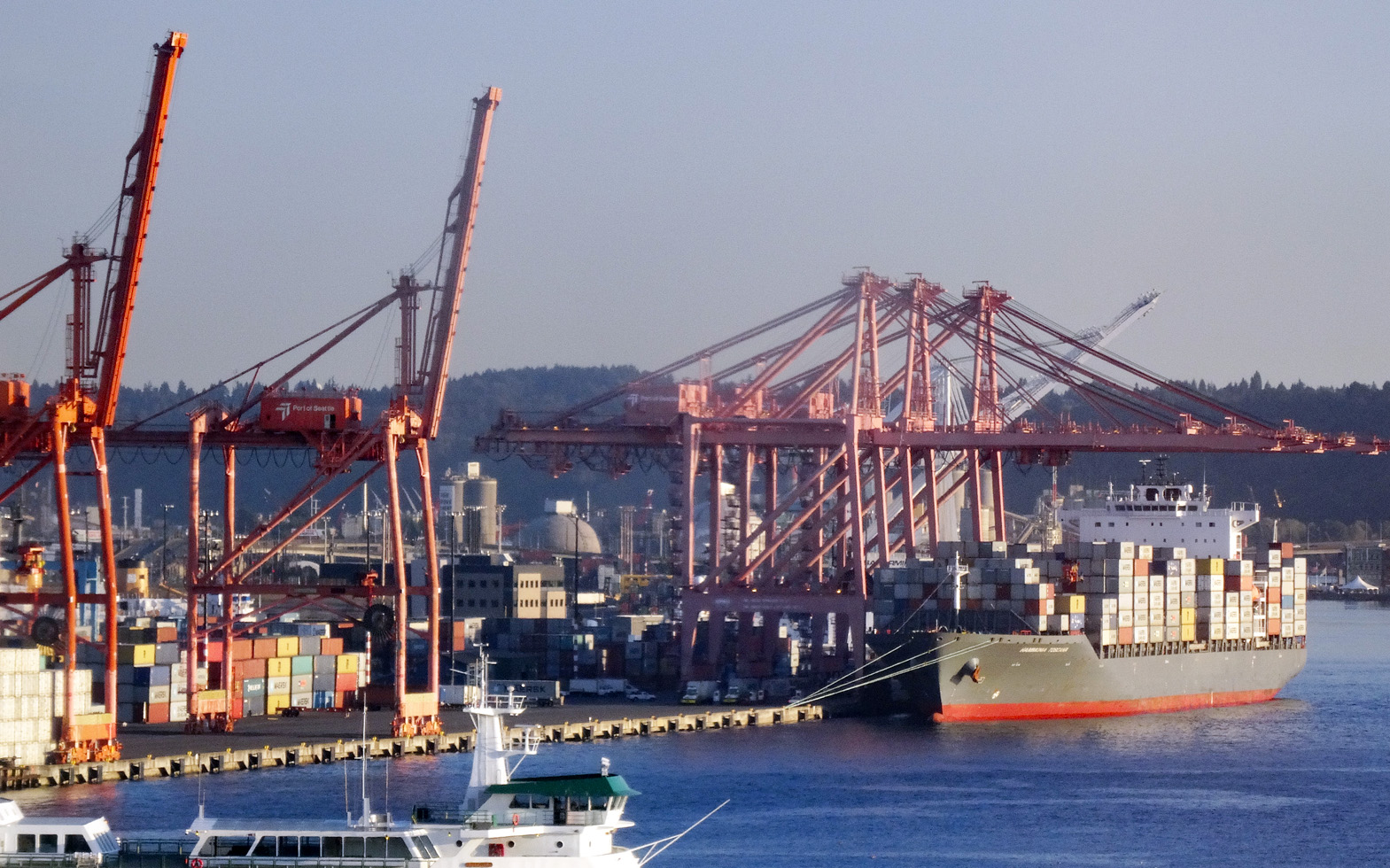 Perhaps the biggest uncertainty for business concerns the imposition of tariffs. Many US businesses rely on imports of raw materials, components, equipment, etc. Imposing tariffs on imports raises business costs. But this will vary from firm to firm, depending on the proportion of their inputs that are imported. And even when the inputs are from other US companies, those companies may rely on imports and thus be forced to raise prices to their customers. And if, in retaliation, other countries impose tariffs on US goods, this will affect US exporters and discourage them from investing.
For many multinational companies, whether based in the USA or elsewhere, supply chains involve many countries. New tariffs will force them to rethink which suppliers to use and where to locate production. The resulting uncertainty can cause them to delay or cancel investments.
Uncertainty has also been caused by the frequent changes in the planned level of tariffs. With the Trump administration using tariffs as a threat to get trading partners to change policy, the threatened tariff rates have varied depending on how trading partners have responded. There has also been uncertainty on just how the tariff policy will be implemented, making it more difficult for businesses to estimate the effect on them.
Then there are serious issues for the longer term. Other countries will be less willing to sign trade deals with the USA if they will not be honoured. Countries may increasingly look to diverting trade from the USA to other countries.
Video
Articles
- Trump’s erratic trade policies are baffling businesses, threatening investment and economic growth
Associated Press, Paul Wiseman, Anne D’innocenzio and Mae Anderson (6/3/25)
- The world is beginning to tire of Trump’s whiplash leadership
CNN, Stephen Collinson (6/3/25)
- US stocks slide and Nasdaq enters correction as chaos over Trump’s tariffs intensifies
CNN, John Towfighi (6/3/25)
- Trump’s Tariffs And Trade: Uncertainty, Chaos Or Brilliance?
Forbes, Mike Patton (6/3/25)
- How Trump’s second term might affect the market and your finances
The Conversation, Art Durnev (4/3/25)
- US corporate bond investors cautiously navigate trade war uncertainty
Reuters, Matt Tracy (6/3/25)
 This week in Trumponomics: Playing chicken with markets
Yahoo Finance, Rick Newman (8/3/25)
- Measuring fear: What the VIX reveals about market uncertainty
The FRED Blog, Aakash Kalyani (13/2/25)
- Trump shrugs off stock market slump, but economic warning signs loom
The Conversation, Conor O’Kane (17/3/25)
Data
Questions
- Find out what tariffs have been proposed, imposed and changed since Donald Trump came to office on 20 January 2025.
- In what scenario might US investment be stimulated by Donald Trump’s policies?
- What countries’ economies have gained or are set to gain from Donald Trump’s policies?
- What is the USMCA agreement? Do Donald Trump’s policies break this agreement?
- Find out and explain what has happened to the US stock market since January 2025. How do share prices affect business investment?
- Which sector’s shares have risen and which have fallen?
- Using the Data link above, find out what has been happening to the US Policy Uncertainty Index since Donald Trump was elected and explain particular spikes in the index. Is this mirrored in the global Policy Uncertainty Index?
- Are changes in the Policy Uncertainty Index mirrored in the World Uncertainty Index (WUI) and the CBOE Volatility Index: VIX?
Original post (24/4/12)
 The result of the first round of the French presidential elections on 22 April make it likely that François Hollande will be the new president.
M. Hollande can be described as an austerity sceptic. In other words, he questions the wisdom of trying to meet the target agreed by eurozone countries of reducing public-sector deficits to no more than 3% of GDP.
If elected, M. Hollande promises to adopt a more Keynesian stance of stimulating demand in order to prevent a slide into recession. This would mean a reversal of cuts and a growth, at least temporarily, of the public-sector deficit.
Currently France’s deficit is much higher than the 3% target. In 2010 it was 7.1%; in 2011 it had fallen somewhat to 5.2%. But it is set to rise in 2012, thanks to the slowing economy in France and most of the rest of Europe.
And it is not just in France that ‘austerity sceptics’ are on the ascendant. In the Netherlands the centre right government of Mark Rutte fell. He was unable to get his coalition partners to agree to sufficient cuts to achieve the 3% target. And yet, the Netherland’s deficit is considerably lower than most eurozone countries’. In 2012 it is projected to be just 4.6% of GDP.
So if doubts about the 3% target could lead to a change in policy in the Netherlands and France, what hope is there that the targets could be adhered to by countries with much larger deficits and where the pain of the cuts is already causing political turmoil?
The growth in austerity scepticism has spooked the markets. The day following M. Hollande’s first round victory and the fall of Mark Rutte’s government, stock markets around Europe plummeted and bond prices rose. The higher bond prices will make it even harder for governments to refinance maturing government debt. Take the case of France. As Robert Peston remarks in his article below:
According to IMF figures, 59% of France’s government debt is held overseas – which means that well over half of all lending to the French state is not motivated by sentimentality or patriotism in any way.
To put that figure into context, just 24.8% of UK general government debt is provided by foreigners.
Perhaps more relevantly, the French government has to borrow a colossal sum equivalent to 18.2% of GDP this year and 19.5% next year to finance debt that is maturing and the current deficit.
So what are the implications of the rise in austerity scepticism? Will it make deficits harder to finance? Will a collapse of confidence push the eurozone into a deep recession. Might the eurozone break apart? Or will a dose of Keynesian policies turn the tide and allow growth to resume, making it easier to service government debts? The following articles explore the issues?
Update (7/5/12)
François Hollande was indeed elected president on 6 May. The question now is to what extent he will be able to enact measures to simulate the economy. In his campaign he had talked about renegotiating the European treaty on budget discipline. Angela Merkel, responding to M. Hollande’s victory, said that the European fiscal treaty had been agreed and could not be renegotiated. Nevertheless, she said she was happy to consider new growth strategies that did not involve increased budget deficits.
Articles
François Hollande’s potential spending spree in France has caused concern in austerity Europe The Telegraph, Bruno Waterfield (23/4/12)
European turmoil, American collateral Guardian, Robin Wells (24/4/12)
Political risk returns to eurozone debt crisis Financial Times, Richard Milne (23/4/12)
The rise of Europe’s austerity foes Business Spectator, Karen Maley (23/3/12)
Europe: A crisis of the centre BBC News, Paul Mason (24/4/12)
Is Hollande enemy or prisoner of finance? BBC News, Robert Peston (23/4/12)
President Hollande and the IMF BBC News, Stephanie Flanders (23/4/12)
French Bond Yields Test Hollande’s Economic Fealty Bloomberg, Mark Deen and Anchalee Worrachate (24/4/12)
Dutch and French politics bring us back to reality BusinessDay (South Africa), Ron Derby (24/4/12)
Crisis topples governments like dominos Deutsche Welle, Bernd Riegert (24/4/12)
Eurozone leaders push for growth BBC News (25/4/12)
Additonal articles (after 6 May)
Francois Hollande to set France on new course after win BBC News (7/5/12)
Europe elections: German Chancellor Angela Merkel welcomes Francois Hollande but warns Greece The Telegraph, 7/5/12)
A Merkel-Hollande bust-up? Less likely than you might think Guardian, Philip Oltermann (7/5/12)
Merkel Rejects Stimulus in Challenge to Hollande BloombergBusinessweek, Patrick Donahue and Tony Czuczka (7/5/12)
François Hollande’s chemistry with Angela Merkel crucial for Europe Guardian, Ian Traynor (7/5/12)
Q&A: End of austerity? BBC News (7/5/12)
Austerity and the people’s verdict Guardian letters, Shanti Chakravarty and others (8/5/12)
Europe: The big debate BBC News, Stephanie Flanders (11/5/12)
Data
European Economy: Economic data Economic and Financial Affairs, European Commission
Eurozone Statistics ECB
French Economic Statistics INSEE, National Institute of Statistics and Economic Studies
Netherlands Statistics CBS, Statistics Netherlands
Questions
- Why do investors worry about the pursuit of Keynesian expansionary fiscal policies? Are their fears justified?
- How important is it for countries, such as the Netherlands, to retain their AAA credit rating?
- What determines bond yields?
- Do a search to find the policies advocated by M. Hollande. Assess the likely economic impact of these policies.
- What conditions are necessary for the pursuit of a tough austerity line to achieve economic growth in (a) the short term of 12 to 18 months; (b) the longer term of several years?
- Is an increased use of public-private partnerships a solution to finding a way of delivering greater infrastructure expenditure without increasing the short-term deficit?
