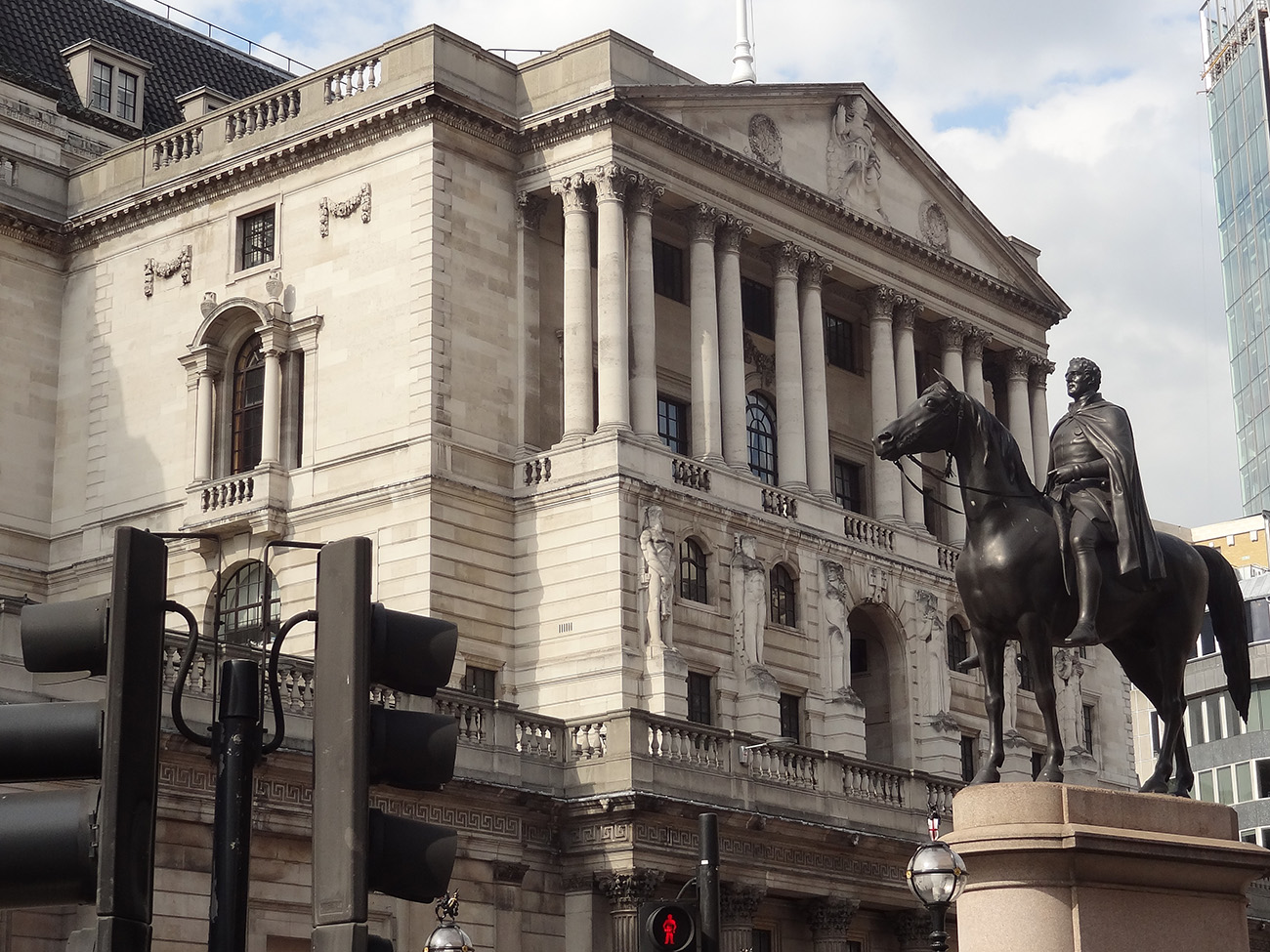
 The Brexit vote has caused shockwaves throughout European economies. But there is a potentially larger economic and political problem facing the EU and the eurozone more specifically. And that is the state of the Italian banking system and the Italian economy.
Italy is the third largest economy in the eurozone after Germany and France. Any serious economic weaknesses could have profound consequences for the rest of the eurozone and beyond.
At 135% of GDP, Italy’s public-sector debt is one the highest in the world; its banks are undercapitalised with a high proportion of bad debt; and it is still struggling to recover from the crisis of 2008–9. The Economist article elaborates:
The adult employment rate is lower than in any EU country bar Greece. The economy has been moribund for years, suffocated by over-regulation and feeble productivity. Amid stagnation and deflation, Italy’s banks are in deep trouble, burdened by some €360 billion of souring loans, the equivalent of a fifth of the country’s GDP. Collectively they have provisioned for only 45% of that amount. At best, Italy’s weak banks will throttle the country’s growth; at worst, some will go bust.
Since 2007, the economy has shrunk by 10%. And potential output has fallen too, as firms have closed. Unemployment is over 11%, with youth unemployment around 40%.
Things seem to be coming to a head. As confidence in the Italian banking system plummets, the Italian government would like to bail out the banks to try to restore confidence and encourage deposits and lending. But under new eurozone rules designed to protect taxpayers, it requires that the first line of support should be from bondholders. Such support is known as a ‘bail-in’.
 If bondholders were large institutional investors, this might not be such a problem, but a significant proportion of bank bonds in Italy are held by small investors, encouraged to do so by tax relief. Bailing in the banks by requiring bondholders to bear significant losses in the value of their bonds could undermine the savings of many Italians and cause them severe hardship, especially those who had saved for their retirement.
So what is the solution? Italian banks need recapitalising to restore confidence and prevent a more serious crisis. However, there is limited scope for bailing in, unless small investors can be protected. And eurozone rules provide little scope for government funding for the banks. These rules should be relaxed under extreme circumstances. At the same time, policy needs to focus on making Italian banking more efficient.
Meanwhile, the IMF is forecasting that Italian economic growth will be less than 1% this year and little better in 2017. Part of the problem, claims the IMF, is the Brexit vote. This has heightened financial market volatility and increasead the risks for Italy with its fragile banking system. But the problems of the Italian economy run deeper and will require various supply-side policies to tackle low productivity, corruption, public-sector inefficiency and a financial system not fit for purpose. What the mix of these policies should be – whether market based or interventionist – is not just a question of effectiveness, but of political viability and democratic support.
Articles
The Italian Job The Economist (9/7/16)
IMF warns Italy of two-decade-long recessionThe Guardian, Larry Elliott (11/7/16)
Italy economy: IMF says country has ‘two lost decades’ of growth BBC News (12/7/16)
What’s the problem with Italian banks? BBC News, Andrew Walker (10/7/16)
Why Italy’s banking crisis will shake the eurozone to its core The Telegraph, Tim Wallace Szu Ping Chan (16/8/16)
If You Thought Brexit Was Bad Wait Until The Italian Banks All Go Bust Forbes, Tim Worstall (17/7/16)
In the euro zone’s latest crisis, Italy is torn between saving the banks or saving its people Quartz, Cassie Werber (13/7/16)
Why Italy could be the next European country to face an economic crisis Vox, Timothy B. Lee (8/7/16)
Forget Brexit, Quitaly is Europe’s next worry The Guardian, Larry Elliott (26/7/16)
Report
Italy IMF Country Report No. 16/222 (July 2016)
Data
Economic Outlook OECD (June 2016) (select ‘By country’ from the left-hand panel and then choose ‘Italy’ from the pull-down menu and choose appropriate time series)
Questions
- Can changes in aggregate demand have supply-side consequences? Explain.
- Explain why there may be a downward spiral of asset sales by banks.
- How might the principle of bail-ins for undercapitalised Italian banks be pursued without being at the expense of the small saver?
- What lessons are there from Japan’s ‘three arrows’ for Italy? Does being in the eurozone constrain Italy’s ability to adopt any or all of these three categories of policy?
- Why may the Brexit vote have more serious consequences for Italy than many other European economies?
- Find out what reforms have already been adopted or are being pursued by the Italian government. How successful are they likely to be in increasing Italian growth and productivity?
- What external factors are currently (a) favourable, (b) unfavourable to improving Italian growth and productivity?
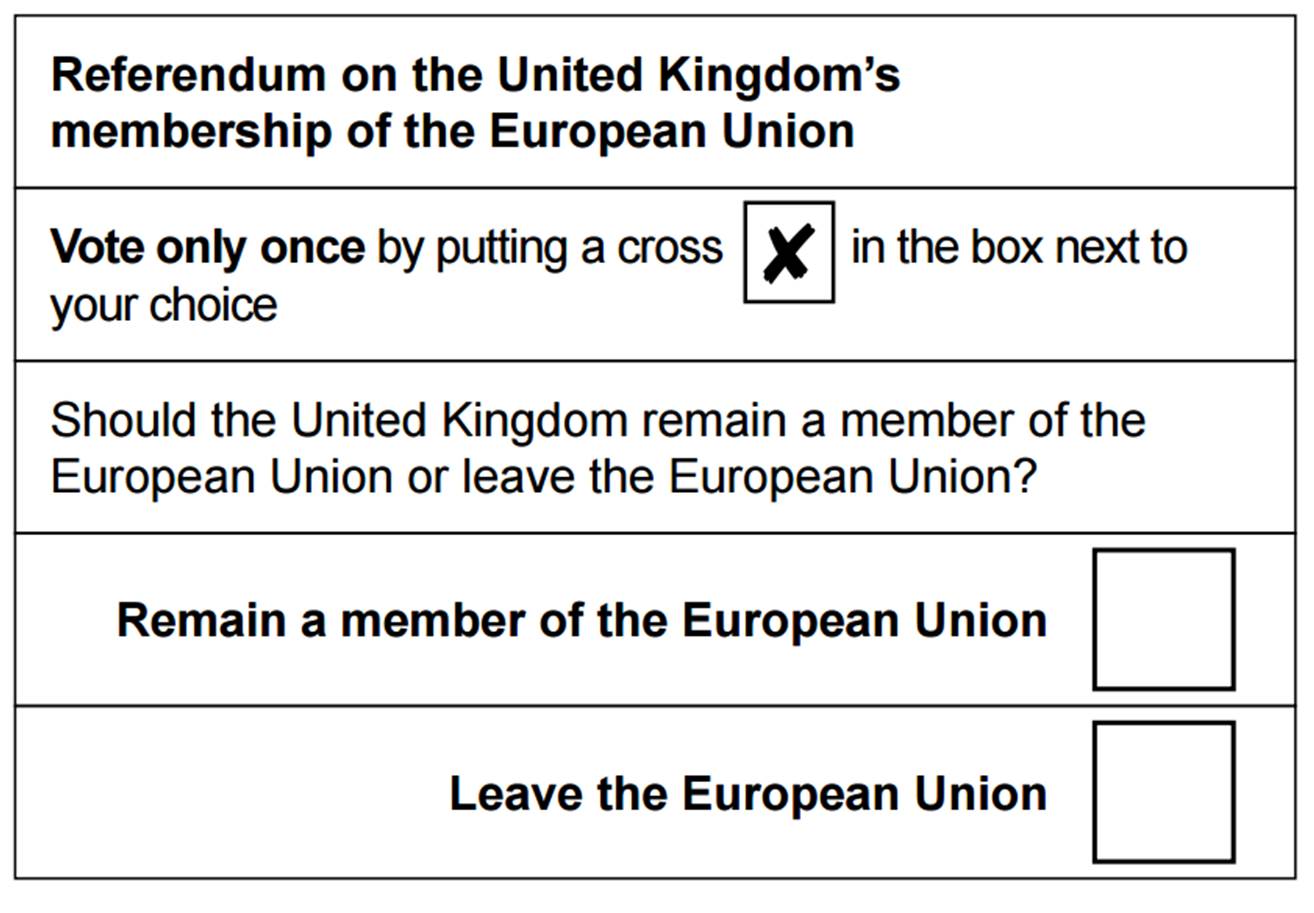
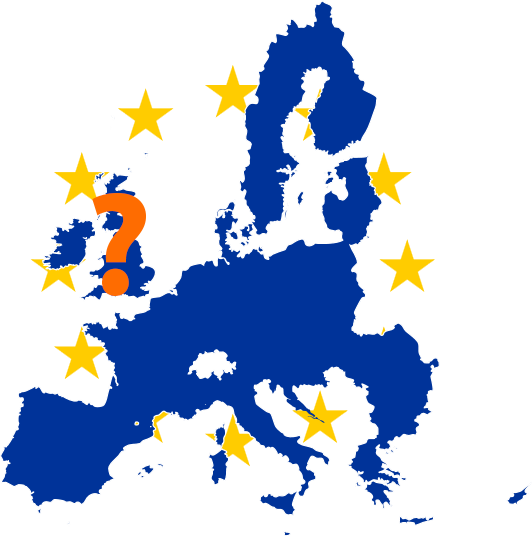 Before the referendum, economists overwhelmingly argued that the economic case for the UK remaining in the EU was much stronger than that for leaving. They warned of serious economic consequences, both short term and long term, of a Brexit vote. And yet, by a majority of 51.9% to 48.1% of the 72.1% of the electorate who voted, the UK voted to leave the EU.
Does this mean that economists failed to communicate to the electorate? Were the arguments presented poorly or in too academic a way?
Or did people simply not believe the economists’ forecasts, being cynical about the ability of economists to forecast? During the campaign, on several occasions I heard people repeating the joke that economists had successfully predicted five out of the last two recessions!
 Did they not believe the data that immigrants from other EU countries to the UK contribute more in taxes they draw in benefits and that overall they make a net positive contribution to output per head? Or perhaps they believed the claims that immigrants imposed a net cost on the economy.
Or were there ‘non-economic’ issues that people found more persuasive, such as questions of sovereignty or national identity? Or was the strain on local resources, such as health services, schools and housing, blamed on immigration itself rather than on a lack of spending on additional resources – the funding for which could have come from the extra GDP generated by the immigration?
Or were there so many lies told by politicians and those with vested interests that people simply didn’t know whom to believe?
Economists will, no doubt, do a lot of soul searching over the coming months. One such economist is Paul Johnson, Director of the Institute for Fiscal Studies, whose article is linked below.
Article
We economists must face the plain truth that the referendum showed our failings Institute for Fiscal Studies newspaper articles. Paul Johnson (28/6/16)
Questions
- In what ways could economists have communicated better to the general public during the referendum campaign?
- For what reasons may people distrust economists?
- Were economists hampered in delivering their message by ‘balanced reporting’?
- Comment on Paul Johnson’s statement that, ‘The most politically engaged of us spend decades working out how to tweak tax policy, or labour market policy, or competition policy to deliver small benefits. How many times over would our work have been repaid if we had simply convinced a few more people of the basics?’
- Do economists, or at least some of them, need to become more ‘media savvy’?
- How could institutions, such as the Royal Economic Society and the Society of Business Economists, do more to help economists collectively to communicate with the general public?
- Give some examples of the terminology/jargon we use which might be inappropriate for communicating with the general public. Suggest some alternative terms to the examples you’ve given.
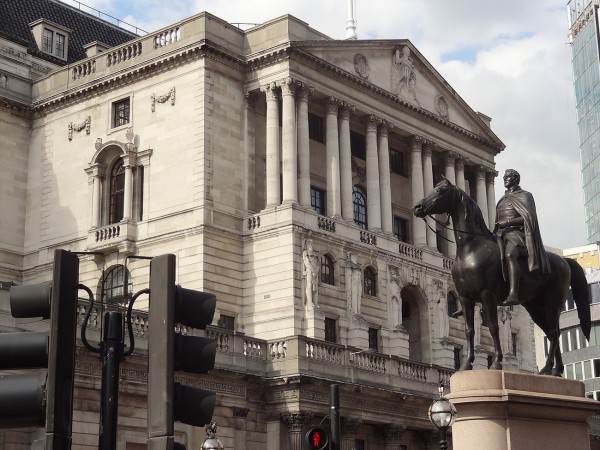 What have been, and will be, the monetary and fiscal responses to the Brexit vote in the referendum of 23 June 2016? This question has been addressed in speeches by Mark Carney, Governor of the Bank of England, and by George Osborne, Chancellor the Exchequer. Both recognise that the vote will cause a negative shock to the economy, which will require some stimulus to aggregate demand to avoid a recession, or at least minimise its depth.
Mark Carney stated that:
The Bank of England stands ready to provide more than £250bn of additional funds through its normal facilities. The Bank of England is also able to provide substantial liquidity in foreign currency, if required.
In the coming weeks, the Bank will assess economic conditions and will consider any additional policy responses.
This could mean that at its the next meeting, scheduled for 13/14 July, the Monetary Policy Committee will consider reducing Bank Rate from its current level of 0.5% and introducing further quantitative easing.
In a speech on 30 June, he went further:
I can assure you that in the coming months the Bank can be expected to take whatever action is needed to support growth subject to inflation being projected to return to the target over an appropriate horizon, and inflation expectations remaining well anchored.
Then in a speech on 5 July, introducing the latest Financial Stability Report, he said that the Bank of England’s Financial Policy Committee is lowering the required capital ratio of banks, thereby freeing up capital for lending to customers. The part being lowered is the ‘countercyclical capital buffer’ – the element that can be varied according to the state of the economy. Mark Carney said:
The FPC is today reducing the countercyclical capital buffer on banks’ UK exposures from 0.5% to 0% with immediate effect. This is a major change. It means that three quarters of UK banks, accounting for 90% of the stock of UK lending, will immediately have greater flexibility to supply credit to UK households and firms.
Specifically, the FPC’s action immediately reduces regulatory capital buffers by £5.7 billion and therefore raises banks’ capacity to lend to UK businesses and households by up to £150 billion. For comparison, last year with a fully functioning banking system and one of the fastest growing economies in the G7, total net lending in the UK was £60 billion.
Thus although there may be changes to interest rates and narrow money in response to economic reactions to the Brexit vote, the monetary policy framework remains unchanged. This is to achieve a target rate of CPI inflation of 2% at the 24-month time horizon.
 But what of fiscal policy?
In its Charter for Budget Responsibility, updated in the Summer 2015 Budget, the government states its Fiscal Mandate:
3.2 In normal times, once a headline surplus has been achieved, the Treasury’s mandate for fiscal policy is:
• a target for a surplus on public-sector net borrowing in each subsequent year.
3.3 For the period outside normal times from 2015-16, the Treasury’s mandate for fiscal policy is:
• a target for a surplus on public-sector net borrowing by the end of 2019-20.
3.4 For this period until 2019-20, the Treasury’s mandate for fiscal policy is supplemented by:
• a target for public-sector net debt as a percentage of GDP to be falling in each year.
The target of a PSNB surplus by 2019-20 has been the cornerstone of recent fiscal policy. In order to stick to it, the Chancellor warned before the referendum that a slowdown in the economy as a result of a Brexit vote would force him to introduce an emergency Budget, which would involve cuts in government expenditure and increases in taxes.
 However, since the vote he is now saying that the slowdown would force him to extend the time for reaching a surplus beyond 2019-20 to avoid dampening the economy further. But does this mean he is abandoning his fiscal target and resorting to discretionary expansionary fiscal policy?
George Osborne’s answer to this question is no. He argues that extending the deadline for a surplus is consistent with paragraph 3.5 of the Charter, which reads:
3.5 These targets apply unless and until the Office for Budget Responsibility (OBR) assess, as part of their economic and fiscal forecast, that there is a significant negative shock to the UK. A significant negative shock is defined as real GDP growth of less than 1% on a rolling 4 quarter-on-4 quarter basis. If the OBR assess that a significant negative shock:
|
|
| • |
occurred in the most recent 4 quarter period; |
| • |
is occurring at the time the assessment is being made; or |
| • |
will occur during the forecast period |
then:
|
|
| • |
if the normal times surplus rule in 3.2 is in force, the target for a surplus each year is suspended (regardless of future data revisions). The Treasury must set out a plan to return to surplus. This plan must include appropriate fiscal targets, which will be assessed by the OBR. The plan, including fiscal targets, must be presented by the Chancellor of the Exchequer to Parliament at or before the first financial report after the shock. The new fiscal targets must be approved by a vote in the House of Commons. |
| • |
if the shock occurs outside normal times, the Treasury will review the appropriateness of its fiscal targets for the period until the public finances return to surplus. Any changes to the targets must be approved by a vote in the House of Commons. |
| • |
once the budget is in surplus, the target set out in 3.2 above applies. |
In other words, if the OBR forecasts that the Brexit vote will result in GDP growing by less than 1%, the Chancellor can delay reaching the surplus and thus not have to introduce tougher austerity measures. This, in effect, is what he is now saying and maintaining that, because of paragraph 3.5, it does not break the Fiscal Mandate. The nature of the next Budget, probably in the autumn, will depend on OBR forecasts.
A few days later, George Osborne announced that he plans to cut corporation tax from the current 20% to less than 15% – below the rate of 17% previously scheduled for 2019-20. His aim is not just to stimulate the economy, but to attract inward investment, as the rate would below that of any major economy and close the rate of 12.5% in Ireland. His hope would also be to halt the outflow of investment as companies seek to relocate in the EU.
Videos and podcasts
 Statement from the Governor of the Bank of England following the EU referendum result Bank of England (24/6/16)
Uncertainty, the economy and policy – speech by Mark Carney Bank of England (30/6/16)
Introduction to Financial Stability Report, July 2016 Bank of England (5/7/16)
Osborne: Life will not be ‘economically rosy’ outside EU BBC News (28/6/16)
Osborne takes ‘realistic’ view over surplus target BBC News (1/7/16)
Why has George Osborne abandoned a key economic target? BBC News (1/7/16)
Articles
Mark Carney says Bank of England ready to inject £250bn into economy to keep UK afloat after EU referendum Independent, Zlata Rodionova (24/6/16)
Carney Signals Rate Cuts as Brexit Chaos Engulfs Political Class Bloomberg, Scott Hamilton (30/6/16)
Bank of England hints at UK interest rate cuts over coming months to ease Brexit woes International Business Times, Gaurav Sharma (30/6/16)
Carney prepares for ‘economic post-traumatic stress’ Financial Times, Emily Cadman (30/6/16)
Bank of England warns Brexit risks beginning to crystallise BBC News (5/7/16)
Bank of England tells banks to cut buffer to boost lending Financial Times, Caroline Binham and Chris Giles (5/7/16)
George Osborne puts corporation tax cut at heart of Brexit recovery plan Financial Times (3/7/16)
George Osborne corporation tax cut is the wrong way to start EU negotiations, former WTO boss says Independent, Hazel Sheffield (5/7/16)
George Osborne abandons 2020 UK surplus target Financial Times, Emily Cadman and Gemma Tetlow (1/7/16)
George Osborne scraps 2020 budget surplus plan The Guardian, Jill Treanor and Katie Allen (1/7/16)
Osborne abandons 2020 budget surplus target BBC News (1/7/16)
Brexit and the easing of austerity BBC News, Kamal Ahmed (1/7/16)
Osborne Follows Carney in Signaling Stimulus After Brexit Bloomberg, Simon Kennedy (1/7/16)
Questions
- Explain the measures taken by the Bank of England directly after the Brexit vote.
- What will determine whether the Bank of England engages in further quantitative easing beyond the current £385bn of asset purchases?
- How does monetary policy easing (or the expectation of it) affect the exchange rate? Explain.
- How effective is monetary policy for expanding aggregate demand? Is it more or less effective than using monetary policy to reduce aggregate demand?
- Explain what is meant by (a) capital adequacy ratios (tier 1 and tier 2); (b) countercyclical buffers. (See, for example, Economics 9th edition, page 533–7 and Figure 16.2))
- To what extent does increasing the supply of credit result in that credit being taken up by businesses and consumers?
- Distinguish between rules-based and discretionary fiscal policy. How would you describe paragraph 3.5 in the Charter for Budget Responsibility?
- Would you describe George Osborne’s proposed fiscal measures as expansionary or merely as less contractionary?
- Why is the WTO unhappy with George Osborne’s proposals about corporation tax?
- What is the Nash equilibrium of countries seeking to undercut each other’s corporation tax rates?
 In April we asked how sustainable is the UK’s appetite for credit? Data in the latest Bank of England’s Money and Credit publication suggest that such concerns are likely grow. It shows net lending (lending net of repayments) by monetary financial institutions (MFIs) to individuals in March 2016 was £9.3 billion, the highest monthly total since August 2007. This took net borrowing over the previous 12 months to £58.6 billion, the highest 12-month figure since September 2008.
The latest credit data raise fears about the impact on the financial well-being of individuals. The financial well-being of people, companies, banks and governments can have dramatic effects on economic activity. These were demonstrated vividly in the late 2000s when a downturn resulted from attempts by economic agents to improve their financial well-being. Retrenchment led to recession. Given the understandable concerns about financial distress we revisit our April blog.
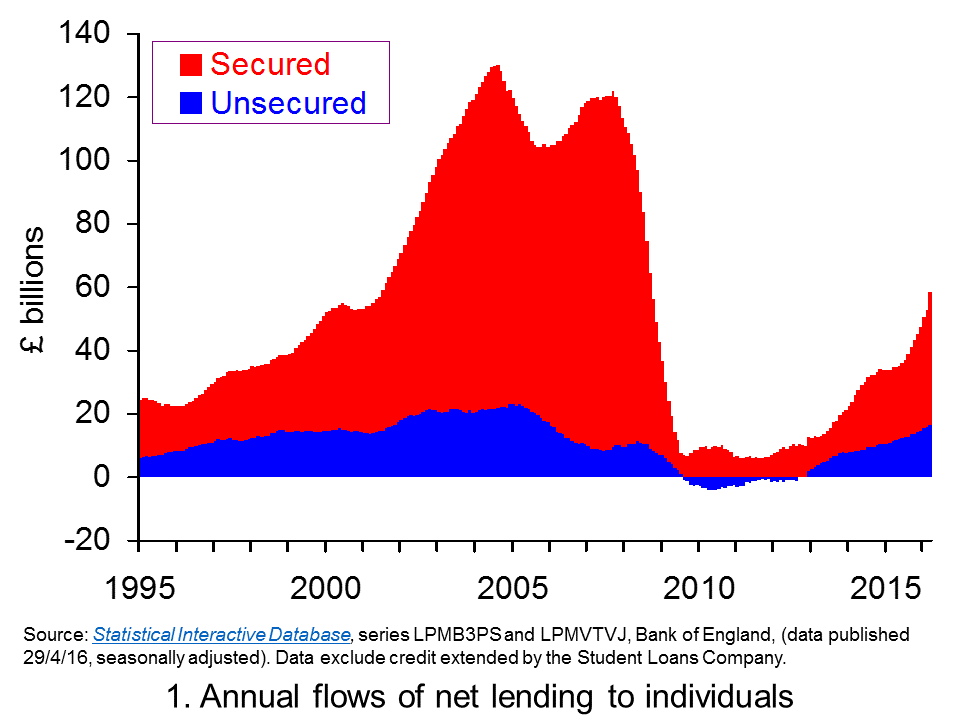 Chart 1 shows the annual flow of lending extended to individuals, net of repayments. (Click here to download a PowerPoint of Chart 1.) The chart provides evidence of cycles both in secured lending and in consumer credit (unsecured lending).
The growth in net lending during the 2000s was stark as was the subsequent squeeze on lending that followed. During 2004, for example, annual net flows of lending from MFIs to individuals exceeded £130 billion, the equivalent of close on 10.5 per cent of annual GDP. Secured lending was buoyed by strong house price growth with UK house price inflation rising above 14 per cent. Nonetheless, consumer credit was very strong too equivalent to 1.8 per cent of GDP.
Net lending collapsed following the financial crisis. In the 12 months to March 2011 the flow of net lending amounted to just £3.56 billion, a mere 0.2 per cent of annual GDP. Furthermore, net consumer credit was now negative. In other words, repayments were exceeding new sums being extended by MFIs.
Clearly, as Chart 1 shows, net lending to individuals is again on the rise. This partly reflects a rebound in sections of the UK housing market. Net secured lending in March was £7.435 billion, the highest monthly figure since November 2007. Over the past 12 months net secured lending has amounted to £42.1 billion, the highest 12-month figure since October 2008.
Yet the growth of unsecured credit has been even more spectacular. In March net consumer credit was £1.88 billion (excluding debt extended by the Student Loans Company). This is the highest month figure since March 2005. It has taken the amount of net consumer credit extended to individuals over the past 12 months to £16.435 billion, the highest figure since December 2005.
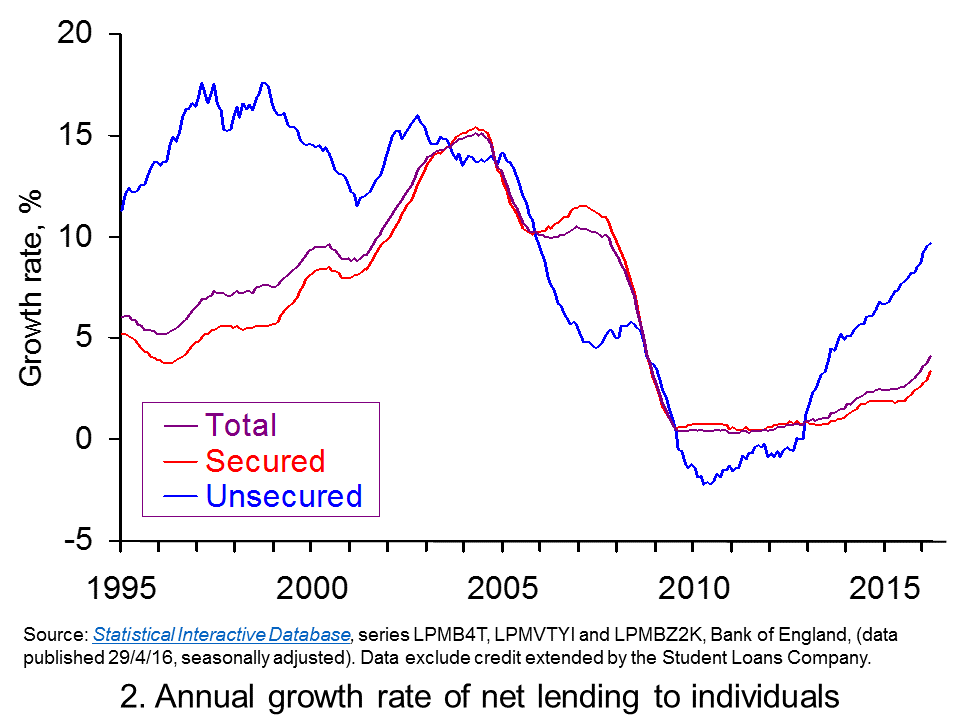 Chart 2 shows the annual growth rate of both forms of net lending by MFIs. In essence, this mirrors the growth rate in the stocks of debt – though changes in debt stocks can also be affected by the writing off of debts. The chart captures the very strong rates of growth in net unsecured lending from MFIs. We are now witnessing the strongest annual rate of growth in consumer credit since November 2005. (Click here to download a PowerPoint of the chart.)
The growth in household borrowing, especially that in consumer credit, evidences the need for individuals to be mindful of their financial well-being. Given that these patterns are now becoming well-established you can expect to see considerable comment in the months ahead about our appetite for credit. Can such an appetite for borrowing be sustained without triggering a further balance sheet recession as experienced at the end of the 2000s?
Articles
Consumer credit rises at fastest pace for 11 years The Guardian, Hilary Osborne (29/4/16)
Debt bubble fears increase as consumer credit soars to 11-year high The Telegraph, Szu Ping Chan (29/4/16)
Fears of households over-stretching on borrowing as consumer credit grows The Scotsman, (29/4/16)
History repeating? Fears of another financial crisis as borrowing reaches 11-year high Sunday Express, Lana Clements (29/4/16)
The chart that shows we put more on our credit cards in March than in any month in 11 years Independent, Ben Chu (1/4/16)
Britain’s free market economy isn’t working The Guardian (13/1/16)
Data
Money and Credit – March 2016 Bank of England
Bankstats (Monetary and Financial Statistics) – Latest Tables Bank of England
Statistical Interactive Database Bank of England
Questions
- What does it mean if individuals are financially distressed?
- How would we measure the financial well-being of individuals and households?
- What actions might individuals take it they are financially distressed? What might the economic consequences be?
- How might uncertainty affect spending and saving by households?
- What measures can policymakers take to reduce the likelihood that flows of credit become too excessive?
- What is meant by a balance sheet recession?
- Explain the difference between secured debt and unsecured debt.
- Should we be more concerned about the growth of consumer credit than secured debt?
 In the blog post, Global warning, we looked at the use of unconventional macroeconomic policies to deal with the slow pace of economic growth around the world. One of the articles was by Nouriel Roubini. In the linked article below, he argues that slow economic growth may be the new global norm.
At the centre of the problem is a fall in the rate of potential economic growth. This has been caused by a lack of investment, which has slowed the pace of innovation and the growth in labour productivity.
The lack of investment, in turn, has been caused by a lack of spending by both households and governments. What is the point in investing in new capacity, argue firms, if they already have spare capacity?
Low consumer spending is partly the result of a redistribution of income from low- and middle-income households (who have a high marginal propensity to consume) to high-income households and corporations (who have a low mpc). Low spending is also the result of both consumers and governments attempting to reduce their levels of debt by cutting back spending.
Low growth leads to hysteresis – the process whereby low actual growth leads to low potential growth. The reason is that the unemployed become deskilled and the lack of investment by firms reduces the innovation that is necessary to embed new technologies.
Read Roubini’s analysis and consider the policy implications.
Article
Has the global economic growth malaise become the ‘new normal’? The Guardian, Nouriel Roubini (2/5/16)
Questions
- Explain what is meant by ‘hysteresis’ and how the concept is relevant in explaining low global economic growth.
- Why has there been a reduction in the marginal propensity to consume in recent years? What is the implication of this for the multiplier and economic recovery?
- Explain what Roubini means by ‘a painful de-leveraging process’. What are the implications of this process?
- How important are structural reforms and what forms could these take? Why has there been a reluctance for governments to institute such reforms?
- ‘Asymmetric adjustment between debtor and creditor economies has also undermined growth.’ Explain what Roubini means by this.
- Why are governments reluctant to use fiscal policy to boost both actual and potential economic growth?
- What feasible policy measures could be taken to boost actual and potential economic growth?
 The Brexit vote has caused shockwaves throughout European economies. But there is a potentially larger economic and political problem facing the EU and the eurozone more specifically. And that is the state of the Italian banking system and the Italian economy.
 If bondholders were large institutional investors, this might not be such a problem, but a significant proportion of bank bonds in Italy are held by small investors, encouraged to do so by tax relief. Bailing in the banks by requiring bondholders to bear significant losses in the value of their bonds could undermine the savings of many Italians and cause them severe hardship, especially those who had saved for their retirement.