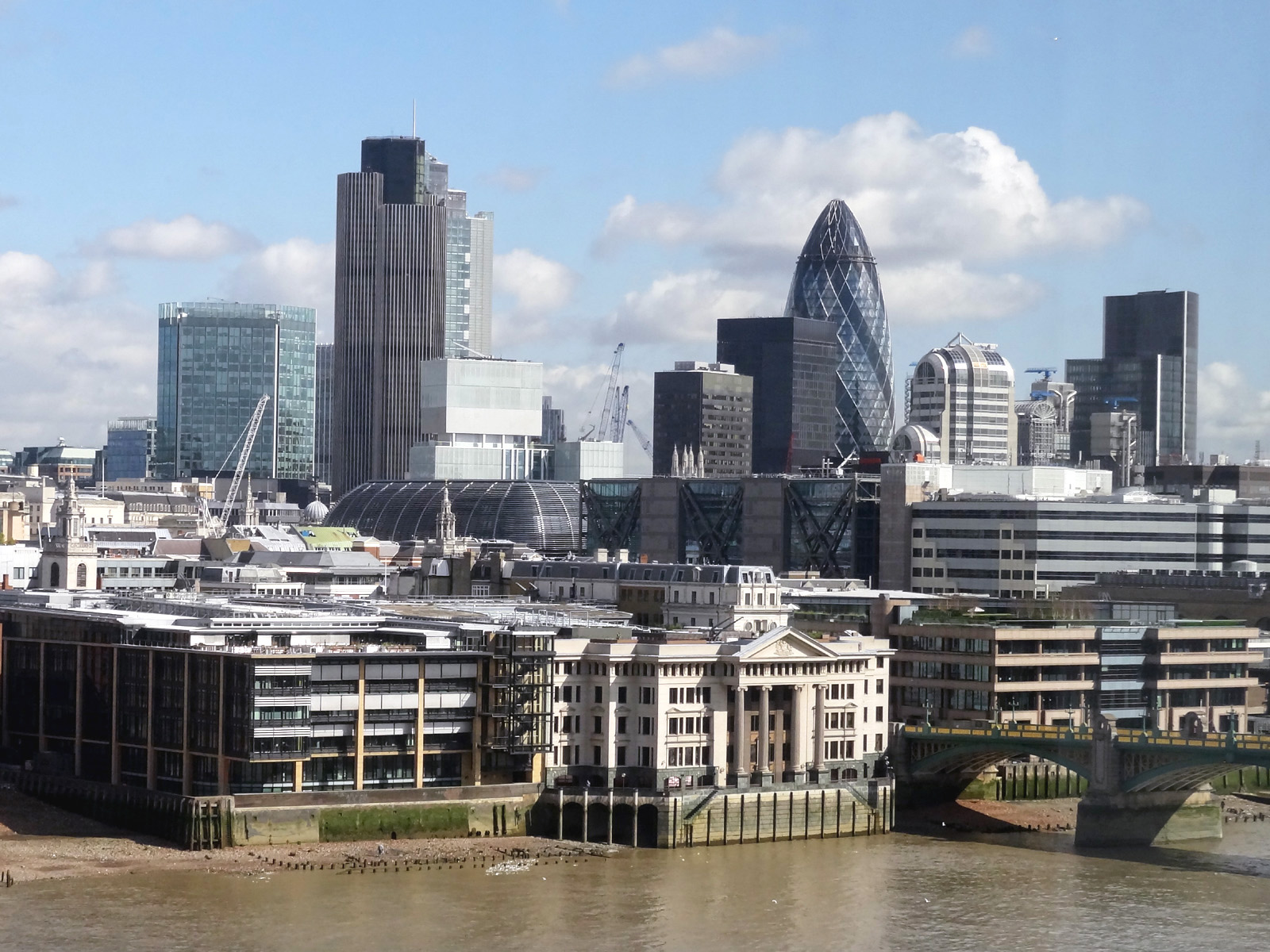
 In the third quarter of 2011, the UK economy grew by 0.6% – nothing to shout about, but at least it was positive. Since then there has been growing concern about the state of the recovery with many commentators widely expecting to see much lower growth in the final quarter of last year.
Today, those commentators were proved right, as official figures released show the UK economy shrank by 0.2%. It doesn’t mean we’re in a recession (that requires 2 successive quarters of negative growth), but if growth doesn’t pick up in quarter 1 of 2012, then ‘Double-Dip Recession’ headlines will fill the front page.
Despite the disappointment that the UK economy has shrunk, the figures were not wholly unexpected, especially given the data released a week or so before, which showed unemployment had risen. Furthermore, with the crisis in the eurozone and many other countries still struggling to mount an economic recovery, there have been few external stimuli for the UK.
Although the fall in growth was larger than expected (0.2% as opposed to the predicted 0.1%), the UK economy is expected to grow throughout 2012. However, the IMF has reduced its forecast annual growth rate from 1.6% to 0.6%. The economic climate for 2012 remains uncertain and much will depend on developments in the eurozone. Further problems could spell trouble, but if there is an improvement in the fortunes of Europe, confidence could return to the markets and economic recovery could be faster. Ian McCafferty, the Chief Economic Adviser of the CBI said:
While the acute fears seen at the end of last year over global demand may be subsiding, 2012 will prove to be a difficult year for UK manufacturing, as the crisis in the eurozone – our biggest export market – has yet to reach any definitive resolution.
Whether or not we do move into a double-dip recession is uncertain and following this latest data, many commentators say it is a 50:50 change; and even then it hinges on many factors. However, even if quarter 1 of 2012 sees negative growth and hence a return to recession for the UK, Chris Williamson from Markit said that ‘there are growing indications that any downturn is likely to be ‘mild and short-lived’. The following articles consider the state of the UK economy.
Unemployment to soar as UK heads back into recession The Telegraph, Philip Aldrick (25/1/12)
UK economy shrinks by 0.2% in last 3 months of 2011 BBC News (25/1/12)
UK GDP: what the economists say Guardian (25/1/12)
UK recession threat: can we dodge the double dip? Citywire, Chris Marshall (25/1/12)
Double-dip recession fears as UK economy shrinks 0.2 percent Independent, Peter Cripps (25/1/12)
PM says ‘no complacency’ on economy Financial Times, Norma Cohen and Elizabeth Rigby (25/1/12)
The UK economy is shrinking. Time to listen to gloom-mongers? Guardian, Phillip Inman (25/1/12)
UK economy shrinks in Q4, raising recession fears The Associated Press (25/1/12)
FTSE CLOSE: Stocks slide as 0.2% GDP fall sparks recession fears; banks among the biggest fallers This is Money (25/1/12)
Sorrell: ‘UK will avoid double-dip recession’ Sky News, Tom Rayner (25/1/12)
Recovery in rehab BBC News, Stephanie Flanders (25/1/12)
Questions
- How is a recession defined? What are the typical characteristics of a recession? (Think about the macroeconomic objectives).
- Which particular sectors of the UK economy were the most severely affected in Q4 of 2011?
- Examine the main causes of the UK’s decline in national output.
- Which of the causes identified in question 3 do you think is the key factor keeping UK national output from growing? Explain your answer.
- Why is there a growing presence of companies from emerging markets in the top 100?
- Why are many commentators suggesting that even if the UK goes into a recession, it is likely to be ‘mild and short-lived’?
- What has happened to stock markets following the release of this latest economic data?
- Evaluate the options open to the Coalition government in stimulating the UK economy. To what extent would your policy solution damage the Coalition’s aim of cutting the UK’s structural budget deficit?
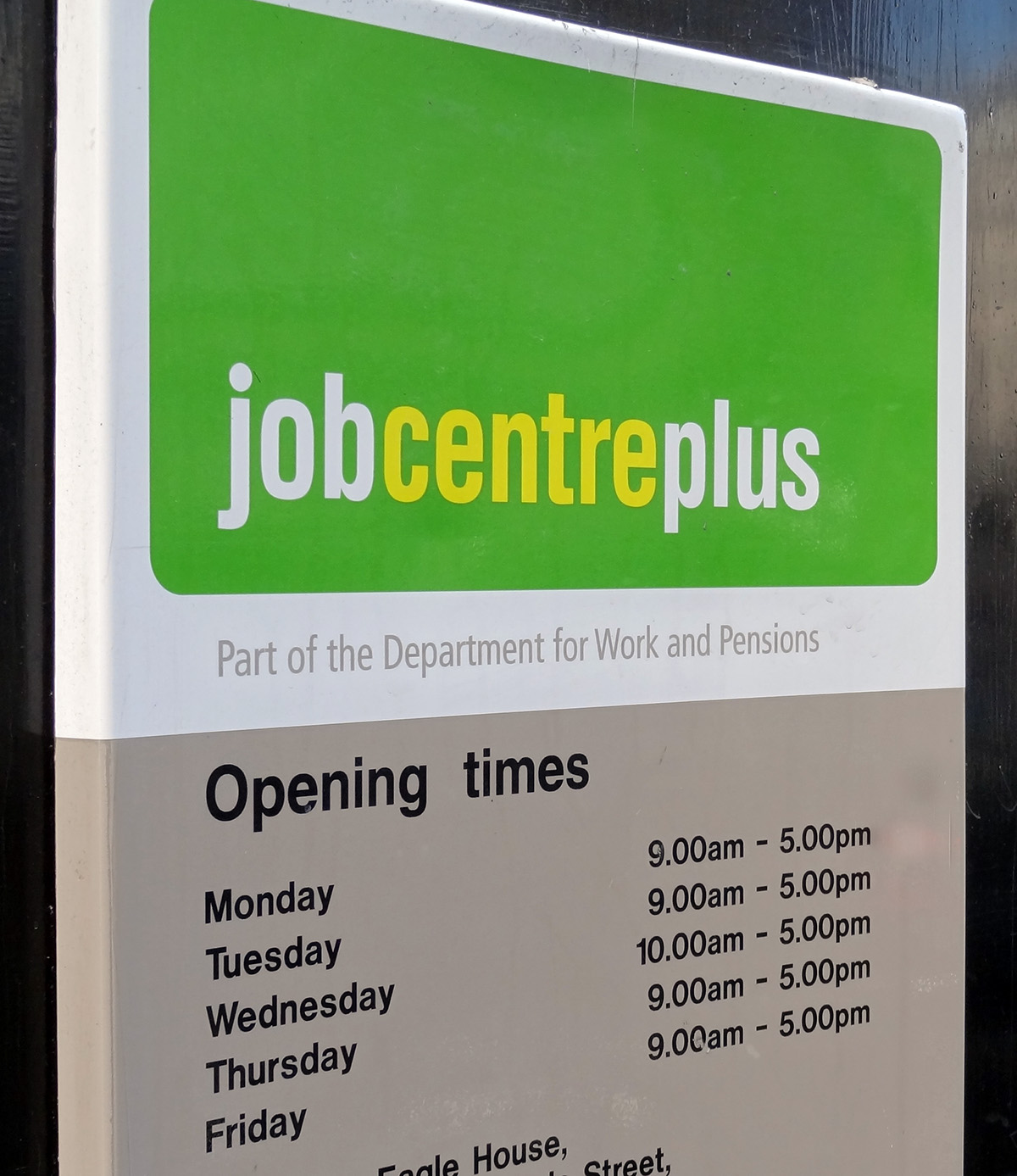 Disagreements are hardly an uncommon occurrence during Prime Minister’s Questions and today the key issue up for debate was UK unemployment. Figures released show that in the 3 months to November 2011, UK unemployment rose to 2.685 million – an increase of 118,000. The ONS said that unemployment now stands at 8.4% – the highest figure in well over a decade.
However, the increase in unemployment is not as high as it was in the 3 months previous to that, which is possibly an indication that the labour market is slowly beginning to recover and the government’s labour market policies are starting to take effect. The government claimed that cuts in the public sector will be compensated by growth in private sector jobs, but the evidence from the ONS did little to back this up.
The labour market is crucial for the recovery of the UK. Jobs mean income and income means consumer spending. If the job market remains uncertain and more people enter unemployment, consumer spending is likely to remain weak for some time. Chris Williamson, the chief economist at Markit:
The increase in unemployment, plus job security worries and low pay growth for those in work, means consumer spending may remain very subdued this year, despite lower inflation alleviating the squeeze on real incomes that caused so much distress to households in 2011.
One area of specific criticism leveled at the Coalition was the extent of youth unemployment, which reached 22.3%. Ed Miliband said the government had cut ‘too far and too fast’ and that it will be remembered for standing aside and doing nothing ‘as thousands of people find themselves unemployed’. The figures are clearly concerning, but the Coalition maintains that policies designed to tackle the labour market are beginning to take effect and over the coming months, the economy will begin to see a decline in the unemployment rate. The following articles look at the unemployment crisis.
Articles
UK unemployment rises to 2.8m Guardian, Heather Stewart (18/1/12)
Leaders clash in commons over jobless rise BBC News (18/1/12)
UK jobless rate hits new 17-year high Financial Times, Brian Groom (18/1/12)
Unemployment rise: reaction The Telegraph, Louise Peacock (18/1/12)
Unemployment total rises by 19000 The Press Association (18/1/12)
Politicians give cautious welcome as quarterly unemployment falls by 1000 in Wales WalesOnline, Claire Miller (18/1/12)
 Employment Minister: unemployment is too high The Telegraph (18/1/12)
Chris Grayling: ‘Unemployment figures are complex’ BBC News (18/1/12)
Data
Unemployment in graphics BBC News (18/1/12)
Data Tables: Labour Market Statistics Excel Spreadsheets ONS January 2012
Questions
- What type of unemployment is being referred to in the above articles?
- Explain the mechanism by which a recession will lead to higher unemployment.
- Using a diagram to help your explanation, analyse the impact of a fall in aggregate demand on the equilibrium unemployment rate and wage rate. What happens to unemployment if wages are sticky downwards?
- What can explain such different stories of unemployment between Scotland, England and Wales?
- What policies have the Coalition implemented to tackle the rising problem of unemployment? On what factors will their effectiveness depend?
- Why is the UK’s job market so important for the future economic recovery of the UK?
There has been much talk of a double-dip recession, with many suggesting that the UK economy is already in a recession. However, according to the British Chambers of Commerce (BCC), a recession is not inevitable. Although the businesses surveyed showed that the economy had significantly weakened, John Longworth the Director General of the BCC said that a ‘new recession is not a foregone conclusion’.
Even though many of the figures showed a continued weakening of the economy, the results are still not as bad as they were back in 2008. The concern is that if the weakness continues, as it is predicted to do in the first quarter of 2012, confidence will remain low and then the economy may stagnate and a recession becomes a more likely scenario. Action is needed to prevent this from happening, especially with the eurozone crisis still causing concern. As John Longworth said:
The UK does have the potential to recover and make its way in the world. We have the talent, the energy and the enterprise. All we need is an environment that puts business first.
At the beginning of December 2011, many analysts thought retail sales would remain low, as they had been throughout 2011. However, British consumers came through in the second half of December and retail sales were up by 4.1% compared with a year ago. According to the British Retail Consortium, this Christmas rush should not be seen as a fundamental change in the direction of the economy and will have done little to boost the overall annual sales of most retailers.
Recession ‘not foregone conclusion’ Guardian (10/1/12)
UK economy likely to shrink amid eurozone crisis, says BCC The Telegraph, Angela Monaghan (10/1/12)
UK recession is not yet inevitable, survey says BBC News (10/1/12)
UK risks recession and lengthy stagnation – BCC Reuters, David Milliken (10/1/12)
U.K recession fears build Wall Street Journal, Ilona Billington (10/1/12)
BoE stimulus expansion may not be enough for recovery, BCC says (quick ad before article appears) Business Week, Scott Hamilton (10/1/12)
Questions
- How is a recession defined?
- What data has the BCC used to come to the conclusion that a recession is not inevitable?
- What action is needed by the government to tackle ‘short term stagnation and a lack of business confidence’?
- What could explain the 4.1% increase in sales in December compared with the previous year? Why is this data not thought to represent a ‘fundamental change in the circumstances of UK consumers’?
- What is expected to happen to UK inflation and employment during the first quarter of 2012?
- Why does the eurozone crisis present a problem for confidence and British exporters?
Throughout the credit crunch and since then, one of the major problems in the global economy has been a lack of lending by banks. A key cause of the credit crunch and many of the debt problems countries and people face today is because of people living off borrowed money. In the past, credit was so easy to obtain – people could receive a mortgage for more than 100% of the value of their property. However, when more and more people began to struggle to make their monthly mortgage repayments, the banking crisis began and since then mortgage lenders have become increasingly wary about who they lend to and how much.
The Bank of England has said that in the coming months it will become even harder to obtain mortgages, as banks become increasingly wary about who becomes their customer and potential home buyers put off even applying for a mortgage. Although mortgage approvals are at a 2-year high, they still remain significantly below their pre-crisis level. Indeed, the Bank of England said:
“Lenders expected the proportion of total loan applications being approved to fall over the coming quarter with some lenders commenting that they had revised down expectations for households’ disposable incomes and hence the affordability of taking out new secured loans.”
As part of this new rationing of mortgages, lenders are requiring applicants to put down larger and larger deposits and so for first time buyers, getting on to the property ladder is becoming more and more of a dream. The property market has been suffering from this mortgage rationing as house sales are down below their pre-crisis level. The housing market is crucial to any economy, as so many other sectors and hence jobs depend on it. If mortgages remain scarce and the required deposit so high, the UK housing market is likely to remain stagnant and this will certainly prove damaging for the prospects of the UK economy in 2012.
Articles
Mortgage approvals hit new two-year high The Telegraph, Angela Monaghan (4/1/12)
Mortgage approvals up but overall lending weak Reuters (4/11/12)
Mortgage rationing becomes worse, Bank of England says BBC News (5/1/12)
Mortgage demand fell in Q4 2011, say lenders Mortgage Strategy, Tessa Norman (5/11/12)
Mortgage lending still stagnant, Bank figures show BBC News (4/11/12)
BoE: Lending to be tighter in Q1 2012 Mortgage Introducer, Yuan Phoon (5/11/12)
Data
Lending to Individuals Bank of England
Questions
- Why are mortgages being rationed?
- Why is the housing market so important for the UK economy?
- Which other sectors of the economy employ people whose jobs are dependent on a buoyant housing market?
- Why has the Bank of England said that in the coming months it will become harder to get a mortgage?
- Why would increased mortgage lending be a much needed stimulus for the UK economy?
- Using an aggregate demand and aggregate supply diagram, show how rationing of mortgages and other loans will affect the UK economy.
Original post (19/9/11)
The Independent Commission on Banking (ICB), led by Sir John Vickers, has just delivered its report. Central to its remit was to investigate ways of making retail banking safer and avoid another bailout by the government, as was necessary in 2007/8.
The report recommended the ‘ringfencing’ of retail banking from the more risky investment banking, often dubbed ‘casino banking’. In other words, if the investment arm of a universal bank made a loss, or even faced collapse, this would not affect the retail arm. The ringfenced operations would include banking services to households and small businesses. Wholesale and investment banking would be outside the ringfence. As far as retail banking services to big business are concerned, these could be inside the ringfence, but details would need to be worked out about precisely which banking services to big business would be inside and which would be outside the ringfence.
The ICB was keen to stress that the ringfence should be high and that the retail arm should be both operationally and legally separate from the wholesale/investment arm. The ringfenced part of the bank should have a capital adequacy ratio of up to 20% (above the Basel III recommendations), with at least 10% of liabilities in the form of equity. Capital could only be moved from the ringfenced arm to the investment arm of the bank if this did not breach the 10% ratio.
The ICB report also recommends measures to increase competition in banking, including making it easier to switch accounts, greater transparency about the terms of accounts and a referral of the banking industry for a competition investigation in 2015. The cost to the banking industry of the measures, if fully implemented, is estimated to be between £4m and £7m.
Because of the requirement in the report for banks to build up their capital and the danger that a too rapid process here would jeopardise the expansion of lending necessary to underpin the recovery, banks would be given until 2019 to complete the recommendations. Moves towards this, however, would need to start soon.
Update (19/12/11)
In December 2011, the government announced that it would accept most of the ICB report, including separating retail and investment banking. It would not, however, demand such stringent capital requirements as those recommended in the report.
The following articles examine the details of the proposals and their likely effectiveness. The later articles examine the government’s response.
Original articles (some with videos)
Audio podcasts
ICB report and press conference
Later articles and webcasts
Questions
- Explain the difference between a capital adequacy ratio and a liquidity ratio. Will the Vickers proposals help to increase the liquidity of the retail banking arm of universal banks?
- Does it matter if equity capital in excess of the 10% requirement for retail banking is transferred to a bank’s investment arm?
- What risks are there for a bank in retail banking?
- What are the advantages and disadvantages of bringing in the measures gradually over an 8-year period?
- Does it matter that the capital adequacy requirements are higher than under the internationally accepted standards in Basel III?
- Assume that there is another global financial crisis. Will the proposals in the report mean that the UK taxpayer will not have to provide a bailout?