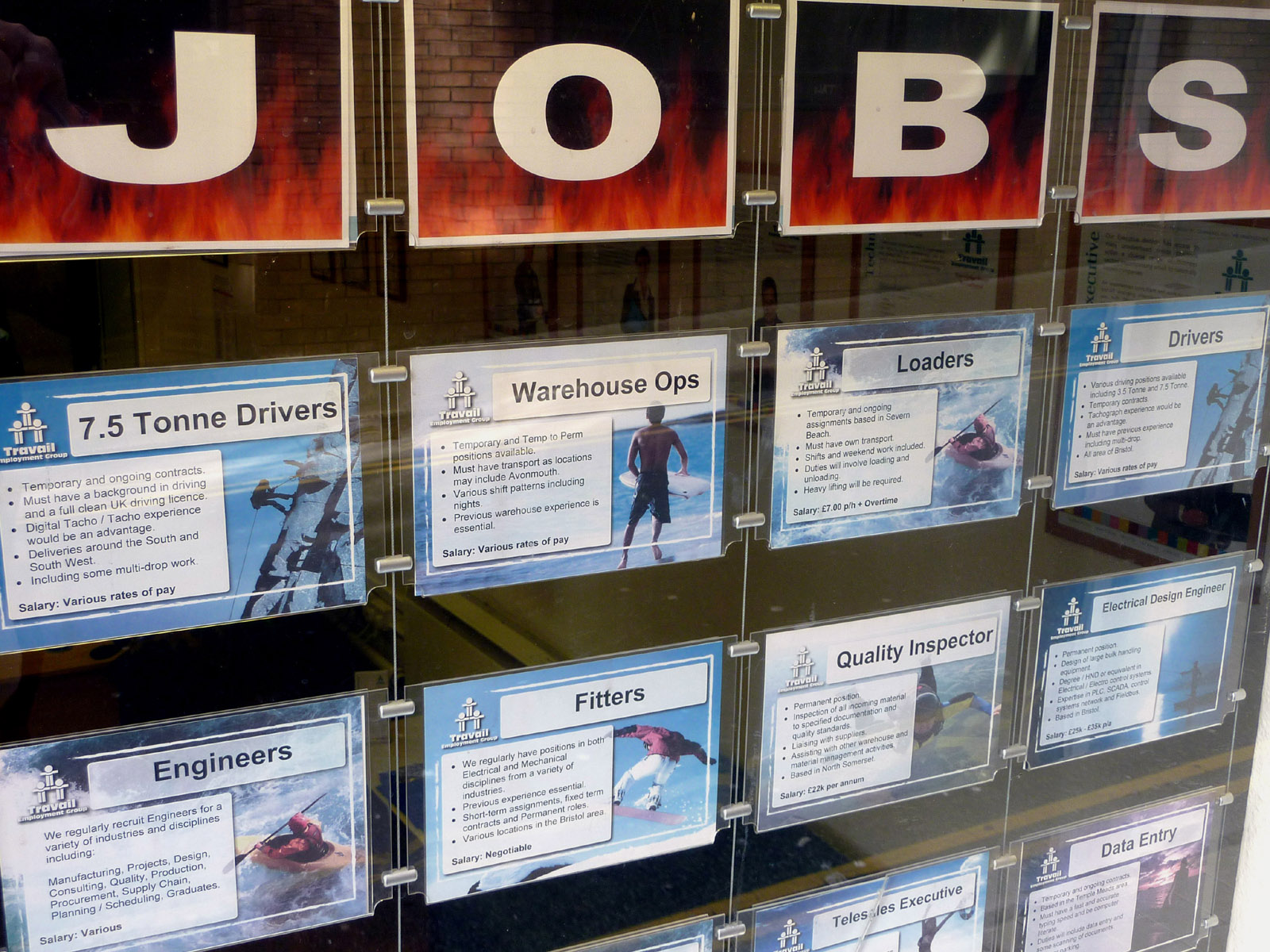
 Unemployment is a term that economists and non-economists are familiar with, even if the non-economists perhaps have a less stringent definition of what we term unemployment. Typically, we say you are unemployed if you are of working age and available for work at the current wage rate, but are not in work. Another important and related concept is that of underemployment, which according to the ONS, is a growing problem in the economy.
Latest figures released by the ONS show that just over 10% of all workers in the UK would like to work more hours each week. This is essentially what underemployment is and it typically affects part-time workers who want to move closer to a full-time job, but are unable to find the necessary hours from their employer. As the economic situation in the UK worsened after the financial crisis, unemployment increased rapidly. Some people went from working full-time to part-time and others simply lost their job. As the economy started to stabilize, people began returning to work, but many found that part-time employment was the only option, despite wanting to work many more hours at the going wage rate. As the ONS said:
During this period [the economic downturn] many workers moved from full-time to part-time roles and many of those returning to work after a period of unemployment could only find part-time jobs … Of the extra one million underemployed workers in 2012 compared with 2008, three-quarters were in part-time posts.
The increase in underemployment has levelled off and though the recession has been a key contributing factor to the higher levels of underemployment, it’s important to note that it can be caused by a few things, as outlined by the ONS.
• employers only being able to offer a few hours of work each week
• workers, such as bar staff, being in jobs where they are only required for a few hours a day
• personal circumstances changing so that someone now wants to work more hours than before
• people settling for a part-time job as second-best when they would much rather have a full-time one
 Although many people are happy with their part-time jobs and hence would not see themselves as underemployed, for those who are underemployed, the fact that they cannot find sufficient hours seems to indicate an inefficiency within the economy, especially if long-term unemployment or underemployment emerges. This problem is particularly relevant amongst the young and those in low-skilled jobs. However, it is also an increasing problem amongst the self-employed.
The implications of underemployment are far-reaching. Naturally it adversely affects an individual’s financial situation, which at the current time with rising household bills can have devastating consequences. There are also wider effects such as the economic implications in terms of economic growth and inefficiency, as well as a potential increased strain on the tax and benefits system. Given these far-reaching consequences, it is an issue that everyone should be concerned about. The following articles consider the growth of underemployment in the UK economy.
Underemployed workers jump by 1m since financial crisis Telegraph, Rebecca Clancy (28/11/12)
 Underemployment affects 10.5% of UK workforce (including video) BBC News (28/11/12)
Economic crash leaves an extra 1million workers under-employed and wanting more hours Mail Online (28/11/12)
UK is underemployed: should we be surprised? BBC News, Stephanomics, Stephanie Flanders (28/11/12)
Unemployment affects 1 in 10 workers, ONS says Guardian, Mark King (28/11/12)
One in 10 workers no underemployed Financial Times, Brian Groom (28/11/12)
Underemployment rises to affect one in ten workers Channel 4 News (28/11/12)
Questions
- What is the difference between unemployment and underemployment? Is one worse than the other?
- Why did underemployment initially begin to rise after the financial crisis and what factors helped to slow the increase?
- How can underemployment be measured? Is it likely to be accurate?
- Part-time work has risen in recent decades, as part of a more flexible labour market. Do you think this is a good thing or does it add to the problem of underemployment?
- What are the economic implications of underemployment? You should think about the effects on an individual, their family, society and the wider economy.
- How can someone who is self-employed be classed as underemployed?
- What action, if any, can be taken by the government to tackle the rising problem of underemployment?
 UK Unemployment figures for the July to September period have just been published. Perhaps surprisingly, the rate has fallen to 7.8% from 8.0% in the previous 3-month period. What is more, there have been similar 0.2 percentage-point falls in each of the two 3-month periods prior to that (see chart below).
This would normally suggest that the economy has been growing strongly and faster than the growth in potential output. But, despite positive economic growth in quarter 3 (see A positive turn of events?), the economy has been experiencing a prolonged period of low or negative growth.
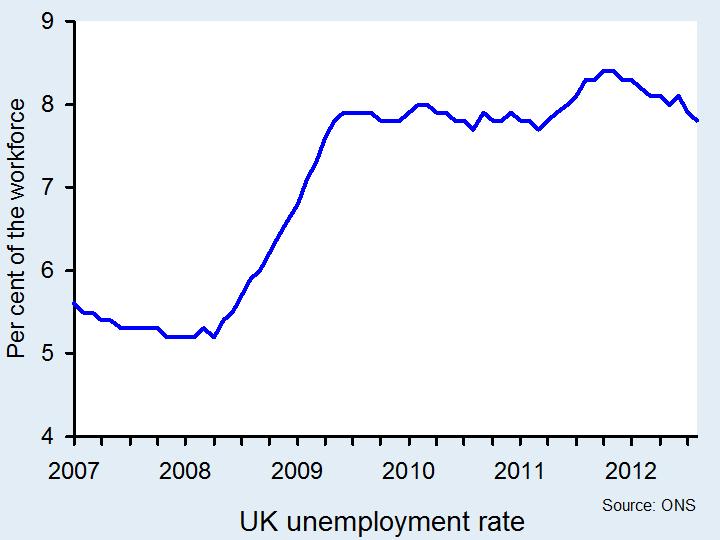
So what is the explanation for the fall in unemployment? (For a PowerPoint of the chart, click here)
One reason is a greater flexibility in the labour market than in previous recessions. People are more willing to accept below inflation wage increases, or even nominal wage cuts, in return for greater job security. Others are prepared to reduce their hours.
The other reason is a fall in productivity (i.e. output per hour worked). One explanation is that people are not working so hard because, with a lack of demand, there is less pressure on them to be productive; a similar explanation is that firms are ‘hoarding’ labour in the hope that the market will pick up again.
Another explanation is that employment growth has often occurred in the low productivity industries, such as labour-intensive service industries; another is that when people leave their jobs they are replace by less productive workers on lower wages; another is that workers are making do with ageing equipment, whose productivity is falling, because firms cannot afford to invest in new equipment. An range of possible explanations is given on page 33 of the Bank of England’s November 2012 Inflation Report.
But with many predicting that growth will be negative again in 2012 quarter 4, the fall in unemployment may not continue. Britain may join many other countries in Europe and experience rising unemployment as well as falling output.
Articles
Government hails fall in jobless total The Guardian, Hélène Mulholland (14/11/12)
UK unemployment figures: analysis The Guardian, Larry Elliott (14/11/12)
Jobless claims rise as Olympics effect wanes The Telegraph, Rachel Cooper and Louisa Peacock (14/11/12)
UK unemployment falls to 2.51 million, ONS says BBC News (14/11/12)
Unemployment continuing to fall BBC News, Stephanie Flanders (14/11/12)
Britain’s recession: Harsh but fair? BBC News, Stephanie Flanders (17/10/12)
The UK productivity puzzle (cont’d) BBC News, Stephanie Flanders (20/9/12)
UK jobs: The plot thickens BBC News, Stephanie Flanders (15/8/12)
Data
Unemployment: the key UK data and benefit claimants for every constituency Guardian Data Blog
Labour Market Statistics, November 2012 ONS
Video Summary: Latest on the Labour Market, November 2012 ONS
Labour Productivity, Q2 2012 ONS
International Comparisons of Productivity, First estimates for 2011 ONS
Questions
- What possible explanation are there for the latest fall in unemployment?
- What has been happening to employment, both full time and part time?
- What are the different ways of measuring productivity? Why will they be affected differently by a fall in the average number of hours worked?
- Why might it be in firms’ interests to maintain the level of their workforce despite falling sales?
- Assume that there has been a fall in aggregate demand. Compare the resulting effect on consumption of (a) a fall in wages rates; (b) a rise in unemployment. How might the design of the benefit system affect the answer?
 More and more food banks are opening every week across the developed world. In the UK alone, there are over 250 food banks. These are run by volunteers and provide food and other basic provisions to those who struggle to feed themselves and their children. The food is donated by people or sometimes supermarkets. Some food banks receive financial help from local authorities.
According to the Trussell Trust, which runs many food banks in the UK, “In 2011-12 food banks fed 128,687 people nationwide, 100% more than the previous year.” But why, in mixed economies, where the State is expected to provide benefits to the poor, do so many people have to resort to food handouts?

Partly the problem is a cut in benefits – a response of many countries to rising public-sector deficits; partly it’s delays in receiving benefits or the complexities in claiming; partly it’s because some people have had their benefits suspended because of a change in their circumstances or changes in the conditions for claiming benefits; partly it’s the inability of people to afford to feed their families properly in times of rising food and energy prices and rising rents, where incomes are not rising in line with the personal rates of inflation that poor households experience; partly it’s the sky-high interest rates that many poor people, often deep in debt, have to pay to continue obtaining credit – often from ‘payday loan companies’ or ‘doorstep lenders’; partly it’s the inability of many poor people to find work which pays enough to feed their families and pay all their other bills.
Food poverty is a real and growing problem. But are food banks the answer? The following videos and articles look at the issues.
Webcasts
UK
Growing demand for food banks in Britain BBC Newsnight, Paul Mason (5/9/12)
Children will go hungry warn Bristol food banks This is Bristol, (2/7/12)
Children going hungry ITV News (16/10/12)
Food bank: We need more food to feed UK’s hungry The Telegraph, Gregg Morgan (27/9/12)
Food banks help struggling London families BBC News (21/6/12)
Europe
EU food aid to dry up by 2014? France 24 (16/10/12)
Spain
Food banks squeezed in Spain Euronews (3/11/12)
USA
As donations dwindle, food banks are feeling the pinch Komo News, Elisa Jaffe (28/9/12)
Articles
UK
Breadline Britain: councils fund food banks to plug holes in welfare state The Guardian, Patrick Butler (21/8/12)
Councils to invest in food banks LocalGov, Dominic Browne (22/8/12)
The growing demand for food banks in breadline Britain BBC News, Paul Mason (4/9/12)
Food banks: ‘I had no-one else to turn to’ BBC News (4/9/12)
Poorest starved of dignity as charity food parcels double in just two years Daily Record (4/9/12)
More and more banking on generosity to others for food South Wales Evening Post (13/11/12)
USA
Northern Illinois Food Bank Kicks Off Hunger Action Month St. Charles Patch, Rick Nagel (1/9/12)
Australia
More families get help as food becomes discretionary spend Sydney Morning Herald (21/8/12)
Information
How a foodbank works The Trussell Trust
Questions
- Why do so many people find themselves trapped in food poverty?
- What factors are likely to lead to an increase in food poverty in the coming months?
- Should the government subsidise food banks?
- Discuss ways of tackling the problem of poor families being trapped in debt and having to pay very high interest rates.
- Is rent control a good means of tackling poverty?
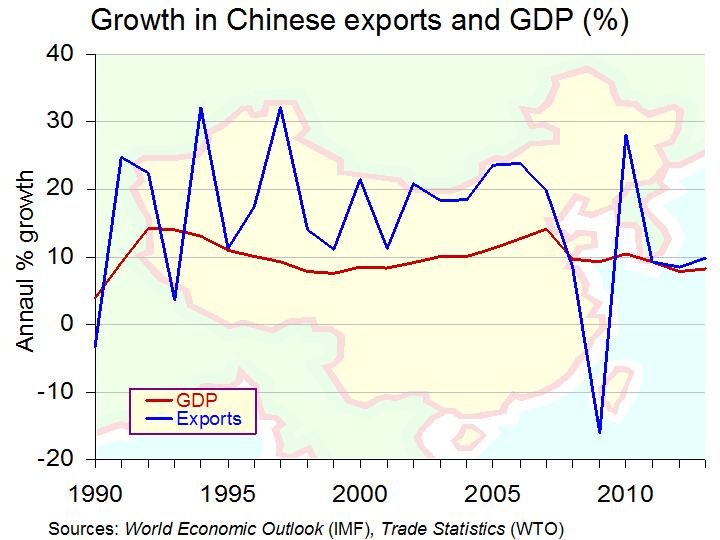 China has been one of the success stories of the past 20 years, with rapid growth in domestic and export demand. This has created the second largest economy in the world. From 1992 to 2007 annual GDP growth averaged 10.7% and annual export growth averaged 18.9% (see chart).
However, with the credit crunch and ensuing recession, growth rates in China have fallen somewhat. Annual GDP growth has averaged 9.6% and annual export growth has averaged 7.4%. Such growth rates may not seem bad, given that many Western economies have been struggling to achieve any growth, but they have been causing concern for this booming economy.
 In its May Outlook, the World Bank forecast China’s growth for the year at 8.2%, but it has since been reduced to 7.8%. A key part of China’s success story has been its export market, but it has been this market that has caused concerns for the mainland economy. In August of this year, its year-on-year export growth was at only 2.7%, but exports last month grew by more than expected, at approximately 7.4%. China has had a consistent trade surplus and according to government figures, this has widened to $27.67 billion in September from $26.66 billion in the previous month.
Recovery in this market will be crucial for the continued success of the economy, as a means of alleviating the fears of a slowdown. This higher growth of exports may be a misleading indicator, perhaps influenced by seasonal factors and thus may not be a sign of what’s to come. Indeed, many analysts have said that they are not convinced that these healthier trade figures will remain. Alistair Thornton, from IHS Global Economics said:
“It’s safe to say we are overshooting the trend here and we expect (the data) to come back in line in the months ahead.”
Citigroup economist, Ding Shaung also confirmed these sentiments:
”The trade data is a positive sign for the Chinese economy … But it remains to be seen whether import and export growth can remain at these levels.”
Part of this pessimism is due to the uncertainty surrounding the growth prospects of its biggest two trading partners – the US and the European Union. Exports to the former have remained relatively high, but exports to the European Union have suffered, falling by over 5.6%. It is likely that weaknesses in the global economy have held back China’s growth prospects in both exports and national output. The Chinese government was aiming for growth of 7.6% in 2012. Not a bad rate you may say, but when compared with growth rates for 2011 (9.3%) and 2010 (10.4%), it does represent a significant fall. The future of the Chinese economy is crucial for the recovery of the world economy, in part as it represents a big demand for imports from other countries, such as the US and Europe. The following articles consider the trade and growth prospects of the world’s second largest economy.
Chinese exports grow faster than expected in September BBC News (14/10/12)
Chinese exports grow faster than expected Financial Times, Patti Waldmeir (14/10/12)
China exports jump, but weaknesses seen ahead The Korea Herald (14/10/12)
China exports rise, hinting at a glimmer of revival New York Times, Keith Bradsher (13/10/12)
China’s trade surplus widens Wall Street Journal, William Kazer (13/10/12)
Chinese surplus widens as exports surge CNN, Paavan Mathemas (13/10/12)
China’s economic slow-down BBC Today Programme, Linda Yueh (18/10/12)
Questions
- What is a trade surplus?
- Which factors have influenced Chinese exports and imports?
- Why is China’s growth rate such an important variable for the UK and other Western economies?
- Why has export growth in China fallen recently? Can you use the same explanation for its lower growth in national output?
- Explain why analysts remain pessimistic about the sustainability of these improved trade figures.
- Using a diagram, illustrate the effect that higher Chinese growth rates will have on GDP in a country such as the UK. Could there be a multiplier effect?
 With droughts and poor harvests in both North America and in Russia and the Ukraine, there are worries that food prices are likely to see sharp rises in the coming months. This is clearly bad news for consumers, especially the poor for whom food accounts for a large proportion of expenditure.
But it’s also bad news more generally, as higher food prices are likely to have a dampening effect on the global economy, struggling to recover from five years of low or negative growth. And it’s not just food prices. Oil prices are rising again. Since mid June, they have risen by nearly 25%. This too is likely to have a dampening effect.
Another contributing factor to rising food prices is a response, in part, to rising oil prices. This is the diversion of land from growing food to growing crops for biofuels.
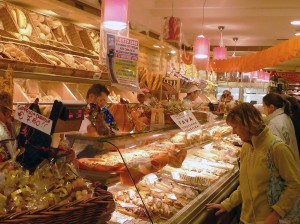
G20 countries held a conference call on 28 August to discuss food prices. Although representatives decided against an emergency meeting, they agreed to reassess the situation in a few weeks when the size of the US harvest would be clearer. If the situation proved as bad as feared, then the G20 would call an emergency meeting of the Rapid Response Forum, to consider what could be done.
But is the sole cause of rising food prices a lack of production? Are there other problems on the supply side, such as poor distribution systems and waste? And what about the role of demand? How is this contributing to long-term increases in food prices? The articles consider these various factors and what can be done to dampen food prices.
Articles
G20 points to ‘worrying’ food prices Financial Times, Javier Blas (28/8/12)
US food prices to surge on drought Gulf News(30/8/12)
Best to get used to high food and energy prices – they’re here to stay The Telegraph, Jeremy Warner (29/8/12)
Feeling a drought The Economist (14/8/12)
Q&A: World food and fuel prices BBC News (14/8/12)
G20 considers global meeting as food prices rise BBC News (28/8/12)
Biofuels and Food Prices (direct link) BBC ‘In the Balance’ programme (25/8/12)
U.N. body urges G20 action on food prices, waste Reuters, Patrick Lannin (27/8/12)
Ethanol industry hits back over food price claims EurActiv (28/8/12)
The era of cheap food may be over Guardian, Larry Elliott (2/9/12)
Data
Food Price Index Index Mundi
Questions
- Why have food prices been rising in recent weeks?
- Use a demand and supply diagram to demonstrate what has been happening to food prices.
- What determines the price elasticity of demand for wheat? What might this elasticity vary over time?
- What is the role of speculation in determining food prices?
- Illustrate on an aggregate demand and supply diagram the effect of a commodity price shock. What is likely to be the policy response from central banks?
- What determines the price elasticity of supply of food in (a) the short term and (b) the long term?
- What determines the cross price elasticity of supply of food to the price of oil? Is the cross price elasticity of supply positive or negative?
- What can governments do to reduce food prices, or at least reduce food price inflation?
- What benefits may come from higher food and fuel prices over the longer term?
 Unemployment is a term that economists and non-economists are familiar with, even if the non-economists perhaps have a less stringent definition of what we term unemployment. Typically, we say you are unemployed if you are of working age and available for work at the current wage rate, but are not in work. Another important and related concept is that of underemployment, which according to the ONS, is a growing problem in the economy.
 Although many people are happy with their part-time jobs and hence would not see themselves as underemployed, for those who are underemployed, the fact that they cannot find sufficient hours seems to indicate an inefficiency within the economy, especially if long-term unemployment or underemployment emerges. This problem is particularly relevant amongst the young and those in low-skilled jobs. However, it is also an increasing problem amongst the self-employed.