 Germany is the world’s fourth largest economy and Europe’s largest. Part of its strength has come from its exports, which last year increased by 11.4% to $1.3 trillion – the first time it had ever exceed the $1 trillion mark. Germany, however, is by no means the country with the largest export sector – that mantle was taken from them by China, whose exports rose 20.3% last year to reach $1.9 trillion.
At the same time as exports have been rising from Germany, imports have also increased, showing a recovery in domestic demand as well. Despite this, Germany’s foreign trade surplus increased slightly to €158.1 billion (from €154.9 billion).
However, in the last month of 2011, its export growth did slow – the fastest drop in nearly 3 years – and that is expected to signal the trend for 2012. As the eurozone debt crisis continues to cause problems, German exports have been forecast to grow by only 2% this year, with economic growth expected to be as low as 0.7%. This is a marked change from last year, where the Germany economy grew by some 3%. Help for the eurozone is unlikely to come form Europe’s second largest economy, France, where growth in the first 3 months of 2012 is expected to be zero and figures have shown a widening trade deficit, with issues of competitiveness at the forefront. The following articles look at Germany’s prowess in the export market and the likely developments over the coming year.
German exports drop is steepest in nearly 3 years Reuters (8/2/12)
German exports set record of a trillion euros in 2011 BBC News (8/2/12)
German exports broke euro1 trillion mark in 2011 The Associated Press (8/2/12)
Surprise drop in German industrial output Telegraph, Angela Monaghan (7/2/12)
French trade deficit hits high, competitiveness at issue Reuters (7/2/12)
French trade deficit casts shadow on campaign Financial Times, Hugh Carnegy (7/2/12)
German exports fall at fastest rate in three years, sparks fears over Europe’s bulwark economy Telegraph, Louise Armitstead (8/2/12)
Questions
- What is meant by a trade surplus?
- Briefly examine some of the factors that may have contributed to Germany’s rising exports throughout 2011.
- How has the eurozone debt crisis impacted the Germany economy and in particular the export sector?
- The articles that look at France refer to a growing trade deficit, with competitiveness being a key issue. What is meant by competitiveness and why is the French economy suffering from a lack of it?
- Does France’s membership of a single currency reduce its ability to tackle its competitiveness issues?
- Why is German growth expected to remain sluggish throughout 2012? Given that Germany is a member of the eurozone, what government policies are open to the government to boost economic growth?
- China has overtaken Germany as the largest exporter, with growth of 20.3% in 2011. What factors have allowed Chinese exports to grow so quickly?
The International Monetary Fund consists of 187 countries and is concerned with its members’ economic health. It promotes co-operation, economic stability and is also there to lend to those countries facing difficulties. The role of the IMF as a lender has come into question, as critics argue that the conditions placed on loans to countries can cause more problems than they solve, as the cause of the problems is not always identified. However, despite the criticisms and the current charges facing the former IMF Chief, the International Monetary Fund continues to play an important role in the global economic environment.
Many countries have used IMF credit and over the past two decades it has predominantly been the transition and the emerging market economies that have demanded the IMF’s resources. Whilst its lending did drop off in the mid 2000s, the global financial crisis of 2008/09 saw an increase in the demand for IMF funds from emerging economies to some $60 billion. In May 2010, we saw the IMF together with the EU put together a rescue package for Greece and it is now the turn of Egypt. The uprisings in Egypt put the stability of the economy in jeopardy, as investment declined, tax revenues decreased and the usually buoyant tourist industry started to struggle. Despite the efforts of the government to stabilise the economy, it remains short of cash and the IMF looks set to agree a loan deal of $3 billion (£1.8 billion). Egypt would have five years to repay the loan at an interest rate of 1.5%, after a three year ‘grace period’.
Other countries to receive loans include Ireland, Belarus, the Ukraine and Iceland, the latter of which owes the IMF $2,828.67 per person of its population. The UK has used the IMF back in 1976 and it may be something to look out for, depending on how our recovery continues. The following articles look at the IMF and its role in promoting global financial stability.
Articles
IMF to lend Egypt $3 bn: Ministry Associated Press (6/5/11)
IMF agrees $3bn financing deal with Egypt BBC News (5/6/11)
Timeline: Greece’s debt crisis Reuters (5/6/11)
Egypt strikes $3bn IMF deal to ‘re-launch’ economy Guardian, Jack Shenker (5/6/11)
The IMF versus the Arab Spring Guardian, Austin Mackell (25/5/11)
EU/IMF/ECB statement on Greek bailout Reuters (3/6/11)
Belarus wins $3 billion loan from Russia-led fund, still seeks IMF’s help Bloomberg, Scott Rose and Daryna Krasnolutska (4/6/11)
IMF frees up $225mn for Iceland Associated Press (4/6/11)
IMF loan: which country owes the most? Guardian (24/5/11)
International Monetary Fund
International Monetary Fund Homepage
IMF outlines $3 billion support for Egypt International Monetary Fund, IMF Survey Online (5/6/11)
Questions
- What is the role of the IMF and how is it financed?
- What are the objectives of the loans to countries such as Greece, Iceland and Egypt?
- What other countries has the IMF lent to and what are the conditions that have been placed on these loans?
- What has been the impact on the Egyptian economy of the uprisings? Think about all the industries that have been affected and the wider impacts.
- Can you find any examples of circumstances in which the conditions of an IMF loan have made problems worse for the recipient?
- Why are the conditions of the IMF loan to Egypt favourable and how will the loan help the economy?
- Look at the trend in IMF lending. What factors explain the peak and troughs? In particular, what is the explanation for the incresae in lending during the financial crisis?
Periodically, the BBC hosts debates on major global topics. The following links are to the January 2011 debate on the state of the world economy and on what policies governments and central banks should pursue.
Should governments be boosting aggregate demand by raising government expenditure and cutting taxes in order to stimulate growth and plan to bring down deficits over the long term once growth is established? Or should they embark on tough fiscal consolidation now by cutting government expenditure and/or raising taxes in order to stimulate confidence by international financiers, thereby keeping long-term interest rates down and creating the foundations for sustainable economic growth? The debate considers these two very different policy approaches.
The participants in the debate are Joseph Stiglitz (Professor of Economics, Columbia University), Christina Romer (Professor of Economics, University of California, Berkeley and Adviser to Barack Obama (2009–10)), George Papaconstantinou (Finance Minister of Greece), Dominique Strauss-Khan (Managing Director, IMF) and Zhou Xiaochuan (Governor, Chinese Central Bank). The debate is in five separate webcasts.
Webcasts
World debate on the global economy BBC World Service (20/1/11)
 Part 1
Part 2
Part 3
Part 4
Part 5
Questions
- What are the arguments for maintaining economic stimulus, at least for the time being? What are the relative merits of fiscal and monetary stimulus? Explain whether such policies are consistent with Keynesian polcies.
- What are the arguments for tough fiscal consolidation? Explain whether such policies are consistent with new classical policies.
- How successful have US policies been in stimulating the US economy?
- What role can China play in the recovery and long-term growth of the global economy and are there any imbalances that need correcting?
- Why might countries’ domestic policies result in currency wars? Is currency realignment necessary for sustained global growth?
- How important are consumer and business confidence to short-term recovery and long-term growth and to what extent do government policies respond to swings in confidence?
The USA has complained for a long time now that the Chinese currency is undervalued. This makes it hard for American domestic firms to compete with cheap Chinese imports and for US exporters to sell to China. This was a major talking point at the G20 conference in Korea in November 2010: see Seoul traders and the following clip from Reuters: Obama pressures China at G20.
So is the yuan undervalued and, if so, has there been any appreciation to reduce the degree of undervaluation? In 2005, the yuan was pegged at $0.12 (or $1 = ¥8.28). In July 2005 the peg was relaxed and the yuan has appreciated. By mid-December 2010, the yuan was trading at $0.15 (or $1 = ¥6.66) – a 25% appreciation since 2005. In real terms the appreciation has been greater. Chinese inflation is above US inflation. Latest figures for Chinese inflation show consumer prices rising by an annual rate of 5.1%. This compares with 1.2% in the USA. This makes the real appreciation greater.
But despite this appreciation, the USA maintains that the Chinese currency is still considerably undervalued. Estimates for this undervaluation are around 40%. In its latest ‘Big Mac Index’, The Economist calculates this undervaluation at 41.2%. Links to the relevant data are given below. Read the articles and then use the data to answer the questions.
Articles
China’s soaring inflation could hit UK shoppers The Telegraph, Richard Tyler (11/12/10)
China says November inflation rises to 5.1 percent Bloomberg, Cara Anna (11/12/10)
Jump in China inflation keeps focus on tightening Reuters, Aileen Wang and Simon Rabinovitch (11/12/10)
China inflation rise fastest since July 2008, exceeds market forecast The Australian, Aaron Back (11/12/10)
China’s top economic planner says December CPI likely below 5% Xinhuanet (11/12/10)
Yuan rises vs dollar after strong trade data The Economic Times of India (11/12/10)
Who wins if Yuan is significantly revalued? International Business Times (12/12/10)
Currency war reveals growing global fissures AsiaOne (11/12/10)
How China’s Inflation Policy Will Help the Yuan / Dollar Exchange Rate Seeking Alpha, Ed Dolan (29/11/10)
Data
Monthly Data Chinese National Bureau of Statistics
US Inflation Rate in Percent for Jan 2000-Present InflationData.com
BIS effective exchange rate indices Bank for International Settlements
Spot Exchange Rates Bank of England
IMF World Economic Ourlook Data Find The Best
Economic Data freely available online The Economics Network
The Big Mac Index The Economist
Questions
- Using Bank for International Settlements data above (broad indices), plot the nominal and real exchange rate indices for the US dollar and the yuan from 2005 to the present day. How much have (a) the nominal and (b) the real yuan exchange rate indices appreciated against the dollar exchange rate indices? (Note: you can use the Excel data to plot all four series on the same diagram.)
- Why has the Chinese rate of inflation risen?
- How are the anti-inflationary policies being considered by the Chinese authorities likely to impact on (a) the yuan exchange rate (b) the Chinese current account?
- In what ways do the Chinese authorities intervene in the foreign exchange market?
- What are the implications of the People’s Bank of China increasing the amount of yuan that can be traded on currency markets and increasing the amount of yuan-denominated debt?
- What are meant by purchasing power parity (PPP) exchange rates? Is the Big Mac index a good guide to the degree to which a currency is under- or overvalued?
It doesn’t seem that long ago when Greece was in the news regarding its deficit and need for bailing out. Back then, countries such as Spain, Portugal and Ireland were being mentioned as the next countries which might require financial assistance from the EU. It is now the Irish economy that is in trouble, even though the Irish government has not yet requested any financial help. The EU, however, is ‘ready to act’.
The Irish economy experienced an extremely strong boom, but they also suffered from the biggest recession in the developed world, with national income falling by over 20% since 2007. Savers are withdrawing their money; property prices continue to collapse; and banks needed bailing out. Austerity measures have already been implemented – tax rises and spending cuts equal to 5% of GDP took place, but it has still not been enough to stabilise the economy’s finances. All of these problems have contributed to a large and unsustainable budget deficit and a significant lack of funding and that’s where the EU and possibly the IMF come in.
If the Irish economy continues to decline and experiences a financial crisis, the UK would probably be one of the first to step in and offer finance. As our closest neighbour and an important trading partner, the collapse of the Irish economy would adversely affect the UK. A significant proportion of our exports go to the Irish economy and, with Irish taxpayers facing troubled times, UK exporting companies may be the ones to suffer.
One thing that this crisis has done is to provide eurosceptics with an opportunity to argue their case and blame the euro for the collapse of Ireland. With one monetary policy, the Irish economy is tied in to the interest rates set by the ECB and low interest rates fuelled the then booming economy. The common currency also increased capital flows from central European countries, such as Germany, to peripheral countries, such as Ireland, Spain and Portugal. In themselves, capital flows aren’t a problem, but when they are used to fund property bubbles and not productive investments, adverse effects are inevitable, as Ireland found to its detriment.
As prices collapsed and banks simply ran out of money, the government stepped in and rescued not only the depositors of Irish banks, but also their bondholders. Unable to devalue their currency, as it’s the euro, the Irish economy was unable to boost exports and hence aggregate demand and in turn economic growth. Although, the Irish government has not requested any financial help, as the French Finance Minister commented about a potential bailout: “Is it six months or a few days away? I’d say it’s closer to days.” The following articles look at this developing situation in Europe.
EU plays down Irish republic bail-out talks BBC News (17/11/10)
Ireland bailout: the European politicians who will decide Telegraph, Phillip Aldrick (17/11/10)
Don’t blame the Euro for Ireland’s mess Financial Times, Phillipe Legrain (17/11/10)
Britain signals intention to help Ireland in debt crisis New York Times, James Kanter and Steven Erlanger (17/11/10)
Ireland will take aid if ‘bank issue is too big’ Irish Times, Jason Michael (17/11/10)
Irish junior party says partnership strained Reuters (17/11/10)
Ireland resists humiliating bail-out as UK pledges £7 billion Telegraph, Bruno Waterfield (17/11/10)
Markets stable as Ireland bailout looms Associated Press (17/11/10)
The implausible in pursuit of the indefensible? BBC News blogs, Stephanomics, Stephanie Flanders (16/11/10)
Ireland bailout worth ‘tens of billions’ of euros, says central bank governor Guardian, Julia Kollewe and Lisa O’Carroll (18/11/10)
The stages of Ireland’s grief BBC News blogs, Stephanomics, Stephanie Flanders (18/11/10)
Q&A: Irish Republic finances BBC News (19/11/10)
Could Spain and Portugal be next to accept bail-outs? BBC News, Gavin Hewitt (19/11/10)
Questions
- Why will the UK be affected by the collapse of the Irish economy?
- If Ireland were not a member of the eurozone, would the country be any better off? How might a floating exchange rate boost growth?
- The Financial Times article talks about the euro not being to blame for the Irish problems, saying that ‘tight fiscal policy’ should have been used. What does this mean?
- Why is the housing market so important to any nation?
- What are the arguments (a) for and (b) against the euro? Would Ireland benefit from leaving the euro?
- Should the UK government intervene to help Ireland? What are the key factors that will influence this decision? What about the EU – should Ireland ask for help? Should the EU give help?
- Austerity measures have already been implemented, but what other actions could the Irish economy take to increase competitiveness?
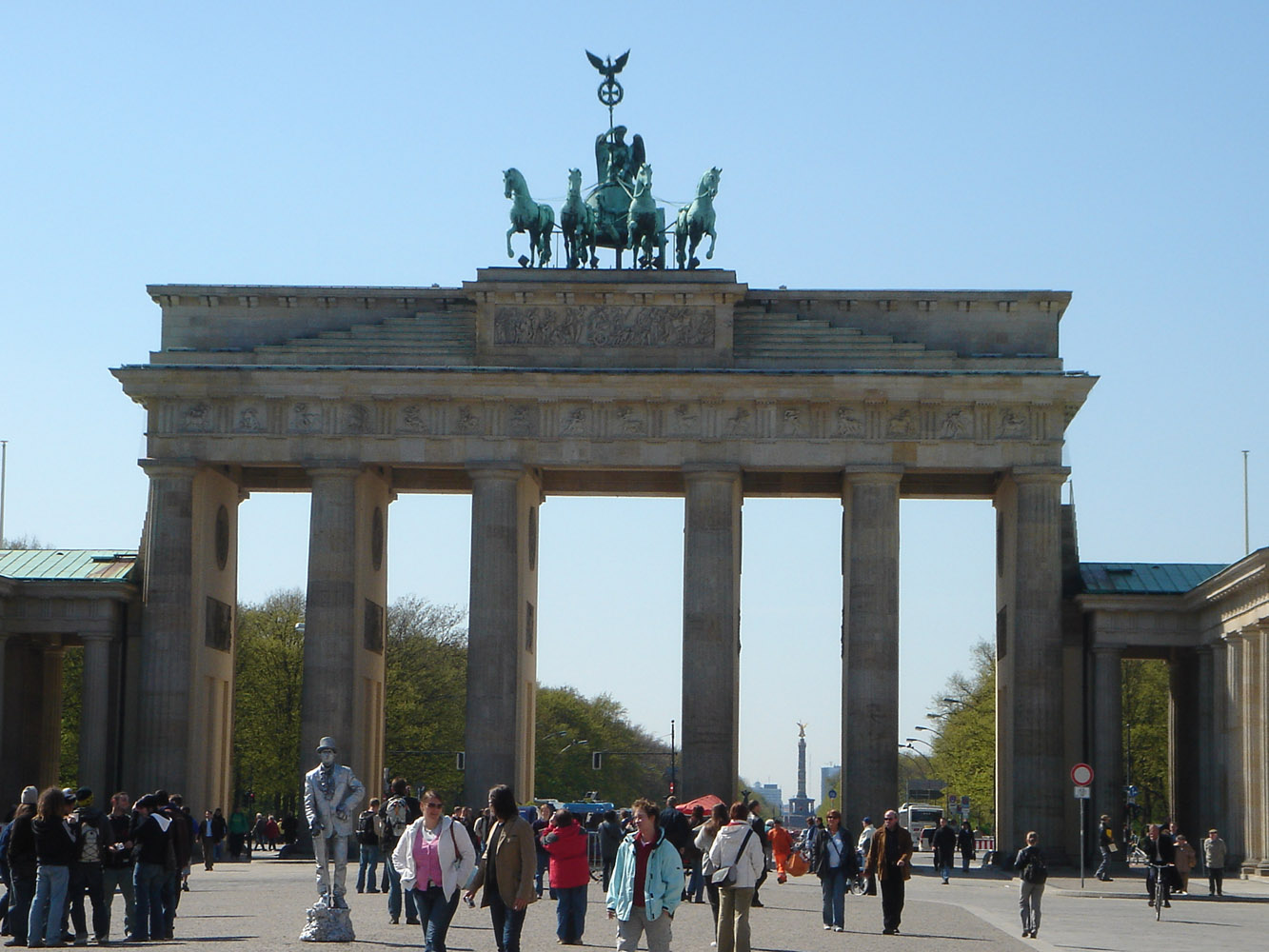 Germany is the world’s fourth largest economy and Europe’s largest. Part of its strength has come from its exports, which last year increased by 11.4% to $1.3 trillion – the first time it had ever exceed the $1 trillion mark. Germany, however, is by no means the country with the largest export sector – that mantle was taken from them by China, whose exports rose 20.3% last year to reach $1.9 trillion.