 When people take out loans they typically do so to spend and with the UK economy in its current state, many would argue that this is a good thing. The ‘payday loan’ industry took advantage of the weak economy and the squeezed households in the UK and for the past few years, we have seen constant adverts that will appeal to many households. But, is the industry as competitive as the adverts would have us believe?
An inquiry into this industry has been on-going for some time, and it has now been referred to the Competition Commission, due to ‘deep-rooted problems with the way competition works’. For some, a payday loan is a short term form of finance, but for others it has become a way of living that has led to a debt spiral. Frank McKillop, policy manager at Abcul said:
There is a clear demand for instant credit and across the country we are increasingly seeing members who have debts with multiple payday lenders and a record of rolling over debts, or going to one payday lender to clear the debt to another.
One problem identified by the OFT is that customers have found it difficult to compare costs and this has led, in some cases, to customers paying back significantly more than they originally thought. Customers being unable to repay loans will ring warning bells for many people, with no-one wanting a return to the height of the credit crunch.
 The OFT has criticized payday loan companies for competing not on costs, but on the speed of approval and using certain unapproved tactics as part of their advertising. The selling point of such companies is that you can have the money in a very short time period. However, the criticism is that this leads to loans being given to those who are unable to afford them. Key credit checks are not being done and with late night texts being sent to often financially vulnerable people, it is no wonder that complaints have been received. In a statement, the OFT said:
The competitive pressure to approve loans quickly may give firms an incentive to skimp on the affordability assessment which is designed to prevent irresponsible lending and protect consumers.
[the business models of companies were] predicated on making loans which are unaffordable, leading to borrowers paying far more than expected through rollovers, additional interest and other charges.
While payday loans are legal and there are many companies offering them, it is what they are competing over, which seems to be in question. The industry itself has begun to change its practices, providing more information to customers, only allowing loans to be rolled over three times and the potential to freeze repayments if the customer gets into financial difficulty. If more stringent checks are completed and hence timing does not become the only grounds for competition, then the problems above may become less significant. With the ongoing OFT inquiry into the practices of the payday loan industry and the continuing demand for such financing, it is likely that we will see much more of both the good and the bad that it has to offer. The following articles consider the investigation.
Webcasts
 Balls warns against payday loans ‘blank cheque’ BBC News (27/6/13)
Payday lender investigation could be delayed by bureaucracy Telegraph, Steve Hawkes (27/6/13)
Payday lenders to face ‘tougher restrictions’ on advertising BBC News, Simon Gompertz (1/7/13)
Payday lending rates BBC News, Julio Martino and Stella Creasy (2/7/13)
Articles
Regulator to investigate payday loan industry Financial Times, Elaine Moore and Robert Cookson (27/6/13)
Q&A: Payday loans BBC News (31/5/13)
Payday loans: reining in an industry that is a law unto itself Guardian (27/6/13)
Payday loans industry to face competition inquiry BBC News (27/6/13)
Payday loans firms face competition inquiry Sky News (27/6/13)
Payday loans market faces competition inquiry Guardian, Hilary Osborne (27/6/13)
OFT refers payday loans to Competition Commission Scotsman, Jane Bradley (27/6/13)
Five reasons why we all need to worry about payday lenders Telegraph, Emma Simon (27/6/13)
OFT documents
Payday lending compliance review Office of Fair Trading (27/6/13)
Questions
- Into which market structure would you place the payday loans industry? Make sure you justify your answer.
- What is the role of the (a) the OFT and (b) the Competition Commission? Do these authorities overlap?
- What part does advertising play in this industry?
- To what extent is the payday loan industry a possible cause of another credit crunch?
- Why has the OFT referred this industry to the Competition Commission?
- To what extent are payday loans an essential part of an economy?
 Over the past few years, the term ‘bail-out’ has been a common phrase. But, what about the term ‘bail-in’? The latest bank to face financial ruin is the Co-operative Bank, but instead of turning to the tax-payer for a rescue, £1.5 billion will come from bond holders being offered shares in the bank. This will mean that the bank will become listed on the stock market.
Back in 2009, the Co-operative Bank bought Britannia Building Society and it seems that this was the start of its downfall. It took over many bad mortgage loans and loans to companies, and these played a large part in its current financial difficulties.
In order to rescue the bank and raise the capital needed to absorb current and future losses, without turning to the tax-payer, bond-holders of £1.3 billion of loans to the bank will be asked to swap them for shares and bonds, thus leading to significant losses for them. These bond-holders include 7000 private investors.
Since the financial crisis five years ago, the conventional banking model has seen much criticism and many suggested that the mutual structure of the Co-operative provided a better model, creating trust, due to its many stakeholders, who are not as focused on profitability and returns as those shareholders of a listed bank. However, the problems of the Co-operative seem to have put paid to that idea. The bail-in will mean that the bank is now listed on the stock market and thus will have shareholders expecting returns and profitability. This will undoubtedly change the focus of the bank. Euan Sutherland, the new Chief Executive said:
We are very clear that the bank will remain true to responsible and community-based banking and retain its ethical investment stance … Clearly there are lessons to learn and clearly there will be a time to look back and do that but, to be honest, in the last six weeks, where I have been involved with the Co-operative group, we have focused on driving a very solid future for this bank.
The good news is that the savings of those in the Co-operative are safe and taxpayers will not have to fork out any more money.
Yet, the co-operative structure of the bank has long been praised by customers and government alike. But is it perhaps this structure, which has led to its collapse? Furthermore, will the change in structure that will see it listed on the stock market, lead to a change in its approach to banking? The following articles consider the latest bank to run into difficulties.
Webcast
Co-op Bank unveils rescue plan to tackle the £1.5bn hole BBC News (17/6/13)
Articles
Co-op Bank travails show weakness of mutual model Financial Times, Sarah Gordon (21/6/13)
Co-operative Bank to list on stock market in rescue deal The Guardian, Jill Treanor (17/6/13)
Troubled Co-operative Bank unveils rescue plan to plug £1.5bn hole in balance sheet Independent, Nick Goodway (17/6/13)
Co-op Bank announces plan to plug £1.5bn hole Which? (17/6/13)
The Co-operative Bank and the challenge of finding co-op capital The Guardian, Andrew Bibby (13/6/13)
Co-op Bank seeks to fill £1.5bn capital hole Sky News (17/6/13)
Does Co-op Group deserve to keep control of Co-op Bank? BBC News, Robert Peston (9/7/13)
Questions
- Why did the Co-operative Bank move into financial trouble?
- What are the key characteristics of a Mutual? Are they disadvantages or advantages?
- What is a ‘bail-in’? Who will gain and who will lose?
- The Co-operative Bank will now be listed on the stock market. What does this mean?
- What are the advantages and disadvantages of floating a company on the stock market?
- Why are all banks required to hold capital to absorb losses?
 Since coming to office in December 2012, Shinzo Abe’s government has been determined to revive the Japanese economy. For the past 20 years, Japan’s growth has averaged only 0.8% per annum. This compares with 1.3% for Germany, 2.3% for the UK, 2.6% for the USA, 4.9% for South Korea and 10.4% for China.
Japanese real GDP per capita was only 14.5% higher in 2012 than 20 years earlier. This compares with figures for Germany, the UK, the USA, South Korea and China of 27%, 45%, 34%, 126% and 497% respectively.
So what has the Japanese government done to boost both short-term and long-term growth after years of stagnation? There are ‘three arrows’ to the policy, targeted at reviving and sustaining economic growth.
 The first arrow is monetary policy. The Bank of Japan has engaged in extensive quantitative easing through bond purchases in order to drive down the exchange rate (see A J-curve for Japan?), stimulate expenditure and increase the rate of inflation. A target inflation rate of 2% has been set by the Bank of Japan. Part of the problem for the Japanese economy over the years has been stagnant or falling prices. Japanese consumers have got used to waiting to spend in the hope of being able to buy at lower prices. Similarly, Japanese businesses have often delayed stock purchase. By committing to bond purchases of whatever amount is necessary to achieve the 2% inflation target, the central bank hopes to break this cycle and encourage people to buy now rather than later.
 The second arrow is fiscal policy. Despite having the highest debt to GDP ratio in the developed world, Japan is embarking on a large-scale programme of infrastructure investment and other public works. The package is worth over $100bn. The expansionary fiscal policy is accompanied by a longer-term plan for fiscal consolidation as economic growth picks up. In the short term, Japan should have no difficulty in financing the higher deficit, given that most of the borrowing is internal and denominated in yen.
 The third arrow is supply-side policy. On 5 June, Shinzo Abe unveiled a series of goals his government would like to achieve in order to boost capacity and productivity. These include increasing private-sector investment (both domestic and inward), infrastructure expenditure (both private and public), increasing farmland, encouraging more women to work by improving day-care facilities for children, and deregulation of both goods, capital and labour markets. The prime minister, however, did not give details of the measures that would be introduced to achieve these objectives. More details will be announced in mid-June.
The following videos and articles look at the three arrows of Abenomics and the effects they are having on confidence and attitudes as well as on expenditure, output and the exchange rate. They also look at the crucial third arrow: at whether supply-side reforms will be enough to achieve a sustained increase in economic growth.
Videos
Abenomics an uncertain future for most Financial Times on YouTube, Ben McLannahan (30/5/13)
Assessing Abenomics NHK World (3/6/13)
Adam Posen on Abenomics NHK World (30/5/13)
Japanese concerned over ‘Abenomics’ AlJazeera on YouTube (30/5/13)
Abenomics – the cure for deflation? BBC News, Rupert Wingfield-Hayes (10/5/13)
Japan PM’s economic speech ‘short on detail’ BBC News, Rupert Wingfield Hayes (5/6/13)
Pretty Positive on Abenomics Bloomberg, Jan Hatzius, Goldman Sachs (5/6/13)
Why Abenomics is Bonkers: Pro CNBC, Graeme Maxton, (27/5/13)
‘Abe’nomics Not About BOJ Printing Money Bloomberg, Derek Halpenny (31/5/13)
Abenomics Aims `Third Arrow’ at Business Rules Bloomberg, Willie Pesek (5/6/13)
Analysis on Abe’s Growth Plan NHK World (5/6/13)
Articles
Will three arrows find their target? On Line Opinion, Andrew Leigh (6/6/13)
Japan Fires ‘Third Arrow,’ but Will It Work? CNBC, Dhara Ranasinghe (5/6/13)
Japan’s ‘3 Arrows’ May Run Into German Wall CNBC, Michael Ivanovitch (19/5/13)
Japan’s recovery – the power of Abe’s three arrows Commonwealth Bank, Australia, Melanie Timbrell (31/5/13)
So Far, the Battery Charger Is Working in Japan The New York Times, Jeff Sommer (18/5/13)
Abenomics Could Light A Fire Under The Japan Trade Again Business Insider, Matthew Boesler (4/6/13)
Japan’s New Prime Minister Unveils The ‘Most Important’ Plank Of Abenomics Business Insider (5/6/13)
Japan PM pledges to boost incomes by 30% Channel NewsAsia (5/6/13)
Abe’s growth strategy disappoints economists, investors The Asahi Shimbun (6/6/13)
Abenomics Won’t Be ’Magic Bullet’ for Japan, Says Johnson of MIT Bloomberg, Cordell Eddings (5/6/13)
Too soon to call time on Abenomics BBC News, Stephanie Flanders (19/6/13)
Abenomics: The objectives and the risks BBC News, Puneet Pal Singh (19/7/13)
Data
World Economic Outlook Database IMF
Bank of Japan Statistics Bank of Japan
Economic Outlook Annex Tables OECD
Country statistical profile: Japan 2013 OECD
Questions
- Demonstrate on (a) an aggregate demand and supply diagram and (b) a Keynesian 45° line diagram the effects of the three arrows (assuming they are successful) in meeting their objectives.
- What will determine the effectiveness of the first two arrows in boosting short-term economic growth?
- Would you characterise the policies of the third arrow as interventionist or market-orientated, or as a mixture? Explain.
- What are the dangers in ‘Abenomics’?
- Find out what has been happening to Japanese bond rates. What are the implications of this for monetary policy?
- What are the ‘markets telling Abe’?
- In what ways will expectations influence the effectiveness of Abenomics?
 Here are a series of videos examining the case for and against austerity policy. Is such policy necessary to re-balance countries’ economies and retain or regain the confidence of investors? Or does such policy harm not just short-run growth but long-run growth too? Does it reduce investment and thereby aggregate supply?
These videos follow on from the news item Keynes versus the Classics: a new version of an old story. In the first video, Mark Blyth, author of Austerity: the History of a Dangerous Idea, argues that austerity policy has not worked and never can. George Osborne, by contrast, argues that although it has been a ‘hard road to recovery’, austerity policy is working.
International bodies take a more nuanced stand. The IMF, while supporting the objective of reducing the government deficit, argues that the pace of the cuts in the UK should be slowed until more robust growth returns. The OECD, in examining the global economy, is more supportive of countries maintaining the pace of deficit reduction, but argues that the ECB needs to take stronger monetary measures to boost bank lending in the eurozone.
With austerity having increasingly alarming effects on unemployment and social cohesion, especially within certain eurozone countries, such as Greece, Portugal and Spain, it is not surprising that there are growing demands for rethinking macroeconomic policy.
There is general agreement that more needs to be done to promote economic growth, and a growing consensus that an increase in infrastructure expenditure is desirable. But whether such expenditure should be financed by increased borrowing (with the extra deficit being reduced subsequently as a result of the extra growth), or whether it should be financed by reductions in expenditure elsewhere, is a continuing focus of debate.
Austerity: the History of a Dangerous Idea The Guardian, Mark Blyth (27/5/13) (see also)
IMF: UK austerity will be a ‘drag on growth’ BBC News. Hugh Pym (22/5/13)
George Osborne: ‘Hard road to recovery for UK economy’ BBC News (22/5/13)
Economy and austerity BBC News, Sajid Javid and Stephen Timms (1/5/13)
IMF’s Olivier Blanchard urges UK austerity rethink BBC News (16/4/13)
OECD ‘supportive of Osborne austerity plans’ BBC news (29/5/13)
Stimulus vs. austerity measures in EU CNN, Mohamed El-Erian (29/5/13)
‘No time to wobble’ on deficit reduction YouTube, Sir Roger Carr (CBI president) (16/5/13)
Deficit-Cutting: Not If, But When Wall Street Journal Live, David Wessel (8/5/13)
Questions
- What are the arguments for maintaining a policy of deficit reduction through tight fiscal policy?
- What are the three principles put forward by Mark Blyth for designing an appropriate macroeconomic policy?
- How does the fallacy of composition relate to the effects of all countries pursuing austerity policy simultaneously?
- Is the IMF for or against austerity? Explain.
- Assess the policies advocated by the OECD to stimulate economic growth in the eurozone.
 Why are 43 companies in the pub and restaurant sector in the UK donating over a £1 million to an 86 year old Frenchman who claims to work a 70 hour week? Jacques Borel has led an interesting and varied life which has included activities such as helping the French resistance in the 2nd world war and opening the first take-away hamburger restaurant in France in 1961. In 2001 he started a campaign to get the European Union to allow member states to reduce the rate of VAT applied to food and drink sold in the pub, hotel and restaurant industry. Organisations such as JD Wetherspoon, Heineken and Pizza Hut are backing his attempts to persuade the UK government of the benefits of this policy.
VAT is paid when goods and services are purchased and is normally included in the price advertised by the seller. It generates a significant amount of money for the UK government and it is estimated that it will raise £102 billion in 2012-13 – the third biggest source of revenue after income tax and national insurance contributions. It is applied at three different rates in the UK – a standard rate of 20%, a reduced rate of 5% and a zero rate i.e. 0%. This may sound straightforward but in reality the tax is extremely complicated as previously discussed in articles on this website . For example most basic or staple items of food sold in shops are zero rated. However there are some rather bizarre exceptions. For example a packet of potato crisps is subject to the standard rate of VAT whereas tortilla chips are not. The standard rate is applied to a packet of Wotsits whereas a zero rate is applied to a packet of Skips!
The campaign headed by Mr Borel focuses on the discrepancy between the zero-rate applied to most food items purchased from a shop and the standard rate applied to food purchased in restaurants or cafes. For example, if you buy a Pizza from a supermarket then you don’t pay any tax on this purchase, whereas if you eat a pizza in a restaurant the standard 20% rate of VAT is applied. Mr Borel is lobbying the UK government to reduce the rate of VAT paid in pubs and restaurants from the standard rate of 20% to the reduced rate of 5%. One reason why so many UK companies are willing to offer him financial support is because of his success in getting governments in other countries such as Germany, Belgium, Finland and France to adopt this policy.
In a recent radio interview Mr Borel was asked to make his case for the proposed reduction of VAT in the UK. He claimed:
I have a commitment from 125 chains of hotels, restaurants and independents to use 60% of the reduction in VAT to lower prices so that would be a 7.5% decrease in price. When you decrease price by that magnitude you will see an increase in customers of 10-12% and you will be forced to hire new staff. In our best case scenario, we plan to create 670,000 jobs in three years.
When asked in another interview why the hospitality sector should be favoured more than others he replied that:
It would create more jobs in a minimal amount of time…you cannot do that with any other industry.
One obvious drawback of the policy would be the loss of revenue for the UK government. Some estimates have suggested that the loss of VAT receipts would be between £5.5 and £7.8 billion. However it has been claimed that over time the impact of the change on government finances would be zero. In response to the proposed tax cut a Treasury spokesman commented:
Any reduced rates would make a significant impact on revenue and, as a significant proportion of spending in these areas is by UK residents, any increase in activity in these areas would largely be at the expense of other consumer spending.
Webcast
Jacques Borel: VAT cut for pubs Morning Advertiser on YouTube (18/5/11)
Articles
Industry VAT campaigner Jacques Borel appears on Radio Four’s Today and Radio Five Propelinfo (24/4/13)
French veteran in fight to cut pub VAT Financial Times, Christopher Thompson (5/6/12)
The fiscal impact of reduced VAT rates VAT Club Jobs (22/4/13)
Pub and restaurant groups pay 86-year-old Frenchman £1m to convince UK government to cut VAT The Mail on Sunday, Sarah Bridge (20/4/13)
French veteran seeks British jobs boost with VAT Reuters (17/1/13)
Questions
- In his radio interview Jacques Borel claims that if firms pass on 60% of the cut in VAT this would cause a 7.5% reduction in prices. Explain why this is the case. Clearly outline any assumptions you have made in the analysis
- If 60% of the reduction was passed on by firms through lower prices, what do you think would happen to the money generated from the other 40% of the reduction?
- Using a demand and supply diagram illustrate the proposed reduction in the rate of VAT on the hospitality industry. Make sure your diagram is drawn in such a way that it clearly illustrates producers passing on 60% of the tax reduction in the form of lower prices.
- Assuming that the hospitality industry was very competitive, what impact would a reduction in VAT have on consumer surplus, producer surplus and deadweight welfare loss?
- Explain any assumptions you have in your answer to question 3 about the price elasticity of demand and supply.
- Using the figures provided in the radio interview is it possible to calculate the price elasticity of demand. Try making the calculation and clearly explain any assumptions you have made.
- Explain why the reduction in VAT might have no net effect on government finances in the long run?
- What factors determine the price elasticity of supply? What assumption is Mr Borel making about the price elasticity of supply in the hospitality industry compared to other industries when he makes the claim that jobs would be created quickly?
- Outline some of the arguments against cutting the rate of VAT.
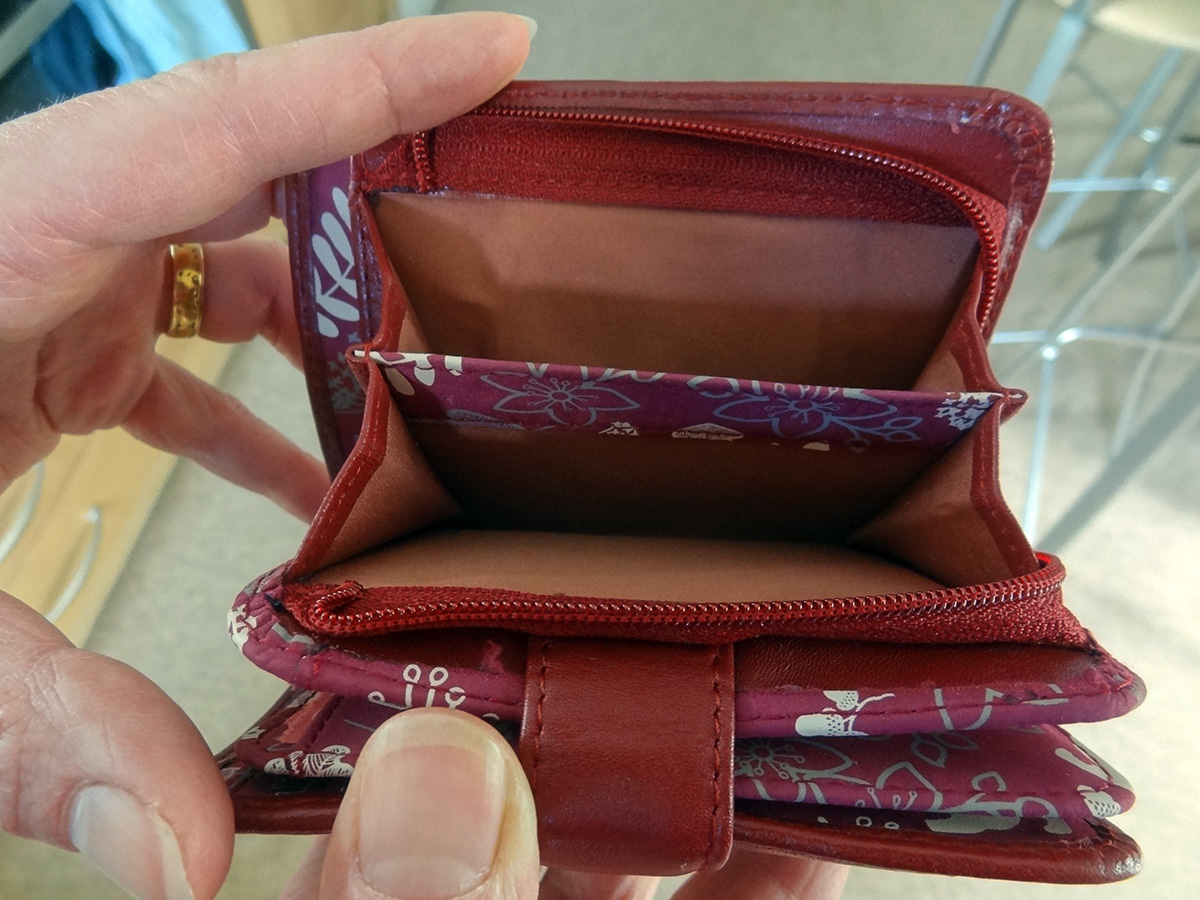 When people take out loans they typically do so to spend and with the UK economy in its current state, many would argue that this is a good thing. The ‘payday loan’ industry took advantage of the weak economy and the squeezed households in the UK and for the past few years, we have seen constant adverts that will appeal to many households. But, is the industry as competitive as the adverts would have us believe?
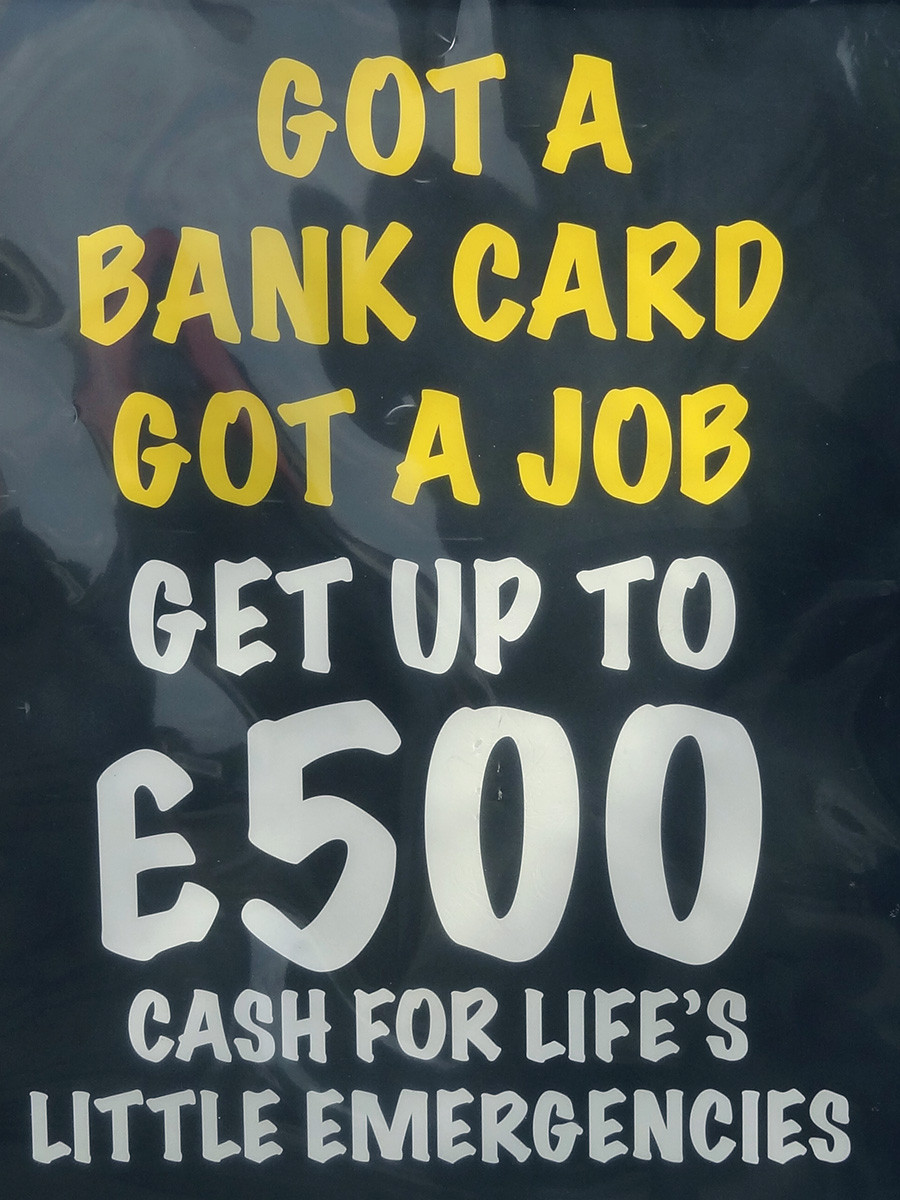 The OFT has criticized payday loan companies for competing not on costs, but on the speed of approval and using certain unapproved tactics as part of their advertising. The selling point of such companies is that you can have the money in a very short time period. However, the criticism is that this leads to loans being given to those who are unable to afford them. Key credit checks are not being done and with late night texts being sent to often financially vulnerable people, it is no wonder that complaints have been received. In a statement, the OFT said: