 With the UK and eurozone economies in recession and with business and consumer confidence low, the Bank of England and the ECB have sprung into action.
The ECB has cut its main refinancing rate from 1% to an all-time low of 0.75%. Meanwhile, the Bank of England has embarked on a further round of quantitative easing (QE). The MPC voted to inject a further £50 billion through its asset purchase scheme, bring the total to £375 billion since QE began in March 2009.
And it is not just in Europe that monetary policy is being eased. In Australia and China interest rates have been cut. In the USA, there have been further asset purchases by the Fed and it is expected that the Japanese central bank will cut rates very soon, along with those in Korea, Indonesia and Sri Lanka.
But with consumers seeming reluctant to spend and businesses being reluctant to invest, will the new money in the UK and elsewhere actually be lent and spent? Or will it simply sit in banks, boosting their liquidity base, but doing little if anything to boost aggregate demand?
And likewise in the eurozone, will a 25 basis point reduction in interest rates (i.e. a 0.25 percentage point reduction) do anything to boost borrowing and spending?
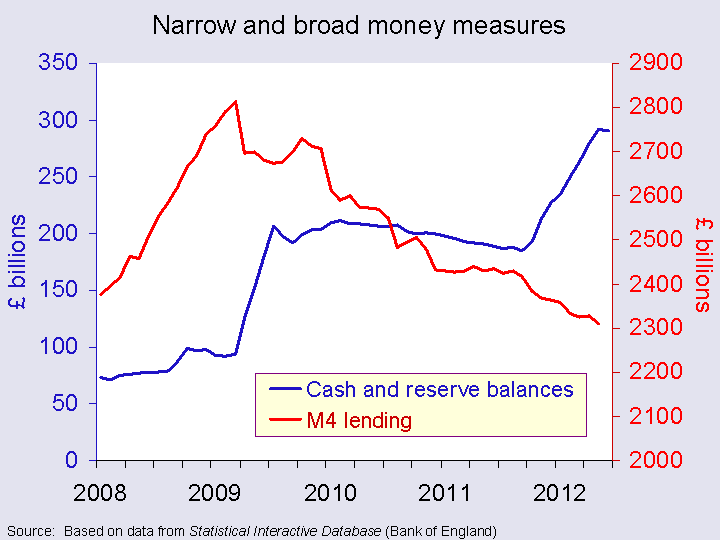 It is like pushing on a string – a term used by Keynesians to refer to the futile nature of monetary policy when people are reluctant to spend. Indeed the evidence over the past few years since QE started is that despite narrow money having risen massively, M4 lending has declined (see chart).
For a PowerPoint of the chart, click here.
The following articles look at the conundrum
Articles
Draghi-King Push May Mean Bigger Step Into Zero-Rate Era BloombergBusinessweek, Simon Kennedy (4/7/12)
QE and rate cut as central banks play stimulus card Independent, Ben Chu (6/7/12)
QE is welcome, but not enough Independent, Leader (6/7/12)
Interest rates cut to spur growth China Daily, Wang Xiaotian, Ding Qingfen and Gao Changxin (6/7/12)
Rate cuts shake global confidence Sydney Morning Herald, Eric Johnston, Clancy Yeates and Peter Cai (7/7/12)
Global Policy Easing Presses Asia to Cut Rates BloombergBusinessweek, Sharon Chen and Justina Lee (6/7/12)
Economic slowdown raises alarm in China, Europe Globe and Mail, Kevin Carmichael (5/7/12)
Bank of England sets sail with QE3 BBC News, Stephanie Flanders (5/7/12)
The twilight of the central banker The Economist (26/6/12)
The case for truly bold monetary policy Financial Times, Martin Wolf (28/6/12)
Questions
- Is the world economy in a liquidity trap?
- What advice would you give politicians around the world seeking to boost consumer and business confidence?
- Are we witnessing “The twilight of the central banker”? (See The Economist article above.)
- Explain the following extracts from the Martin Wolf article: “In a monetary system, based on fiat (or man-made) money, the state guarantees the money supply in the interests of the public. In normal times, however, actual supply is a byproduct of lending activities of banks. It is, in brief, the product of privately operated printing presses… In the last resort, the power to create money rests properly with the state. When private sector supply is diminishing, as now, the state not only can, but should, step in, with real urgency.”
- Should monetary policy in the UK be combined with fiscal policy in providing a stimulus at a time when the government can borrow ultra cheaply from the Bank of England? Does this apply to other governments around the world?
- Why did Asian share prices fall despite the stimulus?
 Barclays’ Chief Executive, Bob Diamond, has resigned following revelations that Barclays staff had been involved in rigging the LIBOR in the period 2005–9, including the financial crisis of 2007–9.
So what is the LIBOR; how is it set; what were the reasons for Barclays (and other banks, as will soon be revealed) attempting to manipulate the rate; and what were the consequences?
The LIBOR, or London interbank offered rate, is the average of what banks report that they would have to pay to borrow from one another in the inter-bank market. Separate LIBORs are calculated for 15 different lending periods: overnight, one week, one month, two months, three months, six months, etc. The rates are set daily as the average of submissions made to Thomson Reuters by some 15 to 20 banks (a poll overseen by the British Bankers’ Association). Thomson Reuters then publishes the LIBORs, along with all of the submissions from individual banks which are used to calculate it.
Many interest rates around the world are based on LIBORs, or their European counterpart, EURIBORs. They include bond rates, mortgage rates, overdraft rates, etc. Trillions of dollars worth of such assets are benchmarked to the LIBORs. Thus manipulating LIBORs by even 1 basis point (0.01%) can result in millions of dollars worth of gains (or losses) to banks.
 The charge, made by the Financial Services Authority, is that Barclays staff deliberately under- or overstated the rate at which the bank would have to borrow. For example, when interbank loans were drying up in the autumn of 2008, Barclays staff were accused of deliberately understating the rate at which they would have to borrow in order to persuade markets that the bank was facing less difficulty than it really was and thereby boost confidence in the bank. In other words they were accused of trying to manipulate LIBORs down by lying.
As it was the LIBORs were rising well above bank rate. The spread for the one-month LIBOR was around 1 to 1.2% above Bank Rate. Today it is around 0.1 to 0.15% above Bank Rate. Without lying by staff in Barclays, RBS and probably other banks too, the spread in 2008 may have been quite a bit higher still.
The following articles look at the issue, its impact at the time and the aftermath today.
Articles
A Libor primer The Globe and Mail, Kevin Carmichael (3/7/12)
60 second guide to Libor Which? (3/7/12)
Explaining the Libor interest rate mess CNN Money (3/7/12)
Fixing Libor Financial Times (27/6/12)
LIBOR in the News: What it is, Why it’s Important Technorati, John Sollars (2/7/12)
Libor rigging ‘was institutionalised at major UK bank’ The Telegraph, Philip Aldrick (1/7/12)
Barclays ‘attempted to manipulate interest rates’ BBC News, Robert Peston (27/6/12)
The Libor Conspiracy: Were the Bank of England and Whitehall in on it? Independent, Oliver Wright, James Moore , Nigel Morris (4/7/12)
Fixing LIBOR The Economist (10/3/12)
Cleaning up LIBOR? The Economist (14/5/12)
Eagle fried The Economist, Schumpeter (27/6/12)
Barclays looks like the victim Financial Post, Terence Corcoran (3/7/12)
Inconvenient truths about Libor BBC News, Stephanie Flanders (4/7/12)
Timeline: Barclays’ widening Libor-fixing scandal BBC News (5/7/12)
The elusive truth about Barclays’ lie BBC News, Robert Peston (4/7/12)
Rate Fixing Scandal Is International: EU’s Almunia CNBC, Shai Ahmed (4/7/12)
Bank-Bonus Culture to Blame for Barclays Scandal The Daily Beast, Alex Klein (3/7/12)
 Libor scandal ‘damaging’ for City BBC Today Programme, Andrew Lilico and Mark Boleat (5/7/12)
Data
Libor rate fixing: see each bank’s submissions Guardian Data Blog, Simon Rogers (3/7/12)
Sterling interbank rates Bank of England
Questions
- Using data from the Bank of England (see link above), chart two or three LIBOR rates against Bank rate from 2007 to the present day.
- For what reason would individuals and firms lose from banks manipulating LIBOR rates?
- Why would LIBOR manipulation be more ‘effective’ if banks colluded in their submissions about their interest rates?
- Why might the Bank of England and the government have been quite keen for the LIBOR to have been manipulated downwards in 2008?
- To what extent was the LIBOR rigging scandal an example of the problem of asymmetric information?
- In the light of the LIBOR rigging scandal, should universal banks be split into separate investment and retail banks, rather than erecting some firewall around their retail banking arm?
- What are the arguments for and against making attempts to manipulate LIBOR rates a criminal offences?
 Eurozone leaders met at a summit in Brussels on 28 and 29 June. Expectations ahead of the summit were low that any significant progress would be made on supporting eurozone banks and governments, on achieving more effective bank regulation or stimulating economic growth.
For once, EU leaders surprised markets by reaching a more comprehensive agreement than anticipated. The agreement has five key elements:
1. The use of funds from the soon-to-be launched eurozone bailout fund, the European Stability Mechanism (ESM), to lend to banks directly. Previously, funds had been made available to national governments to lend to their banks. This, however, increased the debts of the national governments, such as Spain, which made it harder for them to meet deficit and debt targets.
2. The setting up of a new banking supervisory body to impose common standards, such as capital adequacy requirements, on banks across the eurozone.
3. The use of the eurozone bailout fund to buy government bonds on the secondary market, provided governments are sticking to agreed deficit reduction measures. This would help to reduce interest rates on government bonds in countries such as Spain, Italy and Greece, currently having to pay interest rates 5 or 6 percentage points above those on German bonds.
4. A €120bn growth package to target EU money at small businesses, youth unemployment and infrastructure improvements. Most of the money would be from existing funds, such as EU Structural Funds, which are currently unused. There would be some additional funds, however, including €10bn to boost the lending capacity of the European Investment Bank.
5. A 10-year ‘roadmap’ towards greater fiscal union, including the creation of a eurozone treasury, which could limit overall spending by national governments.
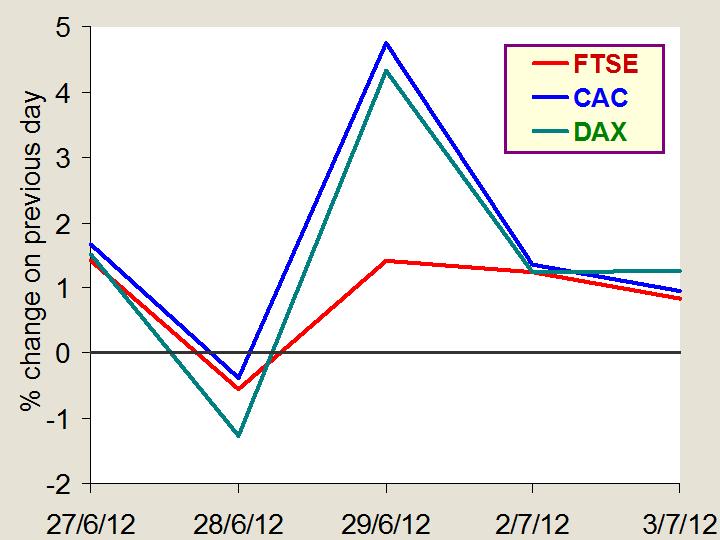 Generally the agreement has been greeted positively, with stock markets in the eurozone and across the world rising significantly. But will the measures be enough to reassure investors over the coming weeks? Will they cure the problems of the eurozone or are they just one more, albeit larger, sticking plaster?
The following webcasts, podcasts and articles look at the agreement and the resulting prospects for the eurozone.
Webcasts and podcasts
Eurozone bends the rules to save single currency euronews (29/6/12)
Markets Like Euro Crisis Deal, Merkel Defensive Associated Press (29/6/12)
Eurozone crisis: ‘Breakthrough’ at summit BBC News, Gavin Hewitt (29/6/12)
EU summit outcome exceeds – low – expectations euronews (29/6/12)
Italy and Spain are main beneficiaries after EU summit euronews (30/6/12)
EU bank aid deal ‘better than expected, worse than needed’ euronews (29/6/12)
New eurozone deal ‘not enough’ BBC Today Programme, James Shugg (29/6/12)
Eurozone: ‘Massive concession’ from Angela Merkel BBC Today Programme, Gavin Hewitt and Robert Peston (29/6/12)
Articles
Eurozone bank bailout deal throws lifeline to Spain and Italy Guardian, Ian Traynor and Phillip Inman (29/6/12)
Spain lifeline after EU allows direct access to eurozone bailout funds Guardian (29/6/12)
Less disunion The Economist, Charlemagne’s notebook (29/6/12)
Eurozone agrees on bank recapitalisation BBC News (29/6/12)
Merkel defends compromise deal on eurozone banks BBC News (29/6/12)
A first, tentative step to salvation for the eurozone Independent, Leading article (29/6/12)
Analysis – Sharing a vision may be Europe’s biggest challenge Reuters, Alan Wheatley (3/7/12)
Eurozone bank agreement welcomed FT Adviser, Rebecca Clancy & Bradley Gerrard (2/7/12)
The real victor in Brussels was Merkel Financial Times, Wolfgang Münchau (1/7/12)
Finns, Dutch cast first doubt on EU summit deal EurActiv (3/7/12)
A Euro deal from Brussels BBC News, Stephanie Flanders (29/6/12)
Document
Conclusions of the European Council (28/29 June 2012) European Council (29/6/12)
Questions
- What are the advantages of the ESF lending to banks directly? Are there any problems associated with the proposal?
- To what extent will the measures solve the problems of the eurozone? What else might need to be done?
- Are there any potential moral hazards contained in the proposals and how are they likely to be tackled?
- Explain the concept of ‘seniority’ in the following statement: “the debt owed by Spain to the EFSF, if and when it is transferred to the ESM, will not gain seniority”. Why might this be good for private financiers?
- If governments’ bonds are to be purchased by the ESM, what conditions are likely to be attached?
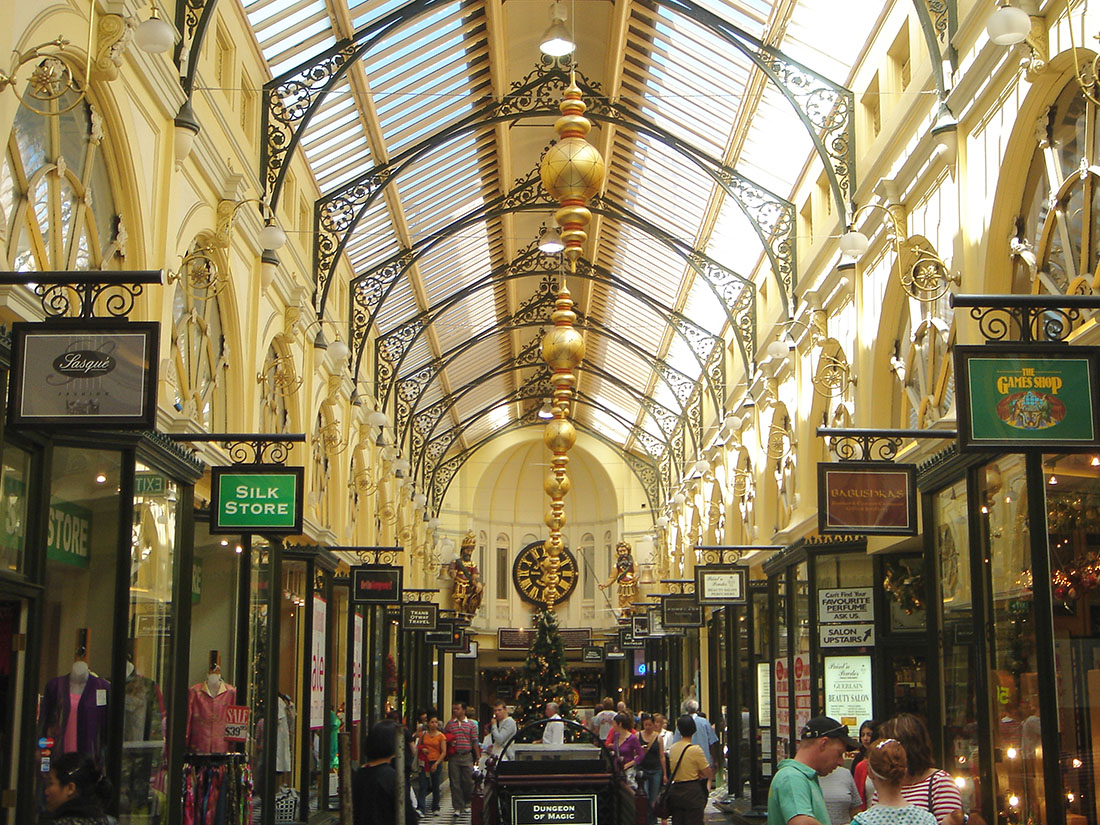 A recent article on this blog discussed the likelihood that we will soon move to a cashless society. It is therefore interesting to consider the implications that this might have for consumer behaviour. We might expect the form of payment to make no difference to a rational consumer. However, there is considerable evidence to suggest that this is not the case.
One reason why people appear to spend more freely on credit cards is payment decoupling – you get utility from the item purchased before you pay the cost. However, more recent evidence suggests that this is not the only relevant factor. It appears that the degree of transparency of the payment method also has an effect. Psychologists quoted in the above article conclude from their experimental evidence that:
Payment modes differ in the transparency with which individuals can feel the outflow of money. ….with cash being the most transparent payment mode.
This effect also appears to make people spend cash less freely.
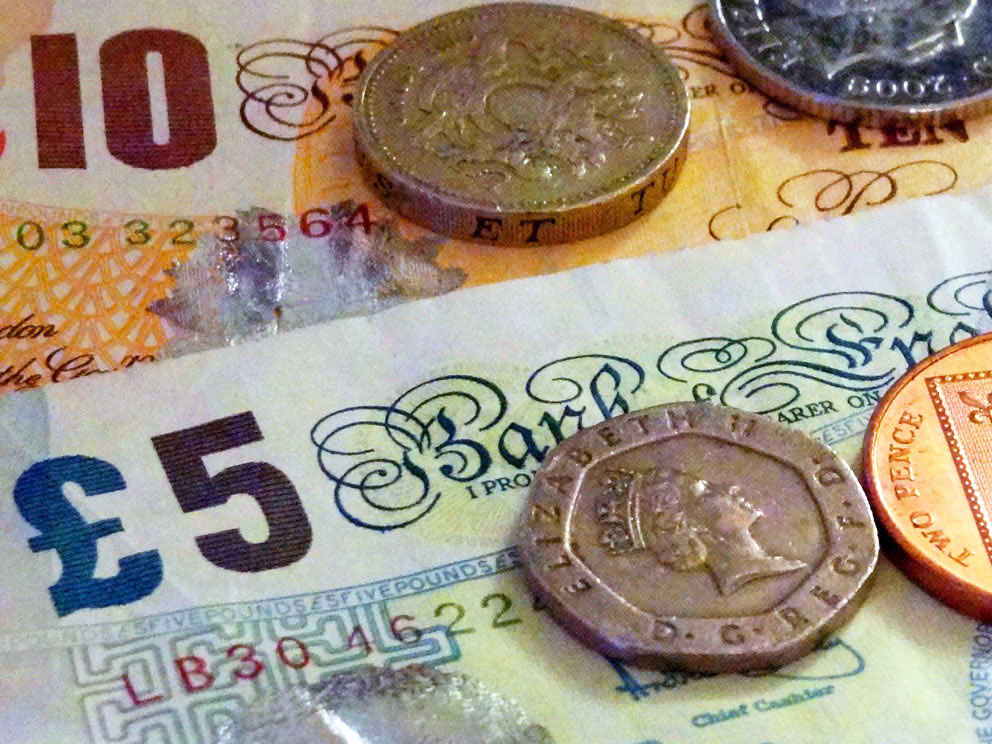 The author of the above article spent some time experimenting with trying to make all his purchases using cash. He found that by doing so, he was able to reduce his spending by about 10%. However, this seems likely to become harder to do in the future and, as the article concludes, it is already difficult to purchase some items with cash.
Article
Why does foreign money seem like play money? Science Codex (04/06/07)
Questions
- What type of products is it already difficult to purchase with cash?
- How did the psychologists test the transparency of payment methods?
- Do you think the consumer behaviour described above is likely to persist in the long-run?
- Might firms be able to take advantage of the consumers behave described above?
- Do you think the transparency of foreign currencies is the main reason why people spend more when they are abroad?
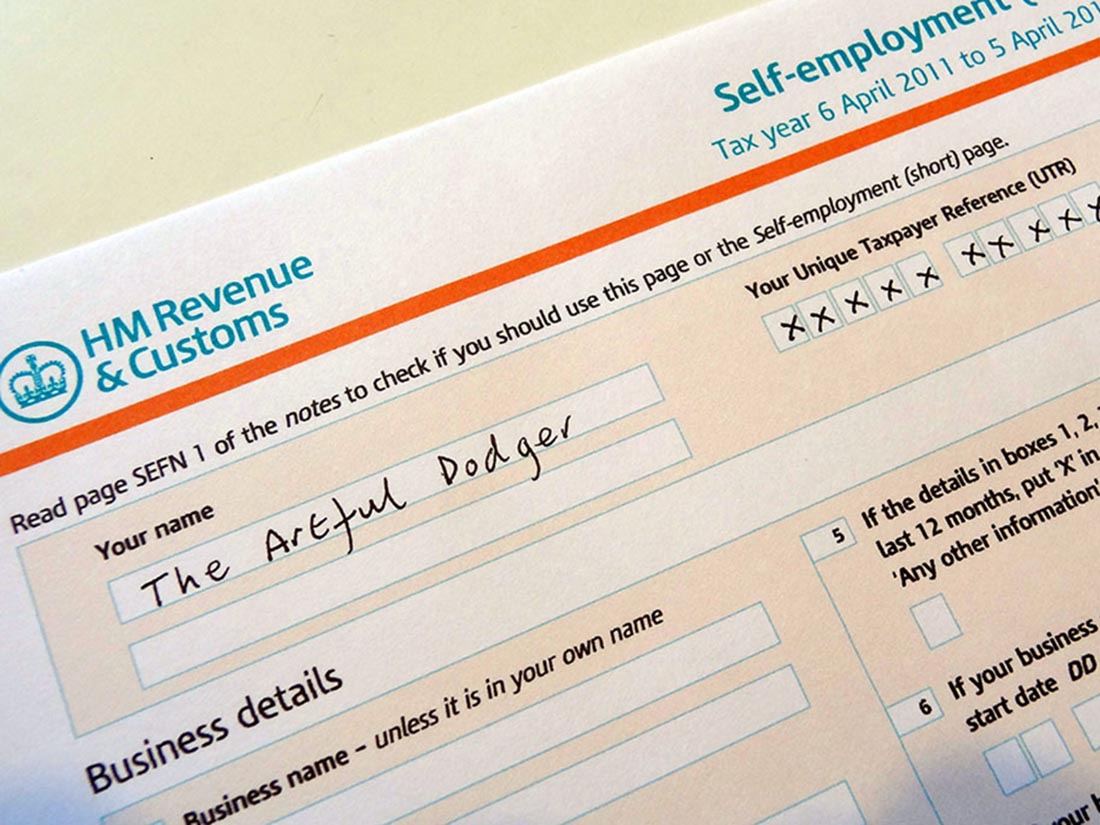 Let’s face it – no-one likes paying tax! After all, to see your monthly pay decline by £1000 through taxation and national insurance has got to hurt. Yet, taxation and national insurance contributions are essential sources of government revenue to finance benefits and public and merit goods.
However, with so much attention given to the UK’s ‘culture of dependency’, many people are increasingly angry with having to pay so much in taxation to see it being spent by the government on individuals who in some cases choose not to work and at the same time seeing other rich people paying so little in taxation. The increase in the top rate of tax received a lot of coverage. Although it did make the tax system more progressive, there were many concerns that it would lead to lower growth, a lack of innovation and enterprise and increased tax evasion and avoidance, as the super-rich were being hit with phenomenal tax bills. The post on the 50p income tax available here is worth looking at again to think about the effect that taxes have on incentives.
The issue of tax avoidance is by no means new, but with a large budget deficit in the UK, tax avoidance by the super-rich has become something that everyone has an opinion on. The average household has seen its income squeezed more and more, as the government continues its efforts to cut the deficit. The fact that the super rich are avoiding sometimes millions in taxation, while the average household struggles to pay even the basic rate of tax, creates a rather contentious issue. The Chief Secretary to the Treasury, Danny Alexander, has said that the basic rate of tax could be cut by 2p in the pound if tax avoidance came to an end. He commented to the BBC’s Sunday Politics Programme that:
‘We have to make sure that everybody, especially the rich and famous, are paying their fair share of tax…These sorts of schemes that save wealthy people potentially tens of millions of pounds in tax, they are paid for by everybody else… If we could narrow the tax gap in this country by a quarter we could reduce income tax for every basic rate payer by 2p in the pound.’
This would clearly have some very positive effects on some of the poorest people living in the UK.
There is a variety of tax avoidance schemes available and the one receiving the most attention at present is the Jersey-based K2 scheme, which Jimmy Carr and others are thought to be using. The Public Accounts Committee will be reporting on the problem of using private companies to pay salaries, as a means of avoiding income tax and national insurance contributions.
If tax avoidance could be stopped, or at least reduced, then not only could basic rate tax payers benefit, but it might go some way to cutting the budget deficit, giving the government more flexibility in stimulating the economy. According to HMRC, tax avoidance and evasion cost the economy some £42 billion – enough to pay off one-third of Britain’s budget deficit.
The following articles consider the problem of tax avoidance and then try answering the questions on the issue of taxation.
Five-point plan to curb tax cheating by big firms and super-rich Guardian (27/6/12)
Stop tax dodgers or there will be ‘riots on the streets’, warns top lawyer designing new anti-avoidance rules Mail Online, Julian Gavaghan (26/6/12)
Danny Alexander describes aggressive tax avoidance as ‘morally repugnant’ Guardian, Patrick Wintour (24/6/12)
Basic tax ‘could be cut by 2p’ if avoidance ended BBC News(24/6/12)
Danny Alexander says tax avoidance ‘adds 2p in every £1 to basic tax rate’ Independent, Oliver Wright (24/6/12)
Make tax returns public, urges peer The Press Association (28/6/12)
Tax officials reveal scale of probe Financial Times, Jim Pickard (27/6/12)
Questions
- What are the key principles of a good tax system?
- Explain how taxation affects the incentive to work?
- What is the difference between tax evasion and tax avoidance?
- Using indifference analysis, illustrate the effect of a cut in the basic rate of income tax. How does it affect the decision to work more or less? You should consider the income and substitution effects in your answer and which rate of tax (if any) an individual is paying.
- Why is tax avoidance of such concern at the moment? Think about the current state of the economy.
- What are taxes and national insurance contributions used to pay for?
- To what extent do you think tax avoidance is a natural consequence of any tax system?