As noted in the posting about the new high-speed rail link (High-speed rail link is on track), transport issues in the UK are always newsworthy topics and here we go again. This time, though, we look to the sky, where air traffic was halted for five days, from April 14th to 19th. Whilst some flights took off on the morning of the 20th April, further volcanic clouds were expected to ground flights at 7pm. Then, with new scientific evidence suggesting that it would be safe to ease restrictions, flights resumed on 21st April.
A big problem during this period was the uncertainty about how long the disruption might last. And even with the easing of restrictions, there was no certainty that dangerous levels of ash might not return if there was a new bout of activity from the volcano and if winds were unfavourable. One thing that was certain is that it would cost the British and other European economies at a time when they can hardly afford it.
The airline industry is already expected to lose £1.4bn this year and the volcanic cloud is estimated to have cost airlines approximately £130 million per day in lost revenues. The tourism industry has also suffered, although the losses are significantly lower. Countries, such as Kenya, that rely heavily on air freight to transport goods have suffered and businesses have also lost out, owing to cancelled meetings, delays to mail and stranded staff. Customers were angry that they might face extra charges to rebook flights and were having to pay for further accommodation. Whilst the direct effects on economic growth were thought to be only minimal, the long-term effects are uncertain. A drop of between 1% and 2% for European GDP was being suggested.
Airlines have been asking for compensation, in particular BA. After a tumultuous time with strikes, such a disruption could not have come at a worse time. BA has estimated costs of between £15m and £20m per day, due to lost passenger and freight revenues, as well as the need to support passengers trapped abroad.
However, the news was not all bad, especially if you are a rail operator or own a shipping company, as other means of transport have seen a huge rise in demand. Many stranded passengers have railed against the ‘profiteering’ of rail, coach and car-hire companies as prices soared. A case of supply and demand?
Iceland volcano cloud: the economic impact BBC News (19/4/10)
BA seeks compensation for volcano losses Telegraph (19/4/10)
Tourists and economy trapped by the volcano eruption in Iceland Balkans Business News (19/4/10)
Iceland volcano: the impact of the ash cloud on Britain Guardian, James Meikle (18/4/10)
Volcano’s ash cloud causes sporting chaos BBC News (20/4/10)
Travel companies lose millions of pounds with UK tourism next to suffer Independent, Alistair Dawber (20/4/10)
Volcanic ash costing airline £130m a day Channel 4 News (19/4/10)
BA demands government compensation as airlines watch reserves go up in smoke Independent (20/4/10)
British Airway seeks compensation for air chaos (including video) BBC News (19/4/10)
How long will chaos last – and what has it cost? Independent (19/4/10)
Europe counting economic cost of volcano CNBC, Patrick Allen (18/4/10)
How could Europe volcano cloud crisis play out? Reuters, Peter Apps (19/4/10)
Questions
- Who are the main losers from the volcanic ash cloud? Think about businesses and individuals.
- How can other means of transport, such as rail, be seen as a complement and a substitute to air travel?
- How can the economic impact of such disruption be estimated? Can you apply a cost–benefit analysis to this situation?
- Airlines are losing revenue and hence profits. Try illustrating this on a diagram.
- Should the airlines be compensated? If so, how would you propose compensating them? Are there any problems with your proposal?
- If one airline is the sole provider of flights between two locations, does it have a natural monopoly? Explain your answer.
- What is the impact on UK exports and imports? How might the exchange rate be affected?
- Does anyone gain from the volcanic ash cloud? Explain your answer.
’The steepest and longest recession of any developed country since World War II.’ This has been the case for Ireland, which has seen national income fall by 20% since 2007. Many countries across the globe have experienced pretty bad recessions, but what makes Ireland stand out is how it has been dealt with.
In the UK, the government has continued spending in a bid to stimulate the economy and to use Gordon Brown’s phrase from 2008, we have aimed to ‘spend our way out of recession’. Ireland, however, did not have that option. With too much borrowing, Ireland was unable to stimulate the economy and needed to cut its debts in order to maintain its credibility in the eurozone. Last year, significant cuts in government spending were accompanied by tax rises equal to 5% of GDP. Similar action is to be expected in the UK following the election, where popular benefits may have to be reduced, as transfer payments do account for the majority of government spending. Whoever is in government following the election will have some hard decisions to make and everyone will be affected. Read the article below and listen to the interview and think about what the UK can learn from Ireland.
Irish lessons for the UK (including interview) BBC Stephanomics (9/4/10)
Questions
- In the interview, Brian Lenihan said that the UK was expecting too much from the falling value of sterling. What was the UK expecting following significant depreciations in the value of sterling and why has that not happened?
- What is a deflationary spiral? Why has it caused Ireland’s public debt to rise so much?
- Why does Brian Lenihan argue that there are limits to how much taxes can be increased? What are diminishing returns to taxation?
- Would the UK be any better off had we joined the euro? What about other countries: would they have benefited had we joined the euro?
Whilst the internet and technological developments provide massive opportunities, they also create problems. For some time now, newspapers have seen declining sales, as more and more information becomes available online. Type something into Google or any other search engine and you will typically find thousands of relevant articles, even if the story has only just broken. As revenue from newspaper sales falls, revenue has to be made somewhere else to continue investment in ‘frontline journalism’. The question is: where will this come from?
The Financial Times and News Corp’s Wall Street Journal charge readers for online access and we can expect this to become more common from May, when the Times and the Sunday Times launch their new websites, where users will be charged for access. Subscription to these online news articles will be £1 per day or £2 for weekly access. Whilst the Executives of the Times admit that they will lose many online readers, they hope that the relatively low price, combined with a differentiated product will be enough of an incentive to keep readers reading.
Critics of this strategy argue that this a high risk strategy, as there is so much information available online. Whilst the BBC does plan to curtail the scope of its website, the Times and Sunday Times will still face competition from them, as well as the Guardian, the Independent, Reuters, etc., all of whom currently do not charge for online access. However, if you value journalism, then surely it’s right that a price should be charged to read it. Only time will tell how successful a strategy this is likely to be and whether we can expect other online news sites to follow their example.
Times and Sunday Times websites to charge from June (including video) BBC News (26/3/10)
Murdoch to launch UK web paywall in June Financial Times, Tim Bradshaw (26/3/10)
Times and Sunday Times websites to start charging from June Guardian, Mercedes Bunz (26/3/09)
News Corp to charge for UK Times Online from June Reuters (26/3/10)
Murdoch-owned newspaper charges for content BBC News (14/1/10)
Questions
- Why have newspaper sales declined?
- How might estimates of elasticity have been used to make the decision to charge to view online articles?
- ’If people value journalism, they should pay for it.’ What key economic concepts are being considered within that statement?
- Why is charging for access to the Times Online viewed as a high-risk strategy?
- What are the advantages and disadvantages of this strategy? To what extent do you think it is likely that other newspapers will soon follow suit?
- Which consumers do you think will be most affected by this strategy?
- In what ways might non-pay sites gain from theTimes’ charging policy?
- Would you continue to read articles from the Times linked from this site if you had to pay to access them? If so, why? If not, why not? (We want to know!!)
Ofcom, the communications regulator, is keen to encourage the spread of super-fast broadband through investment in fibre-optic cabling. So far, super-fast broadband is available to around 46 per cent of the UK population. Both Virgin Media (formerly Telewest and NTL) and BT have invested in fibre optic cables, but Ofcom is keen to extend the use to rival companies.
It proposes two methods: the first is to give competitors access to BT’s cables; the second is to allow competitors to install their own cables using BT’s ducts and telegraph poles. In both cases BT would charge companies to use its infrastructure and would be free to set prices so as to ensure a ‘fair rate of return’.
The articles below consider this ‘solution’ and its likely success in developing competition in the super-fast broadband market through competition, or whether BT’s and Virgin’s market dominance will continue to the detriment of consumers. You can also find links below to the Ofcom report and summaries
Articles
BT welcomes Ofcom’s fibre access plans Reuters, Kate Holton (23/3/10)
Ofcom to encourage super-fast broadband Business Financial Newswire (23/3/10)
Ofcom tells BT to open its fibre network ShareCast (23/3/10)
Ofcom wants BT to open up infrastructure Financial Times, Philip Stafford (23/3/10)
Ofcom push to give broadband rivals access to BT tunnels Financial Times, Tim Bradshaw and Andrew Parker (23/3/10)
BT UK Pushes Ofcom to Open Virgin Medias Broadband Cable Ducts SamKnows, Phil Thompson (23/3/10)
BT welcomes Ofcom’s fibre access plans ISPreview, MarkJ (8/3/10)
Report and summaries
Summary: Enabling a super-fast broadband Britain Ofcom (23/3/10)
Review of the wholesale local access market: full document Ofcom (23/3/10)
Review of the wholesale local access market: summary Ofcom (23/3/10)
Questions
- What forms does competition take in the broadband market?
- What are the barriers to entry to the super-fast broadband market?
- Are fibre-optic networks a natural monopoly? Explain the significance of your answer for competition in the super-fast broadband market.
- Will Ofcom’s desire for BT to get a fair return on its wholesale pricing of access to its cabling, ducts and telegraph poles be sufficient to ensure effective competition and that profits are not excessive?
- Explain whether it would be in consumers’ interests for competitors to be given access to Virgin’s cables and ducts.
 Throughout October we saw widespread strikes, from bins to the post and airline flights to buses – and it’s not yet over. (See article The Winter of Discontent: the sequel?) Last November, BA cut the number of cabin crew members, despite strike action, which delayed hundreds of flights. This issue has yet to be resolved and over the weekend, there were further talks to try to reach some agreement. However, no truce was reached and so further strikes are now expected. Indeed, the Unite union announced the results of another ballot of cabin crew, showing even larger support for strike action.
However, BA is not the only airline facing strike action. Some 4000 pilots at Lufthansa, a German airline, called a four-day strike, following disputes over job security. This has led to thousands of flights being cancelled and thousands of passengers left stranded. Although the strike was suspended after one day, the dispute is not settled.
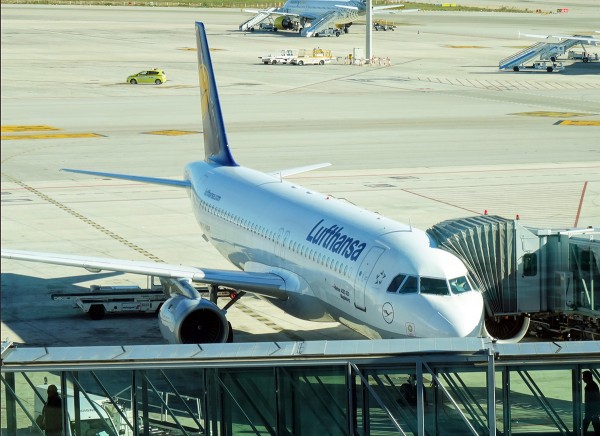 The stimulus for this action appears to date back to the huge turnover that Lufthansa made in 2007, with pilots feeling they should have a share in this success, along with its recent purchase of Austrian Airlines and the need to turn this into a profitable enterprise. The Lufthansa pilots are concerned that foreign pilots will be brought in to replace them in order to reduce costs. The airline fears that this strike could cost them about £21.9 million per day. With both sides unwilling to yield, it looks as though many passengers may find themselves stranded for a bit longer.
Articles
Questions
- How effective is the strike action by Lufthansa and BA likely to be? Which factors affect this?
- With a huge turnover in 2007, why were pay cuts at Lufthansa felt to be necessary by the company?
- How would wages be determined in the airline industry without trade unions? Illustrate this on a diagram and use that to explain why some workers get paid more than others.
- On your diagram of wage determination, now illustrate the effects of a trade union entering the market. How are wages and the equilibrium level of employment affected?
- Other than striking, what other options do workers and unions have?
- If strike action is costly to BA and Lufthansa, why don’t they simply agree to the unions’ demands?
