 The UK has always been an attractive place for investment, as foreign companies look to cities such as London for stable investment opportunities. This provides not only jobs and output, but also tax revenue for the government. However, one drawback is the lost tax revenue through tax avoidance schemes and big businesses say that if the UK is to remain competitive it needs to look at cutting taxes and bureaucracy.
In recent months, we have seen cases of individuals being prosecuted for tax evasion and more recently in the USA, Microsoft and Hewlett-Packard have been criticized by the Senate for allegedly moving an estimated £13bn to offshore accounts. (Microsoft and HP deny any wrong-doing). It is cases like this that provide an argument for governments to cut business rates and avoid losing business and jobs to other tax havens. Lord Fink, who is a Director of Firms located in a variety of tax havens said:
’I don’t see why the UK should not compete for jobs that at present are going to the Cayman Islands’
 Tax havens are obviously attractive to firms, as they provide a means of retaining more of a firm’s earnings and hence their profits. By offering a much lower rate of tax than countries such as the UK, they help to ease the tax burden on wealthy individuals and investors in hedge funds, along with many others.
The question is, do these lower tax rates discourage investment into the UK and thus would a relaxation of Revenue Customs’ rules mean an increase in inward investment and the other positive things that this would bring? Or would a decrease in tax rates for wealthy investors send the wrong message?
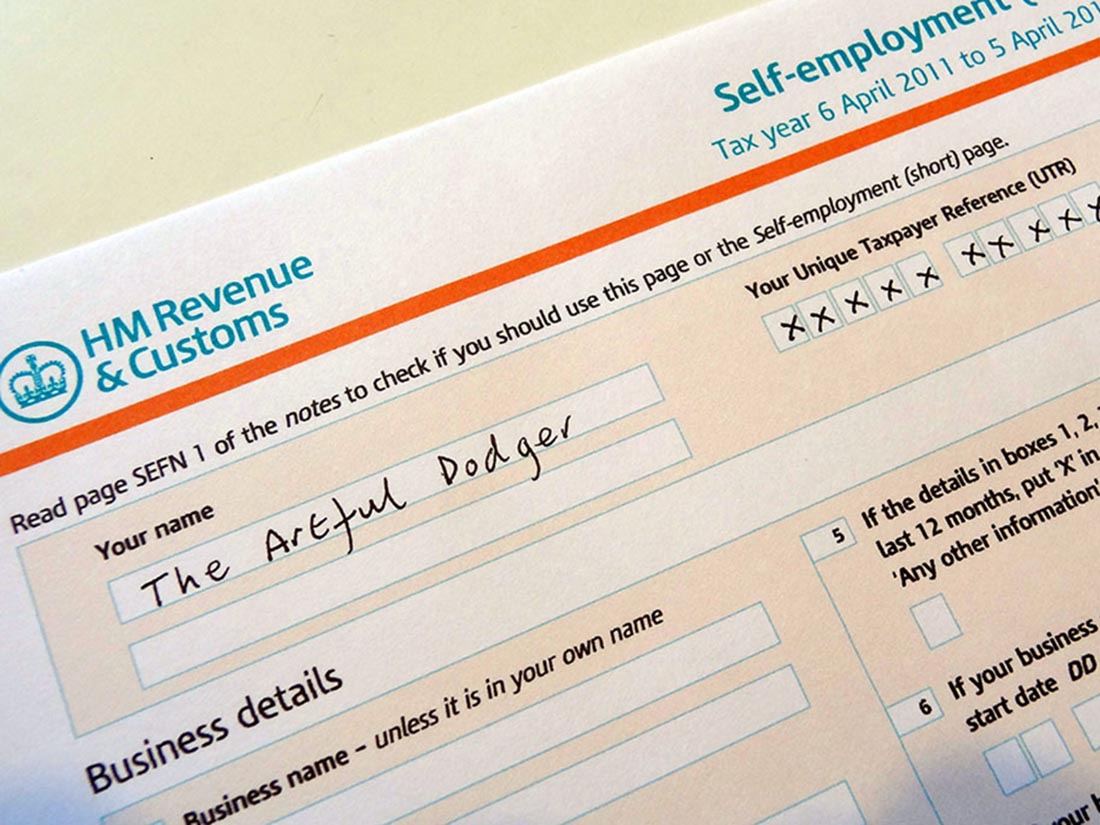 In a time of austerity, tax cuts for the rich are never going to be a popular policy – at least not amongst the ‘non-rich’ – in truth, the majority of the population. Furthermore, many simply see tax havens as morally wrong – or as George Osborne put it ‘morally repugnant’. The use of them provides the better off with a means of paying less to the taxman, whilst the worse off continue to pay their share.
The controversy surrounding tax havens is perhaps even more of an issue given the size of the public-sector deficit. With tax havens being used by those who should be paying the most, tax revenues are lower than would be the case without tax evasion and avoidance. Is this adding to the burden of basic rate tax payers?
This doesn’t help the gap between government expenditure and revenue, which has contributed to the largest amount of UK public-sector borrowing in August 2012 since records began. Net borrowing reached £14.4bn, as things like corporation tax receipts fell and benefit payments rose. Money that should go in to the government’s coffers is undoubtedly making its way into tax havens, but does that also mean that jobs are making their way out of the country? If tax rates in the UK were cut, cities such as London may become even more attractive places to invest, which could potentially create a much needed boost for the economy. But, at what cost? The following articles consider the controversy of tax havens.
Microsoft and HP rapped by US Senate over tax havens BBC News (20/9/12)
Morally repugnant tax avoiders can rest easy under David Cameron Guardian, Tanya Gold (21/9/12)
Britain could prevent the use of tax havens by ending ‘archaic’ business rules Telegraph, Rowena Mason (21/9/12)
UK public-sector borrowing hits record high of £14.4bn BBC News (21/9/12)
The top Tory who wants to make Britain a tax haven for millionaires Guardian, Martin Williams and Rajeev Syal (20/9/12)
Make UK a tax haven to attract investment from millionaires, urges Tory treasurer Mail Online, Daniel Martin (21/9/12)
Microsoft saved billions using Irish tax havens Irish Times, Genevieve Carbery (21/9/12)
Microsoft, HP skirted taxes via offshore units: U.S. Senate Panel Reuters, Kim Dixon (21/9/12)
Danny Alexander says tax avoidance ‘adds 2p in every £1 to basic tax rate’ Independent, Oliver Wright (24/6/12)
Questions
- What are the key features of tax havens?
- Briefly explain the arguments in favour of tax havens and those against. Think about them from all points of view.
- Explain the way in which a cut in UK tax rates could create jobs and how the multiplier effect may provide a boost for the UK economy.
- If tax rates were cut, how might this affect an individual’s decision to work? What about an individual’s decision to invest? Use indifference analysis to help explain your answer.
- How does tax avoidance and evasion affect public sector borrowing? Is there any way a cut in tax rates on foreign investment could improve the government’s finances?
- Do you think there is any truth in the argument that the UK is losing out to other countries because of its higher tax rates? Is a reduction in tax rates necessary to help us compete?
 In the blog A surprising rise we analysed the recent trends in the housing market. In August house prices increased the fastest since January 2010 and this left the average UK house price at just under £165,000.
Whilst this has still meant getting on the property ladder is only a dream for many, for those wishing to buy in London, they will, on average, need to find £368,000. London wages are significantly higher than in the rest of the country, so it is hardly surprising that average house prices are too.
However, an average London wage won’t get you close to the following property! With a reported asking price of £300m, it would be the highest priced house ever sold in London. Undoubtedly, you get a fair amount for your money, including 45 bedrooms and 60,000 square feet, but is this worth £300m? A property expert believes that it will be sold privately, not publicly, as it is such a rare property and that naturally, there will only be a few potential buyers!!
So, who are the likely buyers? You won’t be able to walk into a local estate agent and ask for a viewing. Only certain people with the funds to spare are being offered it. Many foreigners have been purchasing property in London, looking for a safe investment, with the trouble in Europe. This has led to London property prices rising very rapidly. But surely £300m is a little over the top! Assuming the asking price is paid, in order for a potential buyer to get any consumer surplus, he or she would have to value the property at significantly more than £300m – especially as stamp duty of approximately £21m would have to be paid.
The following few articles look at this record property price. (By the way, the house in the picture at the top of this blog is not the house that’s for sale: it’s a girls’ school in Tetbury. I don’t know how much it’s worth!)
London’s most expensive house yet, at £300m? BBC News, Ian Pollock (13/9/12)
London mansion on sale for record £300m Telegraph, Matthew Sparkes (13/9/12)
Money’s not too tight for buyer of £300m London mansion Guardian, Esther Addley and Yasmin Morgan-Griffiths (13/9/12)
Questions
- Why are property prices in London so much higher than in other parts of the UK?
- Why is this property being sold privately not publicly, when selling publicly typically gains a higher price?
- How would an individual place a value on this property?
- What is consumer surplus and how would an individual calculate it?
- Could this record price for the property have a positive or adverse effect on property prices in other parts of London?
- Why is mortgage rationing unlikely to be a concern for this property!
 In an attempt to kick start the UK housing industry, the government has proposed a series of measures to reduce regulations.
These include relaxing planning restrictions on building extensions to existing homes, shops and offices; relaxing current rules that all new housing developments should include affordable housing (which often makes little or no profit for the builders); an extra £280m for the FirstBuy scheme that provides loans to first-time buyers to raise money for a deposit; and a new “major infrastructure fast track” scheme, whereby developers of large commercial and residential projects currently stalled at local authority planning level can have their applications ‘fast tracked’ by the national Planning Inspectorate.
The government maintains that the measures will increase the flow of new houses coming onto the market by reducing ‘red tape’.

Critics maintain that the problem of the slump in house building has little to do with a lack of availability of new houses or new plots for building. Rather, it is a reflection of the recession in the economy as a whole. The solution, claim critics, is to stimulate the economy and then the new-build property market will recover along with other sectors.
The articles look at the likely success of these latest policy proposals for the property market.
Articles
David Cameron and Nick Clegg unveil plans to kick-start Britain’s ailing house building industry Independent, Oliver Wright (6/9/12)
Planning rules on extensions to be relaxed ‘to boost economy’ BBC News (6/9/12)
Q&A: Housing and planning shake-up BBC News (6/9/12)
 Government plans are recipe for planning blight, says LGA BBC News (6/9/12)
Scepticism greets home improvements plan Financial Times, George Parker and Gill Plimmer (6/9/12)
Extensions and loft conversions could add nearly a quarter to the value of homes Independent, Alex Johnson (10/9/12)
Green groups condemn relaxation of house-building planning rules GreenWise (6/9/12)
Construction figures deal blow to government housebuilding plans Guardian, Philip Inman (4/9/12)
House builders sitting on 400,000 undeveloped plots of land with planning permission The Telegraph (5/9/12)
Weak demand hits building sector Independent, Jamie Grierson (4/9/12)
Free up green-belt land for new housing, says Policy Exchange Guardian, Nicholas Watt (13/9/12)
Relaxing Planning Laws Will Damage British Housing Huffington Post, Martin Roberts (7/9/12)
Will David Cameron’s planning reforms create jobs and growth? Guardian, Juliette Jowit (6/9/12)
Data
Economic Data freely available online (see site 30 for links to housing market data) Economics Network
Lending to individuals Bank of England
Questions
- Distinguish between supply-side and demand-side policy and the different types of each.
- How would you classify the types of policy proposals announced on freeing up the new-build property market in terms of your answer to question 1?
- What will determine the success of the policy measures in stimulating (a) the new-build property market; (b) the economy generally?
- What externalities are involved in relaxing the regulations on home extensions?
- If you were in power, how would you go about stimulating the property market? Would there be any downsides of your proposals?
 Induced hydraulic fracturing or “fracking”, is a technique used to make fractures in shale beds, normally deep underground, through the injection of liquids under high pressure. The idea is to release oil or gas. Fracking has transformed the oil industry by allowing vast reserves to be tapped.
Although the main ingredient of the fracking liquid is water, it is also necessary to include sand and a gelling agent to increase the viscosity of the liquid and bind in the sand. The commonest gelling agent is guar gum, a gel made from powdered guar seeds, which are grown in the semi-desert regions of India and Pakistan. Guar gum is also widely used in the food industry as a binding, thickening, texturising and moisture control agent.

With the rapid growth in fracking, especially in the USA, the demand for guar gum has rocketed – and so has its price. In just one year the price of guar beans, from which the seeds are extracted, has risen ten fold from about 30 rupees (about 34 pence) to around 300 rupees per kilo. This has transformed the lives of many poor farmers. Across the desert belt of north-west India, fields are being planted with guar.

But will it last? What will the oil and gas extraction companies do in response to the higher price? What will the food industry do? What will happen to the demand and supply of guar gum over the longer term? Is it risky for farmers in India and Pakistan to rely on a single crop, or should they take advantage of the high prices while they last? These types of questions are central to many mono-crop economies.
Webcast
The little green bean in big fracking demand CNN, Mallika Kapur (10/9/12)
Articles
Frackers in frantic search for guar bean substitutes Reuters, Braden Reddall (13/8/12)
After first-half surge, US drillers find respite in guar wars Reuters (20/7/12)
Guar Gum Exports From India to Drop on Halliburton Stocks BloombergBusinessweek, Prabhudatta Mishra (3/9/12)
Frackers Seek Guar Bean Substitutes The Ithaca Independent, Ed Sutherland (13/8/12)
Synthetic Fracking Ingredient to Replace Guar Bean Greener Ideas, Madison E. Rowe (15/8/12)
From emu farms to guar crops: Why the desert is fertile for Ponzi schemes The Economic Times of India, Vikram Doctor (10/9/12)
Guar gum replacer cuts cost by up to 40% Food Manufacture, Lorraine Mullaney (4/9/12)
Less Guar Needed: TIC Gums Introduces Ticaloid Lite Powder TIC Gums (27/8/12)
Immediate Supply of Guar Gum Available in the US PRLog (1/9/12)
Questions
- Why have guar bean, powder and gum prices risen so rapidly? Use a demand and supply diagram to illustrate your answer.
- How is the price elasticity of supply of guar likely to differ between the short term and the long term? What will be the implications of this for guar prices and the livelihood of guar growers?
- How is the price elasticity of demand for guar likely to differ between the short term and the long term? What will be the implications of this for guar prices and the livelihood of guar growers?
- What would you advise guar growers to do and why?
- What is the role of speculation in determining the price of guar?
- What is a ‘ponzi scheme’? Why is the ‘desert so fertile for ponzi schemes’? (Note that the symbol for a rupee is Rs or ₹, that 100,000 rupees are referred to as 1 Lakh and that 100 Lakh are referred to as 1 Crore.)
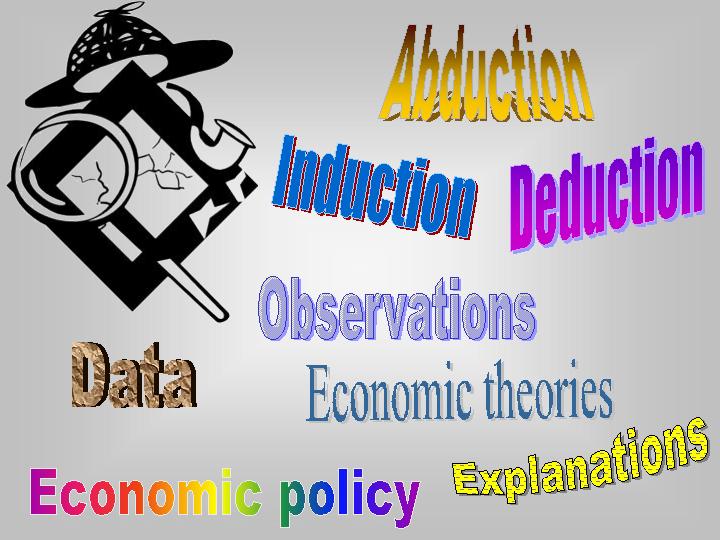 Many of you reading this will be embarking on an economics degree. During your studies you’ll be developing the skills that economists bring to observing and analysing the world around us and considering the policy options to achieve various social and economic objectives. You’ll be learning how to become an ‘economic detective’ and to do ‘forensic economics’.
Identifying the nature of economic problems; collecting and examining the evidence; using the economist’s ‘toolkit’ of concepts and ideas to make sense of the evidence; looking for explanations; constructing hypotheses and theories; considering what can be done to tackle the problems and prevent them occurring in the future – these are the sorts of things you will be doing; and they involve detective work.
The podcast below looks at the methods of Sherlock Holmes. These are the sorts of methods successful economists use. John Gray identifies three types of reasoning. The first two are probably familiar to you, or soon will be.
1. Induction involves looking at evidence and then using it to construct general theories. So, for example, if you observe on many occasions that when the prices of various goods rise, the quantity demanded falls, you can then hypothesise that whenever the price of a good rises, the quantity demanded will fall; in other words, you induce that price and quantity demanded are inversely related – that demand curves are downward sloping. This is known as the ‘Law of demand’. Induction, of course, is only as good as the evidence. Nevertheless, inductive methods are logical and it can be demonstrated how the theories follow from the evidence.
2. Deduction involves using theories to draw conclusions about specific cases. So, for example, you could use the law of demand to deduce that when the price of a specific good rises, the quantity demanded of that good will fall. You would also assume that nothing else had changed that could influence the demand for the good. In other words, you assume ‘ceteris paribus‘ or ‘other things being equal’. As long as you have not made any logical errors, deduction is foolproof. As John Gray puts it:
Deduction is infallible as long as the premises are true, while induction yields probabilities that can always be falsified by events
But there is a third type of reasoning and this is where the true economic detective comes in. This is known as ‘abduction’. This is the type of logic that is used when evidence is thin or where there are lots of scraps of seemingly contradictory evidence. And this is the type of logic employed so successfully by Sherlock Holmes.
 3. Abduction involves making informed guesses or estimates from limited evidence. It is using the scraps of evidence as clues as to what might be really going on. It is how many initial hypotheses are formed. Then the researcher (or detective) will use the clues to search for more evidence that can be used for induction that will yield a more robust theory. The clues may lead to a false trail, but sometimes they may allow the researcher to develop a new theory or amend an existing one. A good researcher will be alert to clues; to seeing patterns in details that might previously have been dismissed or gone unnoticed.
Before the banking crisis of 2007/8 and the subsequent credit crunch and recession in the developed world, many economists were picking up clues and trying to use them to develop a theory of systemic risk in financial markets. They were using the skills of an economic detective to try to discover not only what was currently going on but also what might be the consequences for the future. Some used abduction successfully to predict the impending crisis; most did not.
If you are embarking on an economics degree and will possibly go on to a career as an economist, then part of your training will be as a detective. With good detective skills – looking for clues, seeing connections, identifying what more evidence is required and where to find it, and then using it to provide explanations and policy prescriptions – you could make a very successful and sought-after economist. Being a good economist is not just about learning theories and techniques, although this is vitally important; it’s also about being imaginative and thinking ‘outside the box’. Good luck!
Podcast
Sherlock Holmes and the Romance of Reason BBC: A Point of View, John Gray (17/8/12) (Click here for a transcript.)
Articles and information
Detective work: forensic economics Business:Life, Tim Harford (2/5/12)
The Search for 100 Million Missing Women Slate, Stephen J. Dubner and Steven D. Levitt (24/5/05)
Abduction Stanford Encyclopedia of Philosophy, Igor Douven (9/2/11)
Abductive reasoning Wikipedia
Questions
- Explain the difference between induction and abduction.
- Identify the various ‘threshold concepts’ in economics. Does an understanding of these concepts help an economist do better detective work?
- How might forensic economics be used for crime fighting?
- Why might elegant and sophisticated economic theory be dangerous in the ‘messy’ and statistically ‘noisy’ real world?
- In trying to establish an explanation for “100 Million Missing Women”, what use was made of abduction, induction and deduction?
 The UK has always been an attractive place for investment, as foreign companies look to cities such as London for stable investment opportunities. This provides not only jobs and output, but also tax revenue for the government. However, one drawback is the lost tax revenue through tax avoidance schemes and big businesses say that if the UK is to remain competitive it needs to look at cutting taxes and bureaucracy.
 Tax havens are obviously attractive to firms, as they provide a means of retaining more of a firm’s earnings and hence their profits. By offering a much lower rate of tax than countries such as the UK, they help to ease the tax burden on wealthy individuals and investors in hedge funds, along with many others.