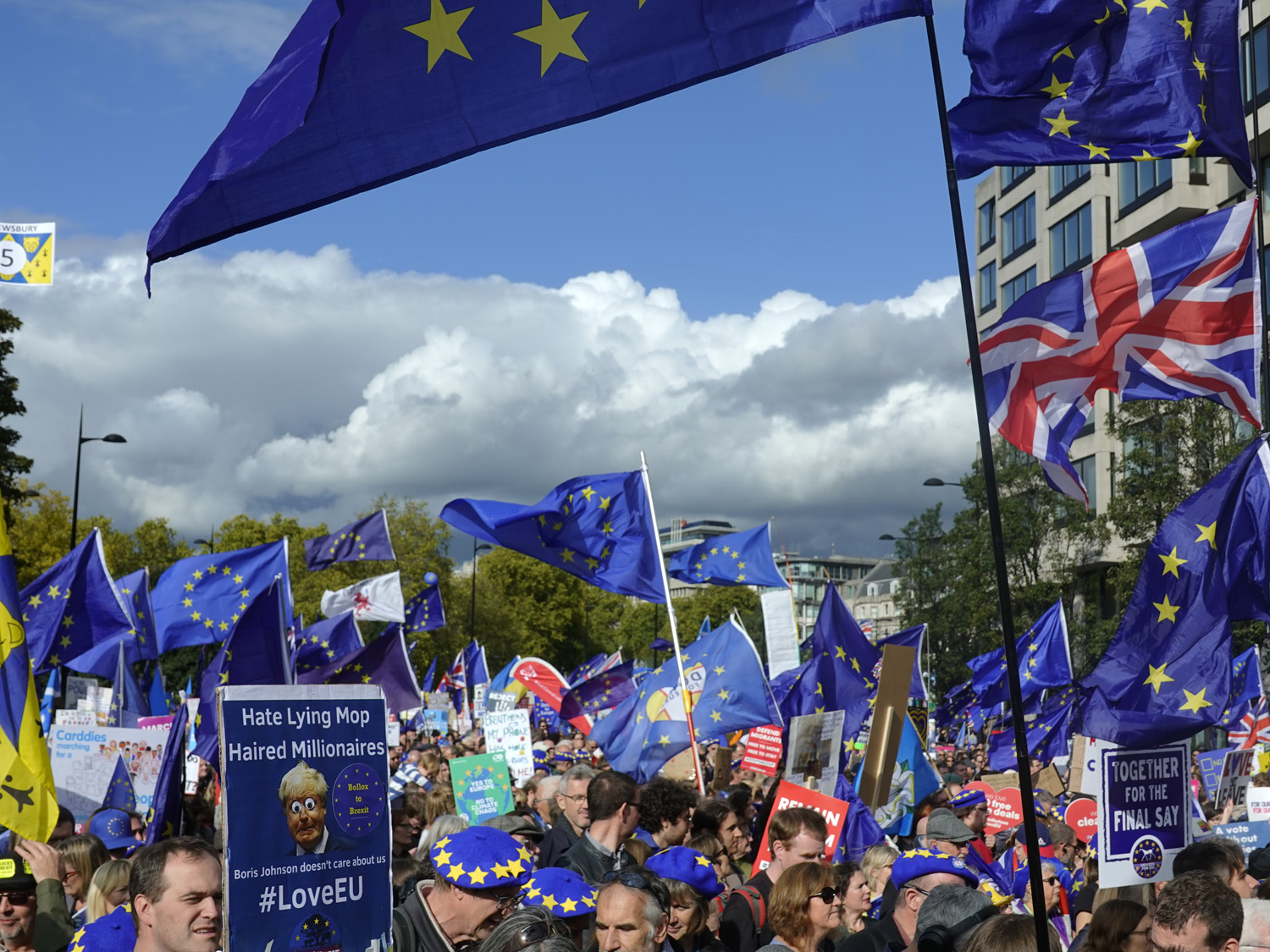
 A general election has been called in the UK for 12 December. Central to the debates between the parties will be their policy on Brexit.
They range from the Liberal Democrats’, Plaid Cymru’s and Sinn Féin’s policy of cancelling Brexit and remaining in the EU, to the Scottish Nationalists’ and Greens’ policy of halting Brexit while a People’s Vote (another referendum) is held, with the parties campaigning to stay in the EU, to the Conservative Party’s policy of supporting the Withdrawal Agreement and Political Declaration negotiated between the Boris Johnson government and the EU, to the DUP which supports Brexit but not a version which creates a border between Great Britain and Northern Ireland, to the Brexit Party and UKIP which support leaving the EU with no deal (what they call a ‘clean break’) and then negotiating individual trade deals on a country-by-country basis.
The Labour Party also supports a People’s Vote, but only after renegotiating the Withdrawal Agreement and Political Declaration, so that if Brexit took place, the UK would have a close relationship with the single market and remain in a customs union. Also, various laws and regulations on environmental protection and workers’ rights would be retained. The referendum would take place within six months of the election and would be a choice between this new deal and remain.
But what are the economic costs and benefits of these various alternatives? Prior to the June 2016 referendum, the Treasury costed various scenarios. After 15 years, a deal would make UK GDP between 3.4% and 7.8% lower than if it remained in the EU, depending on the nature of the deal. No deal would make GDP between 5.4% and 9.5% lower.
Then in November 2018, the Treasury published analysis of the original deal negotiated by Theresa May in July 2018 (the ‘Chequers deal’). It estimated that GDP would be up to 3.9% lower after 15 years than it would have been if the UK had remained in the EU. In the case of a no-deal Brexit, GDP would be up to 9.3% lower after 15 years.
When asked for Treasury forecasts of the effects of Boris Johnson’s deal, the Chancellor, Sajid Javid, said that the Treasury had not been asked to provide forecasts as the deal was “self-evidently in our economic interest“.
 Other forecasters, however, have analysed the effects of the Johnson deal. The National Institute for Economic and Social Research (NIESR), the UK’s longest established independent economic research institute, has estimated the costs of various scenarios, including the Johnson deal, the May deal, a no-deal scenario and also a scenario of continuing uncertainty with no agreement over Brexit. The NIESR estimates that, under the Johnson deal, with a successful free-trade agreement with the EU, in 10 years’ time UK GDP will be 3.5% lower than it would be by remaining in the EU. This represents a cost of £70 billion. The costs would arise from less trade with the EU, lower inward investment, slower growth in productivity and labour shortages from lower migration. These would be offset somewhat by savings on budget contributions to the EU.
Under Theresa May’s deal UK GDP would be 3.0% lower (and thus slightly less costly than Boris Johnson’s deal). Continuing in the current situation with chronic uncertainty about whether the UK would leave or remain would leave the UK 2% worse off after 10 years. In other words, uncertainty would be less damaging than leaving. The costs from the various scenarios would be in addition to the costs that have already occurred – the NIESR estimates that GDP is already 2.5% smaller than it would have been as a result of the 2016 Brexit vote.
Another report also costs the various scenarios. In ‘The economic impact of Boris Johnson’s Brexit proposals’, Professors Anand Menon and Jonathan Portes and a team at The UK in a Changing Europe estimate the effects of a decline in trade, migration and productivity from the various scenarios – again, 10 years after new trading arrangements are in place.  According to their analysis, UK GDP would be 4.9%, 6.4% and 8.1% lower with the May deal, the Johnson deal and no deal respectively than it would have been from remaining in the EU.
But how much reliance should we put on such forecasts? How realistic are their assumptions? What other factors could they have taken into account? Look at the two reports and at the articles discussing them and then consider the questions below which are concerned with the nature of economic forecasting.
Articles
- UK’s new Brexit deal worse than continued uncertainty – NIESR
Reuters, David Milliken (30/10/19)
- Brexit deal means ‘£70bn hit to UK by 2029′
BBC News, Faisal Islam (30/10/19)
- Boris Johnson’s Brexit deal worse for economy than Theresa May’s, new analysis shows
Politics Home, Matt Honeycombe-Foster (30/10/19)
- Boris Johnson’s Brexit deal ‘would cost UK economy £70bn’
The Guardian, Richard Partington (30/10/19)
- UK economy suffers ‘slow puncture’ as general election is called
ITV News, Joel Hills (30/10/19)
 Boris Johnson’s Brexit deal ‘would deliver £70bn hit to economy by 2029’
Sky News, Ed Conway (30/10/19)
- Boris Johnson’s Brexit deal won’t cost Britain £70bn by 2029
The Spectator, Ross Clark (30/10/19)
- Boris Johnson’s Brexit deal would make people worse off than Theresa May’s
The Guardian, Anand Menon and Jonathan Portes (13/10/19)
- How Boris Johnson’s hard Brexit would hit the UK economy
Financial Times, Chris Giles (13/10/19)
- Boris Johnson’s Brexit deal is worse for the UK economy than Theresa May’s, research suggests
CNBC, Elliot Smith (19/10/19)
Reports
Questions
- What are the arguments in favour of the assumptions and analysis of the two recent reports considered in this blog?
- What are the arguments against the assumptions and analysis of the two reports?
- How useful are forecasts like these, given the inevitable uncertainty surrounding (a) the outcome of negotiations post Brexit and (b) the strength of the global economy?
- If it could be demonstrated beyond doubt to everyone that each of the Brexit scenarios meant that UK GDP would be lower than if it remained in the EU, would this prove that the UK should remain in the EU? Explain.
- If economic forecasts turn out to be inaccurate, does this mean that economists should abandon forecasting?
 There is increasing recognition that the world is facing a climate emergency. Concerns are growing about the damaging effects of global warming on weather patterns, with increasing droughts, forest fires, floods and hurricanes. Ice sheets are melting and glaciers retreating, with consequent rising sea levels. Habitats and livelihoods are being destroyed. And many of the effects seem to be occurring more rapidly than had previously been expected.
Extinction Rebellion has staged protests in many countries; the period from 20 to 27 September saw a worldwide climate strike (see also), with millions of people marching and children leaving school to protest; a Climate Action Summit took place at the United Nations, with a rousing speech by Greta Thunberg, the 16 year-old Swedish activist; the UN’s Intergovernmental Panel on Climate Change (IPCC) has just released a report with evidence showing that the melting of ice sheets and rising sea levels is more rapid than previously thought; at its annual party conference in Brighton, the Labour Party pledged that, in government, it would bring forward the UK’s target for zero net carbon emissions from 2050 to 2030.
Increasingly attention is focusing on what can be done. At first sight, it might seem as if the answer lies solely with climate scientists, environmentalists, technologists, politicians and industry. When the matter is discussed in the media, it is often the environment correspondent, the science correspondent, the political correspondent or the business correspondent who reports on developments in policy. But economics has an absolutely central role to play in both the analysis of the problem and in examining the effectiveness of alternative solutions.
One of the key things that economists do is to examine incentives and how they impact on human behaviour. Indeed, understanding the design and effectiveness of incentives is one of the 15 Threshold Concepts we identify in the Sloman books.
One of the most influential studies of the impact of climate change and means of addressing it was the study back in 2006, The Economics of Climate Change: The Stern Review, led by the economist Sir Nicholas Stern. The Review reflected economists’ arguments that climate change represents a massive failure of markets and of governments too. Firms and individuals can emit greenhouse gases into the atmosphere at no charge to themselves, even though it imposes costs on others. These external costs are possible because the atmosphere is a public good, which is free to exploit.
 Part of the solution is to ‘internalise’ these externalities by imposing charges on people and firms for their emissions, such as imposing higher taxes on cars with high exhaust emissions or on coal-fired power stations. This can be done through the tax system, with ‘green’ taxes and charges. Economists study the effectiveness of these and how much they are likely to change people’s behaviour.
Another part of the solution is to subsidise green alternatives, such as solar and wind power, that provide positive environmental externalities. But again, just how responsive will demand be? This again is something that economists study.
Of course, changing human behaviour is not just about raising the prices of activities that create negative environmental externalities and lowering the prices of those that create positive ones. Part of the solution lies in education to make people aware of the environmental impacts of their activities and what can be done about it. The problem here is that there is a lack of information – a classic market failure. Making people aware of the consequences of their actions can play a key part in the economic decisions they make. Economists study the extent that imperfect information distorts decision making and how informed decision making can improve outcomes.
Another part of the solution may be direct government investment in green technologies or the use of legislation to prevent or restrict activities that contribute to global warming. But in each case, economists are well placed to examine the efficacy and the costs and benefits of alternative policies. Economists have the tools to make cost–benefit appraisals.
Economists also study the motivations of people and how they affect their decisions, including decisions about whether or not to take part in activities with high emissions, such air travel, and decisions on ‘green’ activities, such as eating less meat and more vegetables.
If you are starting out on an economics degree, you will soon see that economists are at the centre of the analysis of some of the biggest issues of the day, such as climate change and the environment generally, inequality and poverty, working conditions, the work–life balance, the price of accommodation, the effects of populism and the retreat from global responsibility and, in the UK especially, the effects of Brexit, of whatever form.
Articles
Report
Questions
- Explain what is meant by environmental externalities.
- Compare the relative merits of carbon taxes and legislation as means of reducing carbon emissions.
- If there is a climate emergency, why are most governments unwilling to take the necessary measures to make their countries net carbon neutral within the next few years?
- In what ways would you suggest incentivising (a) individuals and (b) firms to reduce carbon emissions? Explain your reasoning.
- For what reasons are the burdens of climate changed shared unequally between people across the globe?
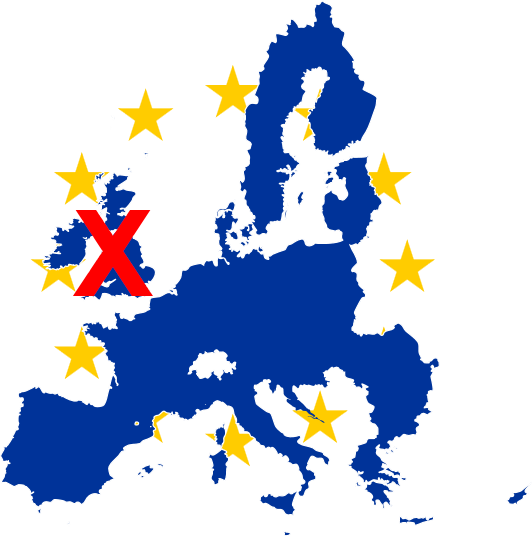 Economists were generally in favour of the UK remaining in the EU and highly critical of the policy proposals of Donald Trump. And yet the UK voted to leave the EU and Donald Trump was elected.
People rejected the advice of most economists. Many blamed the failure of most economists to predict the 2007/8 financial crisis and to find solutions to the growing gulf between rich and poor, with the majority stuck on low incomes.
So to what extent are economists to blame for the rise in populism – a wave that could lead to electoral upsets in various European countries? The podcast below brings together economists and politicians from across the political spectrum. It is over an hour long and provides an in-depth discussion of many of the issues and the extent to which economists can provide answers.
Podcast
Should economists share the blame for populism? Guardian Politics Weekly podcast, Heather Stewart, joined by Andrew Lilico, Ann Pettifor, Jonathan Portes, Rachel Reeves and Vince Cable (23/2/17)
Questions
- Why has globalisation become a dirty word?
- Assess the arguments for and against an open policy towards immigration?
- In what positive ways may economists contribute to populism?
- Do economists concentrate too much on growth in GDP rather than on its distribution?
- Give some examples of ways in which various popular interpretations of economic phenomena may confuse correlation with causality.
- Why did the proportions of people who voted for and against Brexit differ considerably from one part of the country to another, from one age group to another and from one social group to another?
- In what ways have economists and the subject of economics contributed towards a growth in human welfare?
- What are the advantages and disadvantages of the trend for undergraduate economics curricula to become more mathematical (at least until relatively recently)?
 Is too much expected of economists? When economic forecasts turn out to be wrong, as they often are, economists are criticised for having inaccurate or unrealistic models. But is this a fair criticism?
The following article by Richard Whittle from Manchester Metropolitan University looks at what economists can and cannot do. The article highlights two key problems for economic forecasting.
The first concerns human behaviour, which is influenced by a whole range of factors and can change very rapidly in response to changing circumstances. Moods of optimism or pessimism can quickly spread in response to a news item, such as measures announced by Donald Trump or latest data on growth or the housing market.
The second concerns the whole range of possible economic shocks. Such shocks, by their very nature, are hard to predict and can quickly make forecasts wrong. They could be a surprise election result, a surprise government policy change, a natural disaster, a war or a series of terrorist attacks. And these shocks, in turn, affect human behaviour. Consumption and investment may rise or fall as the events affect confidence and herd behaviour.
But is it a fair criticism of economics that it cannot foretell the future? Do economists, as the article says, throw up their hands and curse economics as a futile endeavour? Not surprisingly, the answer given is no! The author gives an analogy with medicine.
A doctor cannot definitely prevent illness, but can offer advice on prevention and hopefully offer a cure if you do get ill. This is the same for the work economists do.
Economists can offer advice on preventing crises or slowdowns but cannot definitively prevent them from happening. Economists can also offer robust advice on restoring growth, although when the advice is that the economy has grown too fast and should slow, it is often not welcomed by policy makers.
Helping understanding the various drivers in an economy and how humans are likely to respond to various incentives is a key part of what economists do. But making predictions with 100% certainty is asking too much of economists.
 And just as medical professionals can predict that if you smoke, eat unhealthy food or take no exercise you are likely to be less healthy and die younger, but cannot say precisely when an individual will die, so too economists can predict that certain policy measures are likely to increase or decrease GDP or employment or inflation, but they cannot say precisely how much they will be affected.
As the article says, “the true value of the economist lies not in mystical fortune telling, but in achieving a better understanding of the nature of the economies in which we live and work.”
Article
How to be an economist in 2017 The Conversation, Richard Whittle (24/1/17)
Questions
- For what reasons has economics been ‘in crisis’? What is the solution to this crisis?
- Look at some macroeconomic forecasts for a country of your choice made two years ago for today (see, for example, forecasts made by the IMF, OECD or a central bank). How accurate were they? Explain any inaccuracies.
- To what extent is economic forecasting like weather forecasting?
- What is meant by cumulative causation? Give some examples. Why does cumulative causation make economic forecasting difficult?
- How is the increased usage of contactless card payments likely to affect spending patterns? Explain why.
- Why is it difficult to forecast the effects of Brexit?
- How can economic advisors help governments in designing policy?
- Why do people tend to overweight high probabilities and underweight low ones?
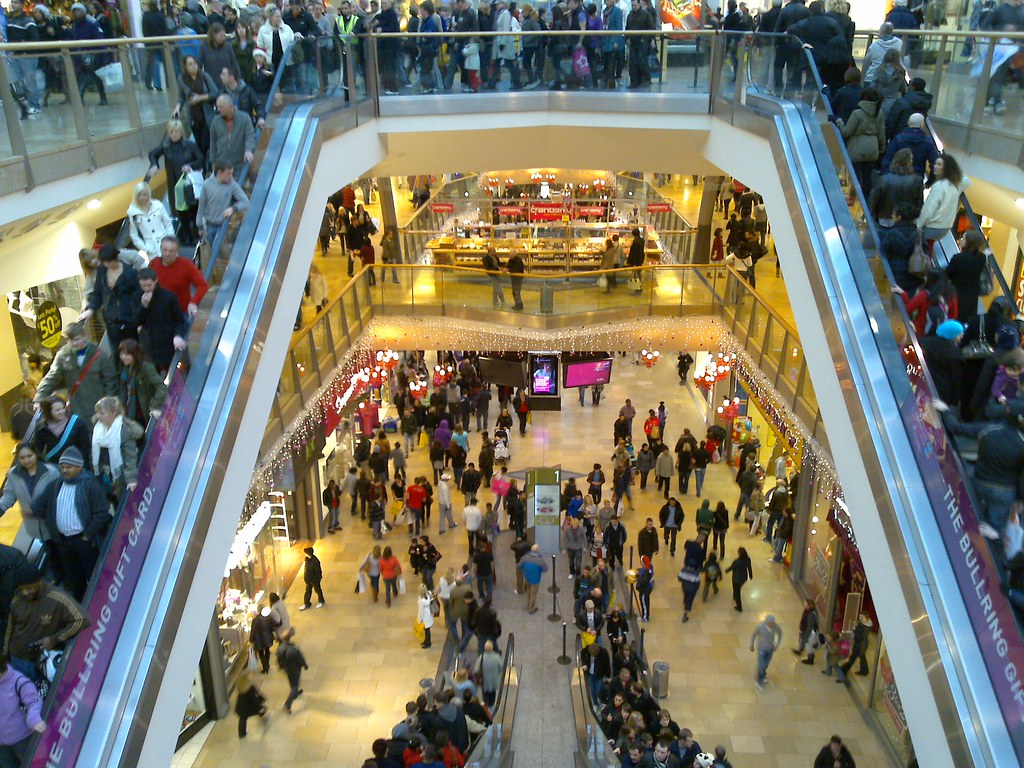 We all know that our spending changes during the Christmas period: namely we spend a lot more than during the rest of the year. This applies across the board – we buy more clothes, food and drink, even though each day, we can generally only wear, eat and drink the same amount as usual! This has some interesting points from a behavioural economics stance, but here I’m going to think about the impact of this on some key retailers.
Marks & Spencer have previously made headlines for the wrong reasons: poor sales on clothes and the need for serious restructuring of its stores, target audience and marketing in order for this long-standing retailer to remain current and competitive. Although sales were expected to rise in the Christmas period, they did significantly better than expected, with sales growth of 2.3%, above the expected 0.5%. More encouragingly, this growth was not just in food, but in clothing and homeware as well.
One of the key reasons given for this above-expected improvement in sales was the conveniently timed Christmas, falling on a Sunday and hence giving extra shopping days. M&S have said that this certainly helped with their Christmas trading. Although this was good for Q4 trading, the timing will not play ball for Easter and they are expecting a negative effective during that trading period. Some analysts have said that despite the growth being boosted by the timing of Christmas, there were still signs of a change in fortunes. Bryan Roberts from TCC Global said:

“It might be the sign of some green shoots in that part of the business.”
This is consistent with the Chief Executive, Steve Rowe’s comments that despite the timing of Christmas adding around 1.5% to clothing and home sales growth, the recovery was also due to “better ranges, better availability and better prices”.
It appears as though many other retailers have experienced positive growth in Christmas sales, with the John Lewis Partnership seeing like-for-like sales growth of 2.7%, with Waitrose at a 2.8% rise.
The other interesting area is supermarkets. Waitrose and M&S are certainly competitors in the food industry, but at the higher end. If we consider the mid-range supermarkets (Asda, Morrisons, Sainsbury’s and Tesco), they have also performed, as a whole, fairly well. The low-cost Aldi and Lidl have been causing havoc for these supermarket chains, but the Christmas period seemed to prove fruitful for them.
Tesco saw UK like-for-like sales up by 1.8%, which showed significant progress in light of previously difficult trading periods with the emergence of the low-cost chains. Q$ was its better quarter of sales growth for over five years. One of the key drivers of this growth is fresh food sales and its Chief Executive, Dave Lewis said “we are very encouraged by the sustained strong progress that we are making across the group.” However, despite these positive numbers, Tesco only really met market expectation, rather than surpassing them as Morrison, Sainsbury’s and Marks & Spencer did.
 Perhaps the stand-out performance came from Morrisons, with its best Christmas performance for seven years. Another casualty of the low-cost competitors, it has been making a recovery and Q4 of 2016 demonstrated this beyond doubt. Like-for-like sales for the nine weeks to the start of 2017 were up by 2.9%, with growth in both food and drink and clothing.
Morrisons has been on a long and painful journey, with significant reorganisation of its stores and management. While this has created problems, it does appear to be working.
We also saw a general move up to the more premium own-brands and this again benefited all supermarkets. Morrisons Chief Executive, David Potts said:
“We are delighted to have found our mojo … Every year does bring its challenges, but so far we haven’t seen any change in consumer sentiment. Customers splashed out over Christmas and wanted to trade up … We are becoming more relevant to more people as we turn the company around.”
So it seems to be success all round for traders over the Christmas period and that, in many cases, this has been a reversal of fortunes. The question now is whether or not this will continue with the uncertainty over Brexit and the economy.
Articles
M&S beats Christmas sales forecast in clothing and homeware BBC News (12/1/17)
Marks & Spencer reports long-awaited rise in clothing sales The Telegraph, Ashley Armstrong (12/1/17)
Marks and Spencer reveals signs of growth in clothing business Financial Times, Mark Vandevelde (12/1/17)
Tesco’s festive sales lifted by fresh food The Telegraph, Ashley Armstrong (12/01/17)
Tesco caps year of recovery with solid Christmas Reuters, James Davey and Kate Holton (12/1/17)
Tesco, Marks & Spencer, Debenhams, John Lewis and co cheer strong Christmas trading Independent, Josie Cox and Zlata Rodionova (12/1/17)
Morrisons sees best Christmas performance for seven years BBC News (10/12/17)
Morrisons enjoys some ‘remarkable’ Christmas cheer’ The Guardian, Sarah butler and Angela Monaghan (10/1/17)
Record Christmas as Sainsbury’s ‘shows logic of Argos takeover’ The Guardian, Sarah Butler and Angela Monaghan (11/1/17)
Questions
- Why have the big four in the supermarket industry been under pressure over the past 2 years in terms of their sales, profits and market share?
- How have the changes that have been made by M&S’ Chief Executive helped to boost sales once more?
- Share prices for supermarkets have risen. Illustrate why this is on a demand and supply diagram. Why has Tesco, despite its performance, seen a fall in its share price?
- What are the key factors behind Morrison’s success?
- What type of market structure is the supermarket industry? Does this help to explain why the big four have faced so many challenges in recent times?
- If there has been a general increase in sales across all stores over the Christmas trading period, that goes beyond expectations, can we infer anything about customer tastes and their expectations about the future?