Rival bids for Warner Bros. face competition scrutiny
 The television streaming market is currently attracting considerable attention from policy makers. This follows Warner Bros. accepting Netflix’s offer to buy part of the company for $72bn. To understand how this deal came about and why there is policy concern, we need to go back a few years.
The media and entertainment conglomerate Warner Bros. Discovery (WBD) was created in 2022 when AT&T sold Warner Bros to Discovery.1 However, in June 2025 the company announced that it would split the business into two parts. One would be (a) the studio for TV and movie production, where for example the Harry Potter franchises were made, and (b) the TV streaming business, home to for example the hit TV series Succession. The other, the more traditional and declining TV networks, including channels such as CNN, Discovery and TNT Sports, would form a new company called Discovery Global. David Zaslav, WBD President and Chief Executive stated that:
We are empowering these iconic brands with the sharper focus and strategic flexibility they need to compete most effectively in today’s evolving media landscape.2
Shortly afterwards, rival media and entertainment conglomerate, Paramount Skydance, made a series of bids to purchase the entire WBD business. But these were rejected by the WBD board. Despite this, in October 2025 WBD made public that it was open to a sale and had received unsolicited interest from several companies. It was believed that this included offers from Comcast and Netflix.
Recent developments
 In December 2025, Netflix announced that it had agreed a deal with WBD to buy its studio and streaming service business, including its back catalogue of shows. The deal is planned to be put to WBD shareholders in the next few months.3 Netflix has over 300m subscribers across the globe and streams popular shows, such as Stranger Things and Squid Games.
Despite this accepted offer, Paramount has subsequently pursued a hostile takeover of WBD by going straight to its shareholders. In addition, Paramount launched a lawsuit to get further information on how Netflix was chosen as the buyer and to provide WBD shareholders with information on the value of the TV network business that WBD was selling. This, however, was quickly thrown out of the courts.
Over time, Netflix and Paramount have tinkered with their bids to make them more attractive to WBD. Whilst Paramount’s bid was all cash, originally Netflix was offering a mixture of cash and shares. However, in January, it switched this to an all-cash offer. In February, Paramount made clear that if WBD instead accepted its offer, it would pay the $2.8bn termination fee that would be owed to Netflix.4 Furthermore, from early 2027 Paramount would pay WBD shareholders payments of $650m per quarter, known as ticking fees, if combining WBD and Paramount faced regulatory delay.
In mid-February 2026, it emerged that, following a waiver from Netflix, WBD had reopened talks with Paramount. Paramount was given a week to make its offer. Then, under the agreed deal, Netflix would have the right to adjust its bid. This is an attempt by WBD to end the hostile bidding war Paramount is pursuing and to provide clarity for its shareholders. WBD has reiterated that it will:
continue to recommend and remain fully committed to our transaction with Netflix. [However], we welcome the opportunity to engage with you and expeditiously determine whether Paramount Skydance can deliver an actionable, binding proposal that provides superior value.5
The insertion of the ticking fees by Paramount is in response to the substantial attention competition authorities across the globe are paying to the acquisition of WBD. The deal is being investigated by the US Department of Justice and, in early February, Netflix was questioned by the US Senate Antitrust Sub-committee. During this hearing, one of the Senators expressed his anger with the country’s competition laws and raised concerns that the deal would result in Netflix getting:
more power over consumers and leaving fewer alternatives and streaming platforms.6
While Paramount did not attend this hearing, it is believed that it has raised concerns about the Netflix-WBD deal to regulators. Netflix co-CEO, Ted Sarandos, has also met with Donald Trump to discuss the deal. However, Trump subsequently stated that the deal ‘could be a problem’.7
The EU and UK markets
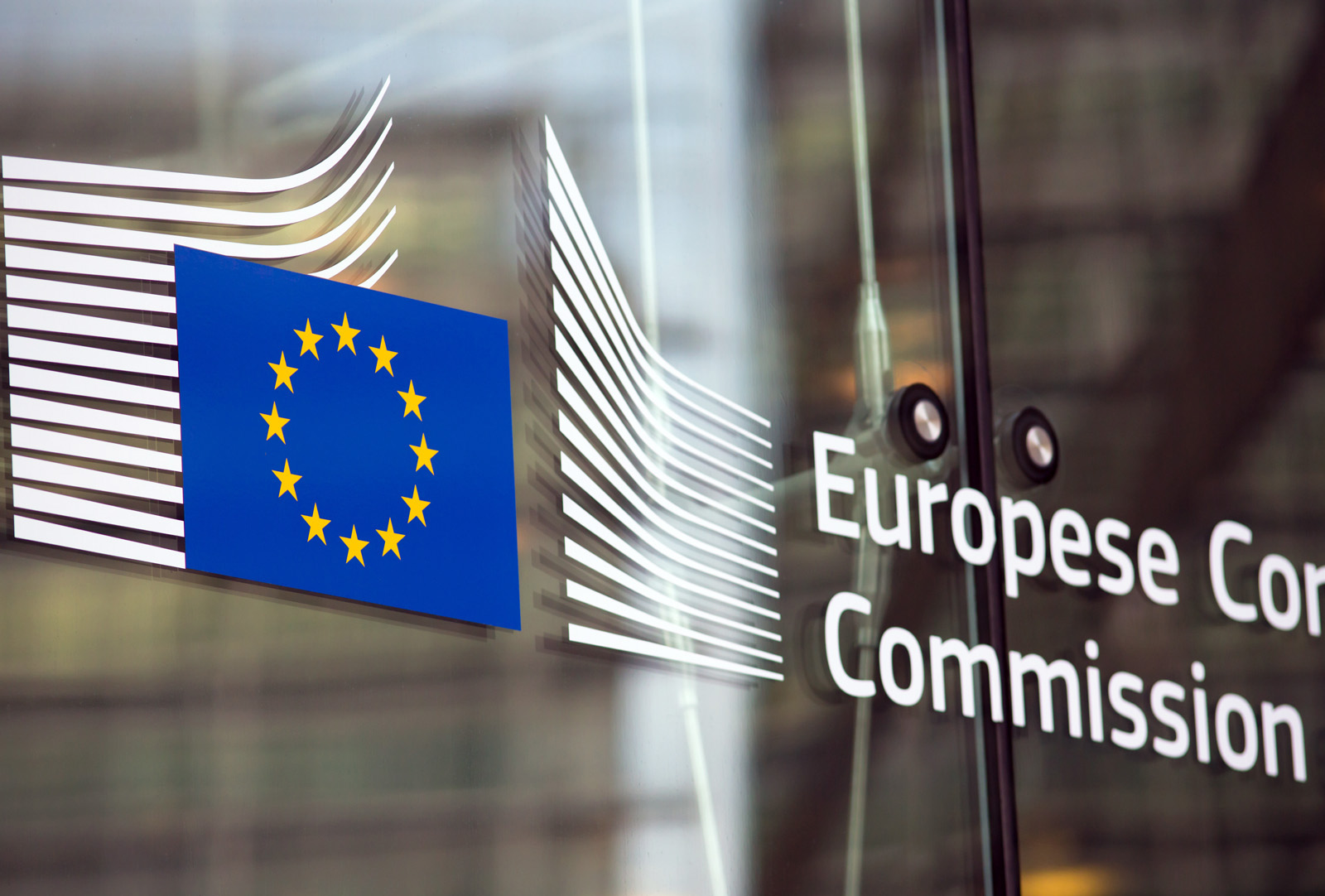 Furthermore, whilst all the companies involved are American, both the mergers with Netflix and Paramount are being investigated by the European Commission as markets in Europe would be affected.
In the UK, a group of politicians and former policymakers, have written to the Competition and Markets Authority urging it to conduct a full investigation of the Netflix-WBD merger. The letter argues that the merger could have:
damaging consequences for consumers, the UK’s world-leading creative industries and the UK cinema industry.
and that:
At a time when the British consumer can ill-afford more price increases, Netflix would possess an unprecedented ability to raise prices to access television and films.8
 The letter comes at a time when pressure is being placed on the CMA to adopt a generally more business-friendly approach.
The impact of the merger on the UK market is particularly complicated since Warner Bros.’ streaming service, HBO Max, is only due to launch in the UK in March 2026. This is still the plan, with WBD’s head of global streaming, Jean-Briac Perette acknowledging that:
We are likely the last scaled global streamer to come to market. We’ve tried to learn from the rest. We’re a complementary and distinct service to the more volume-driven or basic cable-like streamers in the market. More is not better. Better is better.9
An alternative route to regulatory approval
An easier route to regulatory approval may well be instrumental in allowing Netflix or Paramount to win the battle for WBD. Netflix stresses that the deal will create economic growth and jobs. Netflix’s Sarandos highlighted that:
This is not a typical media merger where you end up with what’s called the Noah’s Ark problem — two of everything. We are buying a company that has assets that we do not, and we will keep investing in those.10
The problem of economic power
In contrast, critics argue that either of the deals would create a new company with too much power. However, given the nature of the firms involved, the competition issues will be fundamentally different between the two deals.
 The Paramount deal would primarily reduce the number of studios in the market. This could provide the new merged studio with more bargaining power over distributors, advertisers and creators. Ultimately, this could negatively impact on the final product that consumers watch in the cinema and on television.
The Netflix deal on the other hand would impact directly on the streaming market. In the USA, 80% of consumers have both Netflix and HBO Max.11 After the merger, consumers would have less choice of competing services and Netflix-HBO Max combined may well have an incentive to raise its subscription prices.
In the UK, there are currently three leading streaming services: Netflix, Amazon Prime and Disney+, each with around 23% of the market.12 The merger with WBD could allow Netflix to become the clear market leader.
Concerns about YouTube
When examining streaming markets in all countries, an important factor will be whether to include YouTube in the market. Netflix certainly argues that it is a key competitor, at the hearing Sarandos stated that:
we are competing for the same content, we are competing for the same viewers, we are competing often for the same ad dollars. YouTube is not just cat videos anymore. YouTube is TV.13
If YouTube is included, in the USA it would be the market leader with 13%, ahead of Netflix on 9%. However, the competition authorities may conclude that YouTube’s product and business model is sufficiently different and so not include it in the streaming market.14
The issue of cinemas
 A second concern in the Netflix deal will be the Warner Bros.’ studio content that Netflix would own. The merged business may have an incentive to discontinue, raise the price or reduce the quality of the studio output that it supplies to cinemas. Thus, the competition authorities’ investigations will also pay close attention to the impact on the cinema market.
In line with these arguments, the Hollywood screenwriters’ union, the Writers Guild of America, has indicated that the Netflix-WMD deal should be stopped and filmmakers are clearly concerned about Netflix prioritising streaming.15
The competition authorities may well consider imposing remedies before they are willing to allow either deal to go ahead. With this in mind, it is interesting that Netflix has already made clear that it will continue the 45-day exclusive window that Warner Bros. provides cinemas to show its films.
It will be fascinating to see how the competing bids play out and how the competition regulators view them.
* * *
This post has been updated in a Postscript, following a further bid from Paramount that was not matched by Netflix.
References
- AT&T agrees deal to combine WarnerMedia with Discovery
- HBO and CNN owner to split streaming and cable businesses
- Netflix’s co-CEO went to an antitrust hearing and a culture war broke out
- Warner Bros gives Paramount seven days to make ‘best and final’ offer
- ibid.
- NBC News, op. cit.
- Trump says $72bn Netflix-Warner Bros deal ‘could be a problem’
- UK politicians call for competition review of Netflix bid for Warner Bros
- Warner streaming boss defends HBO Max UK launch ahead of Netflix takeover
- NBC News, op. cit.
- Netflix and Warner Bros struggle to defend merger
- Netflix, Disney+, Prime: Streaming platform market share report UK 2025
InsiderMedia, Jennifer O’Keeffe (2/12/25) - BBC News, Danielle Kaye op. cit.
- Paramount sweetens Warner Bros bid with offer to pay Netflix break-up cost, other fees
- In a takeover of Warner Bros., Netflix makes a play for 21st century Hollywood’s throne
The Guardian, Mark Sweney (16/5/21)
BBC News, Adam Hancock (10/6/25)
NBC News, Saba Hamedy (3/2/26)
The Guardian, Mark Sweney (17/2/26)
BBC News, Osmond Chia (8/12/25)
Financial Times (26/1/26)
Financial Times (9/2/26)
BBC News, Danielle Kaye (3/2/26)
Reuters, Harshita Mary Varghese and Aditya Soni (11/2/26)
NBC News, Daniel Arkin (5/12/25)
Articles
- Netflix to buy Warner Bros film and streaming businesses for $72bn
- Netflix-Warner deal would drive streaming market further down the road of ‘Big 3’ domination
- In a takeover of Warner Bros., Netflix makes a play for 21st century Hollywood’s throne
- Will European regulators shape Hollywood’s bidding war? A rare regulatory scenario could see Brussels tilt the Netflix – Paramount battle for Warner Bros.
- Warner Bros gives Paramount seven days to make ‘best and final’ offer
- Netflix shockingly bows out, leaving Paramount as the apparent Warner Bros. winner
- Paramount set for $111bn Warner Bros takeover after Netflix drops bid
BBC News, Rachel Clun (5/12/25)
The Conversation, David R King (8/12/25)
NBC News, Daniel Arkin (5/12/25)
Imperial Business School blog, Tommaso Valletti (5/2/26)
The Guardian, Mark Sweney (17/2/26)
CNN, Brian Stelter (27/2/26)
BBC News, Danielle Kaye and Nardine Saad (27/2/26)
Questions
- What are the similarities and differences between Netflix’ and YouTube’s business models? How close substitutes do you think they are?
- Do you think cinemas are a closer or more distant substitute to Netflix than YouTube?
- Which deal do you think raises the most competition concerns? What might be a possible remedy that could alleviate these concerns?