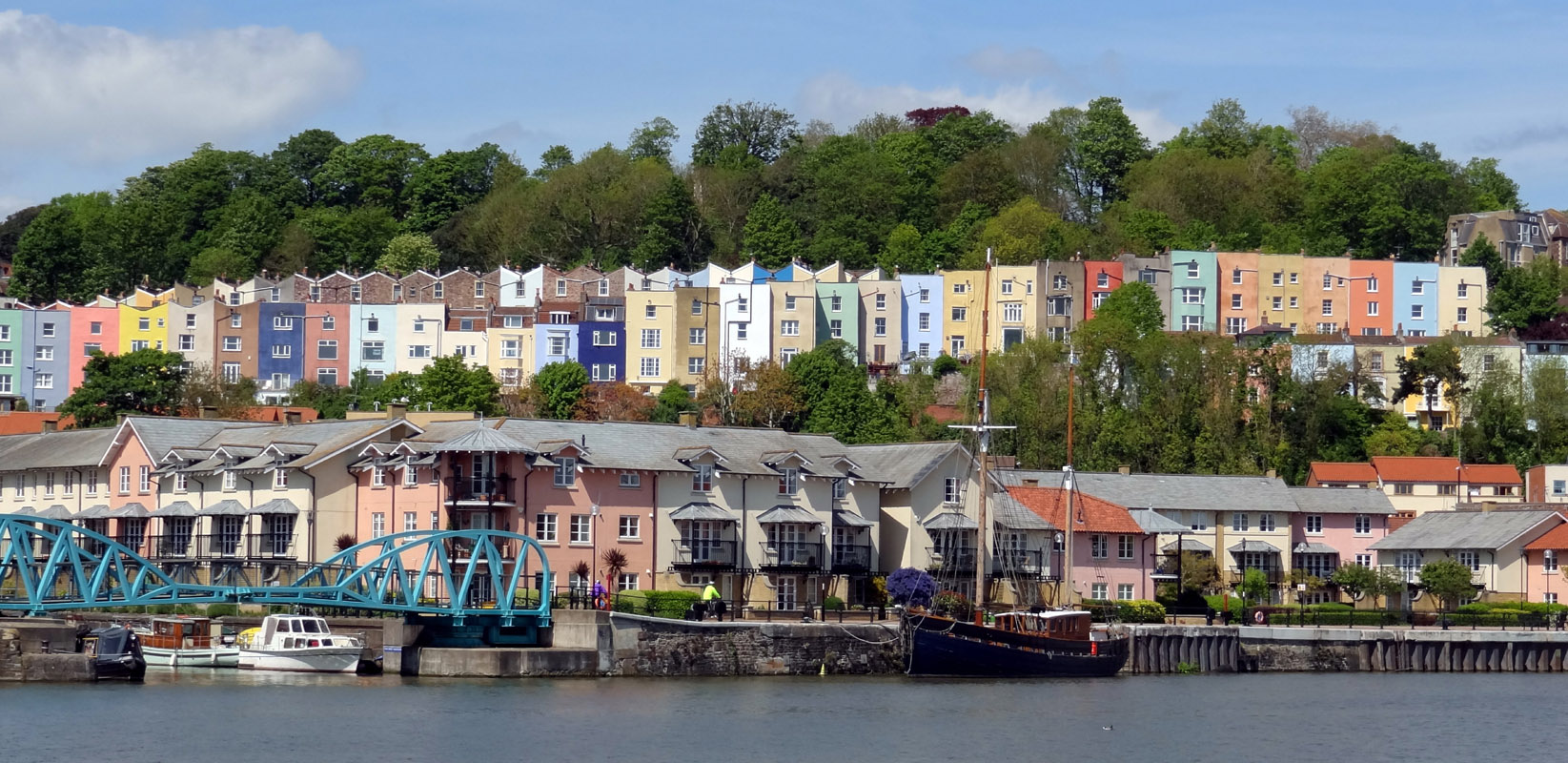
 As a resident of Bristol it is with considerable interest that I’m following the development of the Bristol pound, due for launch in September 2012. One Bristol pound will be worth one pound sterling.
The new currency will be issued in demoninations of £1, £5, £10 and £20 and there is a local competition to design the notes. Participating local traders will open accounts with Bristol Credit Union, which will administer the scheme. It has FSA backing and so all deposits will be guaranteed up to £85,000.
The idea of a local currency is not new. There are already local currencies in Stroud in Gloucestershire, Totnes in Devon, Lewes in East Sussex and Brixton in south London. The Bristol scheme, however, is the first to be introduced on a city-wide scale. The administrators are keen that use of the currency should be as easy as possible; people will be able to open accounts with Bristol Credit Union, pay bills online or by mobile phone.
As the money has to be spent locally, the aim is to help local business, of which more han 100 have already signed up to the scheme. Bristol has a large number of independent traders – in fact, the road where I live is off the Gloucester Road, which has the largest number of independent traders on one street in the UK. The organisers of the Bristol pound are determined to preserve the diversity of shops and prevent Bristol from becoming a ‘clone town’, with high streets full of chain stores.
But how likely is the scheme to encourage people to shop in independent shops and deal with local traders? Will the scheme take off, or will it fizzle out? What are its downsides? The following articles consider these issues.
Articles
The Bristol Pound set to become a flagship for local enterprise The Random Fact, Thomas Foss (7/2/12)
What is the point of local currency? The Telegraph, Rosie Murray-West (7/2/12)
The Bristol pound: will it save the (local) economy? Management Today, Emma Haslett (6/2/12)
‘Bristol Pound’ currency to boost independent traders BBC News Bristol, Dave Harvey (6/2/12)
We don’t want to be part of ‘clone town Britain’: City launches its own currency to keep money local Mail Online, Tom Kelly (6/2/12)
British Town Prepares To Launch Its Own Currency — Here’s How That’s Going To End Business Insider, Macro Man (7/2/12)
They don’t just shop local in Totnes – they have their very own currency Independent, Rob Sharp (1/5/08)
Videos and webcasts
 The town printing its own currency [Stroud] BBC News, Tim Muffett (22/3/10)
Brixton launches its own currency BBC News (17/9/09)
Local currency BBC Politics Show (30/3/09)
Local currency for Lewes BBC News, Rob Pittam (13/5/08)
The Totnes Pound transitionculture.org on YouTube, Clive Ardagh (21/1/09)
Local Currencies – Replacing Scarcity with Trust Peak Moment on YouTube, Francis Ayley (8/2/07)
Questions
- What are the advantages of having a local currency?
- What are the dangers in operating a local currency?
- What steps can be taken to avoid the dangers?
- Can Bristol pounds be ‘created’ by Bristol Credit Union? Could the process be inflationary?
- What market failures are there in the pattern of shops in towns and cities? To what extent is the growth of supermarkets in towns and the growth of out-of-town shopping malls a result of market failures or simply of consumer preferences?
- Are local currencies only for idealists?
 Last year, we felt the cost of the cold weather and whilst we haven’t seen such low temperatures this year, gas shortages are also emerging. Across Eastern Europe, temperatures have fallen well below -30ºC and so demand for gas has unsurprisingly increased.
Thanks to these low temperatures, Russian gas supplies are running low and several countries have seen their deliveries of gas fall. However, the Russian gas monopoly, Gazprom has said that supplies have not been cut and that it has been exporting more gas during these cold times. The blame, according to Alexander Medvedev (the Deputy CEO of Gazprom), lies with the Ukraine taking gas at a pace significantly above contracted levels. The following articles consider this issue.
Russia, Ukraine argue over gas as EU reports shortage Reuters (2/2/12)
Freezing Europe hit by Russian gas shortage BBC News (4/2/12)
Gazprom says ‘Perplexed’ by EU supply drop as Ukraine takes gas Bloomberg BusinessWeek, Anna Shiryaevskaya (3/2/12)
Gazprom cuts gas supplies amid cold snap Financial Times, Guy Chazan (3/2/12)
Gazprom ‘unable to pump extra gas to Europe’ Associated Press (4/2/12)
Questions
- Using a demand and supply diagram, illustrate what we would expect to see with a gas shortage.
- What has been the cause of this current gas shortage? Use a diagram to illustrate the causes.
- What would you expect to happen to prices following this gas shortage?
- Gazprom is said to be a monopoly: what are the characteristics of a monopoly?
- As there are other gas suppliers, how can Gazprom be said to be a monopolist?
 From April 2012, the average household water bill will rise by 5.7% to approximately £367. With households already feeling the squeeze this news is more than unwelcome. The increase in prices will not be standardized across England and Wales. Instead some households will suffer more than others, as their water providers increase prices significantly more than those in other areas.
There has been significant investment in the water industry over the past few years and if this is to continue, funding is required: hence the price hikes. More investment is taking place in some areas than in others and so this goes some way to explaining why some households will see their bills rise by a relatively larger amount. Ofwat, the water regulator, has said that if the investment that these price rises are paying for doesn’t materialize action will be taken. In the context of the current financial situation, consumer groups are understandably concerned about the impact this may have on the lowest income households. Tony Smith, the Chief Executive of the Consumer Council for Water has said:
‘We’ll be making sure that customers get some benefits from this and also that companies step up their help for customers with affordability problems’.
The following articles consider this issue.
How to cut your water bill The Telegraph, Kara Gammell (31/1/12)
Water bills rise by average of 5.7% Guardian, Jill Insley (31/1/12)
Water meter case study: ‘They have set the charges too high’ Guardian, Jill Insley (31/1/12)
Water bills to rise by 5.7 per cent Financial Times, Elaine Moore (31/1/12)
Welsh water imposes lowest increase The Press Association (31/1/12)
Questions
- Why are household incomes already being squeezed?
- Why would you suggest that the RPI and not the CPI has been used to make up the price rises?
- Why are there such wide variations in the amount that consumers are currently charged in different parts of the country? Do you think this is fair? You may find it useful to look at a previous blog on the site
- What is the role of the regulator, Ofwat?
- Can Ofwat’s decision to allow prices to rise by more than the RPI be justified?
Most people are risk-averse: we like certainty and are generally prepared to pay a premium for it. The reason is that certainty gives us positive marginal utility and so as long as the price of insurance (which gives us certainty) is less than the price we place on certainty, we will be willing to pay a positive premium. By having insurance, we know that should the unexpected happen, someone else will cover the risk. As long as there are some risk-averse people, there will always be a demand for insurance.
However, will private companies will be willing to supply it? For private market insurance to be efficient, 5 conditions must hold:
1. Probabilities must be independent
2. Probabilities must be less than one
3. Probabilities must be known or estimable
4. There must be no adverse selection
5. There must be no moral hazard
If these conditions hold or if there are simple solutions, then insurance companies will be willing and able to provide insurance at a price consumers are willing to pay.
There are many markets where we take out insurance – some of them where insurance is compulsory, including home and car insurance. However, one type of insurance that is not compulsory is that for cyclists. No insurance is needed to cycle on the road, but with cycle use increasing and with that the number of accidents involving cyclists also increasing, the calls for cyclists to have some type of insurance is growing. If they are hit by someone without insurance and perhaps suffer from a loss of income; or if they cause vehicle damage, they will receive no compensation. However, whilst the risk of accident is increasing for cyclists, they are still statistically less likely to cause an accident than motorists. Perhaps a mere £30 or £40 per year for a policy is a price worth paying to give cyclists certainty. At least, this is what the Association of British Insurers (ABI) is claiming – hardly surprising when their members made a combined loss of £1.2 billion!
Articles
Cyclists ‘urged to get insurance’ BBC News, Maleen Saeed (26/11/11)
Cyclists urged to get more insurance by … insurance companies Road.CC, Tony Farrelly (26/11/11)
The future of cycle insurance Environmental Transport Assocaition (24/11/11)
Questions
- With each of the above conditions required for private insurance to be possible, explain why each must hold.
- What do we mean by no moral hazard and no adverse selection? Why would their existence prevent a private company from providing insurance?
- Using the concept of marginal utility theory, explain why there is a positive demand insurance.
- What might explain why cyclists are less likely to take out insurance given your answer to the above question?
- Do you think cyclist insurance should be compulsory? If governments are trying to encourage more sustainable transport policy, do you think this is a viable policy?
With Christmas approaching, many high street stores will be hoping for a big increase in sales, but that seems unlikely to be enough for Arcadia, whose brands include Top Shop, BHS and Dorothy Perkins. Arcadia’s profits have decreased to £133m, which is a fall of 38% and, based on this data, it is planning on closing many stores across the country over the next few years. With leases expiring on many of their stores within about 3 years, the current plan, according to Sir Phillip Green, is to close about 250 stores. Speaking to the BBC, he commented:
‘Now, there may be other opportunities that turn up that we might want to open. But certainly, in terms of our existing portfolio, currently that’s our thinking.’
The economic climate has obviously played a key role, but so has the weather. With the hottest October and November for decades, people have been delaying their shopping and purchases of winter clothing and this has put increased strain on many high street traders (see the news item Dreaming of a white Christmas).
What is perhaps of more concern than one company’s profits being significantly lower is the impact this may have on unemployment. With over 2500 stores, Arcadia is one of the largest private employers in the UK and if 250 stores are closed, there may be severe consequences for the labour market and this may have further adverse effects on aggregate demand. A key factor that may partly determine the future of firms such as Arcadia is how much consumers spend this Christmas. Perhaps for these stores, they really may be hoping for a white Christmas – at least that may encourage people to stock up on winter clothes – if they can get to the shops!
Arcadia to close stores after reporting loss Financial Times, Andrea Felsted (24/11/11)
Arcadia and Dixons post profit loss BBC News (19/4/10)
Retail slowdown hits Arcadia stores Guardian, Zoe Wood (9/5/11)
Arcadia set to close up to 260 stores as profits fall BBC News (24/11/11)
Has Sir Phillip Green lost his Midas touch? Independent, James Thompson (25/11/11)
Arcadia suffers 40% slide in profits The Press Association (24/11/11)
Questions
- Explain why the current economic situation has caused a slowdown in retail sales.
- Illustrate the way in which a firm will maximise profits. If profits are declining, is it because sales revenue has fallen or that costs have risen? Adapt your diagram to show a fall in profits based on your answer.
- According to the article by the Press Association, margins were ‘squeezed by 1.8% as it took a £53 million hit to absorb price increases’. What does this mean?
- How might the unseasonably warm weather be an explanation for a weaker trading environment?
- If 260 stores are closed, what impact might this have on unemployment?
- If more workers lose their jobs, how might this have a subsequent adverse effect on sales? Think about the multiplier effect here.