 New Look was founded in 1969 and is an iconic budget retailer found on most British high streets. In its history, it has been a family business; it has been listed on the London stock exchange; returned to a private company and then had the potential to be re-listed. Now, it is moving into South African ownership for £780 million.
90% of New Look will now be owned by Christo Wiese who controls Brait and who has been linked with other take-overs of British retailers in recent years. The remaining 10% will remain in the hands of the founding family. The company has been struggling for some time and in 2010 did have plans to relist the company on the London Stock Exchange. However, volatile market conditions meant that this never occurred and the two private equity firms, Apax and Permira, appeared very eager to sell. New Look’s Chairman, Paul Mason, said:
“This is an ideal outcome for New Look. The Brait team demonstrated to us that they have the long-term vision to help Anders and the team grow this brand.”
It is not yet clear what this move will mean for the retailer, New Look, but with an estimated £1 billion debt, it is expected that changes will have to be made.  It is certainly an attractive investment opportunity and New Look does have a history of high rates of growth, despite its current debt. Furthermore, the debt levels are likely to have helped Mr. Wiese obtain a deal for New Look. Fashion retailing is a highly competitive market, but demand always appears to be growing. It is still relatively ‘new’ news, so we will have to wait to see what this means for the number of stores we see on the high streets and the number of jobs lost or created. The following articles consider this new New Look.
South African tycoon buys New Look fashion retailer BBC News (15/5/15)
South African tycoon enters UK retail fray with New Look purchase Financial Times, Andrea Felsted, Clare Barrett and Joseph Cotterill (15/5/15)
New Look snapped up by South African tycoon The Guardian, Sean Farrell (15/5/15)
New Look sold to South African billionaire for £780m The Telegraph, Elizabeth Anderson and Andrew Trotman (15/5/15)
Questions
- Why might a company become listed on the London stock exchange?
- How would volatile economic circumstances affect a company’s decision to become listed on the stock market?
- What do you think this purchase will mean for the number of New Look stores on British high streets? Do you think there will be job losses or jobs created by this purchase?
- How do you think the level of New Look’s debt affected Christo Wiese’s decision to purchase New Look?
- Which factors are likely to affect a firm’s decision to take-over or purchase another firm?
 Economics is about choices. But how can people be persuaded to make healthy choices, or socially responsible or environmentally friendly choices? Behavioural economists have studied how people can be ‘nudged’ into changing their behaviour. One version of nudge theory is ‘fun theory’. This studies how people can be persuaded into doing desirable things by making it fun to do so.
I came across the first video below a couple of days ago. It looks at a highly successful experiment at the Odenplan underground station in Stockholm to persuade people to make the healthy choice of using the stairs rather than the escalator. It made doing so fun. The stairs were turned into a musical keyboard, complete with sound. Each stair plays a piano note corresponding to its piano key each time someone treads on it. As you go up the stairs you play an ascending scale.
After installing the musical staircase, 66% more people than normal chose the stairs over the escalator.
 The fun theory initiative is sponsored by Volkswagen. The Fun Theory website is ‘dedicated to the thought that something as simple as fun is the easiest way to change people’s behaviour for the better. Be it for yourself, for the environment, or for something entirely different, the only thing that matters is that it’s change for the better.’
VW held a competition in 2009 to encourage people to invent fun products designed to change people’s behaviour. There were over 700 entries and you can see them listed on the site. The 13 finalists included the musical staircase, traffic lights with quiz questions on the red, a Connect Four beer crate, fun tram tickets (giving entry to an instant-win lottery), a pinball exercise machine, a speed camera lottery where a winner is chosen from those abiding by the speed limit, a jukebox rubbish bin (which plays when people add rubbish), a one-armed vending machine, a fun doormat, car safety belts linked to a car’s entertainment system, car safety belt with a gaming screen which turns on when buckled, a bottle bank arcade system and the world’s deepest bin (or at least one which sounds as if it is). The winner was the speed camera lottery.
The fun theory site
Thefuntheory.com
Fun theory videos
 Piano Staircase – Odenplan, Stockholm (on Vimeo)
The Speed Camera Lottery (on VIMP.com, Kevin Richardson)
Garbage Jukebox (on YouTube)
The World’s Deepest Bin (on Vimeo)
Bottle Bank Arcade (on YouTube)
Questions
- Does fun theory rely on rational choices?
- Other than through having fun, how else may people be nudged into changing their behaviour?
- Go through some of the entries to the Fun Theory Award and choose three that you particularly like. Explain why.
- Invent your own fun theory product. You might do this by discussing it groups and perhaps having a group competition.
 Since the Global Financial Crisis, and especially since 2010, there has been a significant decline in the volume of commercial freight carried by aircraft. Whilst regional and national economies have been hit by fiscal problems, credit snarl-ups and twitchy consumer demand, increases in the price of crude oil (until recently) have compounded air freight cost increases, leading to substitution towards the main alternatives.
Whilst some multinational businesses have shifted production back ‘on-shore’, there has been unprecedented growth in sea freight. In the latter case there are, of course, both ‘winners’ and ‘losers’. As the world’s seas and oceans become more and more congested, one of the distinct losers is a large species which shares the water with commercial maritime transport: the whale.
A recent ‘Sharing the Planet’ documentary on BBC Radio 4, highlighted the plight of whales in the world’s open waters. Since the imposition of controls upon the whaling industry, whale numbers had stabilised and even increased. However, the past five years has seen the most significant threat coming from the eerily clinical-sounding ‘ship strike’: that is, unintended incidents of ships hitting and either injuring or killing whales. In particular, the Blue Whale and the Right Whale have been most affected – the Right Whale was almost driven to extinction by ship strikes in the North Atlantic region.
International action is driving a regulatory approach which aims to intervene, for example, to impose speed restrictions in known waters where whales congregate. But this isn’t a universal solution. Even where it is applied, enforcement is tricky and there is industry resistance as already slow shipping freight delivery times are further extended, thus challenging producers under pressure to respond rapidly to changing consumer demand in the world of ecommerce.
But where is the link to the movie Frozen? Well, this year’s top-selling range of toys are tie-ins to Disney’s wintery animated blockbuster. Excess demand for some of the tie-in merchandising has led to  short supply in toy stores and carefully planned production and shipping plans junked. Panicked creation of extra capacity in off-shore production has had to be complemented by the contracting of air freighting options – the lead times are too long to get last-minute products to distributors and retailers in time. Whilst someone has to bear the increased financial cost, the whale might therefore become – at least temporarily – a beneficiary.
But the message is clear: globalised production and distribution involve a complex web of trade-offs.  Where negative externalities hit those without a global voice, this adds weight to the continued efforts towards sustainability and the full costing of production and exchange. Whales are a ‘flagship species’ in diverse ecological systems. The planet cannot afford to lose them. And so, whilst your gift purchases this festive season may have been made possible by products having been air-freighted rather than being sent by yet another ship, don't rest on your laurels. Consider this variant on a traditional injunction: whales are for life, and not just for Christmas.
Guest post by Simon Blake, University of Warwick
Books and articles
Nature in the Balance: The Economics of Biodiversity Oxford Dieter Helm and Cameron Hepburn (eds) (2014)
Frozen dolls sell out Express Sarah Ann Harris (9/12/14)
Biodiversity Finance and Economics Tread Softly November 2014
Information
EU Business and Biodiversity Platform EC Environment DG
Whales & Dolphins (cetaceans) World Wildlife Fund
Questions
- Why might UK-based businesses be concerned with the plight of whales in the world’s seas and oceans?
- In what ways might shipping firms – and the manufacturers who contract their services – be regarded as ‘good’ businesses?
- Using the concept of externalities, how would you account for the impacts of global commerce upon whales?
- How could you conduct a scientific evaluation of the trade-offs involved?
- Can damage to one species by the actions of business ever be offset by ‘making good’ through corporate action elsewhere?
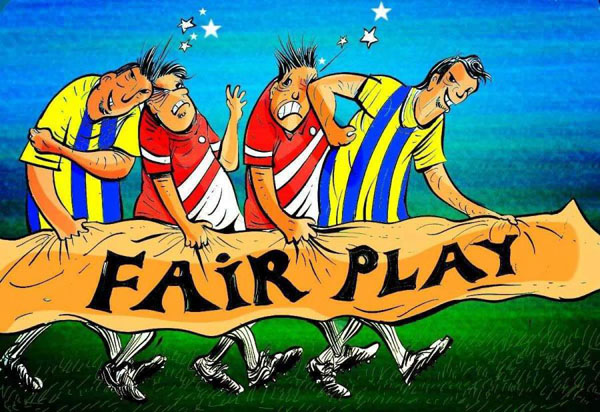 They may not have been happy about it but the executives of Manchester City have finally agreed a settlement with UEFA after it was judged that the club had broken Financial Fair Play (FFP) rules. The club had initially indicated that they might take their case to the Club Financial Control Body’s adjudicatory chamber. For details about FFP, see previous article on the website: What does ‘fair play’ mean for the big teams in Europe?They have also now accepted the sanctions for breaking these rules which appear to be very similar in magnitude to those imposed on Paris St-Germain. UEFA have also judged that seven other clubs have failed to meet their financial requirements.
Why did Manchester City fail the FFP rules when they appeared to be so confident that they would meet them? To understand this requires some discussion of a number of exemptions put in place by UEFA in the implementation of the FFP guidelines.
One of the key aims of FFP is to force the clubs who compete in European competitions to break even. However UEFA allow clubs to make some losses before any sanctions are applied. For the current monitoring period the clubs are allowed to make a cumulative loss of up to €45 million (approximately £37 million) over a two year period from 2011-2013 before any penalties are imposed. This permitted loss is referred to by UEFA as the ‘acceptable deviation’ from breaking even.
Manchester City reported losses in their financial accounts of £97million in 2011-12 and £51.6 million in 2012-13. At first sight this cumulative loss of nearly £149 million over the two year period would suggest that the club failed to meet the FFP regulations by a wide margin i.e. £112 million over the acceptable deviation. However the size of either the profit or loss reported in a club’s final accounts is different from the figure that is used by UEFA when assessing whether the teams have met the FFP criteria. UEFA exclude any costs incurred by the clubs on
– Youth development and community projects
– Building/developing their stadiums
Imagine a situation where after deducting these costs, Manchester City’s losses fell to £75 million in 2011-12 and £35 million in 2012-13. Once again it would still look as if they have failed to meet the FFP guidelines by a large margin. However there is another set of costs that can be excluded if a number of conditions are met. These are the wage costs in 2011-12 of those players who had signed contracts with the club before 1st June 2010. This exemption was introduced by UEFA because a number of clubs complained that they would struggle to meet the rules because of the nature of the players’ contracts. It is quite common for these to be of a 4 or 5 year duration. The teams argued that they were already committed to paying some players very large salaries in 2011-12 because of deals that were agreed long before the FFP rules were introduced. UEFA accepted this argument but only allowed the wage costs to be exempted from the FFP calculations on two conditions:
1. The club could show that the size of its losses were falling over time and that they had a clear strategy in place so that they would be able to comply with FFP regulations in future years.
2. The cumulative loss in excess of the acceptable deviation was caused by losses incurred in the 2011-12 period.
As there is a downward trend in the size of the losses being made by Manchester City they would appear to meet the first condition. It would also be important for them to convince UEFA that they had policies in place to reduce the losses below the permitted levels in the future. In the example above the second criterion is also met as the loss in 2012-13 of £35 million was lower than the acceptable deviation of £37 million. Therefore the reason why the cumulative permitted loss would be broken is because of the impact of the £75 million loss in 2011-12.
However there is another element to the second condition. The club also has to show that the sole reason for the loss in 2011-12 was because of the wage costs they were already committed to – i.e. from the contracts signed before the 1st June 2010. If these wage costs are smaller than the losses reported in that period then they cannot be exempted from the FFP calculations as they can only partly explain the loss.
Reports in the press have suggested that approximately £80 million of Manchester City’s wage bill in 2011-12 was caused by contracts that were signed with players before the 1st June 2010. If this was true then in the example above they would have met the FFP requirements as the £80 million of wages could fully account for the £75 million loss in the 2011-12 season. This would mean that the £80 million could be exempted from the FFP calculation and City would have made a cumulative loss of £35 million which was less than the acceptable deviation of £37 million.
If the wages paid to the players from the contracts signed prior to 1st June 2010 could not fully account for the losses in 2011-12 then they could not be deducted in the FFP calculations. For example imagine if after deducting the costs of youth/community projects and infrastructure spending that Manchester City’s loss had been £85 million in 2011-12 instead of £75 million. The wages bill of £80 million could not fully account for this loss of and hence the £80 million wage bill would be counted in the calculations. The cumulative loss would now be £120 million (£85 million + £35 million) and the acceptable deviation would have been exceeded by £83 million.
Unfortunately for Manchester City this appears to be more or less what happened. As part of the FFP process UEFA also examined deals struck between the club and other organisations in which the owner had an interest. These are referred to by UEFA as Related Party Transactions (RPTs). It would seem that the accountants at UEFA came to the conclusion that some of these RPTs were at above market prices. Interestingly some press reports have indicated that the £35 million a year deal with Etihad was judged to be fine. It was a number of secondary sponsorship deals which were considered to be above fair market values. Once adjustments were made to take account of this it looks as if the re-calculated losses for 2011-12 were greater than the £80 million of wages. With these wage costs not exempted from the calculation, Manchester City have been judged to have missed the FFP conditions by a wide margin.
The following quote is taken from a statement released by the club:
At the heart of the discussions is a fundamental disagreement between the club’s and UEFA’s respective interpretations of the FFP regulations on players purchased before 2010.
The following sanctions have been imposed:
– A £49 million fine to be withheld from UEFA prize money over the next three seasons. (£32 million is suspended and depends on their financial performance in future years)
– A limit on the squad size for the Champions League – 21 instead of 25 players
– Spending limited on transfers this summer to £49 million plus any revenue received in transfer fees from the sale of players
– A freeze on the wage bill of the Champions League squad for the next two seasons
It will be interesting to see if these penalties significantly constrain Manchester City’s ability to compete with the other big teams in Europe next season.
Articles
Manchester City accept world-record £50m fine for breach of Uefa Financial Fair Play rules The Telegraph, (16/5/14)
Manchester City facing £50m fine for breaching Uefa’s Financial Fair Play regulations The Telegraph, (6/5/14)
A beginner’s guide to UEFA’s financial fair play regulations SB Nation, (30/04/14)
Financial Fair Play Explained Financial Fair Play 2012
Man City to act swiftly in transfer market – Khaldoon Al Mubarak BBC Sport, (20/5/14)
Manchester City fined and squad capped for FFP breach BBC Sport, (16/5/14)
Manchester City facing Uefa sanctions over finances BBC Sport, (6/5/14)
Paris St-Germain’s £167m deal fails Uefa financial fair play rules BBC Sport, (1/5/14)
Manchester City and PSG breach Uefa FFP rules BBC Sport, (28/4/14)
Financial Fair Play: What rules have Manchester City broken and what are the likely sanctions? The Mirror, (6/5/14)
We’re innocent! Manchester City on the attack over FFP penalties The Express, (21/5/14)
Man City facing double UEFA punishment for breaching financial fair play rules talkSPORT, (6/5/14) .
Questions
- What are barriers to entry? Give 4 examples.
- What impact do barriers to entry have on a market? Draw a diagram to illustrate your answer.
- To what extent do you think that the UEFA Fair Play Rules act as a barrier to entry?
- What impact do you think the FFP rules will have on the marginal revenue product of the most talented players? Draw a diagram to illustrate your answer.
- Can you think of any methods that a club might use to try and circumvent a rule that attempts to restrict the size of its wage bill.
 When Kraft took over Cadbury, it was seen as a large take-over, but its size pales in comparison to the potential takeover of AstraZeneca by Pfizer. However, having made two offers for the UK drugs firm, the US company has been rejected twice, saying the terms of the offer were ‘inadequate, substantially undervalue AstraZeneca and are not a basis on which to engage with Pfizer.’
Pfizer initially made an offer of £46.61 per share, valuing the company at £58.5bn, but this latest offer increased the share price to around £50 and raised the company value to £63bn. The rejection was relatively swift and the price still too low, though analysts are suggesting that a price closer to £53 may tempt shareholders. At the moment the negotiations between these two giants remain ‘friendly’, but with this second offer being rejected by the Board, there are now concerns that the takeover could become ‘hostile’ with Pfizer going directly to shareholders. Indeed one investor has said:
We were very keen that the two boards actually get around the table and disucss the bid … I’m never very keen when companies just dismiss things and don’t allow shareholders to take a decision on it … The key thing is that these businesses get talking to each other so they can hammer out a deal.
Following the second offer, shares in AstraZeneca rose by 10p, as the debate continued as to whether such a take-over would be good or bad for British jobs.
Cadbury was seen as a jewel in the crown of British industry and the same can be said of AstraZeneca, especially with the growing importance placed on the Science sector in the UK. While Pfizer has now given the British government further assurances about protection for Britain’s science base, there are still concerns about what this take-over would mean for British jobs. Pfizer has said that 20% of the company’s workforce in research and development would work in the UK and the planned R&D base in Cambridge would still go ahead. However, asset-stripping is a phrase that has been thrown around, based on Pfizer’s previous take-overs and, based on this history, many are suggesting that any assurances made by Pfizer will be pointless. In particular, Allan Black from the GMB union said:
Similar undertakings were given by US multinationals before which have proved to be worthless.
This was echoed by Lord Sainsbury who commented that any assurances made by Pfizer would be ‘frankly meaningless’. However, Vince Cable seems more confident about the consequences for British industry and said:
We’ve now received some assurances from the company that they will strengthen the British science base, they will protect British manufacturing … We need to look at that in detail, we need to look at the small print, we need to establish that it is binding, but as far as it goes, on the basis of what we’ve seen so far, it is welcome and encouraging.
We therefore seem to have a tale of two stories. On the one hand, the assurances of a US company that British jobs and its science base will be protected, but on the other hand, suggestions that we should take Pfizer’s assurances with a pinch of salt and that any take-over could be ‘devastating’. The truth of the matter will only be known if and when the take-over goes ahead and perhaps more importantly, whether it remains friendly and co-operative or does indeed go ‘hostile’. The following articles consider this medical take-over between giants.
AstraZeneca rejects Pfizer bid as US Pharma giant courts UK government The Guardian, Julia Kollewe and Sean Farrell (2/5/14)
AstraZeneca rejects new Pfizer offer BBC News (2/5/14)
AstraZeneca Pfizer: major shareholder urges talks The Telegraph, Denise Roland (2/5/14)
AstraZeneca rejects Pfizer’s raised bid of 63 billion pounds Reuters (2/5/14)
Pfizer-AstraZeneca offer: IoD warns intervention ‘disastrous’ for Britain. The Telegraph, Louise Armitstead (2/5/14)
Pfizer enters takeover discussions with AstraZeneca, sources say Wall Street Journal (2/5/14)
Exclusive: Pfizer insider warns that takeover of AstraZeneca could be ‘devastating’ Independent, Jim Armitage and Chris Green (2/5/14)
The Cadbury deal: how it changed takeovers BBC News, Ben Morris (2/5/14)
Pfizer set to make higher bid for AstraZeneca The Guardian, Julia Kollewe (1/5/14)
The UK’s response to Pfizer’s takeover bid is incoherent and misguided The Guardian, Larry Elliott (4/5/14)
Questions
- What type of take-over would this be classified as? Explain your answer.
- What would occur if the take-over became ‘hostile’?
- Using a demand and supply diagram, explain why share prices in AstraZeneca went up by 10p on the day the second offer was made.
- How would such a take-over affect British jobs?
- Explain how this proposed take-over could (a) boost British R&D in science and (b) harm British R&D in science.
- To what extent might there be concerns from the competition authorities were this take-over to go ahead? How might such a takeover affect Pfizer’s market share and hence its ability to charge a high price?
 New Look was founded in 1969 and is an iconic budget retailer found on most British high streets. In its history, it has been a family business; it has been listed on the London stock exchange; returned to a private company and then had the potential to be re-listed. Now, it is moving into South African ownership for £780 million.
 It is certainly an attractive investment opportunity and New Look does have a history of high rates of growth, despite its current debt. Furthermore, the debt levels are likely to have helped Mr. Wiese obtain a deal for New Look. Fashion retailing is a highly competitive market, but demand always appears to be growing. It is still relatively ‘new’ news, so we will have to wait to see what this means for the number of stores we see on the high streets and the number of jobs lost or created. The following articles consider this new New Look.