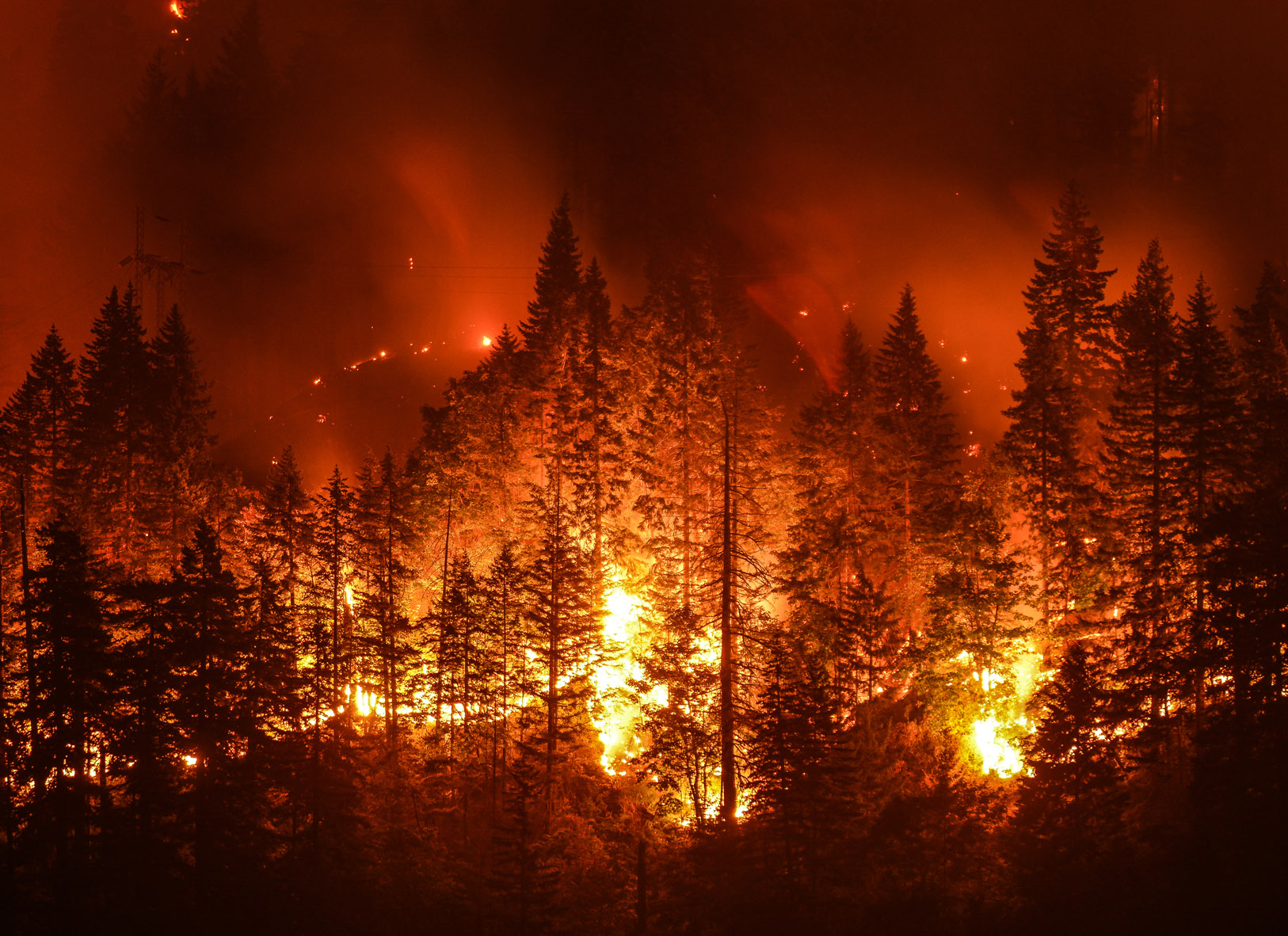
 The global average temperature for July 2023 was the highest ever recorded and July 3rd was the world’s hottest day on record. We’ve seen scenes of wildfires raging across much of southern Europe, people suffering searing temperatures in south-west USA, southern India and western China, flash floods in South Korea, Japan and eastern USA. These are all directly related to global warming, which is causing weather systems to become more extreme. And as the planet continues to warm, so these problems will intensify.
The Secretary General of the United Nations, Antonio Guterres, in a press conference on 27 July warned that:
Climate change is here. It is terrifying. And it is just the beginning. The era of global warming has ended; the era of global boiling has arrived. The air is unbreathable. The heat is unbearable. And the level of fossil-fuel profits and climate inaction is unacceptable. Leaders must lead. No more hesitancy. No more excuses. No more waiting for others to move first. There is simply no more time for that.
The environmental, human, social and economic impact of global warming is huge, but concentrated on just part of the world’s population. For many, a more variable climate is at worst an inconvenience – at least in the short term. But it is the short term that politicians are most concerned about when seeking to win the next election.
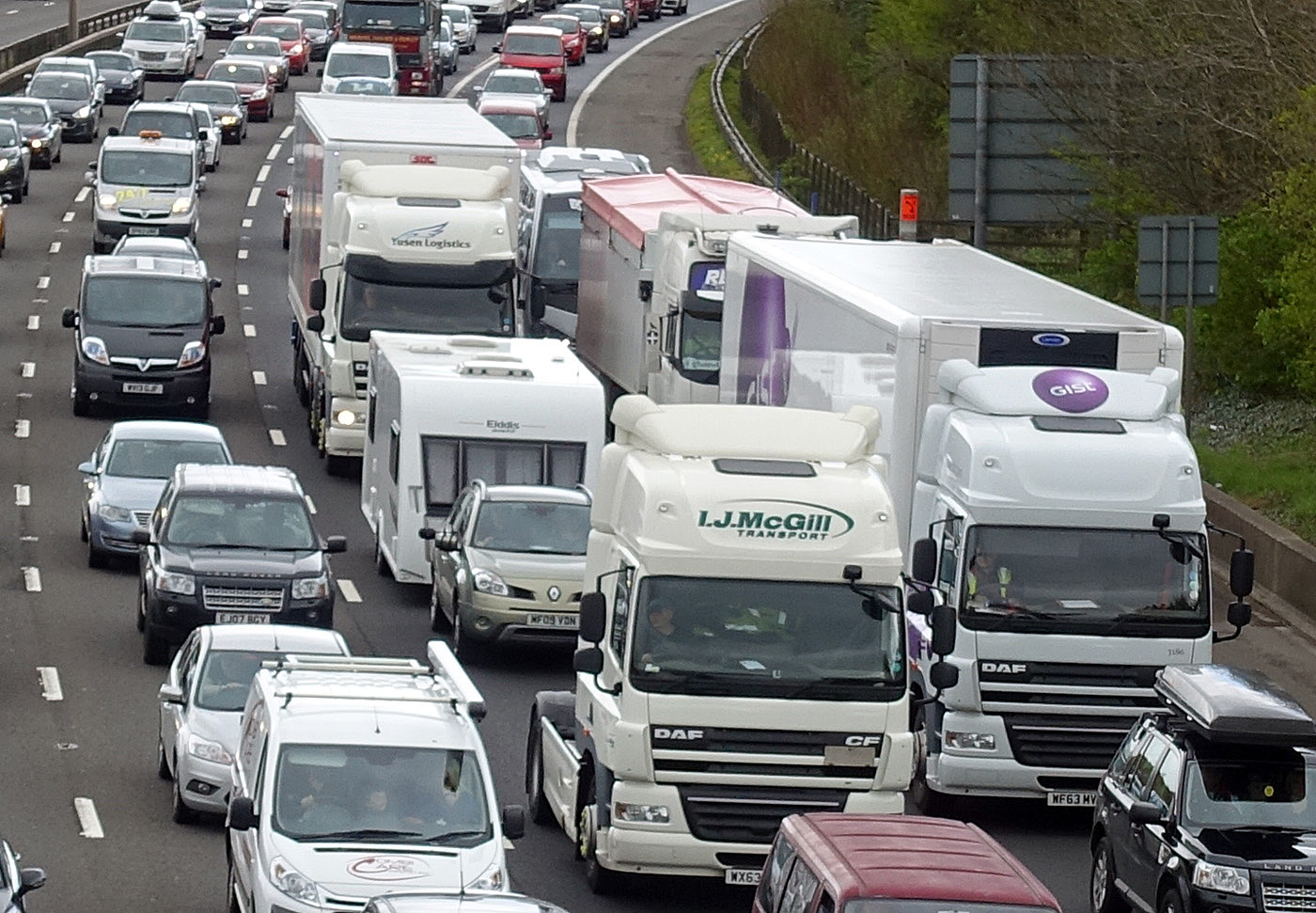 Tackling climate change requires action to reduce carbon emissions now, even though the effects take many years. But one person’s emissions make only a minuscule contribution to global warming. So why not be selfish and carry on driving, flying off on holiday, using a gas boiler and eating large amounts of red meat? This is what many people want to do and governments know it. Many people do not like green policies as they involve sacrifice. Examples include higher fuel prices and restrictions on what you can do. So, despite the visions of fires, floods and destruction, governments are wary about raising fuel taxes, airport duties and charges to use old high-emission cars in cities; wary about raising taxes generally to provide subsidies for sustainable power generation; wary about banning new oil and gas fields that would reduce reliance on imported fuel.
Because the external costs of carbon emissions are so high and global, government action is required to change behaviour. Education can help and scenes of devastation from around the world may change the hearts and minds or some people. Also, the prospect of profits from cleaner and more fuel-efficient technology can help to spur innovation and investment. But to meet net zero targets still requires policies that are unpopular with many people who might be inconvenienced or have to pay higher petrol, energy and food prices, especially at a time when budgets are being squeezed by inflation.
 Part of the problem is a distributional one. The people most affected by the cost-of-living crisis and higher interest rates are those on lower incomes and with higher debts. Politicians know that it will be hard to win the votes of such people if they are faced with higher green taxes. As elections approach, politicians are likely to backtrack on many environmental commitments to appeal to such people.
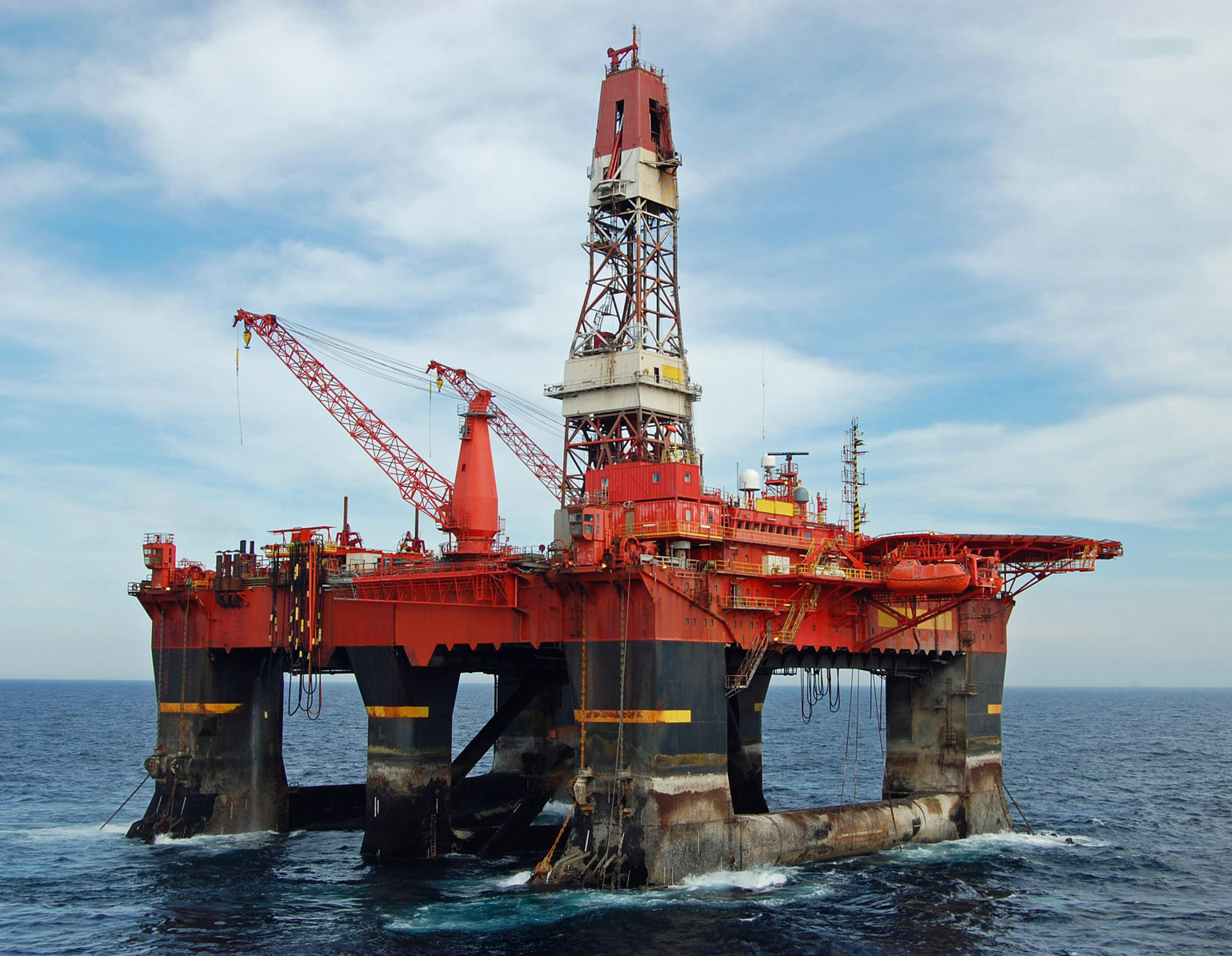
This is beginning to happen in the UK, with the government declaring that it is on the side of the motorist. Indeed, Rishi Sunak has just announced that the government will authorise more than 100 new licenses for new oil and gas wells in the North Sea. This is despite the United Nations, various other international bodies, climate scientists and charities calling for a halt to all licensing and funding of new oil and gas development from new and existing fields. The government argues that increased North Sea production would reduce the reliance on imported oil.
Video
Articles
- July 2023 the Hottest Ever Month on Record, Likely Warmest in ‘Tens of Thousands of Years’
The Wire, Aathira Perinchery (28/7/23)
- Climate threat ‘existential’ says Biden, as world faces hottest July
BBC News, Heather Sharp and Emma Owen (27/7/23)
- UN chief says Earth in ‘era of global boiling’, calls for radical action
Aljazeera (27/7/23)
- Why it’s time to prepare for the worst on climate change
Financial Times, Robert Pindyck (6/7/23)
- The planet heats, the world economy cools – the real global recession is ecological
The Guardian, Larry Elliott (9/7/23)
- Climate change will reshape global supply chains — it can reduce welfare on Earth by 20%: Ivan Rudick
The Economic Times (India), Srijana Mitra Das (30/6/23)
- Rishi Sunak defends granting new North Sea oil and gas licences
BBC News (31/7/23)
- The oil industry has succumbed to a dangerous new climate denialism
The Conversation, Adi Imsirovic (31/7/23)
- Dismay as Rishi Sunak vows to ‘max out’ UK fossil fuel reserves
The Guardian, Severin Carrell, Peter Walker and Helena Horton (31/7/23)
- What are the Conservatives’ green policies – and what could be scrapped
Sky News, Jennifer Scott (31/7/23)
- Rishi Sunak signals he is ready to soften UK green policies
Financial Times, George Parker and Lucy Fisher (24/7/23)
- Green campaigners fear UK policy backlash after ULEZ keeps Uxbridge Tory
Politico, Charlie Cooper and Bethany Dawson (23/7/23)
- Climate policy and economic inequality
VoxEU, Diego Känzig (25/6/23)
- The untapped potential of education in the battle against climate change
VoxEU, Noam Angrist, Kevin Winseck, Harry Anthony Patrinos and Joshua Graff Zivin (14/7/23)
Questions
- In what sense is the environment a ‘public good’? How is the concept of externalities relevant in analysing the private decisions made about the use of a public good?
- How may game theory be used to help understand the difficulties in reaching international agreement about climate change policies?
- What is meant by ‘net zero’? Is carbon capture and storage an acceptable alternative to cutting carbon emissions?
- In what ways could policies to tackle climate change be designed to reduce income inequality rather than increase it?
- What are the arguments for and against banning (a) petrol and diesel cars; (b) gas boilers; (c) fossil-fuel power stations? How much notice should be given if such bans are to be introduced?
- What is meant by ‘nudge theory’? In what ways could people be nudged into making greener decisions?
- What are the arguments for and against granting new licences for North Sea oil and gas drilling? Explain where you feel the balance of the arguments lies.
 Imagine a situation where you are thinking of buying a good and so you go to an e-commerce marketplace such as Amazon, eBay, Etsy or Onbuy. How confident are you about the quality of the different brands/makes that are listed for sale on these digital platforms? How do you choose which product to buy? Is the decision strongly influenced by customer reviews and rating?
When a customer is choosing what to buy it raises an interesting question: to what extent can the true quality of the different goods/services be observed at the time of purchase? Although perfect observability is highly unlikely, the level of consumer information about a product’s true quality will vary between different types of transaction.
For example, when consumers can physically inspect and test/try a product in a shop, it can help them to make more accurate judgements about its quality and condition. This poses a problem for online sellers of high-quality versions of a good. Without the ability to inspect the item physically, consumers may be unsure about its characteristics. They may worry that the online description provided by the seller deliberately misrepresents the true quality of the item.
Consumers may have other concerns about the general reliability of online sellers. For example, in comparison to buying the product from a physical store, consumers may worry that:
- They will have to wait longer to receive the good. In many cases, when consumers purchase a product from a high-street store, they can walk away with the item and start using it straight away. When purchasing on line, they may end up waiting weeks or even longer before the product is finally delivered.
- It will be more difficult to return the product and get a refund.
- They are more likely to come across fraudulent sellers who have set-up a fake website.
This greater level of uncertainty about the true characteristics of the product and the general reliability of the seller will have a negative impact on consumers’ willingness to pay for all goods. This impact is likely to be particularly strong for high-quality versions of a product. If consumers’ willingness to pay falls below the reservation price of many sellers of high-quality goods, then the market could suffer from adverse selection and market failure.
Are there any within-market arrangements that could help deal with this issue? One possibility is for sellers to signal the quality of their products by posting consumer ratings and reviews. If consumers see that a product has many positive ratings, then this will increase their confidence in the quality of the product and so increase their willingness to pay. This could then reduce both levels of asymmetric information and the chances of adverse selection occurring in the market,
There is survey evidence that many people do read consumer reviews when choosing products on line and are heavily influenced by the ratings.
The problem of fake reviews
 However, when consumers look at these reviews can they be sure that they reflect consumers’ honest opinions and/or actual experience of using the good or service? Firms may have an incentive to manipulate and post fake reviews. For example, they could:
- Deliberately fail to display negative reviews on their website while claiming that all reviews are published.
- Use internet bots to post thousands of automated reviews.
- Take positive reviews from competitors’ websites and post them on their own website.
- Pay some customers and/or employees to write and post 5-star reviews on their own website.
- Pay some customers and/or employees to write and post 1-star reviews on their competitors’ websites.
- Set up a website that they claim is independent and use it to provide positive endorsements of their own products.
If the benefits of this type of behaviour outweigh the costs, then we would expect to see fake reviews posted on websites. If their use becomes widespread, then the value of posting genuine reviews will fall. The market may then settle into what economists call a ‘pooling equilibrium’.
What evidence do we have on the posting of fake reviews? Given their nature, it is difficult to collect reliable data and there are large variations in the reported figures. One recent study found evidence of fake reviews being purchased and posted for approximately 1500 products on Amazon.
Can consumers screen reviews and identify those that are more likely to be fake? The following are some tell-tale signs.
- Products that receive a large number of very positive reviews over a short period (i.e. a few days). There are then long periods before the product receives another large number of positive reviews.
- A high percentage of 5-star reviews. Two, three and four start reviews are more likely to be genuine.
- Reviews that specifically mention a rival firm’s products.
- Reviewers who have given very high ratings to large number of different products over a short period of time.
- Reviews that include photos/videos.
Competition authorities around the world have been investigating the issue and the Competition and Markets Authority has announced plans to introduce new laws that make the purchasing and posting of fake reviews illegal.
Articles
Questions
- Outline different types of asymmetric information and explain the difference between adverse selection and moral hazard.
- Using a diagram, explain the impact of uncertainty over the quality of a good on consumers’ willingness to pay.
- Will consumers always face greater uncertainty over quality when purchasing goods on line rather than visiting the high street? Discuss your answer making reference to some specific examples.
- Using diagrams, explain how a market for high-quality versions of a good might collapse if there is asymmetric information. Using price elasticity of supply, explain the circumstances when the market is more likely to collapse.
- Discuss some of the benefits and costs for a firm of purchasing and posting fake reviews.
 We rely on the natural environment as a source of food and raw materials, for recreation and health and as a dump for waste. Yet, too often, little or no monetary value is placed on the environment. GDP, the standard measure of economic success, is based on market values; and the market undervalues the environment. The prices of the goods we buy bear little relationship with the environmental costs of their production. And yet we all bear the costs (some more than others) as the planet warms, as rain forests are cut down, as seas become polluted and as biodiversity is destroyed.
A major study commissioned by the UK government has just been published. The Economics of Biodiversity: The Dasgupta Review looks at how we need to rethink the value we attach to nature and embed that within economic decisions. As the Review begins by saying, ‘We are part of Nature, not separate from it’. Nature is an asset on which we all depend and yet is is hugely undervalued. The Amazon rainforest is seen by developers as valuable only for clearance for cattle, soy or mining. In these terms, Amazon the company, valued at over US$1 trillion, is worth more than the Amazon rainforest. As page 2 of the Headline Messages states:
Nature’s worth to society – the true value of the various goods and services it provides – is not reflected in market prices because much of it is open to all at no monetary charge. These pricing distortions have led us to invest relatively more in other assets, such as produced capital, and underinvest in our natural assets.
 Moreover, aspects of Nature are mobile; some are invisible, such as in the soils; and many are silent. These features mean that the effects of many of our actions on ourselves and others – including our descendants – are hard to trace and go unaccounted for, giving rise to widespread ‘externalities’ and making it hard for markets to function well.
But this is not simply a market failure: it is a broader institutional failure too. Many of our institutions have proved unfit to manage the externalities. Governments almost everywhere exacerbate the problem by paying people more to exploit Nature than to protect it, and to prioritise unsustainable economic activities. A conservative estimate of the total cost globally of subsidies that damage Nature is around US$4 to 6 trillion per year. And we lack the institutional arrangements needed to protect global public goods, such as the ocean or the world’s rainforests.
The Review urges a complete rethinking of environmental value. We need to recognise that we are embedded in Nature and that biodiversity has intrinsic worth – perhaps even moral worth. Only this way can correct economic decisions be made.
To detach Nature from economic reasoning is to imply that we consider ourselves to be external to Nature. The fault is not in economics; it lies in the way we have chosen to practise it.
Policy recommendations
The Review highlights some specific policies that can be adopted to attach value to the environment. It makes three major recommendations.
- Ensure that our demands on Nature do not exceed its supply, and that we increase Nature’s supply relative to its current level. This involves countries and their citizens accepting that they are stewards of the land, seas and atmosphere. This means making conservation central to decision making in areas such a food production, raw material extraction, energy generation and recycling. A range of policy instruments can be used, including taxes and subsidies, laws and regulations, public investment and provision of services.
 Change our measures of economic success to guide us on a more sustainable path. This would involve amending measures, such as GDP, to include environmental degradation (-ve) and improvement (+ve) and national wealth to include all natural assets, such as biodiversity and land, air, sea and water quality. This would involve ‘natural capital accounting’. This, in turn, would be helped by global standardised presentation of data and modelling approaches, and the provision of data on the environment by statistical agencies.
- Transform our institutions and systems – in particular our finance and education systems – to enable these changes and sustain them for future generations. Institutional arrangements should be put into place that allow the pooling of environmental information at local, national and global levels. Then there will need to be international subsidies to countries with environments that should be protected for the global good (e.g. rainforests) and international charges for the use of global common resources, such as oceans and the atmosphere. ‘What is ultimately required is a set of global standards underpinned by credible, decision-grade data, which businesses and financial institutions can use to fully integrate Nature-related considerations into their decision-making, and assess and disclose their use of, and impact on, Nature.’ But this must also be backed up by education so as to encourage people to be more conservationist in their behaviour and attitudes.
It is hoped that the Review will be a major focus of two upcoming United Nations conferences: on Biological Diversity (COP15) in Kunming, China in May 2021 and on Climate Change (COP26) in Glasgow in November 2021. The authors of the Review hope that these conferences will set new environmental commitments and establish the necessary institutional arrangements to ensure such commitments are met. This will involve changing the approach to economic decision making at all levels in society.
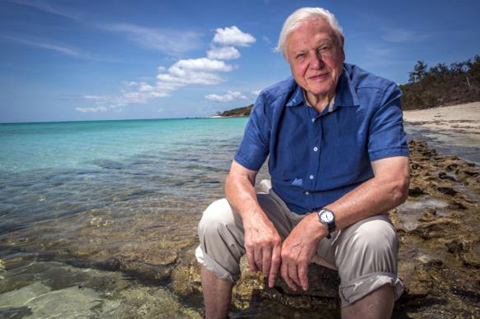 As Sir David Attenborough states in his foreword to the Review,
Economics is a discipline that shapes decisions of the utmost consequence, and so matters to us all. The Dasgupta Review at last puts biodiversity at its core and provides the compass that we urgently need. In doing so, it shows us how, by bringing economics and ecology together, we can help save the natural world at what may be the last minute – and in doing so, save ourselves.
Articles
The Dasgupta Review
Questions
- To what extent is the Dasgupta Review an updated version of the Stern Review of 2006?
- Draw a diagram to illustrate how the existence of negative externalities will lead to production levels above the social optimum.
- To what extent is Nature a public good?
- What is meant by the ‘tragedy of the commons’? How is it relevant to the exploitation of Nature?
- How could market incentives be changed by governments so as to halt the loss of biodiversity?
- Following an international agreement to protect the natural environment, what sanctions could be imposed on countries or companies which violate the agreement? How effective would they be?
 Following concerns about the market power of the Big Six energy suppliers in the UK and high prices for gas and electricity, the industry regulator, Ofgem, referred the industry to the Competition and Markets Authority (CMA) in June 2014. The CMA published its final report in June 2016. This argued that while there was sufficient potential for competition, consumers nevertheless needed further encouragement to switch suppliers. This would strengthen competition in the market.
To encourage switching, the CMA proposed the creation of a database that would include the details of customers who have been on a supplier’s standard variable tariff (SVT) for three or more years. Competitor energy suppliers would have access to this database to offer better deals for these customers.
There had already been calls for price caps to be imposed on suppliers. For example, in the run-up to the 2015 general election, the then Labour leader, Ed Miliband, proposed imposing a price freeze. This was criticised by the Conservatives for being too anti-market, that it would encourage energy companies to raise prices prior to the freeze and that it would be of no benefit in times of falling wholesale energy prices (which was the position in 2015).
 Indeed, in its 2016 report, the CMA recommended price caps only for the 16% of people on prepayment meters and these would be variable caps not freezes. This was followed in February 2017, by Ofgem’s announcement that a temporary price cap for such customers would come into effect in April 2017. The level of the cap would vary by meter type and region. It would also be reviewed every six months to reflect changes in costs and remain in place until 2020. There would be no cap on other customers.
But in the run-up to the 2017 election, the Conservatives announced that they would, after all, introduce a price cap on SVTs – 66% of customers are on such tariffs. Before the details were announced, there was much speculation as to what form such a cap would take? It would not be a simple freeze. But there was debate as to whether caps would vary with wholesale costs or whether they would be relative to the company’s lowest tariffs or to those of its rivals.
As it turned out, the proposal was for a cap on standard variable tariffs. It would be set by Ofgem and reviewed every six months. The cap would be based on the cheapest standard variable tariffs in each part of the UK, taking into account the variable costs for transporting energy there. Ofgem will adjust the cap every six months to reflect changes in the wholesale cost of energy.
Articles before details were anniunced
U.K. Energy Industry Faults May’s Election Pledge to Cap Prices Bloomberg, Rakteem Katakey (23/4/17)
Conservatives promise to cap prices in UK energy market Financial Times, Jim Pickard and Nathalie Thomas (23/4/17)
How might an energy price cap work? BBC News, Brian Milligan (24/4/17)
UK government vows strong action to rein in energy companies The Guardian, Adam Vaughan (19/4/17)
Energy bills: what’s the difference between Tory cap and Miliband freeze? The Guardian, Adam Vaughan (23/4/17)
Capping energy prices? Still a bad idea Adam Smith Institute blogs, Sam Dumitriu (25/4/17)
Bulb becomes ‘first’ provider to cut energy prices this year Moneywise (24/4/17)
Experts slam Conservative plans to cap energy bills as ‘clumsy and counterproductive’ The Telegraph, Lauren Davidson (23/4/17)
Capping energy tariffs isn’t a one-way ticket to Venezuelan-style economic ruin Independent, Ben Chu (25/4/17)
Articles after details were anniunced
Conservatives defend plans to cap UK energy bills Financial Times, Jim Pickard and Nathalie Thomas (9/5/17)
What is the energy price cap – and what does it mean for bills? The Telegraph, Jillian Ambrose (9/5/17)
The new energy price cap con? The Telegraph, Jillian Ambrose (9/5/17)
May defends plan to cap ‘rip-off energy bills’ BBC News (9/5/17)
Q&A: The Tory plan to cap energy prices BBC News, Brian Milligan (9/5/17)
Energy prices could still go up under Theresa May’s price cap plans, admits Business Secretary Greg Clark Independent, Rob Merrick (9/5/17)
Tory claims over energy price cap are just hot air The Guardian, Nils Pratley (9/5/17)
Video and audio
 UK government energy price cap ‘sheer politics’: Bernstein CNBC, Deepa Venkateswaran and Andrew Sentance (25/4/17)
Energy UK: price cap could backfire Sky News, Lawrence Slade (24/4/17)
Scottish Power: Capping prices ‘damages customers’ BBC News, Keith Anderson (24/4/17)
Tories to pledge energy bill cap BBC News, Michael Fallon (24/4/17)
Tories: Energy cap will protect vulnerable people BBC Today Programme, Business Secretary Greg Clark (9/5/17)
Energy cap: good or bad for consumers? Sky News, Stephen Fitzpatrick and James Kirkup (9/5/17)
Questions
- What scope is there for tacit collusion between the Big Six energy suppliers?
- What is meant by the RPI–X price cap? How does it differ from proposals being considered by the government?
- Why are people often reluctant to switch energy supplier?
- How could people be encouraged to switch supplier?
- What are the advantages and disadvantages of imposing a price cap for SVTs (a) relative to costs; (b) relative to lower-priced tariffs?
- Comment on Centrica’s chief executive officer Iain Conn’s statement that “price regulation will result in reduced competition and choice, and potentially impact customer service”.
- Comment on the statement by Lawrence Slade, chief executive officer of Energy UK, that intervention would create “huge uncertainty around government intentions, potentially putting at risk the billions in investment and jobs needed to renew our energy system”.
- Would an announcement of the introduction of a price cap in the near future necessarily encourage energy companies to raise their price now?
 In many cases, we simply leave the market to do what it does best – equate demand with supply and from this we get an equilibrium price and the optimal quantity. But, what happens if either the price or quantity is ‘incorrect’? What happens if the market fails to deliver an efficient outcome? In this case, we look to governments to intervene and ‘correct’ the market and such intervention can take place on the demand and/or supply-side. One area where it is generally felt that government intervention is needed is drugs and the trafficking of them across borders.
There are many ways in which governments have tried to tackle the problem of drug usage. The issue is that drugs are bad for individuals, for the community, society and the economy. Too much is produced and consumed and hence we have a classic case of market failure and this justifies government intervention.
But, how should governments intervene? With a substance such as drugs, we have an inelastic demand with resepect to price – any increase in price leads to only a small decrease in quantity. So any policy implemented by governments that attempts to change the market price will have limited effect in restricting demand. With globalisation, drugs can be moved more easily across borders and hence global co-operation is needed to restrict the flow. The article below considers the area of drugs and drug trafficking and looks at some of the policy options open to government.
Narconomics: The business of drug trafficking Houston Chronicle (16/3/16)
Questions
- Why does the market fail in the case of drug trafficking?
- Draw the demand curve you would expect for drugs and use this to explain why an increase in price will have limited effect on demand.
- Is there an argument for making drugs legal as a means of raising tax revenue?
- If better educational programmes are introduced about the perils of drug usage, how would this affect the market? Use a demand and supply diagram to help explain your answer.
- Why does globalisation make the solutions to drug trafficking more difficult to implement?
- Could drug usage and drug trafficking and hence the need to invest more money in tackling the problem actually boost an economy’s rate of growth? If so, does this mean that we should encourage drug usage?