 You may have recently noticed construction workers from different businesses digging up the roads/pavements near where you live. You may also have noticed them laying fibre optic cables. Why has this been happening? Does it make economic sense for different companies to dig up the same stretch of pavement and lay similar cables next to one another?
For many years the UK had one national fixed communication network that was owned by British Telecom (BT) – the traditional phone landline made from copper wire. This is now operated by OpenReach – part of the BT group but a legally separate division. In addition to this national infrastructure, Virgin Media (formed in 2007 from the merged cable operators, Telewest and NTL) has gradually built up a rival fixed broadband network that now covers just over 50 per cent of the country.
Although customers have only had very limited choice over which fixed communication network to use, they have had far greater choice over which Internet service provider (ISP) to sign up for. This has been possible as the industry regulator, Ofcom, forces OpenReach to provide rival ISPs such as Sky Broadband, TalkTalk and Zen with access to its network.
Expansion of the fibre optic network
 Recent government policy has tried to encourage and incentivise the replacement of the copper wire network with one that is fully fibre. This is often referred to as Fibre to the Premises (FTTP) or Fibre to the Home (FTTH). A fixed network of fully fibre broadband enables much faster download speeds and many argue that it is vital for the future competitiveness of the UK economy.
Replacing the existing fixed communication network with fibre optic cables is expensive. It can involve major civil works: i.e. the digging up of roads and pavements to install new ducts to lay the fibre optic cables inside.
Over a hundred companies, that are not part of either OpenReach or Virgin Media O2 (the parent company of Virgin Media), have recently been digging up pavements/roads and laying new fibre optic cables. Known as alternative network providers (altnets) or independent networks, these businesses vary in size, with many of them securing large loans from banks and private investors. By the middle of 2023, 2.5 million premises in the UK had access to at least two or more of these independent networks.
After a slow initial response to the altnets, OpenReach has recently responded by rapidly installing FTTP. The business is currently building 62 000 connections every week and plans to have 25 million premises connected by the end of 2026. In July 2022, Virgin Media O2 announced that it was establishing a new joint venture with InfraVia Capital Partners. Called Nexfibre, this business aims to connect 5 million premises to FTTP by 2026.
Is the fibre optic network a natural monopoly?
Some people argue that the fixed communication network is an example of a natural monopoly – an industry where a single firm can supply the whole market at a lower average cost than two or more firms. To what extent is this true?
An industry is a natural monopoly where the minimum efficient scale of production (MES) is larger than the market demand for the good/service. This is more likely to occur where there are significant economies of scale. Digging up roads/pavements, installing new ducts and laying fibre optic cable are clear examples of fixed costs. Once the network is built, the marginal cost of supplying customers is relatively small. Therefore, this industry has significant economies of scale and a relatively large MES. This has led many people to argue that building rival fixed communication networks is wasteful duplication and will lead to higher costs and prices.
However, when judging if a sector is a natural monopoly, it is always important to remember that a comparison needs to be made between the MES and the size of the market. An industry could have significant economies of scale, but not be an example of a natural monopoly if the market demand is significantly larger than the MES.
 In the case of the fixed communication network, the size of the market will vary significantly between different regions of the country. In densely populated urban areas, such as large towns and cities, the demand for services provided via these networks is likely to be relatively large. Therefore, the MES could be smaller than the size of the market, making competition between network suppliers both possible and desirable. For example, competition may incentivise firms to innovate, become more efficient and reduce costs.
Research undertaken for the government by the consultancy business, Frontier Economics, found that at least a third of UK households live in areas where competition between three or more different networks is economically desirable.
By contrast, in more sparsely populated rural areas, demand for the services provided by these networks will be smaller. The fixed costs per household of installing the network over longer distances will also be larger. Therefore, the MES is more likely to be greater than the size of the market.
The same research undertaken by Frontier Economics found that around 10 per cent of households live in areas where the fixed communication network is a natural monopoly. The demand and cost conditions for another 10 per cent of households meant it is not commercially viable to have any suppliers.
Therefore, policies towards the promotion of competition, regulation, and government support for the fixed communication network might have to be adjusted depending on the specific demand and cost conditions in a particular region.
Articles
Review
Questions
- Explain the difference between fixed and wireless communication networks.
- Draw a diagram to illustrate a profit-maximising natural monopoly. Outline some of the implications for allocative efficiency.
- Discuss some of the issues with regulating natural monopolies, paying particular attention to price regulation.
- The term ‘overbuild’ is often used to describe a situation where more than one fibre broadband network is being constructed in the same place. Some people argue that incumbent network suppliers deliberately choose to use this term to imply that the outcome is harmful for society. Discuss this argument.
- An important part of government policy in this sector has been the Duct and Pole Access Strategy (DPA). Illustrate the impact of this strategy on the average cost curve and the minimum efficient scale of production for fibre broadband networks.
- Draw a diagram to illustrate a region where (a) it is economically viable to have two or more fibre optic broadband network suppliers and (b) where it is commercially unviable to have any broadband network suppliers without government support.
- Some people argue that network competition provides strong incentives for firms to innovate, to become more efficient and reduce costs. Draw a diagram to illustrate this argument.
- Explain why many ‘altnets’ are so opposed to OpenReach’s new ‘Equinox 2’ pricing scheme for its fibre network.
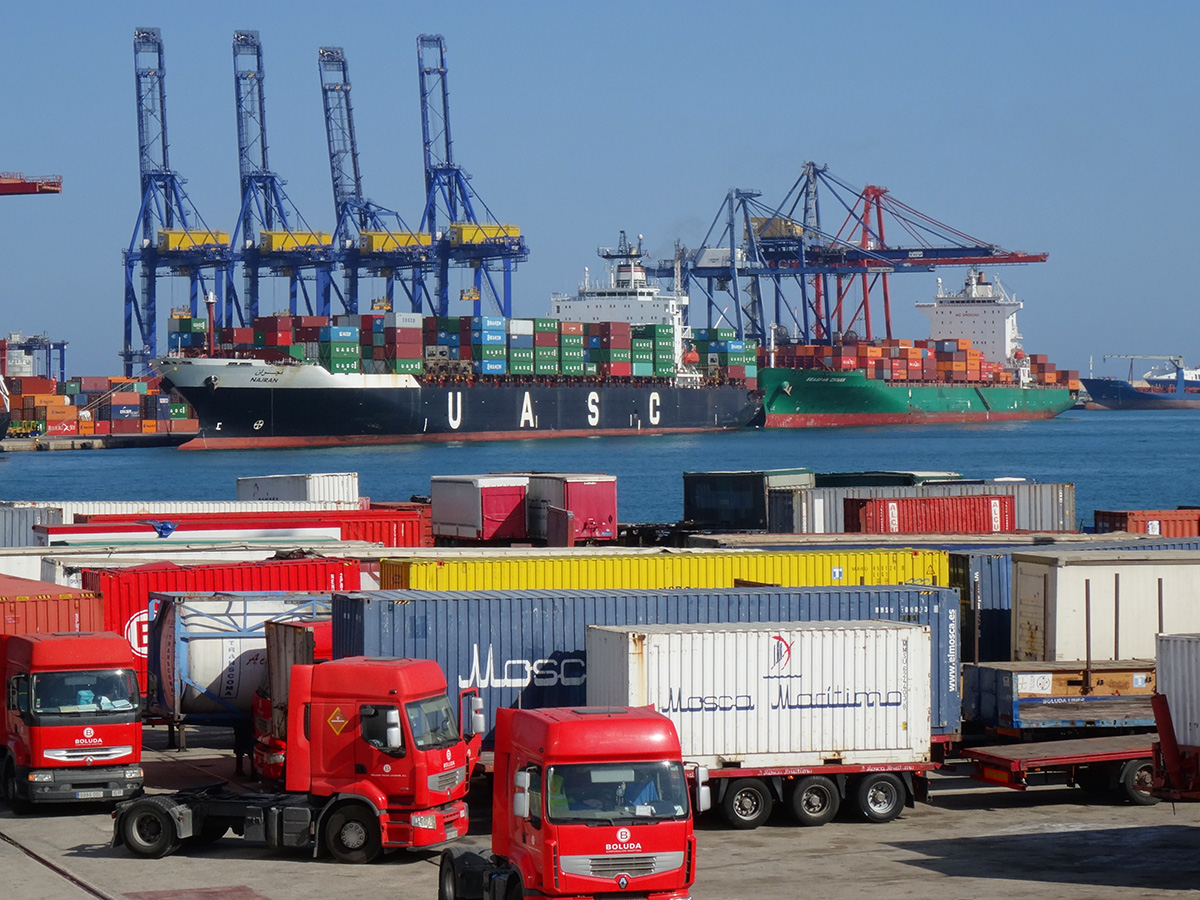 Shipping and supply chains generally have experienced major problems in 2021. The global pandemic disrupted the flow of trade, and the bounce-back in the summer of 2021 saw supply chains stretched as staff shortages and physical capacity limits hit the transport of freight. Ships were held up at ports waiting for unloading and onward transportation. The just-in-time methods of delivery and stock holding were put under considerable strain.
The problems were compounded by the blockage of the Suez canal in March 2021. As the blog, JIT or Illegit stated “When the large container ship, the Ever Given, en route from Malaysia to Felixtowe, was wedged in the Suez canal for six days in March this year, the blockage caused shipping to be backed up. By day six, 367 container ships were waiting to transit the canal. The disruption to supply cost some £730m.”
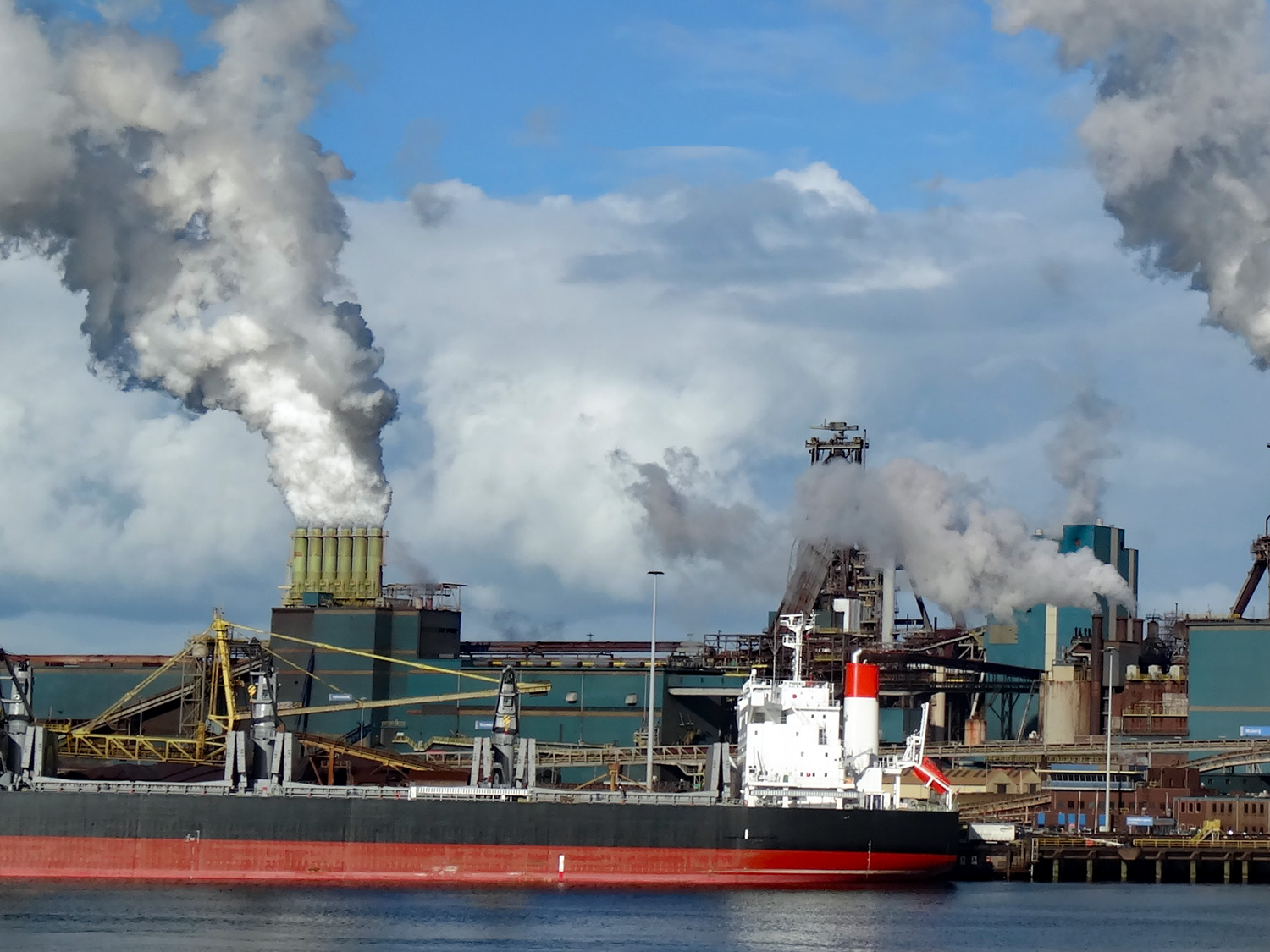 Another major event in 2021 was the Glasgow COP26 climate conference and the growing willingness of countries to commit to decarbonising their economies. But whereas electricity can be generated from renewable sources, and factories and land transport, such as cars, vans and trains, can run on electricity, it is not so easy to decarbonise shipping, especially for long journeys. They cannot plug in to the grid or draw down from overhead cables. They have to carry their own fuel sources with them.
So, have the pandemic and the Ever Given incident exposed weaknesses in the global supply chain and in shipping in particular? And, if so, in what ways is shipping likely to adapt? And will the pressure to decarbonise lead to a radical rethinking of shipping and long-distance trade?
These are some of the issues considered in the podcast linked below. In it, “Shipping strategist Mark Williams tells Helen Lewis how examining the challenge of decarbonising shipping reveals a future which looks radically different to today, in a world where population, oil extraction and economic growth have all peaked, and trade is transformed”.
Listen to the podcast and have a go at the questions below which are based directly on it.
Podcast
Articles
Questions
- Why should we care about the shipping industry?
- What lessons can be drawn from the Ever Given incident?
- What structural changes are needed to make shipping an industry fit for the long-term demands of the global economy?
- Distinguish between just-in-time supply chains and just-in-case supply chains.
- What are ‘reshoring’ and ‘nearshoring’? How have they been driven by a growth in trade barriers?
- What are the implications of reshoring and nearshoring for (a) globalisation and (b) the UK’s trading position post-Brexit?
- What is the contribution of shipping to global greenhouse gas emissions? What other pollutants are emitted from the burning of heavy fuel oil (or ‘bunker fuel’)?
- What levers exist to persuade shipping companies to decarbonise their vessels?
- What alternative ‘green’ fuels are available to power ships?
- What are the difficulties in switching to such fuels?
- What economies of scale are there in shipping?
- How do the ownership patterns in shipping benefit decision making and change in the industry?
- Are ammonia or nuclear power the answer to the decarbonisation of shipping? What are their advantages and disadvantages?
- Why are President Xi’s views on the future of shipping so important?
- How will the decarbonisation of economies affect the demand for shipping?
- What is likely to happen to Chinese demand for iron ore and coking coal over the coming years? What effect will it have on shipping?
- How and by how much is the European Emissions Trading System likely to contribute to the decarbonisation of shipping?
- What is the Sea Cargo Charter? What difference is it likely to make to the decarbonisation of shipping?
- In what ways do cargo ships optimise productivity?
- What impact is slowing population growth, or even no population growth, likely to have on shipping?
 Each week, BBC Radio 4 broadcasts readings from a book serialised in five 15-minute episodes. In the week beginning 18 January 2021, the readings were from English Pastoral: An Inheritance by James Rebanks, a farmer from the Cumbrian fells. His farm is relatively small, covering 185 acres.
He has attempted to make it much more sustainable and less intensive, reintroducing traditional Herdwick sheep, having a mixture of cows and sheep rather than just sheep, a greater sub-division of fields, and more natural scrubland, peatbogs and trees. As a result, soil quality has improved and there has been an explosion of biodiversity, with an abundance of wild flowers and insects.
Apart from being an autobiography of his time as a farmer and his attempt to move towards more traditional methods, the book examines broader issues of agricultural sustainability. It looks at the pressures of consumers wanting cheap food, the market power of supermarkets and wholesalers, the cost pressures on farmers pushing them towards monoculture to achieve economies of scale, and the role of the agrichemicals industry promoting fertilisers, feeds and pesticides which bring short-term financial gains to farmers, but which cause longer-term damage to the land and to biodiversity.
Rebanks has gained quite a lot of media attention after the publication of his first book, The Shepherd’s Life, including being one of the guests on Desert Island Discs and the subject of an episode of The Food Programme.
Listen to the Food Programme podcast and try answering the questions, which are all based on the podcast in the order of the points made in the interview.
Podcast
Reviews
Questions
- What are the incentives of an unregulated market for food that result in monoculture and a loss of biodiversity?
- To what extent are consumers responsible for changes in farming methods?
- Have the changes helped the urban poor?
- How is the monopsony power of supermarkets and food wholesalers impacting on food production and the pattern of agriculture?
- There are various (private) economies of scale in food production, but these often involve substantial external costs and long-term private costs too. How does this impact on land use?
- What are some of the limits of technology in increasing crop, meat and dairy yields?
- Will more recent changes in the pattern of food consumption help to increase mixed farming and biodiversity?
- Is it ‘rational’ for many farmers to continue with intensive farming with high levels of artificial fertilisers and pesticides?
- Is diversity in farming across farms within a local area a public good? If so, how could such diversity be achieved?
- How can farmers be encouraged to think and act holistically?
- Is there a trade-off between food output and biodiversity?
- What are the dangers in the UK reaching an agricultural trade deal with the USA?
- What are the benefits and costs of encouraging local food markets?
 In the last few years there have been growing concerns (see here for example) that markets in the USA are becoming increasingly dominated by a small number of firms. It is feared that the result of this will be a reduction in competition. Consistent with this, evidence suggests that the profits these firms make have increased. Last month The Economist and the Resolution Foundation published evidence (see references below) suggesting a similar picture may be emerging in Britain.
The Economist divided the British economy into 600 sub-sectors and found that in 58% of these the share of total revenue accruing to the 4 biggest firms had increased since 2008. The Resolution Foundation found a similar picture, especially in manufacturing industries where from 2004-16 the top five firms’ share of total revenue increased by over 10%.
Economic theory would suggest that as markets become more concentrated prices are likely to rise and The Economist cites research showing that mark-ups charged by firms in Britain have indeed risen. In addition to consumers facing higher prices, there is also concern that the lack of competition both in the USA and the UK is leading to lower wages being paid to workers. On the other hand, unlike in the USA, the evidence from the UK does not so far suggest there has also been an increase in corporate profits. Instead, it appears that the more successful firms’ profits have increased at the expense of their rivals.
This evidence on profits is line with a number of arguments that suggest we should perhaps be less concerned when markets are dominated by a small number of firms. Large firms may benefit from economies of scale and, being sufficiently large may be necessary for firms to innovate in new products and processes. Furthermore, high market shares may result from the competitive process as a reward for a firm developing a unique product or being more efficient than its rivals.

The Economist cites the supermarket industry as an example where concentrated is high, but competition is intense. Interestingly, this is a market where the British competition authorities have previously been concerned about the level of competition and spent considerable amounts of time investigating.
Despite these two opposing viewpoints, overall, The Economist argues strongly that we should be concerned about the situation in Britain. Not only are prices too high and wages too low, but growth in productivity is slow, even for the leading firms. Furthermore, they make clear that the situation may worsen following Brexit. It is argued that:
leaving the EU’s single market and customs union would reduce trade, easing competitive pressure from abroad.
This is consistent with evidence that joining the EC in the mid 1970s increased foreign competition in the UK and helped to end the low productivity growth that had plagued the economy since the 1930s.
Furthermore, it is suggested that:
to attract investment the government might look more favourably on proposed mergers—and loosening regulations would be easier outside the EU’s competition regime.
Therefore, it is clear that in the future there will be a vital role for the UK’s competition authority to remain independent of political objectives and aim to promote competition. In particular, they must prevent mergers that raise concentration and harm competition and intervene if they believe firms are abusing their dominant positions. Of course, following Brexit the case load of the competition authority in the UK will increase dramatically as they have to take on cases previously dealt with by the European Commission. One estimate is that it will need to look at around 40% more merger cases. It will certainly be interesting to see how competition in markets in Britain evolves over the next few years and the role competition policy plays in regulating this process.
Articles
Questions
- Outline the ways in which concentration in a market is usually measured.
- Explain the different price levels that arise under the alternative models of market structure.
- Why do you think competition is currently so intense in the supermarket industry?
 Global merger and acquisition deals with a combined value of £2.7 trillion ($4.06 trillion) have taken place so far this year (1 Jan to 3 Nov). This is a 38% increase on the same period in 2014 ($2.94 trillion) and even surpasses the previous record high for the same period in 2007 ($3.93 trillion) (see the chart from the Dealogic article linked below).
Measured by dollar value, October was the fifth biggest month in Mergers and Acquisitions (M&As) history with the announcement of $514bn of actual or proposed deals. These included:
|
|
| • |
the proposed £71 billion deal to acquire SABMiller (the world’s second largest brewer) by AB InBev (the world’s largest brewer); |
| • |
the $67bn takeover of network storage provider EMC by Dell (the world’s third largest computer supplier); |
| • |
the proposed deal to acquire Allergan (producer of Botox) by Pfizer (the producer of Viagra). |
Although the dollar value of M&As was extremely large in October the actual number of deals, 2177, was significantly lower than the average of 3521 over the previous 9 months.
Are these large M&As in the interests of the consumer? One advantage is that the newly combined firms may have lower average costs. Reports in the press, following the announcement of most M&As, often discuss the potential for reductions in duplicate resources and rationalisation. After the successful completion of a takeover two previously separate departments, such as finance, law or HRM, may be combined into one office. If the newly integrated department is (i) smaller than the previous two departments added together and (ii) can operate just as effectively, then average costs will fall. This is simply an example of an economy of scale.
Average costs will also decrease if x-inefficiency within the acquired business can be reduced or eliminated. X-inefficiency exists when an organisation incurs higher costs than are necessary to produce any given output. In other words it is not producing in the cheapest possible way. In a number of takeovers in the brewing industry, AB InBev has gained a fearsome reputation for minimising costs and removing any waste or slack in acquired organisations. In an interview with the Financial Times, its chief executive, Carlos Brito, stated that:
“In any company, there’s 20 per cent that lead, 70 per cent that follow and 10 per cent that do nothing. So the 10 per cent, of course, you need to get rid of.”
If any reduction in costs results in lower prices without any lessening in the quality of the good or service, then of course the customer will benefit. However, when two relatively large organisations combine, it may result in a newly merged business with considerable market power. With a fall in the price elasticity of demand for its goods and services, this bigger company may be able to increase its prices and make greater revenues.
An important responsibility of a taxpayer-funded competition authority is to make judgements about whether or not large M&As are in the public interest. For example, the Competition and Markets Authority in the UK investigates deals if the target company has a UK turnover that exceeds £70 million, or if the newly combined business has a market share that is equal to or exceeds 25 per cent. If the CMA concludes that an M&A would lead to a substantial lessening of competition in the market, then it could prohibit the deal from taking place. This has only happened on 9 occasions in the last 12 years. If competition concerns are identified, it is far more likely that CMA will allow the deal to go ahead but with certain conditions attached. This has happened 29 times in the last 12 years and the conditions are referred to as remedies.
The CMA has recently published a report (Understanding past merger remedies) that attempts to evaluate the relative success of the various remedies it has used in 13 M&A cases.
Articles
Are big mergers bad for consumers? BBC News, Daniel Thomas (30/10/15)
Mergers and acquisitions madness may be about to stop The Guardian (11/10/15)
M&A deal activity on pace for record year The Wall Street Journal, Dana Mattioli and Dan Strumpf (10/08/15) [Note: if you can’t see the full article, try clearing cookies (Ctrl+Shift+Delete)]
Global M&A Volume Surpasses $4tr in 2015 YTD Dealogic, Anthony Read (04/11/15)
M&A Volumes Weaken in October despite Megadeals Financial Times, James Fontanella-Khan and Arash Massoudi (01/11/15)
The merger of Dell and EMC is further proof that the IT industry is remaking itself The Economist (12/10/15)
Questions
- Using a cost curve diagram, explain the difference between economies of scale and x-efficiency.
- Explain why a takeover or merger might reduce the price elasticity of demand for the goods or services produced by the newly combined firm.
- Explain how the CMA determines the size of the appropriate market when calculating a firm’s market share.
- Draw a diagram to illustrate the simultaneous impact of greater market power and lower average costs that might result from a horizontal merger. Consider the impact on consumer, producer and total surplus.
- What is the difference between a structural and a behavioural remedy?