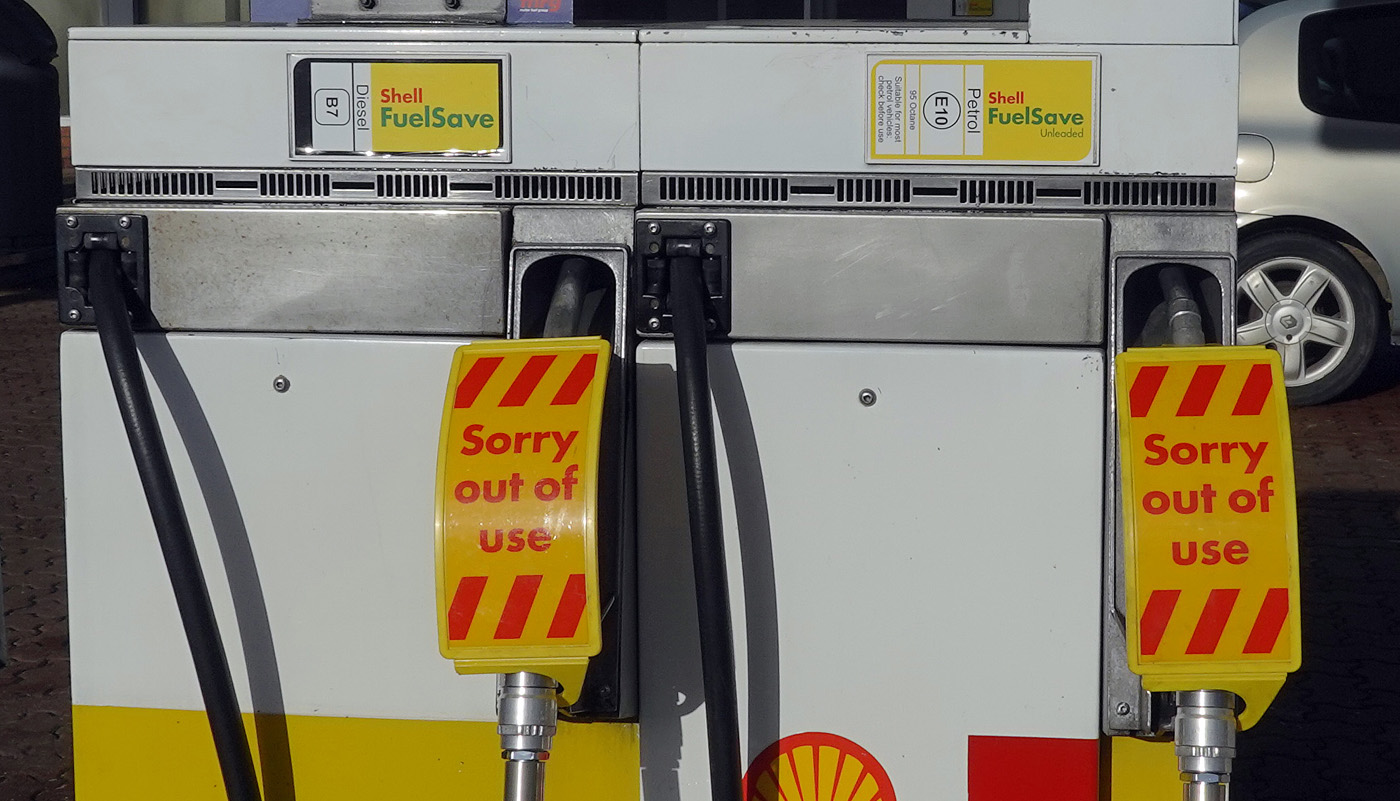
 Long queues at petrol pumps, with many filling stations running out of fuel; fears of shortages of food and various other items in supermarkets; orders by shops and warehouses unfilled or delayed. These have been some of the headlines in the UK in recent days.
The immediate problem is a shortage of over 100 000 lorry drivers, with thousands of drivers from EU countries, who were previously living and working in the UK, having returned to their home countries. Their numbers have not been replaced by British drivers, a problem exacerbated by a decline in HGV tests during the pandemic. Thus the supply of lorry drivers has fallen.
At the same time, as the economy recovers from the COVID-19 pandemic, aggregate demand has risen and with it the demand for lorry drivers.
The shortage is pushing up wages somewhat, but not enough to eliminate the shortage. What is more, the supply of lorry drivers is relatively wage inelastic: a higher wage does not attract many more drivers into the market. Also the demand is also relatively wage inelastic: a higher wage does not do much to dampen the demand for drivers.
But why has this happened? Why has the supply of drivers fallen and why is it inelastic? And what will happen in the coming months? The three main causes are Brexit, COVID-19 and working conditions.
Brexit
 With Brexit, many EU workers left the UK, finding life and working conditions more conducive in the EU. Many EU drivers had faced discrimination and felt that they were not welcome in the UK. It has been difficult finding replacement drivers from the EU as the UK’s immigration system, which now applies to the EU as well as other countries, prioritises workers who are classified as high-skilled, and these do not include lorry drivers.
Those EU drivers who do want to stay as UK residents are finding that settled status or visas are not easy to achieve and involve filling in various documents, which can be an onerous and time-consuming process. As the writer of the first linked bog below, who is a Polish worker in the transport industry, states, ‘Would you rather come to Britain and jump through all the hoops, or choose any of the well-paying EU countries, for example, Germany that, if you live in Western Poland, is just a short drive across (virtually non-existent thanks to Schengen) border?’ Another problem is that with EU driving licences: it is harder for potential employers to check on their status and thus they may prefer to employ UK drivers. This, again, puts off EU drivers from seeking to stay in the UK.
Even in the case of EU drivers living in the EU but delivering to the UK there are problems. First there are the dangers for drivers of boarding ferries in France, where people from migrant camps seek to board lorries to get passage to the UK, often threatening drivers. If illegal migrants do succeed in boarding a trailer unseen by the driver, the driver can then be arrested in the UK. According to the Polish blogger, it’s ‘no surprise that I hear more and more drivers who, when taking on new jobs, demand guarantees from their employers that they won’t be sent to the UK’.
 Then there is a decline in the system known as ‘cabotage’. This is where an EU driver delivers from the EU to destination A in the UK and takes back a load to the EU from destination B in the UK. To avoid having to travel empty between the two UK destinations, the driver could pick up a load to take from A to B. With a fall in imports and exports from and to the EU following Brexit, there are fewer EU lorries on UK roads. This means that there is now less capacity for transporting loads within the UK.
There has also been a large rise in ‘red tape’ associated with post-Brexit customs checks and border controls. This means that lorries can be held up at ports. This makes it much less attractive for EU haulage companies to export to the UK rather than to other EU countries, where paperwork is minimal. In addition, m many drivers are paid by the length of the journey rather than by the time spent, so delays result in them earning less per hour. Full checks have not been introduced yet. When they are, in January and July next year, the problem will be worse.
Tax changes make it more difficult for drivers to avoid taxes by claiming that they are self employed when they are in reality employees. This too is discouraging drivers from the EU from moving to or staying in the UK since many would now (since April 2021) be paying more tax.
COVID-19
Another contributing factor to the shortage of drivers has been COVID-19 and the government’s response to it. COVID rates are considerably higher in the UK than in most EU countries and, not surprisingly, many EU drivers are afraid to come to the UK.
 The pandemic led to fewer HGV driver tests, with 25 000 fewer candidates passing their test in 2020 than in 2019. It takes time to train new drivers and then to test them. However, even if there had been no reduction in HGV drivers passing their tests, there would still be a significant shortage of qualified drivers.
A further problem with the effects of COVID-19 on the economy has been the initial recession and then the bounce back. The sheer size of the bounce back has exacerbated the problem of driver shortages, which otherwise would have been slower to develop, giving the market more time to respond. Real GDP grew by 5.5% from 2021 Q1 to 2021 Q2, giving an annual growth rate of 23.6%. Nevertheless, GDP was still some 3.3% below its 2019 Q3 level.
Pay and working conditions
Working conditions are very poor for many drivers. The following are common complaints:
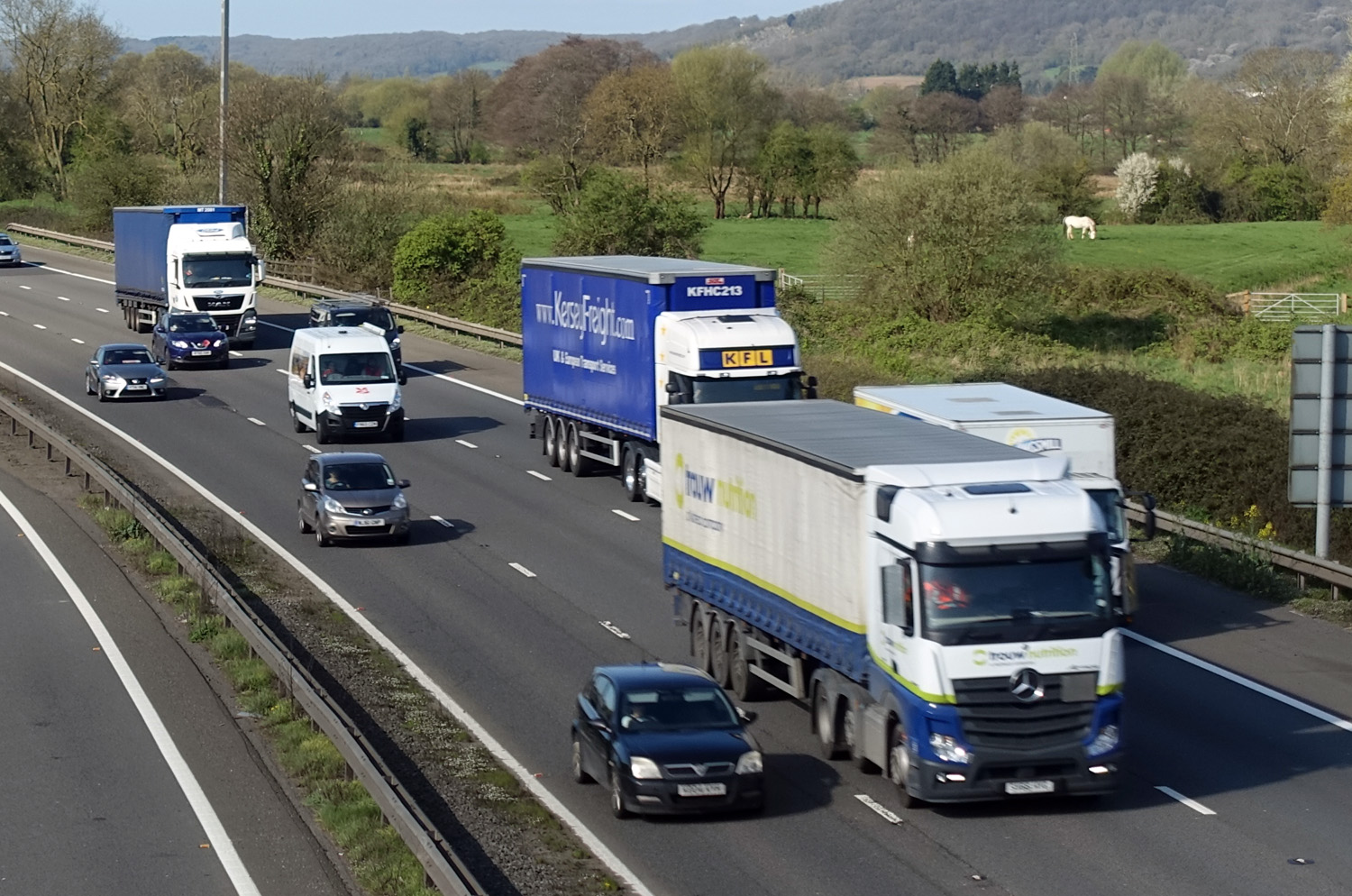 Driving jobs are often very tightly controlled, with computer monitoring and little freedom for the driver. Some cabs have cameras aimed at the drivers so that they can be constantly monitored.
- Drivers are subject to very stringent health and safety regulations, such as not being allowed to drive longer than a certain time, even when they are queuing in congested traffic. Whilst many of these regulations are desirable to protect both the public’s and the driver’s safety, they can discourage drivers from entering or staying in the industry. And some regulations are hard to justify on safety grounds (see second linked article below, point 13).
- Just-in-time deliveries at supermarkets, regional distribution centres (warehouses) or factories make timing very important and add considerable stress to drivers who may face abuse if they are late, even though it was not their fault, with their employer perhaps facing a fine. And yet on other occasions they might have to wait a long time to offload if drivers before them have been delayed, and often the conditions in waiting areas are poor with few if any facilities.
- Drivers often feel a lack of respect from employers, trainers and the general public.
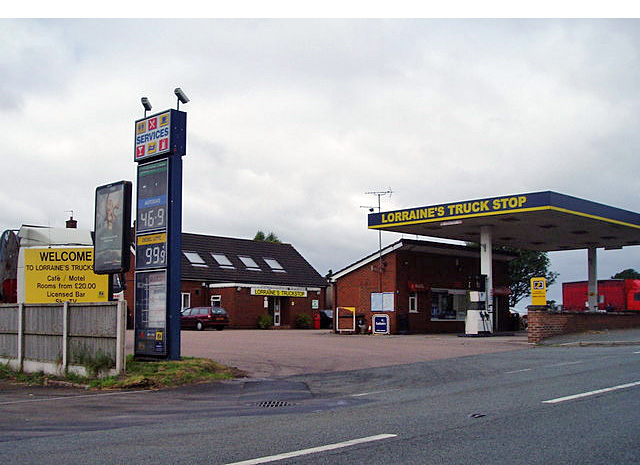 Rest and refreshment facilities are often very poor in the UK and generally much worse than in the EU. In the EU, motorway service areas have better parking, toilets, showers and shops. Restaurants are better and cheaper. Dedicated truck stops have supermarkets, laundrettes, showers or even open-air gyms dedicated to making drivers’ lives easier and more pleasant. The UK by contrast often has very poor facilities. Unlike in most EU motorway services, drivers have to pay to park and are faced with poor toilet and eating facilities. ‘Meanwhile, a typical British truck stop is some dusty yard full of potholes on the side of some industrial estate with a portaloo and a “greasy spoon” burger van parked next to it.’
- Hours are long. Even though driving hours are restricted to 10 hours per day (recently extended to 11 hours), the average working day may be much longer as drivers have to wait at distribution centres, fill in increasing amounts of paperwork and help load or unload their vehicle. Also drivers may have to work variable shifts, which leads to disturbed sleeping patterns.
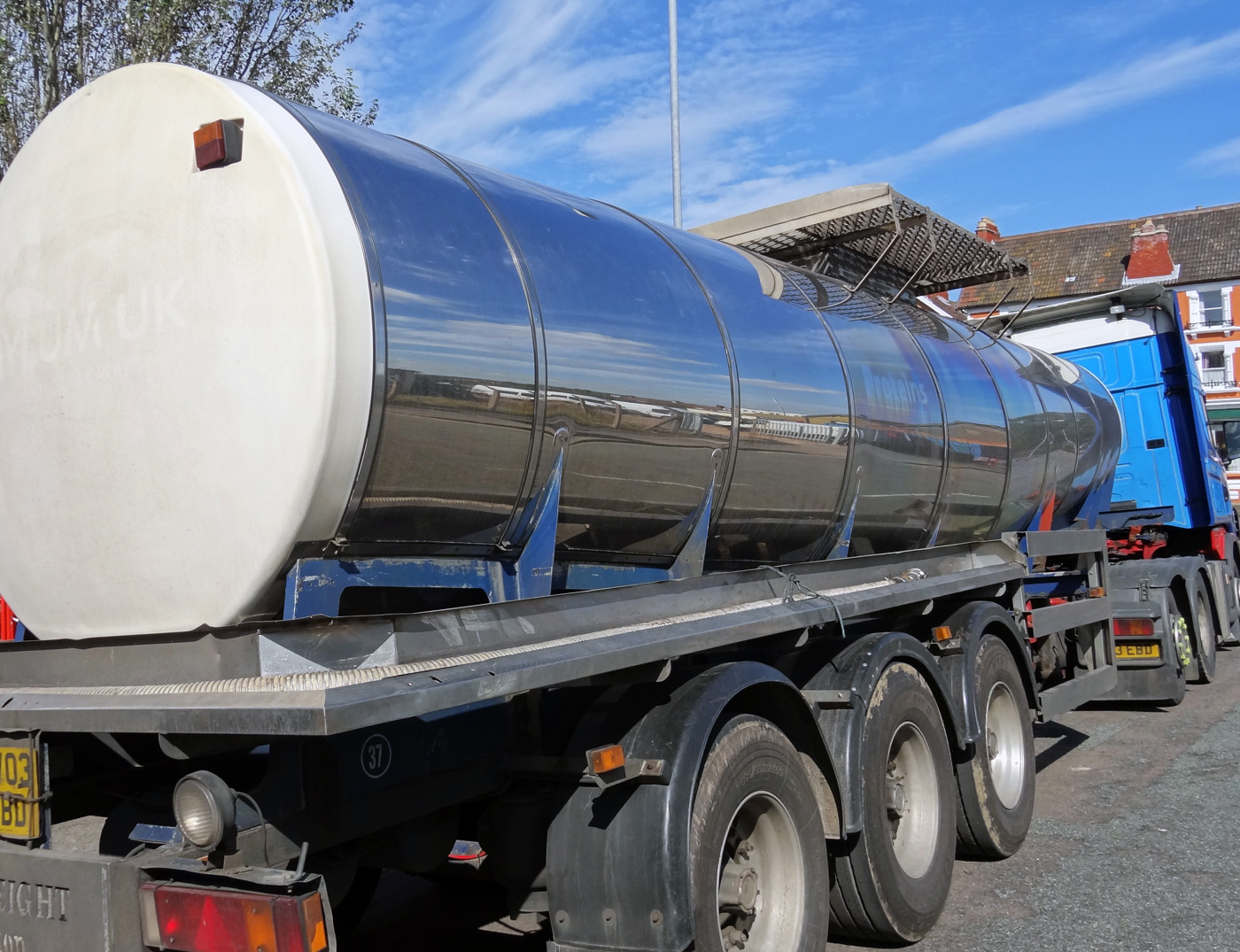 The work is often physically demanding, especially when a large part of the job involves loading and unloading and moving items from the lorry to where the customer wants them.
- Many vehicles are hard and unpleasant to drive, with leased vehicles often low-spec, dirty, uncomfortable and poorly maintained.
- Many of the jobs are agency jobs that do not offer stable employment.
Although pay is higher than in some parts of the labour market where there are shortages, such as social care and hospitality, pay per hour is still relatively poor when compared with many industries which have better conditions of employment.
The future
 The government is allowing more foreign workers into the UK from this month (October); more training places will be offered for potential drivers and the number of driving tests will increase; the government is also encouraging retired drivers or those who have left driving for other jobs to return to the industry.
However, there are shortages of drivers in other EU countries and so it will be difficult to attract additional drivers to the UK from the EU. What is more, with wages and working conditions remaining poor and the labour market remaining tight in other sectors, it might be hard to fill new training places and encourage workers to return to driving. Also, with the average age of drivers being 55, it is likely that the outflow of workers from driving jobs could be large in the coming years.
Articles
- Twenty reasons why there is an HGV driver shortage – part one: 1-10
West Country Bylines, Tomasz Oryński (21/9/21)
- Twenty reasons why there is an HGV driver shortage – part 2: reasons 11-20
West Country Bylines, Tomasz Oryński (23/9/21)
- Gas Shortages Awaken Britain to Some Crucial Workers: Truck Drivers
New York Times, Eshe Nelson and Megan Specia (29/9/21)
- Time running out to save UK industry from worker shortages, say business leaders
CNN, Walé Azeez (1/10/21)
- Boris Johnson’s Brexit choices are making Britain’s fuel and food shortages worse
CNN, Hanna Ziady (29/9/21)
- How serious is the shortage of lorry drivers?
BBC News, Reality Check Team (28/9/21)
- Petrol shortage: Is the fuel crisis improving?
BBC News (1/10/21)
- UK visa plan will not fix lorry driver shortage, says boss
BBC News (28/9/21)
- The empty shelves crisis isn’t just down to Covid and Brexit – it’s been decades in the making
The Guardian, Felicity Lawrence (17/9/21)
- Emergency visa scheme extended in major U-turn by Boris Johnson
The Guardian, Rajeev Syal (1/10/21)
- Truck driver shortage won’t be solved by quick fix visas – here are three ways forward
The Conversation, Temidayo Akenroye (27/9/21)
- UK lorry driver shortage a stark example of a wider European problem
Euronews, Luke Hurst and Shona Murray (29/9/21)
- Emergency visas won’t tempt European lorry drivers to UK, say haulage chiefs
The Observer, Jon Henley, Michael Savage and James Tapper (25/9/21)
- Labour shortage threatens to cancel out any Brexit dividend
British Meat Processors Association, Industry News, Peter Hardwick (28/9/21)
- How to control a consumer panic
BBC News. Faisal Islam (28/9/21)
Questions
- Why are the supply of and demand for lorry drivers relatively wage inelastic?
- Use a marginal productivity diagram to explain the current situation in the market for lorry drivers.
- What policy measures could be adopted to increase the supply of lorry drivers? How successful would these be?
- Is it ‘rational’ for consumers to ‘panic buy’ fuel and other products in short supply?
- Find out why there is a shortage of lorry drivers in the EU. Are any of the explanations similar to those in the UK?
- What are the macroeconomic implications of a shortage of lorry drivers and other key workers?
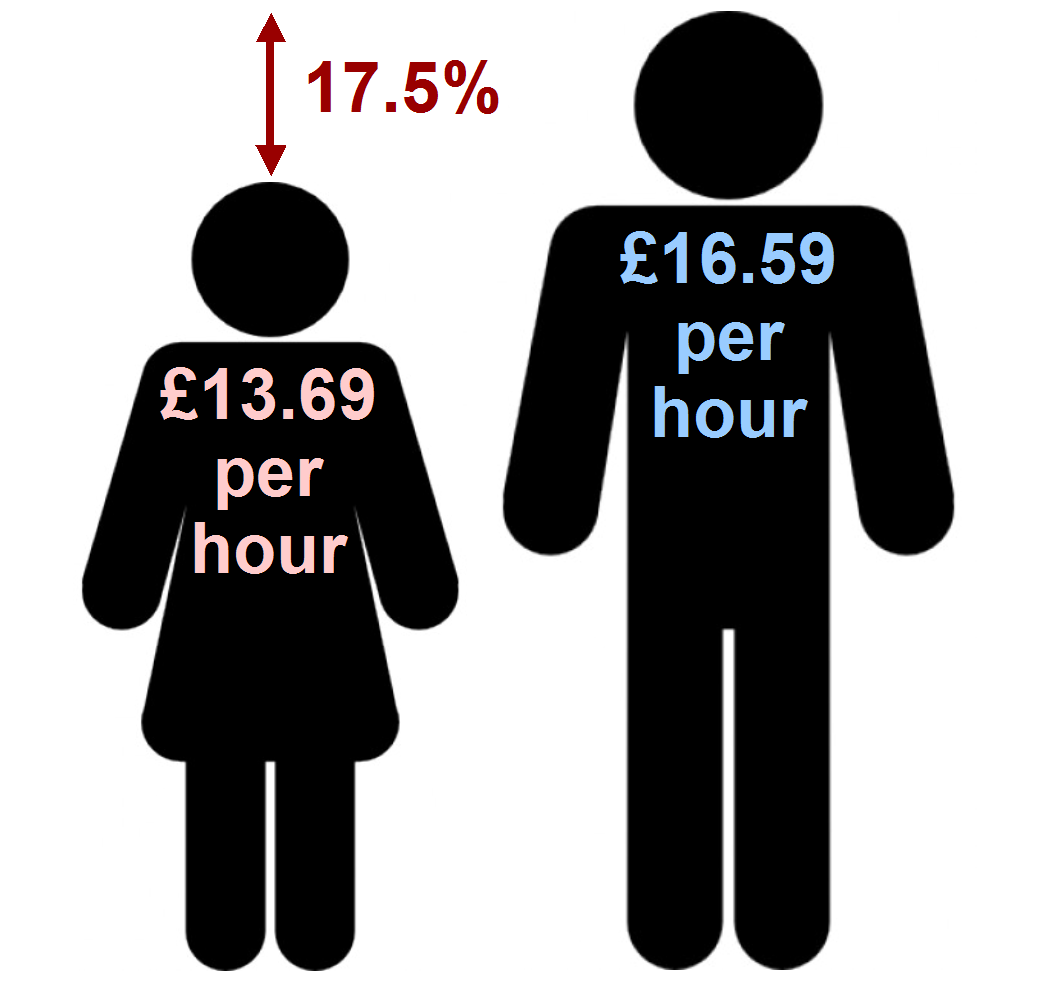 Women in the UK on average earn less per hour than men. According to the Annual Survey of Hours and Earnings, the mean hourly pay for women in 2015 was 17.5% less than that for men. This figure is for all employees, full and part time. As far as full-time employees is concerned, the gap was slightly smaller at 13.9%. Nevertheless, as you can see from Table 6 in the linked Excel file, these gaps have decreased in recent years – but only slightly.
A recent paper from the Institute for Fiscal Studies has disaggregated the figures to give a better picture of this wage gap. It finds that having children is a major contributing factor to the gap. It also finds that this has a bigger impact on the earnings of graduates and those without a degree but with A levels.
On entry to the labour market, men and women earn roughly the same. People’s wages tend to rise during their 20s, but men’s rise slightly faster than women’s, causing a pay gap to open and widen – but slowly at first. Average (mean) men’s wages continue to grow during their 30s and a bit during their 40s. However, average women’s wages flatline. Thus the wage gap grows substantially, especially for the higher educated.
The paper argues that the arrival of children is a major contributing factor to this picture. It looks at the gap before and after the arrival of children. “The crucial observation is that the gap opens up gradually after the first child arrives and continues to widen for many years after that point.” By 12 years after the first child is born, the wage gap has widened to 33%.
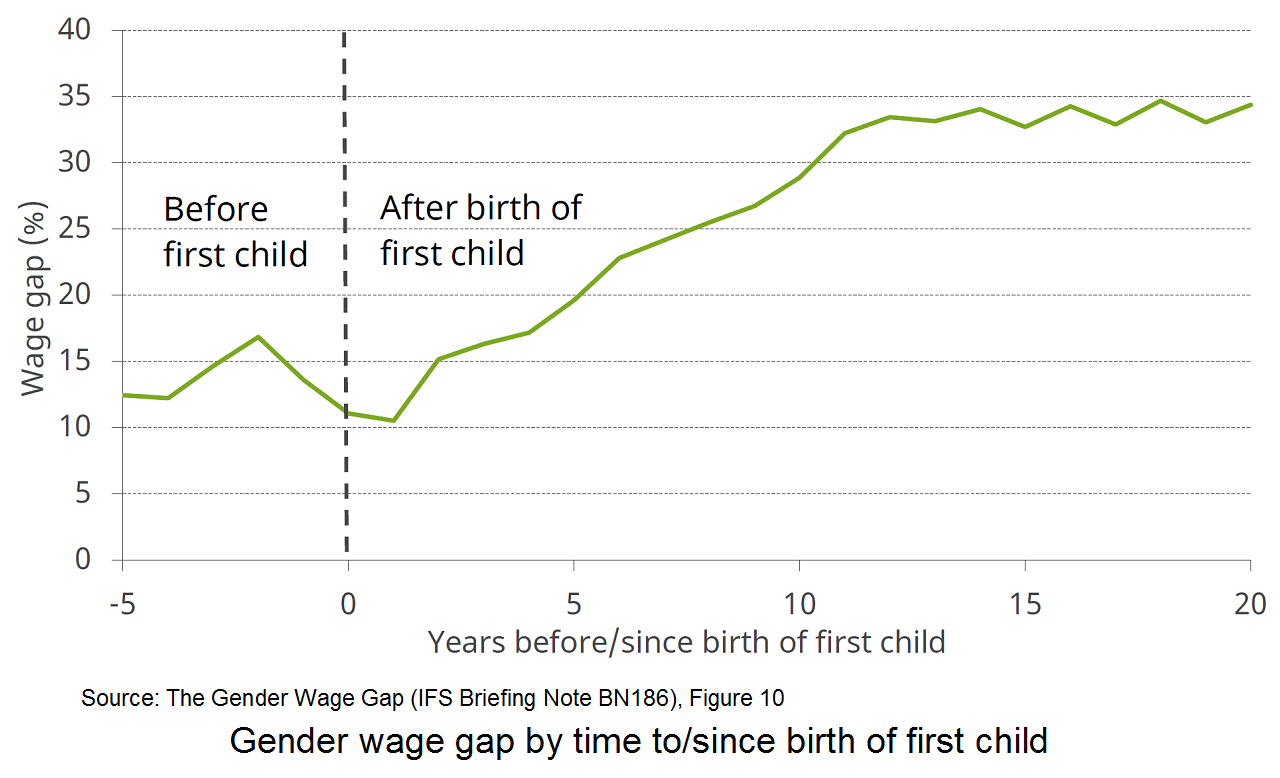
The paper does not offer reasons for the small gap that exists before the arrival of children. But it does give possible reasons for the widening gap after having children. A major one, it suggests, has to do with labour market experience.
“As women are likely to do less paid work after the arrival of children, the level of labour market experience they have falls further and further behind that of their male counterparts, and the wage gap therefore widens.” They may also miss out on promotions.
Each year a woman spends away from the labour market is associated with an average 2% drop in pay compared with those who remain in work. For those with at least A levels, the penalty is 4%; but there is no drop in pay for those without A levels.
Other possible explanations include mothers taking work that requires a lower skill level, and at lower hourly pay, in order to gain flexibility in working hours. However, the evidence suggests that women who move to part-time work on having a child suffer no immediate drop in pay. But their hourly pay does grow more slowly, thus contributing to a widening of the gap.
Another explanation is employers exercising market power to discriminate against women with children. The paper does not consider this explanation.
The articles discussing the paper look at policy implications and identify various things that can be done to narrow the gap. Read the paper and articles and try answering the questions below.
Videos and podcasts
 IFS: gender pay gap widens after first child Compendium of News Reports from BBC News at Six, Channel 4 News, ITV News at Ten and BBC Newsnight from Incorrigible Forever on YouTube (23/8/16)
Gender Pay Gap Hits Women With Children Hardest Sky News (23/8/16)
In Business: Supportive partner = success at work World of Business, BBC Radio 4, Peter Day (25/8/15)
Gender Pay Gap More or Less, BBC Radio 4, Tim Harford (26/8/16)
Gender pay gap: Why do mums increasingly earn less? BBC Victoria Derbyshire programme (23/8/16)
Articles
UK women still far adrift on salary and promotion as gender pay gap remains a gulf The Guardian, Katie Allen (23/8/16)
Gender pay gap: mothers returning to work earn a third less than men The Telegraph, Tim Wallace (23/8/16)
Mothers’ pay lags far behind men BBC News (23/8/16)
Four ways the gender pay gap isn’t all it seems BBC News Magazine, Simon Maybin (29/8/16)
Six ways to tackle the gender pay gap BBC News, Emma Atkinson (23/8/16)
Wage gap for UK women unchanged in 20 years Financial Times, Gemma Tetlow (23/8/16)
The UK’s slow march to gender pay equality Financial Times (23/8/16)
Gender Pay Gap For Mothers Widens For 12 Years After Having Children, New Research Finds Huffington Post, Jack Sommers (23/8/16)
Motherhood costs women a third of their salary compared to men, report reveals Independent, Joe Watts (23/8/16)
The gender pay gap means that more women will be in poverty later in life – but there is something the government can do Independent, Claire Turner (26/8/16)
Gender pay gap won’t close until 2069, says Deloitte The Guardian, Katie Allen (24/9/16)
Papers and Reports
Gender wage gap grows year on year after childbirth as mothers in low-hours jobs see no wage progression IFS Press Release (23/8/16)
The Gender Wage Gap IFS Briefing Note BN18, William Elming , Robert Joyce and Monica Costa Dias (23/8/16)
Women in STEM: Technology, career pathways and the gender pay gap Deloitte (September 2016)
Data
Gender pay differences: Annual Survey of Hours and Earnings: 2015 Provisional Results ONS Statistical Bulletin (18/11/15)
All data related to Annual Survey of Hours and Earnings: 2015 Provisional Results ONS datasets (18/11/15)
ASHE 1997 to 2015 selected estimates (See Tables 1 to 4, 6 and 9) ONS dataset (18/11/15)
All Employees – ASHE: Table 1 ONS dataset (18/11/15)
Questions
- Identify possible reasons for the wage gap between men and women.
- Why is the median wage gap different from the mean wage gap?
- Why is the wage penalty for periods without work greater for more highly educated women?
- To what extent is the gender wage gap a reflection of marginal productivity differences?
- Is the gender pay gap primarily about men and women being paid differently for doing the same job?
- What evidence is provided by the Chartered Management Institute (CMI) on women’s lack of pay progression?
- What could the government do to reduce the wage gap?
- Discuss the relative effectiveness of different policy alternatives.
 The earnings gap between men and women is well-documented and depending on how we measure it, we get different figures. One of the most common measures is mean earnings per hour. The latest estimates suggest that women are paid around 20% less than men, though other data does give lower figures. Though actions have been taken to reduce the inequality between men and women, it still persists in many areas and this has led to plans for new league tables from Nicky Morgan.
The inequality gap has certainly come down. Back in 1970, the wage differential was around 37 per cent, so progress has been made, although the wage gap in the UK has stabilised somewhat. The gender wage gap is at least in part explained by occupations, as women have tended to be prevalent in some of the more poorly paid occupations. However, significant earnings differentials still exist within occupations. We see fewer women in the more senior positions; women tend to take career breaks and hence this can cause more investment into training and promoting men. Furthermore, we often simply see some form of prejudice or discrimination whereby women are just paid less than men, despite the Equal Pay Act.
As a means of combatting this inequality, Nicky Morgan, the Women and Equalities Minister, has announced plans that will require private companies and voluntary organisations employing more than 250 workers to reveal their pay gap. They will have to produce this information online and this will a means to bring down the inequality that exists between men and women in the same occupations. The first League Table of this pay gap will be published in April 2018 so companies will have to begin compiling the information from April 2017. This has received criticism from some, as it is not starting soon enough, but it is seen as a step in the right direction.
Carolyn Fairbairn, CBI Director-General warned that these League Tables shouldn’t be used to name and shame firms, as many factors might explain wage differentials. She noted:
“Where reporting can be useful is as a prompt for companies to ask the right questions about how they can eradicate the gender pay gap … The government should consult closely with business to ensure that this new legislation helps close the gender pay gap, rather than ending up as a box-ticking exercise.”
Clearly there are some close links between the gender pay gap and concerns about poverty and minimum wages and although the League Tables perhaps should not be used to name and shame, one might think it is inevitable that this is how they will be viewed. The following articles consider Nicky Morgan’s inequality plans.
Reports
Gender Pay Gap European Commission
Annual Survey of Hours and Earnings, 2015 Provisional Results Office for National Statistics (November 2015)
Pay gap reporting Equal Pay Portal2016
Articles
Gender pay gap reporting for big firms to start in 2018 Guardian, Rowena Mason (12/02/16)
Gender pay gap to be revealed by employers to tackle inequality Financial Times, Sarah O’Connor (12/02/16)
Firms forced to reveal gender pay gap BBC News (12/02/16)
Gender pay gap League Tables to ‘name and shame’ companies Telegraph, Steven Swinford (12/02/16)
UK companies must reveal gender pay gap under new plans Independent, Oliver Wright (12/02/16)
Companies told to publish gender pay gap Sky News (12/102/16)
Gender pay gap: Business groups mixed on Nicky Morgan’s new name-and-shame plans International Business Times, Bauke Schram (12/02/16)
Now every firm with more than 250 staff must put gender pay gap data online in move to encourage companies to reward staff equally Mail Online, Jack Doyle and Rosie Taylor (12/02/16)
Questions
- Use a labour market diagram to explain how gender pay gaps can emerge based on different marginal products.
- How can gender pay gaps emerge because of women taking career breaks and being less geographically mobile?
- Use information on the ONS website to compare pay differentials across occupations. Are the biggest and smallest differentials where you would expect?
- There are numerous reasons why men have traditionally been paid more than women. Which reasons could be said to be irrational and which are rational?
- If employers were forced to give genuinely equal pay for equal work, how would this affect the employment of women and men? What would determine the magnitude of these effects?
- Do you think this naming and shaming will be effective in reducing the gender pay gap amongst the largest companies? Can you suggest any other policy options?
- If the Equal Pay Act is in place, why can companies still pay women less?
Pay rises have been few and far between since the onset of recession – at least that’s the case for most workers. Pay for private-sector workers rose by 2.7% on average over the past year and for many in the public sector there were pay freezes. But, one group did considerably better: directors. According to the Incomes Data Services (IDS), over the past year, the average pay of the directors of the FTSE 100 companies has increased by almost 50%. Not bad for the aftermath of a recession! Much of the increase in overall pay for directors came from higher bonuses; they rose on average by 23% from £737,000 in 2010 to £906,000 this year.
Unsurprisingly, politicians from all sides have commented on the data – David Cameron said the report was ‘concerning’ and has called for the larger companies to become more transparent about how they set executive pay. How much difference transparency will make is debatable. However, Martin Sorrell, Chief Executive of WPP defended these pay rises, by comparing the pay of directors of UK companies with their counterparts in other parts of the world.
However, this defence is unlikely to make the average person feel any better, as for most people, their overall standard of living has fallen. With CPI inflation at 3.3% in 2010 (and RPI inflation at 4.6%) a person receiving the average private-sector pay rise of 2.7% was worse off; with a pay freeze they would be considerably worse off. Essentially, buying power has fallen, as people’s incomes can purchase them fewer and fewer goods.
However, the data have given David Cameron an opportunity to draw attention to the issue of more women executives. He believes that more women at the top of the big companies and hence in the boardroom would have a positive effect on pay restraint. However, this was met with some skepticism. The following podcasts and articles consider this issue.
Podcasts and webcasts
Directors’ pay rose 50% in past year BBC News, Emma Simpson (28/10/11)
‘Spectacular’ share payouts for executives BBC Today Programme, Steve Tatton of Income Data Services (29/10/11)
Sir Martin Sorrell defends top pay BBC Today Programme, Sir Martin Sorrell, Chief executive of WPP (28/10/11)
‘A closed little club’ sets executive pay BBC Today Programme, John Purcell and Deborah Hargreaves (28/10/11)
Articles
Cameron says Executive pay in U.K. is ‘Issue of concern’ after 49% advance Bloomberg, Thomas Penny (28/10/11)
Directors’ pay rose 50% in last year, says IDS report BBC News (28/10/11)
Cameron ties top pay to women executives issue Financial Times, Jim Pickard and Brian Groom (28/10/11)
£4m advertising boss Sir Martin Sorrell defends rising executive pay Guardian, Jill Treanor and Mark Sweney (28/10/11)
Executive pay soars while the young poor face freefall: where is Labour? Guardian, Polly Toynbee (28/10/11)
My pay is very low, moans advertising tycoon with a basic salary of £1 MILLION a year Mail Online, Jason Groves and Rupert Steiner (29/10/11)
More women directors will rein in excessive pay, says David Cameron Guardian, Nicholas Watt (28/10/11)
David Cameron and Nick Clegg criticise directors’ ‘50% pay rise’ BBC News (28/10/11)
The FTSE fat cats are purring over their pay but that’s good for the UK The Telegraph, Damian Reece (28/10/11)
IDS press release
FTSE 100 directors get 49% increase in total earnings Incomes Data Services (26/10/11)
Questions
- What are the arguments supporting such high pay for the Directors of large UK companies?
- How are wages set in a) perfectly and b) Imperfectly competitive markets?
- Why is the average person worse off, despite pay rises of 2.5%?
- Why does David Cameron believe that more women in the boardroom would act to restrict pay rises?
- To what extent do you think that more transparency in setting pay would improve the system of determining executive pay?
- Do senior executives need to be paid millions of pounds per year to do a good job? How would you set about finding the evidence to answer this question?
- Is the high pay of senior executives a ‘market’ rate of pay or is it the result of oligopolistic collusion between the remuneration committees of large companies (a form of ‘closed shop’)?
- What would be the effect over time on executive pay of remuneration committees basing their recommendations on the top 50% of pay rates in comparable companies?
Approximately 1.6 million past and present female employees of Walmart have had their sex discrimination case dismissed by the US Supreme Court. This case began almost 10 years ago with claims by 5 female workers that they were paid less than their male counterparts and had been passed over for promotion. Despite statistical evidence suggesting a case of sexual discrimination, it was ruled that Walmart was not discriminating against women, as promotion decisions were made by individual managers, hence there was no common element between the plaintiffs. Justice Antonin Scalia said that a common element was ‘entirely absent here’.
Discrimination of any kind will have an impact on the demand curve for labour (or the marginal revenue product curve). As such, the equilibrium wage rate will also be affected: if a firm believes that women are less productive than their male counterparts, the MRP curve will shift inwards, pushing down their wage. The key to this case was that there were so many plaintiffs and so it was practically impossible to determine whether or not pay differentials and promotions were based on legitimate grounds. The following articles consider the case against Walmart.
Supreme Court decision in Walmart class-action claim brings praise, anger FoxNews (20/6/11)
Walmart wins class action ruling Financial Times, Barney Jopson (20/6/11)
Wal-Mart women denied discrimination class action BBC News (20/6/11)
Walmart sex discrimination class action rejected Guardian, Dominic Rushe (20/6/11)
Questions
- Why might a firm engage in discrimination?
- Use a diagram to illustrate the impact of discrimination against women by a firm on the marginal revenue product curve for women.
- Following discrimination against women and in favour of men, what happens to the men’s marginal product curve?
- Given your answer to the above 2 questions, what would you expect to happen to the equilibrium number of male and female workers and the male and female wage rate?
- Are there any adverse effects to a firm of engaging in discrimination of any kind?