Who pays Trump’s tariffs?
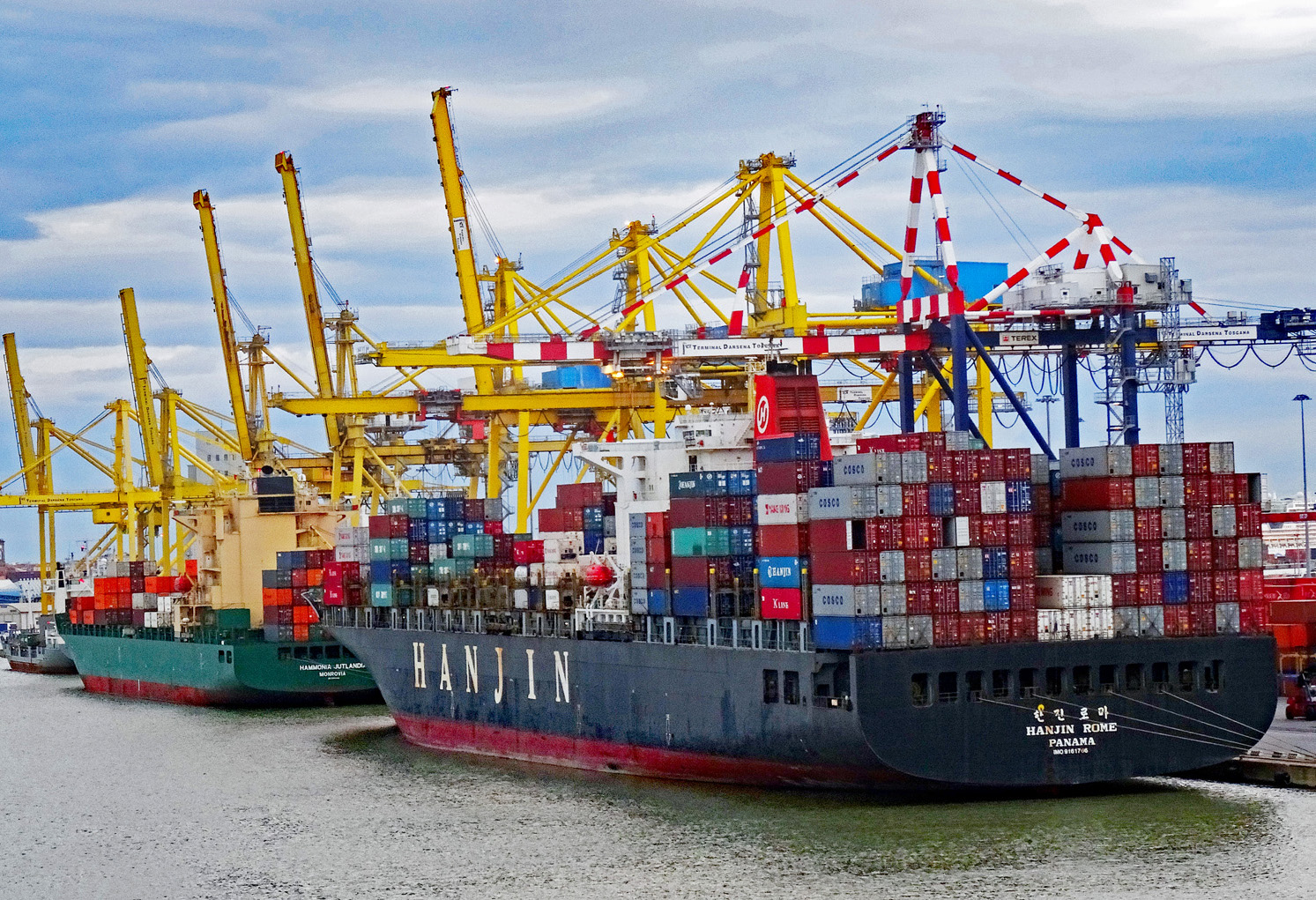 Three recent reports (see links below) have suggested that US consumers and businesses pay most of the tariffs imposed by the second Trump administration. The percentage varies from around 86% to 96%. US customs revenue surged by approximately $200 billion in 2025, but this was a tax paid almost entirely by US consumers and businesses. Foreign suppliers largely maintained their (pre-tariff) prices. They took a hit in terms of reduced volumes rather than reduced pre-tariff prices.
The incidence of a tariff between consumers, domestic importers and overseas producers will depend on price elasticities of demand and supply. The following diagram shows a product where the importing country is large enough to have a degree of market power, which will normally be the case with the USA. The greater its buying power, the flatter will be its demand curve, showing that the foreign supplier will have little influence on the price. With no tariff, the equilibrium price paid by importers will be at point a, where demand equals supply. Q1 would be imported at a price of P1.
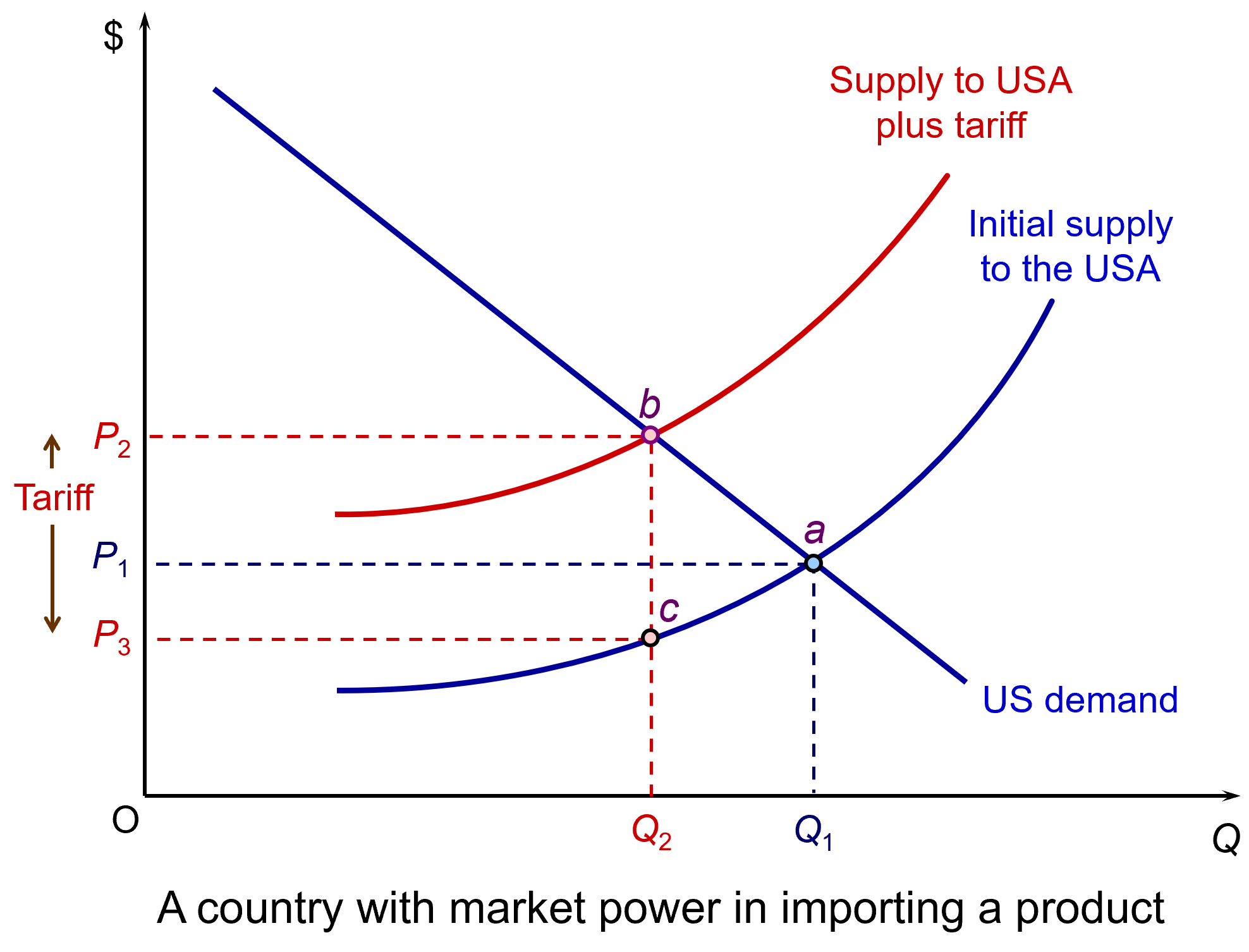 Imposition of a tariff will shift the supply curve upwards by the amount of the tariff. The new equilibrium price paid by importers will be at point b, where the new supply curve crosses the demand curve. Importers thus now pay a post-tariff price of P2: an effective rise in price of P2 minus P1. Foreign exporters receive P3, which is what they are paid by importers after the tariff has been paid.
The consumer price will be above P2 as that includes a mark-up by US businesses on top of the price they pay to import the product. Importers may bear some of the increase in price and not pass the full amount onto consumers, depending on competition and their ability to absorb cost increases.
President Trump argued that there would be very little rise in price from the tariffs and that overseas suppliers would bear the brunt of the tariffs. Indeed, recently he has argued that this must be the case as US inflation has been falling. In response, critics maintain that the rate of inflation would have fallen more without the tariffs and that current prices would be lower than they are. Also, if US importing firms or retailers bear some of the increased cost, even though this helps to dampen the price rise, their lower profits could damage investment and employment.

The Reports
The first report is from the New York Fed (one of the regional branches of the Federal Reserve Bank). It examines the effect of tariffs imposed in 2025, over three periods: (i) January to August, (ii) September to October, and (iii) November. In the first period, 94% of the tariffs were paid by US importers and 6% by foreign exports; in the second period, the figures were 92% and 8% and in the third period, 86% and 14%.
The second report is The Budget and Economic Outlook: 2026 to 2036 from the Congressional Budget Office. Box 2-1 notes that, as of November 2025, ‘the effective tariff rate was about 13 percentage points higher than the roughly 2 percent rate on imports in 2024’. Its analysis suggests that 95% of the tariffs will be borne by importers. Of these higher import prices, 30% will be borne by US businesses, largely through reduced profit margins, and 70% by consumers through higher prices. This will also allow many businesses which produce goods that compete with foreign imports to ‘increase their prices because of the decline in competition from abroad and the increased demand for tariff-free domestic goods’.
The third report is from the Kiel Insitut. In its Policy Brief, Americaʼs Own Goal: Who Pays the Tariffs?, it finds that US importers and consumers bear 96% of the cost of the 2025 tariffs, with foreign exporters absorbing only about 4%. It bases it findings on shipment-level data covering over 25 million transactions valued at nearly $4 trillion. This also shows that exports to the USA declined as foreign exporters preferred to reduce volumes rather than absorbing the tariffs.
The tariffs raised some $200 billion in 2025, around 3.8% of Federal tax receipts. But, as we have seen, this was paid largely by US consumers and business. It goes some way to offsetting the annual cut in tax revenues of around $450 to $520 billion per year from the tax cuts, largely to the better off, in Trump’s ‘One Big Beautiful Bill’.
Reports
- Who Is Paying for the 2025 U.S. Tariffs?
- The Budget and Economic Outlook: 2026 to 2036 – Box 2-1.
- Americaʼs Own Goal: Who Pays the Tariffs?
Liberty Street Economics, Federal Reserve Bank of New York, Mary Amiti, Chris Flanagan, Sebastian Heise, and David E. Weinstein (12/2/26)
Congressional Budget Office (February 2026)
Kiel Policy Brief 201, Kiel Institut, Julian Hinz, Aaron Lohmann, Hendrik Mahlkow and Anna Vorwig (January 2026)
Aricles
- NY Fed report says Americans pay for almost all of Trump’s tariffs
- A year in, it’s official: Americans, not foreigners, are paying for Trump’s tariffs
- Costs from Trump’s tariffs paid mainly by US firms and consumers, NY Fed says
- Consumers and businesses paid nearly 90% of Trump tariffs in 2025, new analysis found
- New Studies Challenge Who Really Pays for Tariffs
- Trump Tariffs: Tracking the Economic Impact of the Trump Trade War
- Who Is Paying the Trump Tariffs?
Reuters, Michael S. Derby (12/2/25)
CNN, Allison Morrow (12/2/26)
BBC News, Kali Hays (13/2/26)
CBS News, Megan Cerullo (12/2/26)
Investopedia, Diccon Hyatt (12/2/26)
Tax Foundation, Erica York and Alex Durante (6/2/26)
Paul Krugman (15/2/26)
Questions
- Summarise the findings of the three reports (but just Box 2-1 of the Congressional Budget Office one).
- Assess the argument that protectionism leads to inefficiency in the protected industries.
- Under what circumstances would exporters to the USA absorb a high percentage of tariff increases? Consider questions of elasticity.
- Can tariffs ever be justified on efficiency grounds?
- Can tariffs be justified as a bargaining ploy? Can they be used as a means of achieving freer and fairer trade?
- Read the blog, President Reagan on tariffs and summarise President Reagan’s arguments. Are they still relevant today?
- Consider the arguments for and against the EU raising tariffs on US goods.