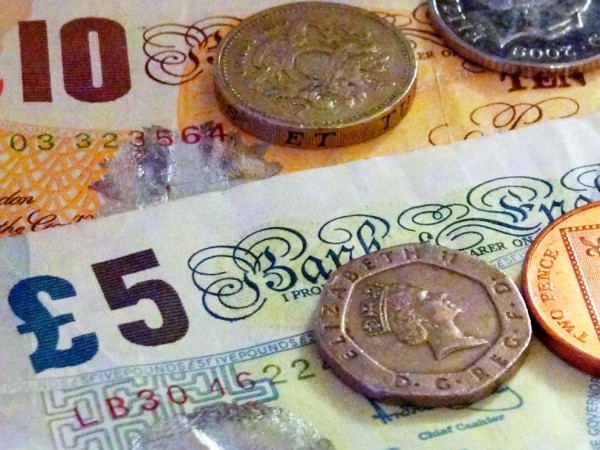
 We have had a minimum wage in the UK for well over a decade and one its key purposes was to boost the pay of the lowest paid workers and in doing so reduce the inequality gap. Rising inequality has been a concern for many countries across the world and not even the nations with the most comprehensive welfare states have been immune.
Switzerland, known for its banking sector, has been very democratic in its approach to pay, holding three referenda in recent years to give the Swiss public the chance to decide on pay. Imposing restrictions on the bonuses available to the bosses of the largest companies was backed in the first referendum, but in this latest vote, the world’s highest minimum wage has been rejected. The proposed wage is the equivalent of £15 per hour and it is the hourly wage which proponents argue is the wage needed to ensure workers can afford to ‘live a decent life’. However, prices in Switzerland are considerably higher than those in the UK and this wage translates to around £8.33 per hour in purchasing power parity terms, according to the OECD. In the UK, much debate has surrounded the question of a living wage and the impact that a significant increase in the NMW would have on firms. The concern in Switzerland has been of a similar nature.
With a higher wage, costs of production will inevitably rise and this is likely to lead to firms taking on fewer workers and perhaps moving towards a different mix of factors of production. With less workers being employed, unemployment would be likely to increase and it may be that the higher costs of production are passed onto consumers in the form of a higher price. One problem is that as prices rise, the real wage falls. Therefore, while advocates of this high minimum wage suggest that it would help to reduce the gap between rich and poor, the critics suggest that it may lead to higher unemployment and would actually harm the lowest paid workers. It appears that the Swiss population agreed with the critics, when 76% voted against the proposal. Cristina Gaggini, who is the Director of the Geneva Office of the Swiss Business Association said:
I think [it would have been] an own goal, for workers as well as for small companies in Switzerland … Studies show that a minimum wage can lead to much more unemployment and poverty than it helps people … And for very small companies it would be very problematic to afford such a high salary.

The proposal was made by Swiss Unions, given the high cost of living in Switzerland’s suggest cities. It was rejected by the Swiss Business Federation and government and this was then echoed by the overwhelming majority in the referendum. Switzerland has been found to be the most expensive place to live in the world and the wages paid are insufficient to provide a decent life, with many claiming benefits to support their earnings. The debate over the minimum wage and the living wage will continue in countries across the world, but for now the Swiss people have had their say. The following articles consider this issue.
Switzerland rejects world’s highest minimum wage BBC News (18/5/14)
Swiss voters reject plan to establish world’s highest minimum wage The Guardian, Julia Kollewe (18/5/14)
Swiss voters reject setting world’s highest minimum wage Wall Street Journal, Neil Maclucas (18/5/14)
Swiss voters reject world’s highest minimum wage, block fighter jets Reuters, Caroline Copley (18/5/14)
Switzerland votes on world’s highest minimum wage at £15 per hour Independent, Loulla-Mae Eleftheriou-Smith (18/5/14)
Swiss reject highest minimum wage in world Financial Times, James Shotter (18/5/14)
Swiss reject world’s highest minimum wage, jet purchase Bloomberg, Catherine Bosley (18/5/14)
Questions
- Using a demand and supply diagram, illustrate the impact of a national minimum wage being imposed.
- Using the diagram above, explain the impact on unemployment and evaluate the factors that determine the amount of unemployment created.
- Given what you know about the proposed Swiss minimum wage, how much of an impact on unemployment do you think there would be?
- Draw a diagram to show the effect on a firm’s costs of production of the national minimum wage. Explain how such costs may affect the prices consumers pay for goods and services.
- How is it possible that a higher minimum wage could actually lead to more inequality within a country?
- Is there a chance that a minimum wage could lead to inflation? What type would it be?
 When you think about John Lewis, you think of a large department store. It is a department store celebrating its 150th anniversary. Many large retailers, such as John Lewis, have expanded their product range throughout their history and have grown organically, moving into larger and more prominent locations. What’s the latest location? St Pancras station.
The idea of a click-and-collect store has grown in popularity over the past decade. With more and more people working and leading very busy lives, together with the growth of online shopping, it is the convenience of this type of purchase which has led to many retailers developing click-and-collect. Indeed, for John Lewis, 33% of its internet sales do come through click-and-collect. However, John Lewis is going a step further and its new strategy is reminiscent of companies like Tesco. If you just need to pop into Tesco to get some milk, you’re likely to go to the local Tesco express. The first mover advantage of Tesco in this market was vital.
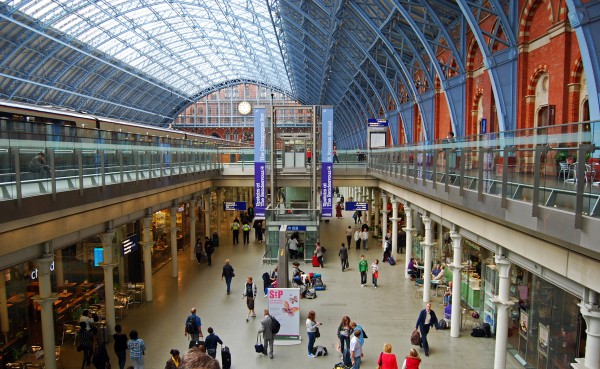
John Lewis is unusual in that it is owned by its employees and this ownership structure has proved successful. Despite a long history, John Lewis has moved with the times and this latest strategy is further evidence of that. In today’s world, convenience is everything and that is one of the key reasons behind its new St Pancras convenience store. It will allow customers to purchase items and then collect them on their way to and from work – click-and-commute, but it will also provide customers with an easily accessible place to buy electronic equipment and a range of household goods. The retail director, Andrew Murphy said:
In the battleground of convenience, we are announcing a new way for commuters to shop with us … Customers spend a huge amount of time commuting, and our research shows that making life easier and shopping more convenient is their top priority.
This appears to be the first of many smaller convenience stores, enabling John Lewis to gain a presence in seemingly impossible places, given the normal size of such Department stores. For many people, commuting to and from work often involves waiting at transport hubs – one of the big downsides to not driving. So it seems sensible for such an established retailer to take advantage of commuters waiting for their train or plane to arrive, who have time to kill. The following articles consider this new direction for an old retailer.
John Lewis to open St Pancras convenience store BBC News (2/5/14)
John Lewis thinks small with convenience store The Guardian, Zoe Wood (2/5/14)
John Lewis to trial convenience store click-and-collect format at St Pancras Retail Week, Ben Cooper (2/5/14)
 Why is click and collect proving so popular? BBC News, Phil Dorrell (2/5/14)
The rise of click and collect for online shoppers BBC News, Phil Dorrell (2/5/14)
Questions
- What are the advantages and disadvantages of the organisational and ownership structure of John Lewis?
- How would you classify this new strategy?
- How do you think this new strategy will benefit John Lewis in terms of its market share, revenue and profit?
- Is it likely that John Lewis will be able to target new customers with this new convenience store strategy?
- How important is a first-mover advantage when it comes to retail? Using game theory, can you create a game whereby there is clear first mover advantage to John Lewis?
 Profits are maximised where marginal cost equals marginal revenue. And in a perfectly competitive market, where price equals marginal revenue, profits are maximised where marginal cost equals price. But what if marginal cost equals zero? Should the competitive profit-maximising firm give the product away? Or is there simply no opportunity for making a profit when there is a high degree of competition?
This is the dilemma considered in the articles linked below. According to Jeremy Rifkin, what we are seeing is the development of technologies that have indeed pushed marginal cost to zero, or close to it, in a large number of sectors of the economy. For example, information can be distributed over the Internet at little or no cost, other than the time of the distributor who is often willing to do this freely in a spirit of sharing. What many people are becoming, says Rifkin, are ‘prosumers’: producing, sharing and consuming.
Over the past decade millions of consumers have become prosumers, producing and sharing music, videos, news, and knowledge at near-zero marginal cost and nearly for free, shrinking revenues in the music, newspaper and book-publishing industries.
What was once confined to a limited number of industries – music, photography, news, publishing and entertainment – is now spreading.
A new economic paradigm – the collaborative commons – has leaped onto the world stage as a powerful challenger to the capitalist market.
A growing legion of prosumers is producing and sharing information, not only knowledge, news and entertainment, but also renewable energy, 3D printed products and online college courses at near-zero marginal cost on the collaborative commons. They are even sharing cars, homes, clothes and tools, entirely bypassing the conventional capitalist market.
So is a collaborative commons a new paradigm that can replace capitalism in a large number of sectors? Are we gradually becoming sharers? And elsewhere, are we becoming swappers?
Articles
Capitalism is making way for the age of free The Guardian, Jeremy Rifkin (31/3/14)
The End of the Capitalist Era, and What Comes Next Huffington Post, Jeremy Rifkin (1/4/14)
Has the Post-Capitalist Economy Finally Arrived? Working Knowledge, James Heskett (2/4/14)
Questions
- In what aspects of your life are you a prosumer? Is this type of behaviour typical of what has always gone on in families and society?
- If marginal cost is zero, why may average cost be well above zero? Illustrate with a diagram.
- Could a monopolist make a profit if marginal cost was zero? Again, illustrate with a diagram.
- Is it desirable for there to be temporary monopoly profits for inventors of new products and services?
- What is meant by a ‘collaborative commons’? Do you participate in such a commons and, if so, how and why?
- Should tweets and Facebook posts be regarded as output?
- What is meant by an internet-of-things infrastructure?
- What are the incentives for authors to contribute to Wikipedia?
- Could marginal cost ever be zero for new physical products?
- Think about the things you buy in the supermarket. Could any of these be produced at zero marginal cost?
- How can capitalists make profits as ‘aggregators of network services and solutions’?
- Provide a critique of Rifkin’s arguments.
 The supermarket industry is a classic example of an oligopoly. A market dominated by a few large companies, which is highly competitive and requires the companies to think about the reactions of the other competitors whenever a decision is made. Throughout the credit crunch, price cutting was the order of the day, as the big four tried to maintain market share and not lose customers to the low cost Aldi and Lidl. Morrisons, however, has found itself in exactly that position and is now looking to restructure to return to profitability.
Morrisons is well known for its fresh food, but it seems that with incomes still being squeezed, even this is insufficient to keep its customers from looking for cheaper alternatives. Morrisons’ market share has been in decline and its profits or the last financial year have been non-existent. It’s been losing ground to its big competitor, Tesco and part of this is due to the fact that Morrisons was late to enter the ‘Tesco metro’ market. It remained dependent on its large supermarkets, whereas Tesco saw the opportunity to expand onto the highstreets, with smaller stores. It was also late arriving to the online shopping business and while it has now developed more sophisticated IT systems, it did lose significant ground to Tesco and its other key competitors.

Another problem is that Morrisons has found itself unable to compete with the low cost supermarkets. The prices on offer at Morrisons are certainly not low enough to compete with prices at Aldi and Lidl and Morrisons has seen many of its customers switch to these cheaper alternatives. But Morrisons is fighting back and has announced plans to cut prices on a huge range of products across its stores. The fresh food aspect of the business will still remain and the hope is that the fresh food combined with cheaper price tags will allow Morrisons to re-gain lost ground to Tesco and take back some of its lost customers from the low-cost alternatives. However, it’s not just Morrisons that has been losing customers to the budget retailers. Tesco, Sainsbury’s and Asda have all lost market share to Aldi and Lidl, but it is Morrisons that has fared the worst.
The latest news on Morrisons’ profits and overall performance, together with its promise of restructuring and price cuts worth £1 billion has caused uncertainty for shareholders and this has reduced the value of shares. However, Morrisons’ Directors have tried to restore confidence by purchasing shares themselves. With expectations of price wars breaking out, the other supermarkets have also seen significant declines in their share values, with a total of £2 billion being wiped off the value of their shares collectively. The consequences of Morrisons’ performance will certainly continue: customers are likely to benefit from lower prices in all of the big four supermarkets, but investors may lose out – at least in the short run. The impact on jobs is uncertain and will certainly depend on how investors and customers react in the coming weeks. The following articles consider this sector.
UK grocer Morrison warns on profit, threatens price war Reuters, James Davey (13/3/14)
Morrisons and the threat to mainstream supermarkets BBC News, Robert Peston (13/3/14)
Morrisons expected to sell property in response to profit drop The Guardian (9/3/14)
Morrisons restructuring sparks fears of new price war BBC News (13/3/14)
Morrisons’ dividend up while profit falls? It’s hard to believe The Guardian, Nils Pratley (13/3/14)
Morrisons boss talks tough as group slides into red The Scotsman, Scott Reid (13/3/14)
Morrisons plots price cuts after annual loss Sky News (13/3/14)
Morrisons’ declaration of £1bn price war with budget stores hammers Sainsbury and Tesco shares This is Money, Rupert Steiner (14/3/14)
Ocado on track for first profit in wake of Morrisons deal Independent, Simon Neville (14/4/14)
Questions
- What are the key characteristics of an oligopoly?
- To what extent do you think the supermarket sector is a good example of an oligopoly?
- Why is the characteristic of interdependence a key cause of the potential price war between the supermarkets?
- Why has Morrisons been affected so badly with the emergence of the budget retailers?
- By using the income an substitution effect, explain how the big four supermarkets have been affected by retailers, such as Aldi and Lidl.
- Using a demand and supply diagram, explain how the share prices of companies like Morrisons are determined. Which factors affect (a) the demand for and (b) the supply of shares?
- What do you think will happen to the number of jobs in Morrisons given the performance of the company and its future plans?
 Footballers in the English Premier League are some of the most highly paid workers in the world. With unique talents and skills and hence a limited supply of labour, together with an insatiable appetite from the British public for football, we would expect to see high wages and a market ripe for investment, with high returns on offer. But, is this case?
The article below is by Linda Yueh, the Chief Business Correspondent for BBC News, and she has looked into the football, asking why on earth buy a football club? Despite the success of the English Premier League in drawing fans, TV and commercial revenues, many teams find it difficult to break even and investing in a team is unlikely to yield much of a return (if any!). Yet, we still see successful businesspeople, especially from abroad, purchasing English football teams.
Many club owners have hugely profitable ventures in other markets and historically only invest their money when they see an opportunity for a high return. But, not in the case of football. A return is unlikely and yet they still invest. So, with positive returns unlikely, what is it about this market that attracts investors? The article by Linda Yueh considers this question.
Article
Why on earth buy a football club? BBC News, Linda Yueh (27/2/14)
Report
Annual Review of Football Finance – Highlights Deloitte, Sports Business Group June 2013
Questions
- How can the returns to investment be measured?
- How can a company’s operating profit be calculated?
- Using a labour market diagram, explain why footballers are paid such a high wage.
- Is it monetary or non-monetary factors that seem to explain why businessmen invest in football clubs?
- Why are English football clubs typically unprofitable? Should they be?
- Which factors can explain the growing financial inequality between clubs in the Premier League and in the divisions below? Is there an argument for government involvement to regulate football?
 We have had a minimum wage in the UK for well over a decade and one its key purposes was to boost the pay of the lowest paid workers and in doing so reduce the inequality gap. Rising inequality has been a concern for many countries across the world and not even the nations with the most comprehensive welfare states have been immune.