 In April 2015 the European Commission (EC) opened a formal investigation into the behaviour of Google in the market for smartphones and tablets. On the 20th April Google was sent a preliminary judgment (referred to formally as a Statement of Objections) in which it was accused of abusing its dominant market position. The European Commissioner argued that the case was similar to the famous and protracted investigation into the conduct of Microsoft.
In the early 2000s Microsoft had a dominant position in the market for desktop operating systems. It has been estimated that 97% of all computing devices at the time used Microsoft Windows. This market power attracted the attention of the EC who accused the company of using its dominance in the operating systems market to restrict competition in complementary markets for software such internet browsers and media players. This led to a complex legal battle between the two parties.
Windows is proprietory software and computer manufacturers have to pay Microsoft a licence fee to install it on their machines. Before the rulings by the EC, Microsoft could make a licence for Windows conditional on other Microsoft software such as Internet Explorer and Media Player being pre-installed. This is known as bundling and in this case the EC came to the conclusion that it restricted competition. The European Commissioner, Margrethe Vestager recently stated that
“If Microsoft’s media player was already there when you bought a PC, it would be hard to persuade people to even try an alternative, so innovators would be at a big disadvantage”
Microsoft lost most of its competition battles with the EC and had to pay a total of €2.2 billion in various fines. It was also forced to change its conduct. For example, the EC instructed Microsoft to provide its users with a choice of internet browsers.
The marketplace for operating systems has gone through some significant changes since the early 2000s. By 2016 Microsoft’s market share had fallen to 26 per cent. One of the major reasons for this decline has been the increasing popularity of smartphones and tablets.
Google’s Android operating system dominates the mobile market with a market share of over 80 per cent. However, the economics of the Android operating system are very different from those of Windows. Unlike Windows, Android is an example of ‘open-source software’. This means that, rather than having to obtain a licence fee, mobile handset or tablet manufacturers can freely install Android on their devices and are not obliged to pre-install other Google software – both Amazon and Nokia have done this. ,
Another major difference is that it is relatively straightforward for rival firms to develop software that can run on Android. Microsoft was accused of making it very difficult for rival software companies to develop products that would run smoothly on the Windows operating system.
It would appear far easier for rival firms to compete with Google than it ever was with Microsoft when it had a dominant market position. It might therefore seem surprising that the EC has accused Google of abusing its dominant market position.
Rather than any restrictions surrounding the licencing conditions for the operating system the EC’s objections to Google’s behaviour focus on its licencing conditions for other proprietary software products it provides. In particular, the EC has focused on the Google Play Store.

The pre-installation of the Google Play Store is seen as vital to the commercial success of any Android phone. Google Play Store was launched in 2012 and brought three previously separate services together – Android Market, Google Music and Google eBookstore. It is the official app store for all users of a device with an Android operating system. It has been argued that a mobile phone store would not stock an Android phone unless it had Google Play Store pre-installed because it is so highly valued by customers.
Therefore it is vital for Android smartphone and tablet manufacturers to obtain a licence for the Play Store. The conditions for obtaining a licence are outlined in the Mobile Application Distribution Agreement. This specifies that a number of other Google apps must also be pre-installed on the device in order for a licence to be granted for the Play Store. These apps include Gmail, Google Chrome, Google Drive, Google Hangouts, Google Maps, Google Search and YouTube. The manufacturer is free to install any other non-google apps.
The EC has specifically objected to the condition that Google Search has to be installed and set as the default search engine. It is concerned that this that will make it very difficult for other search services to compete with Google because (1) manufacturers will have limited incentives to pre-install any competing search engines and (2) consumers will have less incentive to download competing search engines.
The EC has also expressed concerns that the pre-installation of Google Chrome as the mobile browser will also have a negative impact on competition and innovation in this market.
Companies are given 12 weeks to respond after they have received a preliminary judgment. If they do not accept the objections, then the EC will take several months to come to a final ruling and suggest some appropriate remedies. In this case, the most likely remedy is the removal of the licence conditions for the Google Play Store. If Google appeals the ECs decision to the General Court of the EU, it could take years until a final judgment is made.
Murad Ahmed, the European Technology Correspondent at the Financial Times commented that
“One lesson Google might want to learn from Microsoft’s example is while it fights the EU watchdog it is not overtaken by a less distracted competitor.”
Articles
Europe v Google: how Android became a battleground The Guardian (20/4/16)
EU accuses Google of using Android to skew market against rivals The Guardian (20/4/16)
Google faces EU charge over Android ‘abuse of dominance’ BBC News (20/4/16)
Google hit with EU competition charges for ‘abusing’ dominant position with Android Independent (20/4/16)
Everything you need to know about Google and its EU battle The Telegraph (20/4/16)
Questions
- Draw a diagram to compare and contrast the price and quantity in a competitive market with a situation where a firm has market dominance. Clearly state any assumptions you have made in the analysis.
- What factors does the EC consider when judging if a firm has a dominant position in the market?
- This blog has focused on one aspect of Google’s behaviour/conduct that has raised concerns with the EC. What other elements of Google’s conduct has the European Commission objected to?
- Explain the difference between pure and mixed bundling.
- What impact does bundling have on consumer welfare?
 A number of famous Business Schools in the UK and US such as MIT Sloan, NYU Stern and Imperial College have launched new programmes in business analytics. These courses have been nicknamed ‘Big Data finishing school’. Why might qualifications in this area be highly valued by firms?
Employees who have the skills to collect and process Big Data might help firms to successfully implement a pricing strategy that approaches first-degree price discrimination.
First-degree price discrimination is where the seller of a product is able to charge each consumer the maximum price he or she is prepared to pay for each unit of the product. Successfully implementing this type of pricing strategy could enable a firm to make more revenue. It might also lead to an increase in economic efficiency. However, the strategy might be opposed on equity grounds.
In reality, perfect price discrimination is more of a theoretical benchmark than a viable pricing strategy. Discovering the maximum amount each of its customers is willing to pay is an impossible task for a firm.
It may be possible for some sellers to implement a person-specific pricing strategy that approaches first-degree price discrimination. Firms may not be able to charge each customer the maximum amount they are willing to pay but they may be able to charge different prices that reflect customers’ different valuations of the product.
 How could a firm go about predicting how much each of its customers is willing to pay? Traditionally smaller sellers might try to ‘size up’ a customer through individual observation and negotiation. The clothes people wear, the cars they drive and their ethnicity/nationality might indicate something about their income. Second-hand car dealers and stall-holders often haggle with customers in an attempt to personalise pricing. The starting point of these negotiations will often be influenced by the visual observations made by the seller.
The problem with this approach is that observation and negotiation is a time-consuming process. The extra costs involved might be greater than the extra revenue generated. This might be especially true for firms that sell a large volume of products. Just imagine how long it would take to shop at a supermarket if each customer had to haggle with a member of staff over each item in their supermarket trolley!! There is also the problem of designing compensation contracts for sales staff that provide appropriate incentives.
However the rise of e-commerce may lead to a very different trading environment. Whenever people use their smart phones, laptops and tablets to purchase goods, they are providing huge amounts of information (perhaps unconsciously) to the seller. This is known as Big Data. If this information can be effectively collected and processed then it could be used by the seller to predict different customers’ willingness to pay.
Some of this Big Data provides information similar to that observed by sellers in traditional off-line transactions. However, instead of visual clues observed by a salesperson, the firm is able to collect and process far greater quantities of information from the devices that people use.
For example, the Internet Protocol (IP) address could be used to identify the geographical location of the customer: i.e. do they live in a relatively affluent or socially deprived area? The operating system and browser might also indicate something about a buyer’s income and willingness to pay. The travel website, Orbitz, found that Apple users were 40 per cent more likely to book four or five star hotel rooms than customers who used Windows.
Perhaps the most controversial element to Big Data is the large amount of individual-level information that exists about the behaviour of customers. In particular, browsing histories can be used to find out (a) what types of goods people have viewed (b) how long they typically spend on-line and (c) their previous purchase history. This behavioural information might accurately predict price sensitivity and was never available in off-line transactions.
Interestingly, there has been very little evidence to date that firms are implementing personalised pricing on the internet. One possible explanation is that effective techniques to process the mass of available information have not been fully developed. This would help to explain the growth in business analytics courses offered by universities. PricewaterhouseCoopers recently announced its aim to recruit one thousand more data scientists over the next two years.
Another possible explanation is that firms fear a backlash from customers who are deeply opposed to this type of pricing. In a widely cited survey of consumers, 91% of the respondents believed that first-degree price discrimination was unfair.
Articles
Big data is coming for your purchase history – to charge you more money The Guardian, Anna Bernasek and DT Mongan (29/5/15)
Big data is an economic justice issue, not just a Privacy Problem The Huffington Post, Nathan Newman (16/5/15)
MIT’s $75,000 Big Data finishing school (and its many rivals) Financial Times, Adam Jones (20/3/16)
The Government’s consumer data watchdog New York Times, Natasha Singer (23/5/2015)
The economics of big data and differential pricing The Whitehouse blog, Jason Furman, Tim Simcoe (6/2/2015)
Questions
- Explain the difference between first- and third-degree price discrimination.
- Using an appropriate diagram, explain why perfect price discrimination might result in an economically more efficient outcome than uniform pricing.
- Draw a diagram to illustrate how a policy of first-degree price discrimination could lead to greater revenue but lower profits for a firm.
- Why would it be so difficult for a firm to discover the maximum amount each of its customers was willing to pay?
- Explain how the large amount of information on the individual behaviour of customers (so-called Big Data) could be used to predict differences in their willingness to pay.
- What factors might prevent a firm from successfully implementing a policy of personalised pricing?
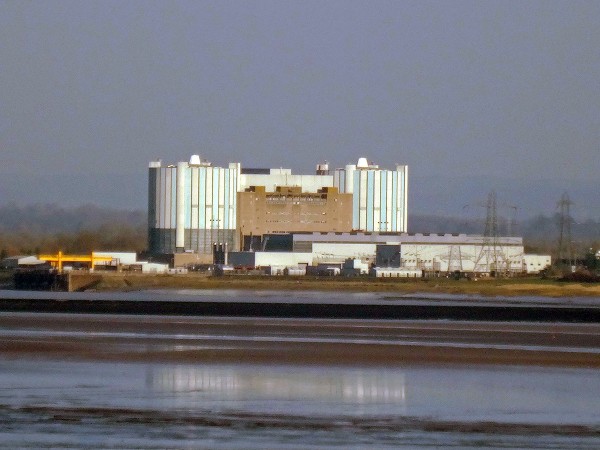
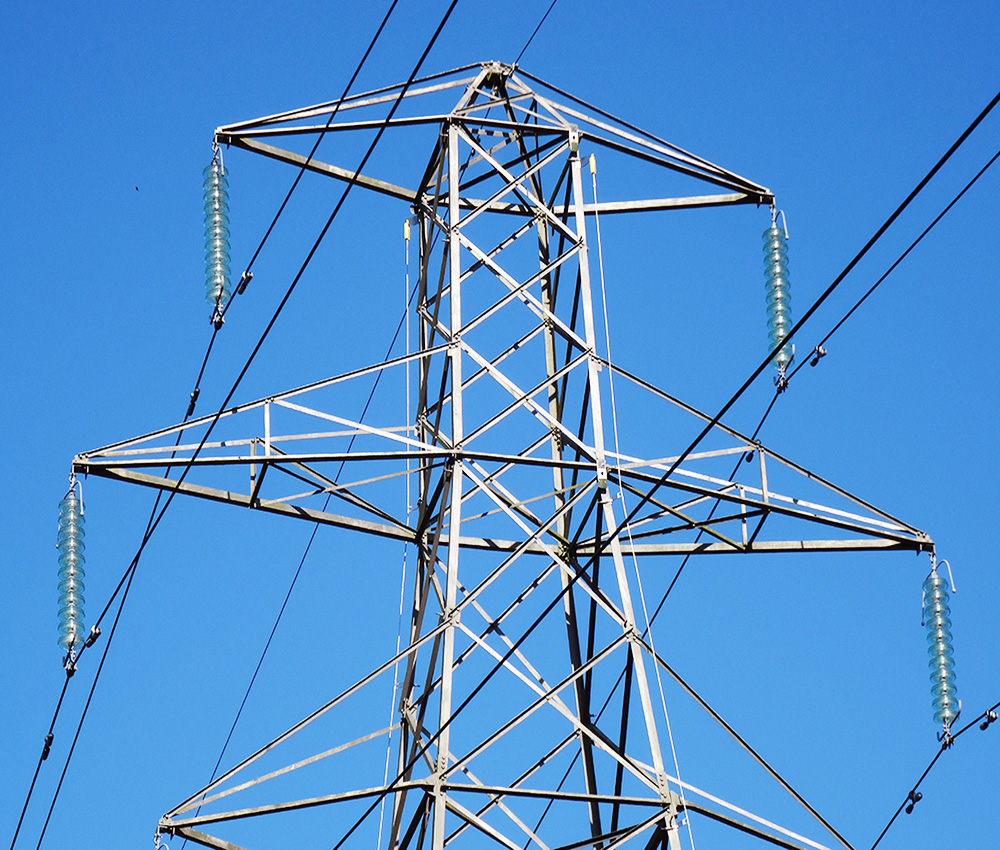 In June 2014, the Gas and Electricity Markets Authority (which governs the energy regulator, Ofgem) referred Great Britain’s retail and wholesale gas and electricity markets to the Competition and Markets Authority (CMA). The market is dominated by the ‘big six‘ energy companies (British Gas, EDF, E.ON, npower, Scottish Power and SSE) and Ofgem suspected that this oligopoly was distorting competition and leading to higher prices.
The CMA presented its report on 10 March 2016. It confirmed its preliminary findings of July and December 2015 “that there are features of the markets for the supply of energy in Great Britain that result in an adverse effect on competition”. It concludes that “the average customer could save over £300 by switching to a cheaper deal” and that “customers could have been paying about £1.7 billion a year more than they would in a competitive market”.
 It made various recommendations to address the problem. These include “requiring the largest suppliers to provide fuller information on their financial performance” and strengthening the role of Ofgem.
Also the CMA wants to encourage more people to switch to cheaper suppliers. At present, some 70% of the customers of the big six are on default standard variable tariffs, which are more expensive than other tariffs available. To address this problem, the CMA proposes the setting up of “an Ofgem-controlled database which will allow rival suppliers to contact domestic and microbusiness customers who have been stuck on their supplier’s default tariff for 3 years or more with better deals.”
Another area of concern for the CMA is the 4 million people (16% of customers) forced to have pre-payment meters. These tend to be customers with poor credit records, who also tend to be on low incomes. Such customers are paying more for their gas and electricity and yet have little opportunity to switch to cheaper alternatives.  For these customers the CMA proposed imposing transitional price controls from no later than April 2017 until 2020. These would cut typical bills by some £80 to £90 per year. In the meantime, the CMA would seek to remove “restrictions on the ability of new suppliers to compete for prepayment customers and reduce barriers such as debt issues that make it difficult for such customers to switch”.
Despite trying to address the problem of lack of competition, consumer inertia and barriers to entry, the CMA has been criticised for not going further. It has also been criticised for the method it has chosen to help consumers switch to cheaper alternative suppliers and tariffs. The articles below look at these criticisms.
Podcast
 Competition and Markets Authority Energy Report BBC You and Yours (10/3/16)
Articles
Millions could see cut in energy bills BBC News (10/3/16)
Shake-up of energy market could save customers millions, watchdog says The Telegraph, Jillian Ambrose (10/3/16)
UK watchdog divided over energy market reforms Financial Times, Kiran Stacey (10/3/16)
How the CMA energy inquiry affects you Which? (10/3/16)
UK watchdog accused of bowing to pressure from ‘big six’ energy suppliers The Guardian, Terry Macalister (10/3/16)
CMA documents
CMA sets out energy market changes CMA press release (10/3/16)
Energy Market Investigation: Summary of provisional remedies Competition and Markets Authority (10/3/16)
Questions
- Find out the market share of the ‘big six’ and whether this has changed over the past few years.
- What, if any, are the barriers to entry in the gas and electricity retail markets?
- Why are the big six able to charge customers some £300 per household more than would be the case if they were on the cheapest deal?
- What criticisms have been made of the CMA’s proposals?
- Discuss alternative proposals to those of the CMA for dealing with the problem of excessive prices of gas and electricity.
- Should Ofgem or another independent not-for-profit body be allowed to run its own price comparison and switching service? Would this be better than the CMA’s proposal for allowing competitors access to people’s energy usage after 3 years of being with the same company on its standard tariff and allowing them to contact these people?
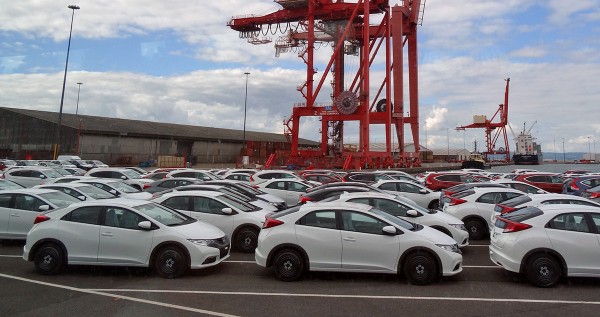 The European Commission has recently carried out a number of investigations into the various sectors of the industry that supplies parts to car manufacturers. Firms have been found guilty of engaging in anti-competitive practices in the supply of bearings, wire harnesses and the foam used in car seats. The latest completed case relates to firms that supply alternators and starters – both important components in a car engine.
On January 27th the European Commission announced that it was imposing fines on some Japanese manufacturing companies. Melco (Mitsubishi Electric), Hitachi and Denso were found guilty of participating in a cartel between September 2004 and February 2010 that restricted competition in the supply alternators and starters to car manufacturers.
The Commission gathered evidence showing that senior managers in the three businesses held discussions about how to implement various anti-competitive practices. These either took place on the phone or at meetings in offices/restaurants. In particular the firms agreed:
|
|
| • |
to co-ordinate their responses to tenders issued by car manufacturers. This involved them agreeing on the price each firm would bid. |
| • |
to exchange commercially sensitive information about pricing and marketing strategies. |
| • |
which of them would supply each car manufacturer with alternators and starters. |
These activities are in breach of Article 101 of the Treaty on the Functioning of the European Union (2009). The European Commissioner for Competition, Margrethe Vestager, stated that:
“Today’s decision sanctions three car part producers whose collusion affected component costs for a number of car manufacturers selling cars in Europe, and ultimately European consumers buying them. If European consumers are affected by a cartel, the Commission will investigate it even if the cartel meetings took place outside of Europe”
The fines imposed on the three businesses were as follows:
– Denso €0
– Hitachi €26 860 000
– Melco €110 929 000
How are these fines calculated? When calculating the size of the fine to impose on a firm the Commission takes into account a number of factors. These include:
|
|
| • |
the size of its annual sales affected by the anti-competitive activities. |
| • |
its market share. |
| • |
the geographical area of its sales. |
| • |
how long it had taken part in the cartel. |
| • |
whether it had previously been found guilty of engaging in anti-competitive practices. |
| • |
if it initiated the cartel in the first place i.e. was it the ring leader? |
In this particular case the size of the fine imposed on both Hitachi and Melco was increased because they had both previously been found guilty of breaking EU competition rules.
If a member of the cartel comes forward with information that helps the Commission with its investigation, a reduction in the size of the fine can be applied under a provision called a Leniency Notice (2006). Timing as well as the quality of the information provided influences the size of this reduction. For example, only the first firm to come forward with relevant information can receive a reduction of up to 100% i.e. obtain full immunity. This explains how Denso could be found guilty but not have to pay a fine. (This firm’s initial approach to the Commission actually triggered the investigation.) Any subsequent firms that come forward with information receive smaller fine reductions. Hitachi and Melco received reductions of 30% and 28% respectively.
If a firm accepts the Commission’s decision a further reduction of up to 10% can be applied. This is called a Settlement Notice (2008). All three firms were awarded the full 10% discount in this case.
The European Commission is currently investigating the behaviour of firms that supply car thermal systems, seatbelts and exhaust systems.
Articles
Car parts price-fixing fines for Hitachi and Mitsubishi Electric BBC News 27/01/16
EU antitrust regulators to fine Japanese car part makers: sources Tech News 26/01/16
Mitsubishi Electric and Hitachi get $150 EU cartel fine Bloomberg 27/01/16
EU fines Mitsubishi Electric, Hitachi for car part cartel Reuters 27/1/16
Questions
- What market conditions would make the formation of a cartel more likely?
- Draw a diagram to illustrate the impact of a profit maximising cartel agreement on the price, output and profit in an industry.
- Draw a diagram to illustrate the incentive that each firm has to cheat on an agreed cartel price and output.
- Why did the European Commission introduce Settlement Notices?
 Recent reports in the media have included headlines such as “Sexist surcharge” and “Pink premium?” Various claims have been made that women pay significantly higher prices for similar products than men.
The Times newspaper recently published the results from an investigation it carried out on the prices of hundreds of similar products that were marketed at both men and women. The study found that those products marketed at women cost 37% more on average than similar versions that were marketed at men. Examples included:
- Disposable razors: Tesco priced a packet of five of its own-brand disposable razors for women at £1. The key characteristic that targeted the razors at female customers was the colour – they were pink. For the same price, a packet targeted at male customers (i.e. they were blue) contained 10 disposable razors.
- Ballpoint pens: Staples priced a packet of five pastel-coloured Bic pens marketed ‘for her’ at £2.99. A packet of five Bic pens that were not in the ‘for her’ range (i.e. they had transparent barrels) were priced at £1.98.
- Scooters: Argos increased the price of a child’s scooter by £5 if it was pink instead of blue.
Maria Miller, the chair of the Women and Equalities Select Committee, stated that:
“It is unacceptable that women face higher costs for the same product just because they are targeted at women. Retailers have got to explain why they do this.”
A more detailed study carried out by New York City’s Department of Consumer Affairs was published in December 2015. Average prices were collected for 794 individual items across 5 different industries. The key findings were that products marketed at women were:
- 7 per cent more for toys and accessories
- 4 per cent more for children’s clothing
- 8 per cent more for adult clothing
- 13 per cent more for personal care products
- 8 per cent more for health products
Interestingly whereas the investigation in the UK only found examples of women paying higher prices than men, the New York study found some goods where the price was higher for men.
Reports in the media have claimed that this is clear evidence of price discrimination. Although this is likely to be true, it is impossible to say for certain without more detailed information on costs.
For example, when referring to the higher price for the razors marketed at women in the UK study, Richard Hyman, an analyst at RAH Advisory, stated that:
“the packaging will be different and they will sell fewer so it could be to do with the volume”
If economies of scale and the different costs of packaging can fully account for the difference in prices between the razors then it is not an example of price discrimination.
Articles
Questions
- Define price discrimination.
- Outline and explain the three different categories of price discrimination.
- Could a situation where a firms charges all of its customers the same price for a good or service ever be classed as an example of price discrimination?
- A firm with market power may still not be able to successfully implement a policy of price discrimination. Explain why.
- Under what circumstances could price discrimination improve allocative efficiency?
 In April 2015 the European Commission (EC) opened a formal investigation into the behaviour of Google in the market for smartphones and tablets. On the 20th April Google was sent a preliminary judgment (referred to formally as a Statement of Objections) in which it was accused of abusing its dominant market position. The European Commissioner argued that the case was similar to the famous and protracted investigation into the conduct of Microsoft.