 Let’s face it – no-one likes paying tax! After all, to see your monthly pay decline by £1000 through taxation and national insurance has got to hurt. Yet, taxation and national insurance contributions are essential sources of government revenue to finance benefits and public and merit goods.
However, with so much attention given to the UK’s ‘culture of dependency’, many people are increasingly angry with having to pay so much in taxation to see it being spent by the government on individuals who in some cases choose not to work and at the same time seeing other rich people paying so little in taxation. The increase in the top rate of tax received a lot of coverage. Although it did make the tax system more progressive, there were many concerns that it would lead to lower growth, a lack of innovation and enterprise and increased tax evasion and avoidance, as the super-rich were being hit with phenomenal tax bills. The post on the 50p income tax available here is worth looking at again to think about the effect that taxes have on incentives.
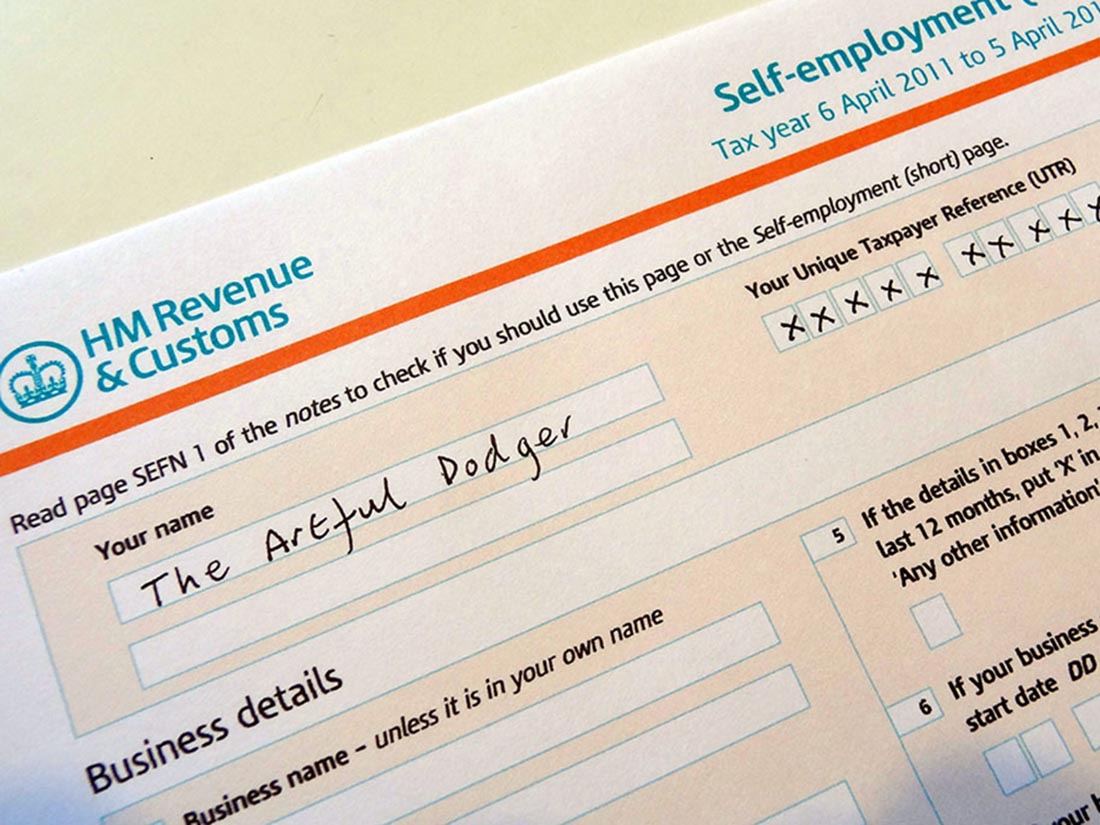
The issue of tax avoidance is by no means new, but with a large budget deficit in the UK, tax avoidance by the super-rich has become something that everyone has an opinion on. The average household has seen its income squeezed more and more, as the government continues its efforts to cut the deficit. The fact that the super rich are avoiding sometimes millions in taxation, while the average household struggles to pay even the basic rate of tax, creates a rather contentious issue. The Chief Secretary to the Treasury, Danny Alexander, has said that the basic rate of tax could be cut by 2p in the pound if tax avoidance came to an end. He commented to the BBC’s Sunday Politics Programme that:
‘We have to make sure that everybody, especially the rich and famous, are paying their fair share of tax…These sorts of schemes that save wealthy people potentially tens of millions of pounds in tax, they are paid for by everybody else… If we could narrow the tax gap in this country by a quarter we could reduce income tax for every basic rate payer by 2p in the pound.’
This would clearly have some very positive effects on some of the poorest people living in the UK.
There is a variety of tax avoidance schemes available and the one receiving the most attention at present is the Jersey-based K2 scheme, which Jimmy Carr and others are thought to be using. The Public Accounts Committee will be reporting on the problem of using private companies to pay salaries, as a means of avoiding income tax and national insurance contributions.
If tax avoidance could be stopped, or at least reduced, then not only could basic rate tax payers benefit, but it might go some way to cutting the budget deficit, giving the government more flexibility in stimulating the economy. According to HMRC, tax avoidance and evasion cost the economy some £42 billion – enough to pay off one-third of Britain’s budget deficit.
The following articles consider the problem of tax avoidance and then try answering the questions on the issue of taxation.
Five-point plan to curb tax cheating by big firms and super-rich Guardian (27/6/12)
Stop tax dodgers or there will be ‘riots on the streets’, warns top lawyer designing new anti-avoidance rules Mail Online, Julian Gavaghan (26/6/12)
Danny Alexander describes aggressive tax avoidance as ‘morally repugnant’ Guardian, Patrick Wintour (24/6/12)
Basic tax ‘could be cut by 2p’ if avoidance ended BBC News(24/6/12)
Danny Alexander says tax avoidance ‘adds 2p in every £1 to basic tax rate’ Independent, Oliver Wright (24/6/12)
Make tax returns public, urges peer The Press Association (28/6/12)
Tax officials reveal scale of probe Financial Times, Jim Pickard (27/6/12)
Questions
- What are the key principles of a good tax system?
- Explain how taxation affects the incentive to work?
- What is the difference between tax evasion and tax avoidance?
- Using indifference analysis, illustrate the effect of a cut in the basic rate of income tax. How does it affect the decision to work more or less? You should consider the income and substitution effects in your answer and which rate of tax (if any) an individual is paying.
- Why is tax avoidance of such concern at the moment? Think about the current state of the economy.
- What are taxes and national insurance contributions used to pay for?
- To what extent do you think tax avoidance is a natural consequence of any tax system?
 Recently there have been calls from business leaders and Conservative politicians to scrap the UK’s 50% income tax rate, which is paid on taxable incomes over £150,000. The 50% income tax rate is thus paid by top earners, who comprise around just 1% of taxpayers.
And yet the government receives about 30% of income tax revenue from this 1% – and this was before the introduction of the 50% rate in April 2010. (In fact, with the marginal national insurance rate of 2%, top earners are paying an effective marginal rate of 52%.)
One argument used by those who favour reducing the 50% rate is that the rich would pay more income tax, not less. There are four reasons given for this. The first is that people would be encouraged to work harder and/or seek promotion if they knew they would keep more of any rise in income. The second is that fewer rich people would be encouraged to leave the country or to relocate their businesses abroad. The third is that more people would be encouraged to work in or set up businesses in the UK. The fourth is that there would be less temptation to evade taxes by not declaring all income earned or to find clever ways of avoiding tax.
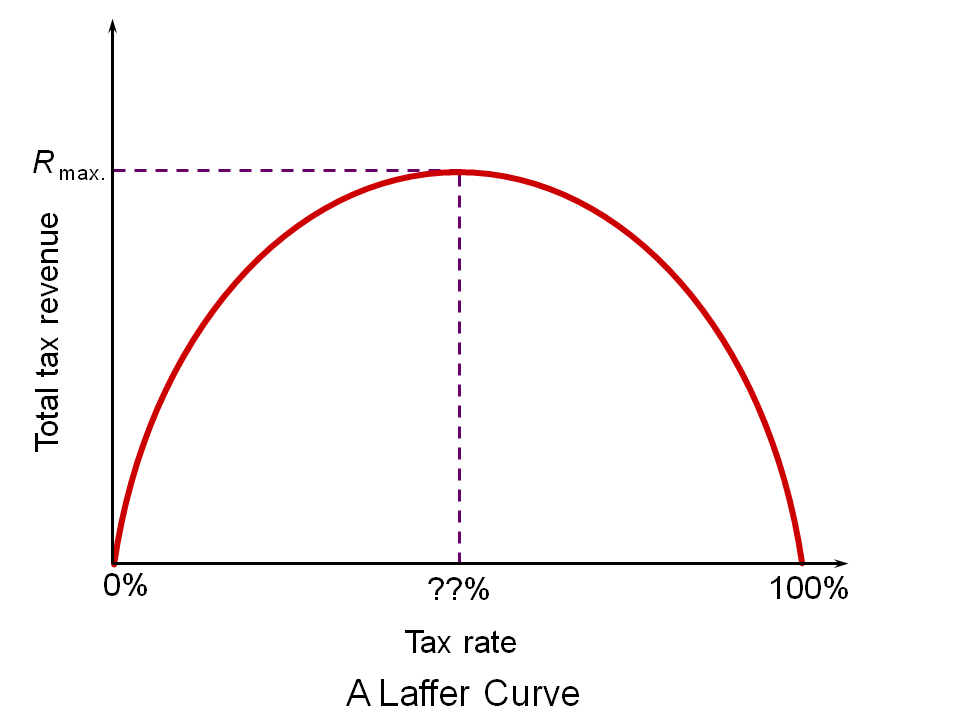
These arguments were put forward in the 1980s by Art Laffer, an adviser to President Reagan. His famous ‘Laffer curve’ (see Economics (8th edition) Box 10.3 or Economics (7th edition) Box 10.4) illustrated that tax revenues are maximised at a particular tax rate. The idea behind the Laffer curve is very simple. At a tax rate of 0%, tax revenue will be zero – but so too at a rate of 100%, since no-one would work if they had to pay all their income in taxes. As the tax rate rises from 0%, so tax revenue would rise. And so too, as the tax rate falls from 100%, the tax rate would rise. It follows that there will be some tax rate between 0% and 100% that maximises tax revenue.
Those arguing that a cut in the top rate of income tax would increase tax revenue are arguing that the 50% rate is beyond the peak of the Laffer curve. But this is an empirical issue. In other words, to assess the argument you would need to look at the evidence as, theoretically, the peak of the Laffer curve could be below or above 50%. Indeed, some argue that the peak is more likely to be at around 75%.
The following podcasts and articles consider the arguments. As you will see, the authors are not all agreed! Consider carefully their arguments and try to identify any flaws in their analysis.
Update
On 27 June 2012, Arthur Laffer appeared on the BBC Today Programme to discuss the Laffer curve and its implications for UK income tax policy. You can hear it from the link below
Podcasts
 Should the 50p tax rate be ditched? BBC Today Programme, John Redwood and Paul Johnson (3/3/12)
Arthur Laffer: Tax rate should ‘provide for growth’ BBC Today Programme (27/6/12)
Articles
Where’s the High Point on the Laffer Curve? And Where Are We? Business Insider, Angry bear Blog (3/3/12)
Tax cuts: we can have our cake and eat it The Telegraph, Ruth Porter (22/2/12)
‘Scrap the 50p tax rate’ say 500 UK entrepreneurs Management Today, Rebecca Burn-Callander (1/3/12)
The Laffer Curve Appears in the UK Forbes, Tim Worstall (22/2/12)
Memo to 50p tax trashers: Laffer Curve peaks at over 75 per cent Left Foot Forward, Alex Hern (1/3/12)
Questions
- Explain how a cut in income tax could lead to an increase in tax revenue.
- Distinguish between the income effect and the substitution effect of a tax cut. Which would have to be bigger if a tax cut were to increase tax revenue?
- If, in a given year, the top rate of tax were raised and tax revenue fell, would this prove that the economy was now past the peak of the Laffer curve?
- What would cause the Laffer curve to shift/change shape? To what extent could the government affect the shape of the Laffer curve?
- If the government retains the 50% top tax rate, what can it do to increase the revenue earned from people paying the top rate?
- What other objectives might the government have for having a high marginal income tax rate on top earners?
- Investigate the marginal income tax and national insurance (social protection) rates in other countries. How progressive are UK income taxes compared with those in other countries?
 The pensions crisis is one area of social policy that has been the focus of attention for some years. With an ageing population, more people entering higher education and a rather substantial deficit facing the government, pension reform has been high on the agenda and not just in the UK.
A number of factors have contributed towards the so-called pensions crisis: rising life expectancy; the ‘baby-boomers’ retiring; more people staying in education for longer; an ageing population. All of these have led to a dependency ratio that is becoming worse – fewer workers to support every pensioner. Over the past few years, strikes have taken place in protest to government pension plans, especially for public sector workers, who see the proposals as making them worse off once they retire. Doctors are the latest group to strike in protest over having to work longer before retiring and having to pay higher national insurance contributions.
So, are the doctors justified in their protests? They are currently on a final-salary pension scheme, which is a very generous scheme, although it is being phased out and replaced with a career average scheme, which will have big implications for doctors’ pensions. Furthermore, there was an overhaul of their pensions in 2008, thus the criticism that further changes are now being made to make them even worse off. Doctors do pay higher national insurance contributions than other occupations, such as teachers and they will naturally receive a higher pension than other NHS workers, such as nurses simply because they earn more. However, this does have big implications for their future.
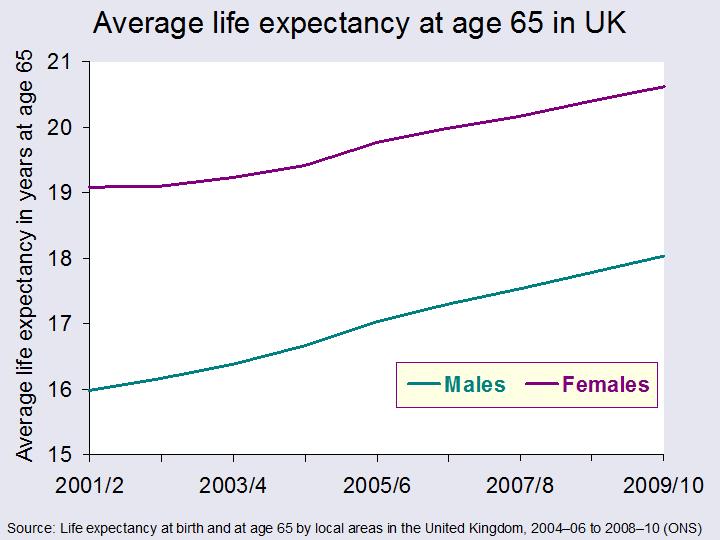 Inequality is a big issue across the UK and this doesn’t only refer to income. Those earning higher salaries are more likely to live longer than the average worker. So, we see life expectancy inequality as well. The consequence of this is that once an individual retires at say 60, if your life expectancy is 85, then you have 25 years to live in retirement receiving whatever pension you have accumulated throughout your working life. If, however, your life expectancy is only 75, perhaps because of your background, your occupation, your health, then you will only spend 15 years in retirement. The person that lives longer therefore receives significantly more in pension payments and if this differing life expectancy is related to your occupation and thus your salary, then inequality of income clearly has some very wide implications for pension schemes and rates of contribution.
There are, of course, wider effects of any industrial action by doctors. Whilst some may agree with their view that this further pension reform is unfair, if any strike action does take place there will be wider economic effects. Those in need of treatment may have to delay it and if that means more people taking sick days, then the economic cost to the economy could be significant. The following articles consider the latest controversy in public-sector pensions.
Report
Independent Public Service Pensions Commission Final Report HM Treasury, Pensions Commission March 2011
Articles
Doctors’ strike: how the cost of NHS pensions soared Telegraph, Matthew Holehouset (21/6/12)
Are doctors’ pensions too generous Guardian, Hillary Osborne and Jill Insley (21/6/12)
Lansley: ‘Doctors’ pension scheme is generous’ BBC News (21/6/12)
Doctors get a nasty taste of Gordon Brown’s pension medicine Telegraph, Philip Johnston (18/6/12)
Doctors wrong on pensions, says Hutton Financial Times, Sarah Neville and Norma Cohen (19/6/12)
BMA ‘Inherent unfairness’ in doctor pensions BBC Radio 4 Today (21/6/12)
Reluctant move against intransigent government Scotsman, Dr Brian Keighley (21/6/12)
Will you be affected by the doctors’ strikes? BBC News (15/6/12)
Questions
- Explain the main factors that are contributing towards the so-called pensions crisis. In each case, is it a demand-side or supply-side issue?
- What are the main proposals to tackling the pensions crisis (not just for Doctors)?
- What is the difference between a career average and a final salary pension scheme? Which is better for (a) those on a higher salary at the end of their career and (b) those who are on a relatively lower salary at the end of their career? Make sure you explain your thinking!!
- What are the arguments both for and against this new round of pension reforms for doctors? Do you think the doctors are justified in taking strike action?
- What are the wider implications of industrial action? Think about the effect on individuals and on the economic performance of the wider economy.
- To what extent is it equitable that public sector workers should pay more in contributions and retire at the same age as the state pension age?
- How might higher contributions affect the incentive to work? What could we see happen to labour supply? Think about both income and substitution effects.
 Here’s a question that goes to the heart of economics and the social sciences generally: how desirable is the market system?
Our lives are dominated by markets. Whether in working or consuming, we operate in a market economy in which money is exchanged for goods or services. But also financial and product markets determine much of the structure of society, where most things seem to have a price.
But whilst, as a positive statement, we can say that money and markets are all around us, does that make them desirable? Markets provide signals and incentives; but are the signals the right ones? What are the incentives and how do we respond to them? And are these responses optimal?
 You will probably have studied various ways in which markets fail to provide the optimal allocation of resources. But what are the limits of markets as a mechanism for social choices? And is there some more fundamental issue about the morality of a society that is organised around markets?
These are questions considered in the following podcast. It is an episode from BBC Radio 4’s Start the Week programme, hosted by Andrew Marr, with guests Michael Sandel, Diane Coyle and Grigory Yavlinksy. Here are the programme details:
Andrew Marr discusses the relationship between markets and morals with the political philosopher Michael Sandel. In his latest book, What Money Can’t Buy, Sandel questions the dominance of the financial markets in our daily lives, in which everything has a price. But the economist Diane Coyle stands up for her much maligned profession, and points to the many benefits of a market economy. The Russian economist Grigory Yavlinksy argues against viewing the world of money as separate from culture and society: he believes the financial crisis was merely a symptom of a wider moral collapse, and that it is time to examine the way we live.
(Links to the three contributors: Michael Sandel, Diane Coyle (see also), Grigory Yavlinsky.)
Podcast
Michael Sandel on Money and Morality BBC Start the Week programme (21/5/12)
Videos and articles
For a range of videos and articles on the morality of capitalism, see the previous post at:
We need to talk about Capitalism (28/1/12)
Questions
- What crises are there in current capitalism?
- What, according to Michael Sandel, is the difference between a market economy and a market society?
- Is the market society a relatively new phenomenon, or does it go back hundreds of years?
- To what extent is the greed expressed through markets and encouraged by markets affecting/infecting society and human relationships generally?
- What is the role of morality and trust in determining the desirability of market relationships?
- To what extent does a market economy allow people, rich and poor, to live separately from each other and not interact as joint members of society?
- What are the value systems promoted by marketisation? Should certain aspects of human life be outside these value systems?
- To what extent is the crisis of capitalism a crisis of economics?
- What policy alternatives are there for rebalancing society?
- What is the role of economists in advising on policy alternatives?
 Calls for a simplified tax and benefit system have been ongoing and many see the Coalition’s plans for a Universal Credit as a step in the right direction. However, a second suggestion set out in a report by lobbying groups is to introduce a single rate of income tax at 30%. The argument is that it will simplify the system, help lower income earners and boost growth.
As well as the introduction of a single rate of income tax, The 2020 Tax Commission’s Report also suggests an increase in the personal allowance to £10,000; scrapping National Insurance Contributions, stamp duty, inheritance tax and air passenger duty, as well as cutting fuel duty by 5p. For the typical tax payer, it may sound great – the difference between your gross and your net pay would narrow, but the wider consequences must be considered. Although a single rate of income tax would undoubtedly simplify the system, the impact on government finances must be considered. The commission predicts that overall borrowing would fall by £35bn after 15 years, but that the national deficit would increase by £49.1bn in the first year. Perhaps not an ideal solution given the current state of the national deficit!
The report does contain some radical change, but the idea of simplification is well-recognised as a necessary principle of any tax system. As the Chairman of the Commission, Allister Heath said:
It is time for Britain to make a vital choice between tweaking the status quo and letting our economy continue to be crippled by complex and punitive taxes, and drastically changing course with a radical but realistic plan for a tax system fit for the 21st century.
The 2020 Tax Commission has set out that plan and would ensure that income is taxed once at a single, much more reasonable rate. It could create the conditions to establish the UK as a global trading hub, generating renewed prosperity for all those who live and work here.
The current system is complex and many people end up paying an extremely high rate of tax, once everything has been paid. The Guardian article below gives a nice illustration. “If you earn income from shares, first corporation tax is taken out of the profits. Then you pay taxes on the dividends. Then because those profits drive up the share price you pay capital gains tax as well.” With a simpler and fairer tax system, the Commission argues that it will boost the competitiveness of the UK economy and help boost its struggling growth rate. How many, if any, of these proposals will be incorporated into the government’s plans is anybody’s guess, but it definitely presents an interesting solution and problem.
Report
The Single Income Tax The 2020 Tax Commission (May 2012)
Articles
Why it’s time for a single income tax Guardian, Matthew Elliott (21/5/12)
Business backs income tax rate of 30% Financial Times, Martin Sandbu (21/5/12)
Calls for single 30% income tax rate BBC News (21/5/12)
Single 30% tax rate ‘essential’ for growth Sky News (21/5/12)
Osborne urged to introduce 30pc income tax for all The Telegraph, Tim Ross (20/5/12)
Tax shake-up urged to empower consumers and kickstart growth Independent, Russell Lynch (21/5/12)
The Tax Reform Britain needs Wall Street Journal, Matthew Sinclair (20/5/12)
Questions
- What are the key principles of a tax system?
- Explain why simplicity is so important when reforming a tax system. How can it affect the incentive to work?
- Would a 30% single rate of income tax be equitable?
- If the reforms set out in the report were to go ahead, what do you think would be the impact on goods and services provided by the government, such as the NHS, education, roads?
- Using indifference analysis, illustrate the effect of a cut in the basic rate of income tax. How does it affect the decision to work more or less? You should consider the income and substitution effects in your answer.
- Why does the report argue that the reforms they suggest would help boost growth?
- How might the proposals affect government finances in both the short and long term?