The precious metals roller coaster
 Precious metals, such as gold, silver and platinum, are seen as safe havens by investors in uncertain times. With the on-off nature of Donald Trump’s tariffs, with ongoing wars, such as the war in Ukraine, and with threats of US action in Iran, with inflation slow to fall and pressure by the Trump administration on the Federal Reserve to make precipitant cuts in interest rates, investors have flocked to precious metals.
Precious metals peaked in late January 2026. Compared with just four months earlier, gold was up by 48%, platinum by 76% and silver by a massive 162%. Silver and platinum were also boosted by their industrial uses. Silver has excellent conductive properties and is used for electronics, AI, solar energy (photovoltaic cells), chemical catalysts and medical equipment. Over 50% of its consumption is for industrial purposes. Platinum is used as a catalyst in catalytic converters to reduce exhaust emissions, in medical devices, chemical processing, oil refining, electronics and glass manufacturing.
The rise was fuelled by speculation, which gathered momentum in December and January. But then the prices of all three metals fell dramatically on Friday 30 January and a bit more on 2 February. Despite a moderate bounce back on 3 February, the prices then fell again and by the end of 5 February, gold had fallen by 15%, platinum by 30% and silver by a massive 42% from the peak.
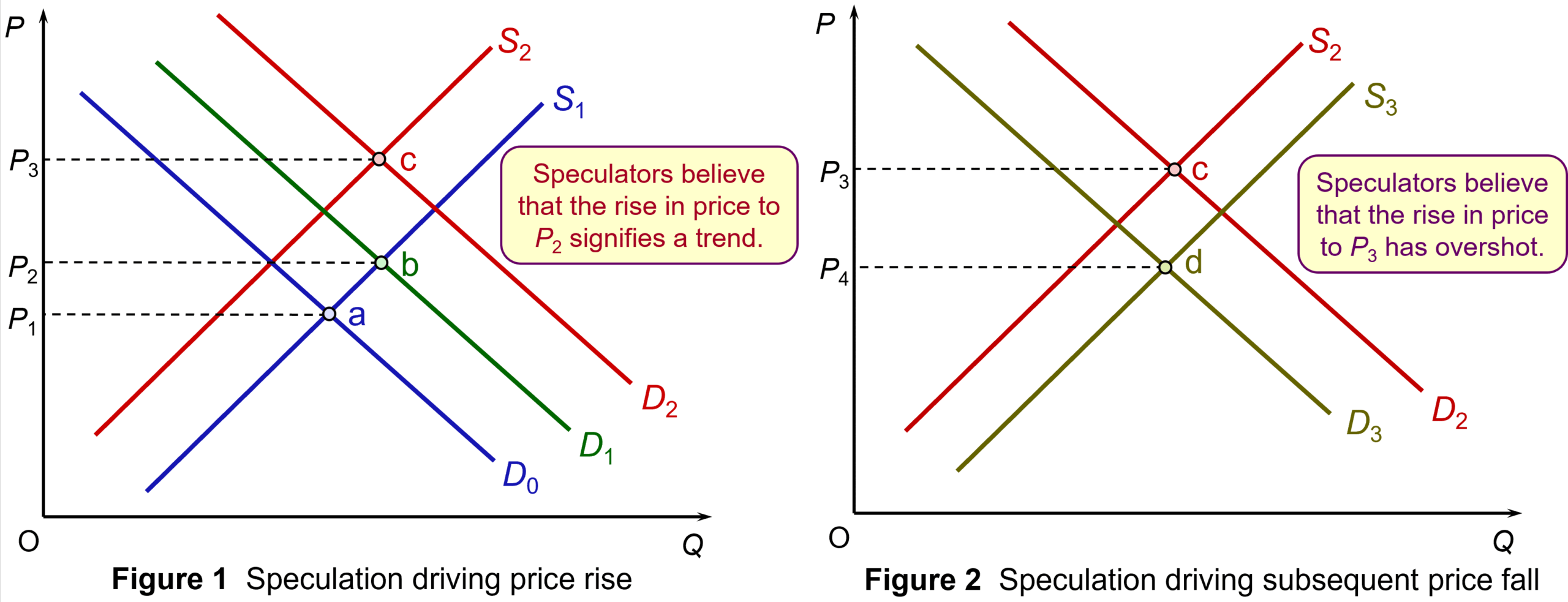
Figure 1 illustrates the effect of speculation on the rise in price of a precious metal, such as silver. Assume that demand rises from D0 to D1 for the reasons given above. Equilibrium moves from point a to point b and the price rises from P1 to P2. Seeing the price rising, holders of the metal wait until the price rises further before selling. Supply shifts from S1 to S2. Potential purchasers of the metal, anticipating a further rise in price, buy now before the price does rise. Demand shifts from D1 to D2. As a result, equilibrium moves from point b to point c and price rises to P3.
Figure 2 illustrates the effect of speculation on the subsequent fall in prices triggered by a belief that price will fall. Speculative selling shifts the supply curve from S2 to S3. Potential demanders hold back and the demand curve shifts from D2 to D3. Equilibrium moves to point d and price falls from P3 to P4. (Click here for a PowerPoint of the two figures.)
But why did prices fall so dramatically? The first reason was that analysts were beginning to argue that the exuberance of investors had led the price of all three metals to overshoot the fundamental balance of supply and demand. Once a tipping point arrived, people sold quickly to lock in the gains they had made over previous weeks. This profit taking caused prices to plummet as speculation of further falls drove prices lower.
 So what was the tipping point? This was the appointment by Donald Trump of Kevin Warsh as the new Chair of the Federal Reserve to take over from Jerome Powell when his tenure comes to an end in May this year.
It was expected that Trump would appoint someone much more willing to cut interest rates and this worried investors, who feared that inflation would rise again. This uncertainty drove demand for precious metals, which are seen as a safe haven. But Kevin Walsh is viewed as hawkish on monetary policy and less likely to slash interest rates than other possible choices for Chair. This triggered the fall in precious metal prices.
But the main factors that drove the demand for the metals still exist. There is still uncertainty, still an increased demand from central banks for gold, still a growing demand for silver and platinum for industrial uses. The next day, 3 February, it seemed that the prices of all three metals had over-corrected. Investors started buying again at the lower prices and consequently prices rose again – once more fuelled by speculation. Gold rose by 6.1%, platinum by 7.9% and silver by 11.6%.
Articles
- What’s going on with the price of gold?
- Gold And Silver Price Plummets Don’t Worry Analysts—Here’s Why
- Gold and silver prices seesaw as FTSE 100 hits record high
- Silver and gold extend losses after last week’s historic plunge
- Why gold and silver prices suddenly collapsed
- Gold and silver prices collapse: Should you be buying or selling?
- The rise and fall (and rise again) of gold prices – what’s going on?
- Gold and silver prices bounce back from recent selloff
- Gold and Silver Rebound Sharply After Historic Two-Day Selloff
- Silver prices crash 45% from peak — more than twice the fall in gold. Should investors be worried?
BBC News, Nick Edser and Faarea Masud (2/2/26)
Forbes, Conor Murray (2/2/26)
The Guardian, Lauren Almeida (2/2/26)
CNBC, Lee Ying Shan (2/2/26)
Deutsche Welle (3/2/26)
Independent, Karl Matchett (2/2/26)
The Conversation, David McMillan (3/2/26)
Sharecast News, Michele Maatouk (3/2/26)
CoinCentral, Trader Edge (3/2/26)
Mint, A Ksheerasagar (6/2/26)
Data
- Commodities
- Gold
- Silver
- Platinum
- Silver Price in USD per Troy Ounce for Last 3 Months
Trading Economics
Trading Economics
Trading Economics
Trading Economics
BullionByPost
Questions
- What has happened to the price of silver since this blog was written? Use a demand and supply diagram to illustrate this.
- Identify the factors that affect the demand for and supply of (a) silver; (b) gold.
- What determines the elasticity of supply of silver (a) in total; (b) to the market?
- Choose another commodity other than the three metals considered in this blog. Find out what has happened to their prices over the past 12 months and explain why these price movements have occurred.