 On 15 March 2019, the ‘Organ Donation (Deemed Consent) Bill’ was passed into law. (See the blog, Organ donations – Changing the default option vs active choice.) The government has just announced that this will come into force on 20 May this year. Under the scheme, ‘adults in England will be considered potential donors unless they chose to opt out or are excluded. The act is known as Max and Keira’s law in honour of a boy who received a heart transplant and the girl who donated it.’
This change from an ‘opt-in’ to an ‘opt-out’ system follows a similar a move in Wales in 2015. Since then, Wales has seen a significant increase in potential donors, with the consent rate rising from 58% to 77%. A similar move in Scotland will come into force in the autumn of this year. The government expects there to be an additional 700 transplant operations per year available for transplant by 2023.
These moves from an opt-in to an opt-out system are consistent with ‘nudge theory’. This maintains that positive reinforcement or making a decision easy for people can persuade them to make a particular choice. They are ‘nudged’ into so doing.
Opting out and nudge theory
In the case of having to opt in to a scheme such as organ donation, people have to make the decision to take part. Many, as a result, do not, partly because they never seem to find the time to do so, even though they might quite like to. With the busy lives people lead, it’s too easy to think, ‘Yes, I’ll do that some time’, but never actually get round to doing it: i.e. they have present bias and hence behave in a time-inconsistent manner.
 With an opt-out system, people are automatically signed up to the scheme, but can freely choose to opt out. In the case of the new organ donor schemes in the UK, it is/will be assumed that organs from people killed in an accident who had not opted out could be used for transplants. If you do not want your organs to be used, you have to notify that you are opting out.
It could be the same with charitable giving. Some firms add a small charitable contribution to the price of their products (e.g. airline tickets or utility bills), unless people opt out.
Similarly, under UK pension arrangements introduced from 2012, firms automatically deduct pension contributions from employees’ wages unless they opt out of the scheme. Opt-out pension schemes like this retain between 90 and 95 per cent of employees. Opt-in pension schemes, by contrast, have much lower participation rates of around 60 per cent, even though they are otherwise identical.
This type of ‘nudging’ can improve the welfare of those who make systematic mistakes (i.e. operate in a time-inconsistent manner), while imposing very limited harm on those who act in a time-consistent manner. If it is in the interests of someone to opt out of the scheme, they can easily do so. Policies such as these are an example of what behavioural economists call ‘soft paternalism’.
Articles
- New opt-out model for organ donation to come into force in May
Pulse, Helen Quinn (25/2/20)
- Max and Keira’s law: New ‘opt-out’ organ donor system to be introduced on 20 May, government plans
Sky News, Greg Heffer (25/2/20)
- Adults to be automatically enrolled as organ donors under new law
Independent, Peter Stubley (26/2/20)
- Max and Keira’s law: New ‘opt-out’ organ donor system that presumes all adults agree to donate when they die will be introduced in May
Mail Online, Ben Spencer (25/2/20)
- Opt-out organ donation law: Your questions answered
New Scientist, Clare Wilson (27/2/20)
- Should organ donors be paid? The heavy toll of US kidney shortage
BBC News, US and Canada, Henri Astier (18/2/20)
- What Spain can teach Scotland about organ donation
BBC News, Scotland, Susie Forrest (18/10/19)
- A little nudge goes a long way in increasing organ donor registrations
The Conversation, Nicole Robitaille (2/5/19)
- How nudge theory is ageing well
Financial Times, Julian Baggini (19/4/19)
- Richard Thaler: ‘If you want people to do something, make it easy’
Financial Times, Tim Harford (2/8/19)
- Why a nudge from the state beats a slap
The Observer, Richard Reeves (30/7/08)
Official Information
Questions
- Why do opt-out schemes have a higher take up than opt-in ones? Would this apply if people behaved in a time-consistent manner?
- What is present bias? How does it differ from simple impatience? Explain how present bias might help to explain the impact of changing the default option.
- What are the arguments for and against nudging people to make decisions that benefit them or are in the social interest?
- Give some example of nudges that are used in public policy or would be a good idea to use. Consider how effective they are likely to be. (You might refer to the work of the Behavioural Insights Team.)
- What are the possible drawbacks of presumed consent in organ donation?
- What are the arguments for and against paying live people to donate organs, such as a kidney?
- How might people be encouraged to behave in the right way during an epidemic, such as corona virus?
- To what extent was nudge theory used during the Brexit referendum campaign and in the two subsequent general elections?
 The USA has seen many horizontal mergers in recent years. This has turned industries that were once relatively competitive into oligopolies, resulting in lower output and higher prices for consumers.
In Europe, by contrast, many markets are becoming more competitive. The result is that in industries such as mobile phone services, airlines and broadband provision, prices are considerably lower in most European countries than in the USA. As the French economist, Thomas Philippon, states in a Guardian article:
When I landed in Boston in 1999, the United States was the land of free markets. Many goods and services were cheaper than in Europe. Twenty years later, American free markets are becoming a myth.
According to Asher Schechter (see linked article below):
Nearly every American industry has experienced an increase in concentration in the last two decades, to the point where … sectors dominated by two or three firms are not the exception, but the rule.
The result has been an increase in deadweight loss, which, according to research by Bruno Pelligrino, now amounts to some 13.3 per cent of total potential surplus.
Philippon in his research estimates that monopolies and oligopolies “cost the median American household about $300 a month” and  deprive “American workers of about $1.25tn of labour income every year”.
One industry considered by the final two linked articles below is housebuilding. Since the US housing and financial crash of 2007–8 many US housebuilders have gone out of business. This has meant that the surviving companies have greater market power. According to Andrew van Dam in the linked Washington Post article below:
They have since built on that advantage, consolidating until many markets are controlled by just a few builders. Their power has exacerbated the country’s affordable-housing crisis, some economists say.
According to research by Luis Quintero and Jacob Cosman:
… this dwindling competition has cost the country approximately 150 000 additional homes a year – all else being equal. With fewer competitors, builders are under less pressure to beat out rival projects, and can time their efforts so that they produce fewer homes while charging higher prices.
Thanks to lobbying of regulators and politicians by businesses and various unfair, but just about legal, practices to exclude rivals, competition policy in the USA has been weak.
In the EU, by contrast, the competition authorities have been more active and tougher. For example, in the airline industry, EU regulators have “encouraged the entry of low-cost competitors by making sure they could get access to takeoff and landing slots.” Politicians from individual EU countries have generally favoured tough EU-wide competition policy to prevent companies from other member states getting an unfair advantage over their own country’s companies.
Articles
Questions
- What are the possible advantages and disadvantages of oligopoly compared with markets with many competitors?
- How can concentration in an industry be measured?
- Why have US markets become more concentrated?
- Why have markets in the EU generally become more competitive?
- Find out what has happened to levels of concentration in the UK housebuilding market.
- What are the possible effects of Brexit on concentration and competition policy in the UK?
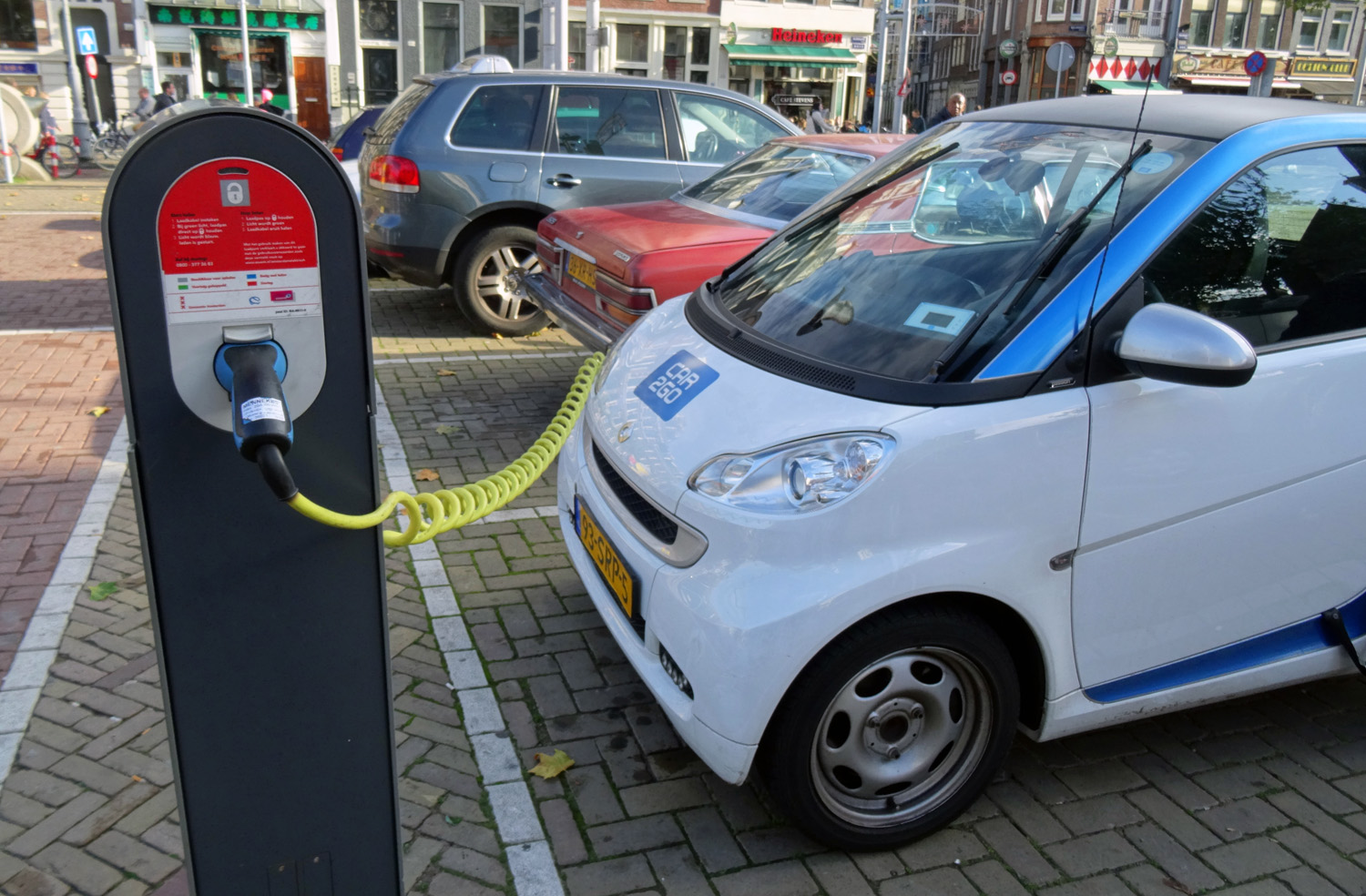 When did you last think about buying a new car? If not recently, then you may be in for a surprise next time you shop around for car deals. First, you will realise that the range of hybrid cars (i.e. cars that combine conventional combustion and electric engines) has widened significantly. The days when you only had a choice of Toyota Prius and another two or three hybrids are long gone! A quick search on the web returned 10 different models (although five of them belong to the Toyota Prius family), including Chevrolet Malibu, VW Jetta and Ford Fusion. And these are only the cars that are currently available in the UK market.
But the biggest surprise of all may be the number of purely (plug-) electric cars that are available to UK buyers these days. The table below provides a summary of total registrations of light-duty plug-electric cars by model in the UK, between 2010 and June 2016.
Source: Wikipedia, “Plug-in electric vehicles in the United Kingdom”
In 2010 there were nly 138 electric vehicles in total registered in the UK. They were indeed an unusual sight at that time – and good luck to you if you had one and you happened to run out of power in the middle of a journey. In 2011 this (small) number increased sevenfold – an increase that was driven mostly by the successful introduction of Nissan Leaf (635 electric Nissans were registered in the UK that year). And since then the number of electric vehicles registered in the country has increased with spectacular speed, at an average rate of 252% per year.
There is clearly strong interest in electric vehicles – an interest likely to increase as their price becomes more competitive. However, they are still very expensive items to buy, especially when compared with their conventional fuel-engine counterparts. What makes electric cars expensive? One thing is the cost of purchasing and maintaining a battery that can deliver a reasonable range. But the cost of batteries is falling, as more and more companies realise the potential of this new market and join the R&D race. As mentioned in a special report that was published recently in the FT:
The cost of lithium-ion batteries has fallen by 75 per cent over the past eight years, measured per kilowatt hour of output. Every time battery production doubles, costs fall by another 5 per cent to 8 per cent, according to analysts at Wood Mackenzie.
There is no doubt that more research will result in more efficient batteries, and will increase the interest in electric cars not only by consumers but also by producers, who already see the opportunity of this new global market.  Does this mean that prices will necessarily fall further? You might think so, but then you have to take into consideration the availability and cost of mining further raw materials to make these batteries (such as cobalt, which is one of the materials used in the making of lithium-ion batteries and nearly half of which is currently sourced from the Democratic Republic of Congo). This may lead to bottlenecks in the production of new battery units. In which case, the price of batteries (and, by extension, the price of electric cars) may not fall much further until some new innovation happens that changes either the material or its efficiency.
The good news is that a lot of researchers are currently looking into these questions, and innovation will do what it always does: give solutions to problems that previously appeared insurmountable. They had better be fast because, according to estimates by Wood Mackenzie, the number of electric vehicles globally is expected to rise by over 50 times – from 2 million (in 2017) to over 125 million by 2035.
How many economists does it take to charge an electric car? I guess we are going to find out!
Articles
Information
Questions
- Using a demand and supply diagram, explain the relationship between the price of a battery and the market (equilibrium) price of a plug-in electric vehicle.
- List all non-price factors that influence demand for plug-in electric vehicles. Briefly explain each.
- Should the government subsidise the development and production of electric car batteries? Explain the advantages and disadvantages of such intervention and take a position.
 We are coming into the big spending season, with Black Friday, Cyber Monday, the run-up to Christmas and then the winter sales. So will we all be rational maximisers and weigh up the utility we expect to receive from items against the price we pay (plus any other cost, such as time spent searching/shopping)? Or will we use a set of heuristics which make life easier and that we have found to be useful in helping us choose – heuristics such as buying things we’ve liked before, or going for things on special offer?
The answer is that we do probably use a set of heuristics, at least for many items. And don’t the retailers and the marketing firms they employ know this!
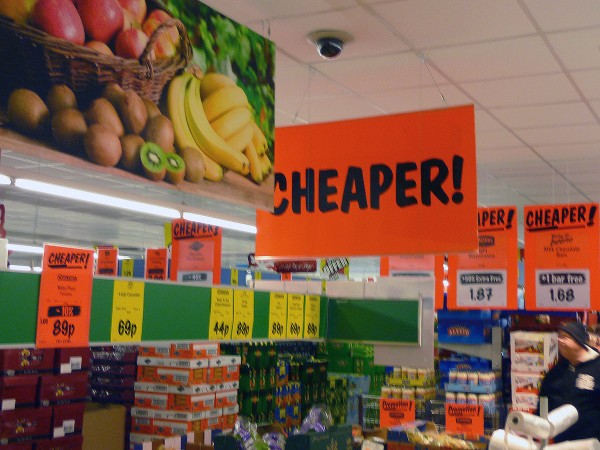
They will use all sorts of tricks of the trade to persuade us to part with our money. These tricks are designed to nudge us (or push us), without us feeling manipulated or conned – at least until we’ve bought their product.
And the tricks are getting more sophisticated. They include special offers which are not as good as they seem, time-limited offers which stimulate us to buy quickly without carefully thinking about what we’re doing, cunning positioning of products in shops to encourage us to buy things we had not planned to buy, adverts which play to our idealised perceptions or the ‘good life’ or what we would like to achieve, and packaging or display which make the product seem better than it is.

Also we are increasingly faced with targeted advertising where our smart devices capture information about our spending habits and tastes through our previous online spending or our search behaviour. This is then fed to advertisers to tailor adverts specifically to us on our mobiles, tablets, laptops and even, soon, on our smart TVs.
We may have a general desire to maximise utility from our spending, but market failures, such as consumers having imperfect information about products and a present bias (see also) in decision making, make us easy targets for the advertising and marketing industry. They understand the heuristics we use and try to take maximum advantage of them.
Happy shopping!
Articles
How shops use tricks to get you spending The Conversation, Cathrine Jansson-Boyd (16/11/17)
ColourPop looks to Qubit for next-gen personalization guidance Retail Dive, Dan O’Shea (13/6/17)
Channel 4 to offer 100% ad targeting across All 4 platform, seeking partners for linear equivalent The Drum, Jessica Goodfellow (14/11/17)
How Google aims to bring TV advertising into the 21st century The Drum, Ronan Shields (19/10/17)
How to Use Heuristics to Your Marketing Advantage MarketingProfs, Cam Secore (12/11/15)
Questions
- Does the use of heuristics contradict the assumption that consumers behave rationally?
- Give some examples of heuristics that you yourself use.
- Other than those identified above and in the first article, what ‘tricks’ might companies play on you to persuade you to buy their products?
- Is advertising personally targeted to individual consumers desirable for them?
- Give some examples of present bias in people’s behaviour.
- What factors should a retailer take into account when deciding whether to make pre-Christmas discounts?
- Explain what is meant by ‘affect heuristic’ and how the advertising industry uses the concept in setting the background to or scenario of an advertisement.
- Have you ever been persuaded into buying something you didn’t want? Why were you persuaded?
 The Competition and Markets Authority (CMA) has imposed a record fine of £84m on the American pharmaceutical manufacturing company Pfizer and of £5.2m on its UK distributor, Flynn Pharma. The CMA found that the companies charged unfair prices to the NHS for phenytoin sodium capsules, the anti-epilepsy drug.
The price was previously regulated, but Pfizer deliberately de-branded the drug in September 2012 and immediately raised the price to Flynn Pharma by between 780% and 1600%, which, in turn, raised the price to the NHS by nearly 2600%. This made the drug many times more expensive than in any other European country.
The cost to the NHS rose from around £2m per year to around £50m in 2013. Although other generic drugs are available, there would be serious health risks to patients forced to switch drugs. The NHS thus had no alternative to paying the higher price.
 Pfizer claimed that the drug was loss-making before it was de-branded. However, the CMA calculated that this did not justify the size of the price increase; that the higher price enabled Pfizer to recover all these claimed losses within just two months.
The usual practice is for pharmaceutical companies to charge high prices for new drugs for a period of time to enable them to recover high research and development costs. Later, the drugs become available as generic drugs that other manufacturers can produce. The price then normally falls dramatically.
Phenytoin sodium was invented many years ago and there has been no recent innovation and no significant investment. But, unlike with many other drugs, there has been no switching by the NHS because of possible dangers to patients. This has given Pfizer and its distributor considerable market power. As the CMA states in its press release:
Epilepsy patients who are already taking phenytoin sodium capsules should not usually be switched to other products, including another manufacturer’s version of the product, due to the risk of loss of seizure control which can have serious health consequences. As a result, the NHS had no alternative to paying the increased prices for the drug.
In conclusion, the CMA found that “both companies have held a dominant position in their respective markets for the manufacture and supply of phenytoin sodium capsules and each has abused that dominant position by charging excessive and unfair prices”.
Articles
Pfizer fined record £84.2m for overcharging NHS 2600% Independent, Zlata Rodionova (7/12/16)
Pfizer fined record £84.2m over NHS overcharging The Guardian, Angela Monaghan (7/12/16)
CMA fines drug firms £90m for over-charging NHS nhe (7/12/16)
Pfizer hit with record fine after hiking price of NHS epilepsy drug by 2,600pc – costing taxpayer millions The Telegraph (7/12/16)
Pfizer, Flynn Get Record Fine on 2,600% Drug Price Increase Bloomberg, Patrick Gower (7/12/16)
CMA publications
Phenytoin sodium capsules: suspected unfair pricing Competition and Markets Authority: Case reference: CE/9742-13, Competition and Markets Authority cases (updated 7/12/16)
CMA fines Pfizer and Flynn £90 million for drug price hike to NHS CMA Press Release (7/12/16)
Questions
- What are the arguments for drug companies being allowed to charge high prices for new drugs?
- How long should these high prices persist?
- Sketch a diagram to illustrate Pfizer’s price for its anti-epilepsy drug before and after it was de-branded. Illustrate the effect on Pfizer’s profits from the drug.
- What determines the price elasticity of demand for (a) a drug which is branded and unique; (b) a drug produced by a specific producer but which is generic and can be produced by a number of producers; (c) a generic drug produced by many producers?
- How should a regulator like the CMA decide what price a firm with market power should be allowed to charge?
- Under what legislation did the CMA fine Pfizer and Flynn Pharma? What is the upper limit to the fine it is able to impose? Did it impose the maximum fine on Pfizer?