 Two surveys have been released looking at the quality of life in cities and the levels of happiness of their residents. The first is a three-yearly Eurobarometer survey by the European Commission focusing on 83 European cities/conurbations. This survey finds that, despite growing concerns about immigration, terrorism and stagnant real incomes, levels of satisfaction have remained stable since the 2012 survey. In all except six cities, at least 80% of respondents say that they are satisfied to live in their city. The highest scores (above 98%) are in the north of Europe.
The second is the 2016 Quality of Life Survey (an annual survey) by the consultancy firm, Mercer. This looks at cities worldwide, particularly from the perspective of employees of multinational companies being placed abroad. The survey found that the top ten cities by quality of life include seven in Europe, and that the five safest cities in the world are all in Europe.
 So what is it that makes the quality of life so high in many European cities, especially those in Germany, Austria, Switzerland, the Netherlands and Scandinavia? Is it that income per head is higher in these cities? In other words, is the quality of life related to GDP?
The answer is only loosely related to GDP. What seems more important is people’s income relative to other people and whether their income relative to other people is rising.
But people regard the quality of life in cities as depending on other factors than simple relative income. One factor common across all cities is household composition. People are least happy if they live on their own.
Other factors include: a feeling of safety; how well integrated different ethic and social groups are felt to be; the quality of public transport; the cleanliness of the city; health care provision and social services; the quality of schools and other educational establishments; sports facilities; cultural facilities; parks and other public spaces; the quality of shops, restaurants and other retail outlets; 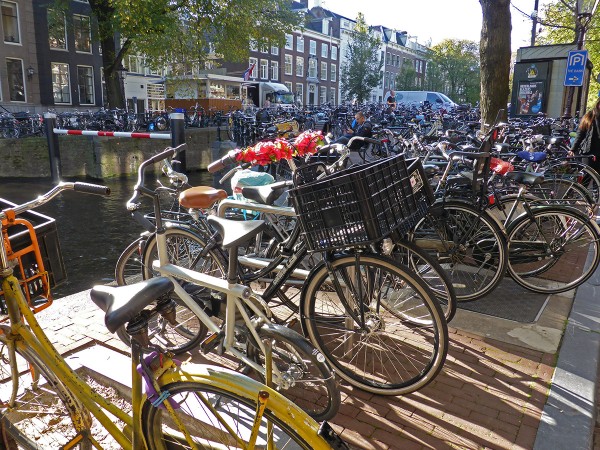 the quality and price of housing; the ease of getting a job; trust in fellow citizens; environmental factors, such as air quality, noise, traffic congestion and cleanliness; good governance of the city. The top three issues are health services, unemployment and education and training.
Although cities with higher incomes per head can usually afford to provide better services, there is only a loose correlation between income per head and quality of life in cities. Many of the factors affecting quality of life are not provided by the market but are provided publicly or are part of social interaction outside the market.
Articles
Happiness in Europe The Economist (25/2/16)
Happiness in Europe: What makes Europeans happy? It depends on where they live The Economist (27/2/16)
Rating Europe’s Most and Least Happy Cities CityLab, Feargus O’Sullivan (9/2/16)
Europe’s Nicest Cities Aren’t Its Happiest Ones Bloomberg, Therese Raphael (2/2/16)
Vienna named world’s top city for quality of life The Guardian, Patrick Collinson (23/2/16)
Vienna named world’s best city to live for quality of life, but London, New York and Paris fail to make top rankings Independent, Loulla-Mae Eleftheriou-Smith (23.2.16)
The world’s most liveable cities: London and Edinburgh rank in top 50 The Telegraph, Soo Kim (23/2/16)
Reports
Quality of Life in European Cities 2015 Flash Eurobarometer 41 (January 2016)
Quality of Life in European Cities 2015: Individual Country Reports Flash Eurobarometer 41 (January 2016) (This may take a short while to download.)
Quality of life in European Cities 2015: Data for Research Flash Eurobarometer 41 (January 2016)
2016 Quality of Living Rankings Mercer (23/2/16)
Western European Cities Top Quality of Living Ranking Mercer, Press Release (23/2/16)
Questions
- Why, do you think, is the quality of life is generally higher in (a) most northern European cities than most southern and eastern European ones; (b) most European cities rather than most north American ones?
- To what extent is (a) absolute real income per head; (b) relative real income per head an indicator of quality of living in cities?
- Why, do you think, are Italians less satisfied with the quality of life in their cities than residents of other western European countries?
- What factors affect your own quality of living? To what extent do they depend on the city/town/village/area where you live?
- Look at the list of factors above that affect quality of life in a given city. Put them in order of priority for you and identify any other factors not listed. To what extent do they depend on your age, your background, your income and your personal interests and tastes?
- Identify a particular city with which you are relatively familiar and assume that you were responsible for allocating the city’s budget. What would you spend more money on, what less and what the same? Provide a justification for your allocation.
- Discuss the following passage from the Bloomberg article: “What is striking is that there appears to be a correlation between those who report high levels of satisfaction and those who view foreigners in their city as an advantage. Conversely, respondents who complained loudest about transportation, public services, safety and other issues tended to view the presence of foreigners far less favorably.”
 The earnings gap between men and women is well-documented and depending on how we measure it, we get different figures. One of the most common measures is mean earnings per hour. The latest estimates suggest that women are paid around 20% less than men, though other data does give lower figures. Though actions have been taken to reduce the inequality between men and women, it still persists in many areas and this has led to plans for new league tables from Nicky Morgan.
The inequality gap has certainly come down. Back in 1970, the wage differential was around 37 per cent, so progress has been made, although the wage gap in the UK has stabilised somewhat. The gender wage gap is at least in part explained by occupations, as women have tended to be prevalent in some of the more poorly paid occupations. However, significant earnings differentials still exist within occupations. We see fewer women in the more senior positions; women tend to take career breaks and hence this can cause more investment into training and promoting men. Furthermore, we often simply see some form of prejudice or discrimination whereby women are just paid less than men, despite the Equal Pay Act.

As a means of combatting this inequality, Nicky Morgan, the Women and Equalities Minister, has announced plans that will require private companies and voluntary organisations employing more than 250 workers to reveal their pay gap. They will have to produce this information online and this will a means to bring down the inequality that exists between men and women in the same occupations. The first League Table of this pay gap will be published in April 2018 so companies will have to begin compiling the information from April 2017. This has received criticism from some, as it is not starting soon enough, but it is seen as a step in the right direction.
Carolyn Fairbairn, CBI Director-General warned that these League Tables shouldn’t be used to name and shame firms, as many factors might explain wage differentials. She noted:
“Where reporting can be useful is as a prompt for companies to ask the right questions about how they can eradicate the gender pay gap … The government should consult closely with business to ensure that this new legislation helps close the gender pay gap, rather than ending up as a box-ticking exercise.”
Clearly there are some close links between the gender pay gap and concerns about poverty and minimum wages and although the League Tables perhaps should not be used to name and shame, one might think it is inevitable that this is how they will be viewed. The following articles consider Nicky Morgan’s inequality plans.
Reports
Gender Pay Gap European Commission
Annual Survey of Hours and Earnings, 2015 Provisional Results Office for National Statistics (November 2015)
Pay gap reporting Equal Pay Portal2016
Articles
Gender pay gap reporting for big firms to start in 2018 Guardian, Rowena Mason (12/02/16)
Gender pay gap to be revealed by employers to tackle inequality Financial Times, Sarah O’Connor (12/02/16)
Firms forced to reveal gender pay gap BBC News (12/02/16)
Gender pay gap League Tables to ‘name and shame’ companies Telegraph, Steven Swinford (12/02/16)
UK companies must reveal gender pay gap under new plans Independent, Oliver Wright (12/02/16)
Companies told to publish gender pay gap Sky News (12/102/16)
Gender pay gap: Business groups mixed on Nicky Morgan’s new name-and-shame plans International Business Times, Bauke Schram (12/02/16)
Now every firm with more than 250 staff must put gender pay gap data online in move to encourage companies to reward staff equally Mail Online, Jack Doyle and Rosie Taylor (12/02/16)
Questions
- Use a labour market diagram to explain how gender pay gaps can emerge based on different marginal products.
- How can gender pay gaps emerge because of women taking career breaks and being less geographically mobile?
- Use information on the ONS website to compare pay differentials across occupations. Are the biggest and smallest differentials where you would expect?
- There are numerous reasons why men have traditionally been paid more than women. Which reasons could be said to be irrational and which are rational?
- If employers were forced to give genuinely equal pay for equal work, how would this affect the employment of women and men? What would determine the magnitude of these effects?
- Do you think this naming and shaming will be effective in reducing the gender pay gap amongst the largest companies? Can you suggest any other policy options?
- If the Equal Pay Act is in place, why can companies still pay women less?
 There are countless people who work 12-hour days – some get rewarded with huge salaries, while others are paid peanuts. A key question is: are these people happy? With 24 hours in a day for both rich and poor, the more hours we work, the fewer hours we have for leisure time. So, how do we choose the optimal work-life balance?
In economics, we often talk about the concept of diminishing marginal utility and this concept can be applied to working life. For many people, each additional hour worked is tougher or adds less to your utility – we get tired, bored and the job may seem more unpleasant the more hours you work. The typical day of work is around 7-8 hours, but across Sweden, some offices are now closing at 3.30, with a 6-hour working day, but with salaries remaining the same. 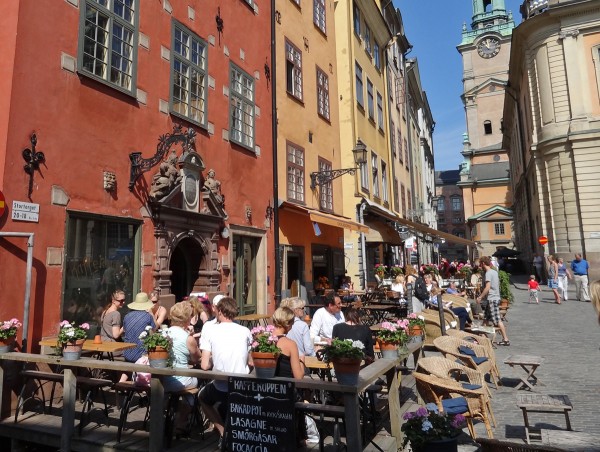 It’s not a new idea in Sweden and trials of this shorter working day concept have proved successful, with higher reported profits, better service to customers (or patients) and happier, more productive staff.
This shorter working day is not a common occurrence across Sweden or other countries, but it’s a practice that is certainly garnering media attention. Companies will certainly be keen if this means an increase in productivity, but one key concern will be the potential loss of business from companies who do keep working after 3.30 and expect phones to be answered.
It would certainly be an attractive prospect for employees and perhaps is a good way of ‘poaching’ the best staff and hence of boosting worker productivity. With more free time, perhaps an employee’s happiness would also increase, which could have significant effects on a range of variables. The following article considers this shorter working day.
The truth about Sweden’s short working hours BBC News, Maddy Savage (2/11/15)
Questions
- Explain the concept of diminishing marginal utility with respect to hours worked. Can this be used to explain why overtime often receives higher rates of pay?
- Using indifference analysis, explain how a change in the number of hours worked might affect an individual’s happiness.
- Why might a shorter working day help to increase a firm’s profits?
- If a shorter working day did increase happiness, what other factors might be affected? Does this explain why other countries are so interested in the success of this initiative?
 According to a an article in The Guardian, The best news in the world, by the president of the World Bank, Jim Yong Kim, there has been a dramatic fall in global poverty over the past two decades. The number of people in extreme poverty is projected to fall this year to below 10% of global population for the first time. This has been made possible, he claims, by unprecedented economic growth, especially in China.
But this raises three questions.
The first is whether, in the face of falling growth rates, progress in poverty reduction can be maintained.
The second is whether the World Bank is measuring extreme poverty in the right way. It is now defined as living on less than US$1.90 a day in 2011 prices – until a few weeks ago is was $1.25 in 2005 prices. As a result of this rebasing, global poverty falls from 14.5% of the world’s population (or 1011 million people) under the old method to 14.2% (or 987 million) under the new.
The third question is whether countries can improve their data collection so that a truer estimate of poverty can be made.
As far as the first question is concerned, Kim states that to stimulate growth, ‘every dollar of public spending should be scrutinised for impact. Every effort must be made to improve productivity.’ What is more, three things must happen:
|
|
| • |
Economic growth must lift all people. It must be inclusive. |
| • |
Investment in human beings is crucial – especially investing in their health and education. Malnourished and poorly educated children will never reach their full potential and countries, in turn, will fall short of their economic and social aspirations. |
| • |
We must ensure that we can provide safety nets that prevent people from falling back into poverty because of poor health, economic shocks, or natural disasters. |
As far as the second question is concerned, there are many who argue that $1.90 per day is far too low a measure of the extreme poverty threshold. It is a purchasing-power parity measure and is equivalent to what $1.90 would buy in the USA in 2011.  But, according to the Jason Hickel article linked below, ‘the US Department of Agriculture calculates that in 2011 the very minimum necessary to buy sufficient food was $5.04 per day. And that’s not taking account of other requirements for survival, such as shelter and clothing.’ Peter Edward of Newcastle University, claims Hickell, ‘calculates that in order to achieve normal human life expectancy of just over 70 years, people need roughly 2.7 to 3.9 times the existing poverty line.’
But even if living on below $1.90 a day is defined as extreme poverty, it is important not to see the problem of poverty as having been solved for people who manage to achieve an income slightly above that level.
The third question is how to improve data. There is a paucity and unreliability of data in many developing countries. According to Kim:
Our report adds that data is sparse and inconsistent across the region and globally. Some 29 countries around the world had no poverty data from 2002 to 2011, so they could not track their progress. Another 28 had just one survey that collected poverty data during that time.
This is a situation that must change to improve the world’s ability to tackle poverty. In fact, we can’t accomplish our goal if we do not have enough information to know whether people are actually lifting themselves out of poverty. For that we need to address huge data gaps. We need robust data.
Articles
The best news in the world: we have made real progress towards ending extreme poverty The Guardian, Jim Yong Kim (3/11/15)
Could you live on $1.90 a day? That’s the international poverty line The Guardian, Jason Hickel (1/11/15)
Making international trade work for the world’s poorest The Guardian, Jim Yong Kim and Roberto Azevêdo (30/6/15)
Global Poverty Will Hit New Low This Year, World Bank Says Huffington Post, Lydia O’Connor (23/10/15)
The international poverty line has just been raised to $1.90 a day, but global poverty is basically unchanged. How is that even possible? World Bank blogs, Francisco Ferreira, Dean Mitchell Jolliffe and Espen Beer Prydz (4/10/2015)
Why Didn’t the World Bank Make Reducing Inequality One of Its Goals? World Bank blogs, Jaime Saavedra-Chanduvi (23/9/13)
$1.90 Per Day: What Does it Say? Institute for New Economic Thinking, Rahul Lahoti and Sanjay Reddy (6/10/15)
Reports and papers
The Role of Trade in Ending Poverty WTO and World Bank (2015)
Poverty in a Rising Africa World Bank (1/10/15)
Ending extreme poverty and sharing prosperity: progress and policies World Bank, Marcio Cruz, James Foster, Bryce Quillin and Philip Schellekens (October 2015)
Questions
- Explain how the World Bank calculates the extreme poverty line.
- Why, if the line has risen from $1.25 per day to $1.90 per day, has the number of people recorded as being in extreme poverty fallen as a result?
- Why has the number of people in extreme poverty been rising over the years and yet the percentage of people in extreme poverty been falling?
- What policies can be adopted to tackle poverty? Discuss their practicality?
- Are reduced poverty and increased economic growth consistent policy goals? (See the blog post Inequality and economic growth.)
- What are the inadequacies of using income per day (albeit in ppp terms) as a measure of the degree of poverty? What other indicators of poverty could be used and how suitable would they be?
- How could international trade be made to work for the world’s poorest?
In a recent post, we looked at the rising number of people being paid less than the (voluntary) living wage. The Living Wage Foundation has just published the latest annual update to the living wage. This brings it to £9.40 per hour in London and £8.25 outside London – well above the statutory National Minimum Wage of £6.70 for those aged 21 and over. Even when employers are required to pay at least the so-called National Living Wage (NLW) of £7.20 per hour from April 2016 to those aged 25 and over, the NLW will still be well below the living wage.
Read the earlier post and then answer the questions in the light of the new living wage rates and the new linked articles.
Articles
Living wage rate increased by 40p an hour BBC News (2/11/15)
London ‘living wage’ rises to £9.40 an hour Financial Times, Sarah O’Connor (2/11/15)
Living Wage now £8.25 across the UK and £9.40 in London Independent, Jon Stone (2/11/15)
Special report: The Living Wage and its impact on workers and businesses Manchester Evening News, Adam Jupp (2/11/15)
Living Wage: Number Of Employers Paying It Doubles In A Year, While Six Million Workers Still Go Without Huffington Post, Jack Sommers (2/11/15)
Living wage rate increases announced as campaigners call for more businesses to go beyond legal minimums Living Wage Foundation (30/10/15)
Data and Reports
Estimates of employee jobs paid less than the living wage in London and other parts of the UK ONS (12/10/15)
Annual Survey of Hours and Earnings ONS
Living wage rates: the calculation Living Wage Foundation
National Minimum Wage rates GOV.UK
Questions
- By referring to the Living Wage Foundation site, explain how the living wage is calculated. If you were defining the living wage, would you define it in this way? Explain.
- Distinguish between low pay and poverty. Does pay give a good indication of poverty?
- For what reasons has the number of jobs paying below the living wage increased? Does marginal productivty theory provide an explanation?
- Is it best to base statutory minimum wages on median earnings, mean earnings or the cost of living? Explain.
- If more 6 million jobs pay below the living wage, does this mean that 6 million people, more than 6 million people or fewer than 6 million people receive average hourly wages below the living wage? Explain.
- For what reasons might firms volunteer to pay the living wage to their employees? Is doing so consistent with the aim of profit maximisation?
- Why are more women than men paid wage rates below the living wage?
- Why does the proportion of people being paid the living wage vary from one part of the UK to another? Is this likely to be purely a reflection of differences in the cost of living?
 Two surveys have been released looking at the quality of life in cities and the levels of happiness of their residents. The first is a three-yearly Eurobarometer survey by the European Commission focusing on 83 European cities/conurbations. This survey finds that, despite growing concerns about immigration, terrorism and stagnant real incomes, levels of satisfaction have remained stable since the 2012 survey. In all except six cities, at least 80% of respondents say that they are satisfied to live in their city. The highest scores (above 98%) are in the north of Europe.
 So what is it that makes the quality of life so high in many European cities, especially those in Germany, Austria, Switzerland, the Netherlands and Scandinavia? Is it that income per head is higher in these cities? In other words, is the quality of life related to GDP?
 the quality and price of housing; the ease of getting a job; trust in fellow citizens; environmental factors, such as air quality, noise, traffic congestion and cleanliness; good governance of the city. The top three issues are health services, unemployment and education and training.