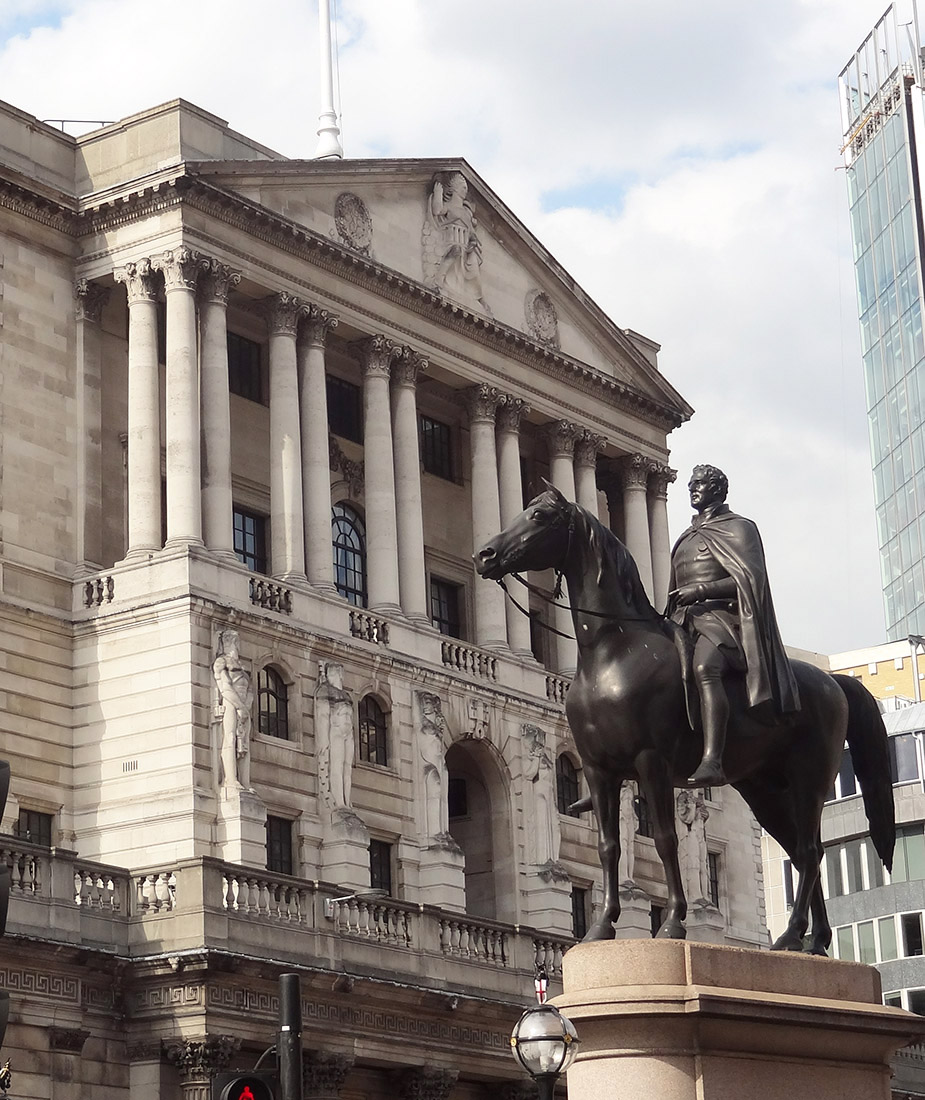
 This is the first of three blogs looking at inflation, at its effect on household budgets and at monetary policy to bring inflation back to the target rate. This first one takes an overview.
The housing and mortgage markets are vitally important to the financial well-being of many households. We have seen this vividly in recent times through the impact of rising inflation rates on interest rates and, in turn, on mortgage repayments. Some people on variable rate mortgages, or whose fixed rate deals are coming to the end of their term, have struggled to pay the new higher rates. In this blog we explore the reasons behind these events and the extent to which the financial well-being of UK households has been affected.
Chart 1 shows the path of inflation in the UK since 1997 when the Bank of England’s Monetary Policy Committee (MPC) was first charged with meeting an inflation rate target (click here for a PowerPoint). It captures the impact of the inflation shock that began to emerge in 2021 and saw the CPI inflation rate peak at 11.1 per cent in October 2022 – considerably above the Bank’s 2 per cent target.
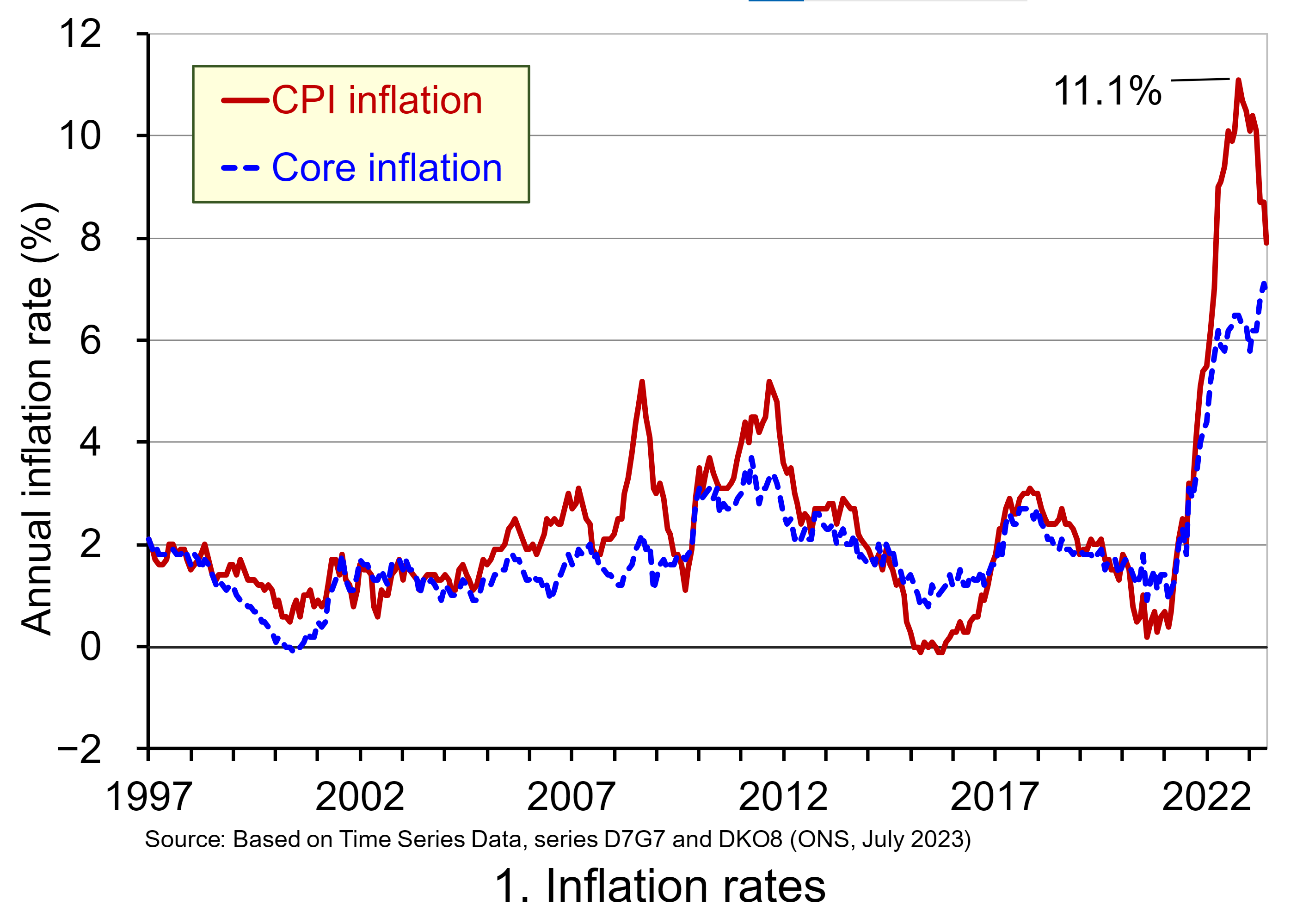 Despite easing somewhat, the CPI inflation rate is showing signs of persistence – meaning that it is taking time for it to return to target. One way of understanding this persistence is to look at a measure of inflation known as core inflation. This inflation rate measure excludes energy, food, alcoholic beverages and tobacco prices, all of which are notoriously volatile. Core inflation thus captures underlying inflationary pressures.
To address the inflationary pressures, the Bank of England began raising Bank Rate in December 2021 from a low of just 0.1 per cent. By June 2023 the Bank Rate had risen to 5 per cent with the prospect of further hikes. As the Bank Rate rises, the cost of borrowing from the Bank of England by commercial banks rises too. Therefore increases in the Bank Rate ripple through to other interest rates. However, the passthrough effect can be uneven affecting spreads between Bank Rate and other interest rates.
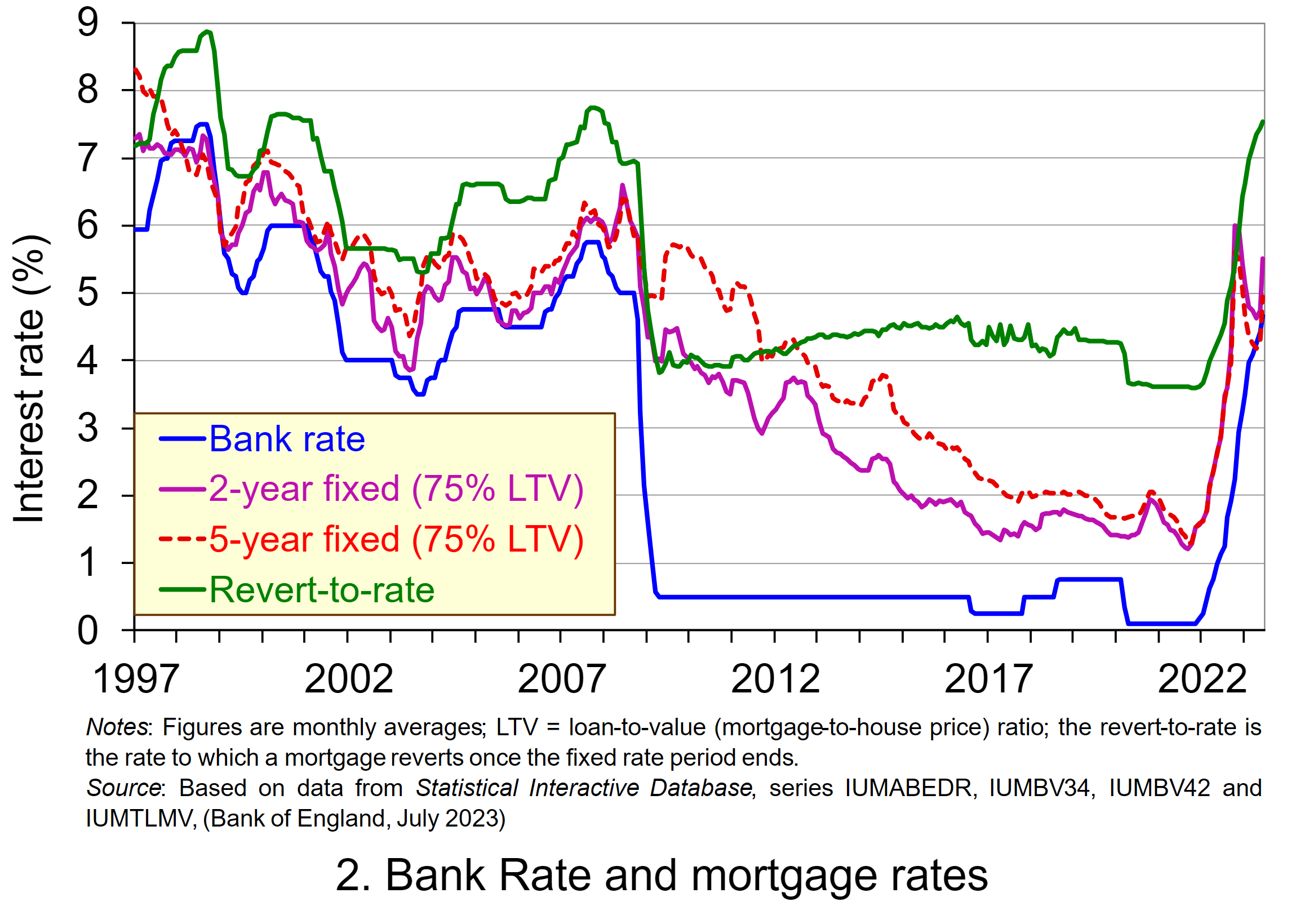 The increase in the Bank Rate is reflected in the increases in mortgage rates shown in Chart 2 (click here for a PowerPoint). As we have seen, this affects most immediately those with variable rate mortgages, and then those with fixed-rate mortgages as they come up for renewal. Analysis from the Resolution Foundation (2023) estimates that 4.2 million households saw their mortgage rates change between December 2021 and June 2023 – the equivalent of 56 per cent of mortgaged households.
The persistence of inflation means that mortgage rates may not have yet peaked and are likely to stay higher for longer than originally thought. With fixes normally between two to five years, the problem of higher rates for those renewing will continue. The Resolution Foundation projects that by the end of 2026, almost all households with a mortgage would have moved to a higher rate since December 2021. At this point, the typical annual repayment cost for mortgaged households is forecast to be £2000 per annum higher, leading to an increase in annual repayments for the UK household sector of £15.8 billion.
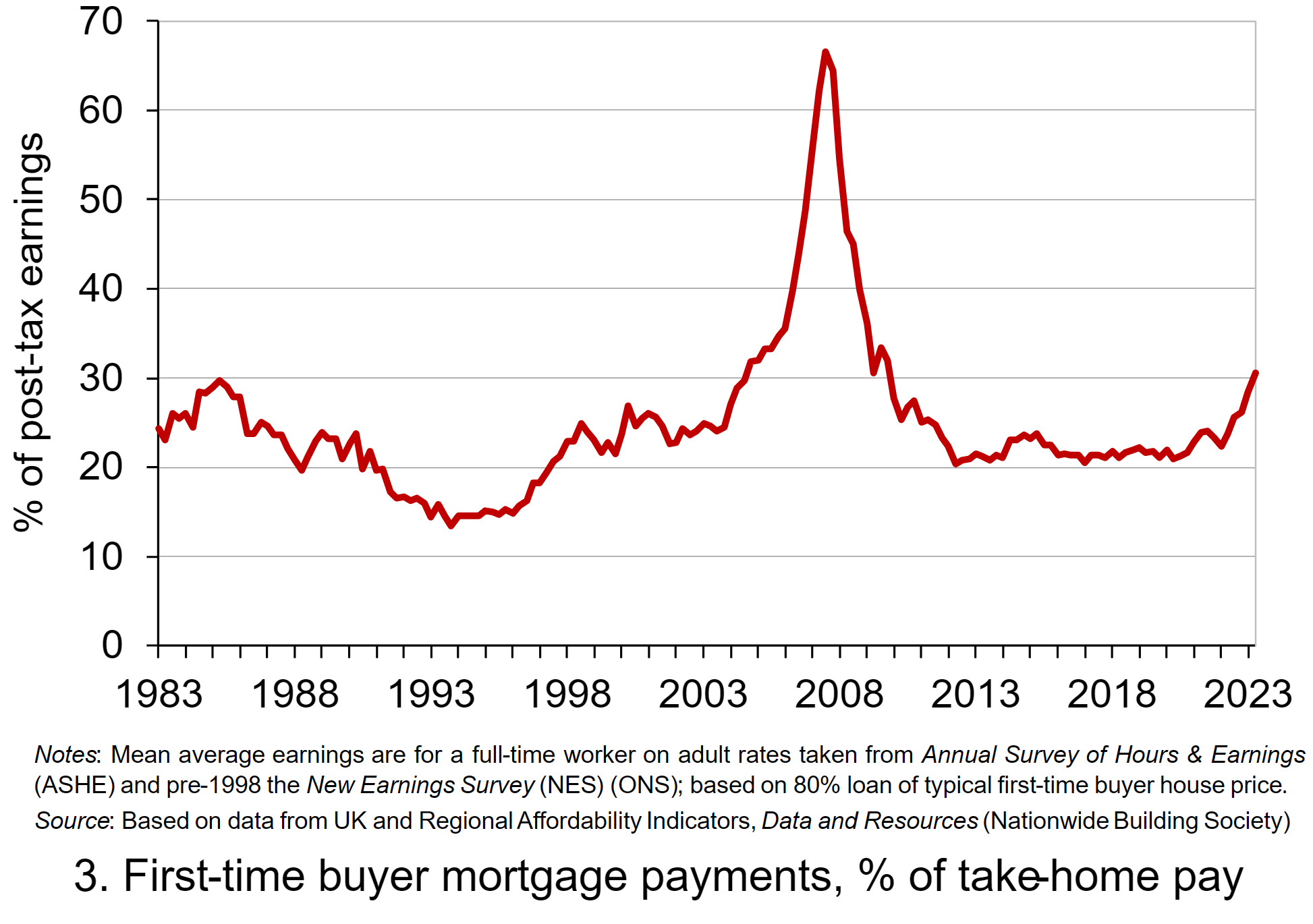 Chart 3 provides a visual picture of the typical annual repayment costs facing first-time buyers as a percentage of earnings after tax and national insurance (click here for a PowerPoint). The Nationwide Building Society figures are based on an 80% loan on the typical first-time buyer house price. It shows that repayment costs have been rising sharply on the back of rising interest rates and are now higher than at any time since the global financial crisis of 2007–8.
Articles
- UK inflation to fall to lowest level since March 2022 but Bank of England still tipped to hike interest rates
City A.M., Jack Barnett (17/7/23)
- UK inflation and interest rates high – how do other economies compare?
BBC News, Dharshini David (23/7/23)
- Mortgage payments set to jump by £500 for one million households
BBC News, Tom Espiner (13/7/23)
- Interest rates: Big rise less likely after inflation surprise
BBC News, Daniel Thomas, Faisal Islam & Dharshini David (19/7/23)
- Rising Mortgage Costs. What Can Be Done?
NIESR blog, Max Mosley and Adrian Pabst (17/7/23)
- UK interest rates forecast to rise less sharply after inflation falls to 7.9%
The Guardian, Richard Partington (19/7/23)
- Mortgage costs: More Scots falling behind on repayments
Herald Scotland, Kristy Dorsey (18/7/23)
- The Mortgage Crunch
Resolution Foundation, Simon Pittaway (17/6/23)
- Peaked Interest?
Resolution Foundation, Molly Broome, Ian Mulheirn and Simon Pittaway (17/7/23)
Data
Questions
- What possible indicators could be used to assess the affordability of residential house prices?
- What is captured by the rate of core inflation? Discuss the arguments for using this as the target inflation rate measure.
- What factors might affect the proportion of people taking out fixed-rate mortgages rather than variable-rate mortgages?
- Discuss the ways by which house price changes could impact on household consumption.
- Investigate the proportion of mortgages that are fixed rate and the typical length of the fixed rate term in two European countries, the USA and Japan. How does each differ from the UK?
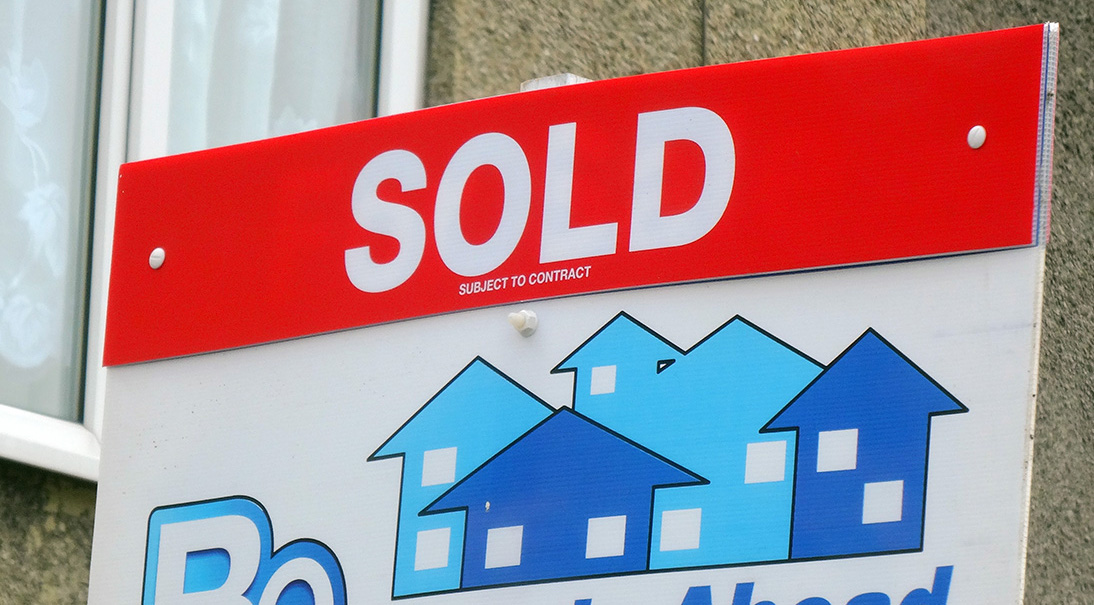 In July this year, the UK saw the highest annual house price inflation rate since May 2003. The housing market is experiencing an excess demand for houses. There is a greater demand from buyers than there are homes for sale. This has led to a double-digit annual rise for the 10th consecutive month. Nationwide building society data show that UK house prices rose by 10% in the year to August 2022, with the typical property price rising by £50 000 in the past two years to £273 751.
The market has seen this continued growth in house prices despite the growing pressure on buyers’ budgets. It is even reported that estate agents are seeing a recent surge in activity. However, can the housing market continue to grow, or will we witness a crash?
House market activity
There are also signs that the housing market is now losing some momentum. According to the Nationwide, the average price of a home was £294 260 in August, 0.4% higher than the previous month. Although this marked another record high, the rise was less than earlier in the year. Halifax called the monthly rise ‘relatively modest’ compared with the rapid house price inflation that has been seen in recent times, where the average monthly increase in house prices has been 0.9%. The latest increase marked a return to growth for house prices, after they fell in July for the first time in more than a year.
However, the annual growth did slow in August, despite house prices still growing. The annual rate of house price growth dropped to 11.5% from 11.8% in July – the lowest level in three months. The Nationwide is predicting that an increase in energy costs and rising mortgage interest rates will add to the pressure on household budgets in the coming months. Energy prices are continually rising, and it is suggested that the least energy-efficient properties could typically see bills surge by £2700 a year, or £225 a month. This added squeeze on households’ disposable income, combined with the expectation that that inflation is set to remain in double digits into next year, is predicted to slow house price increases further or even cause them to fall.
Barratt Developments, the country’s biggest housebuilder, stated that the number of homes reserved each week until the end of August had fallen below the level of a year earlier, and was now lower than before the coronavirus pandemic. This has been partly driven by people anticipating further rises in interest rates and provides further evidence of a slowdown in the housing market.
Bank of England decisions on interest rates
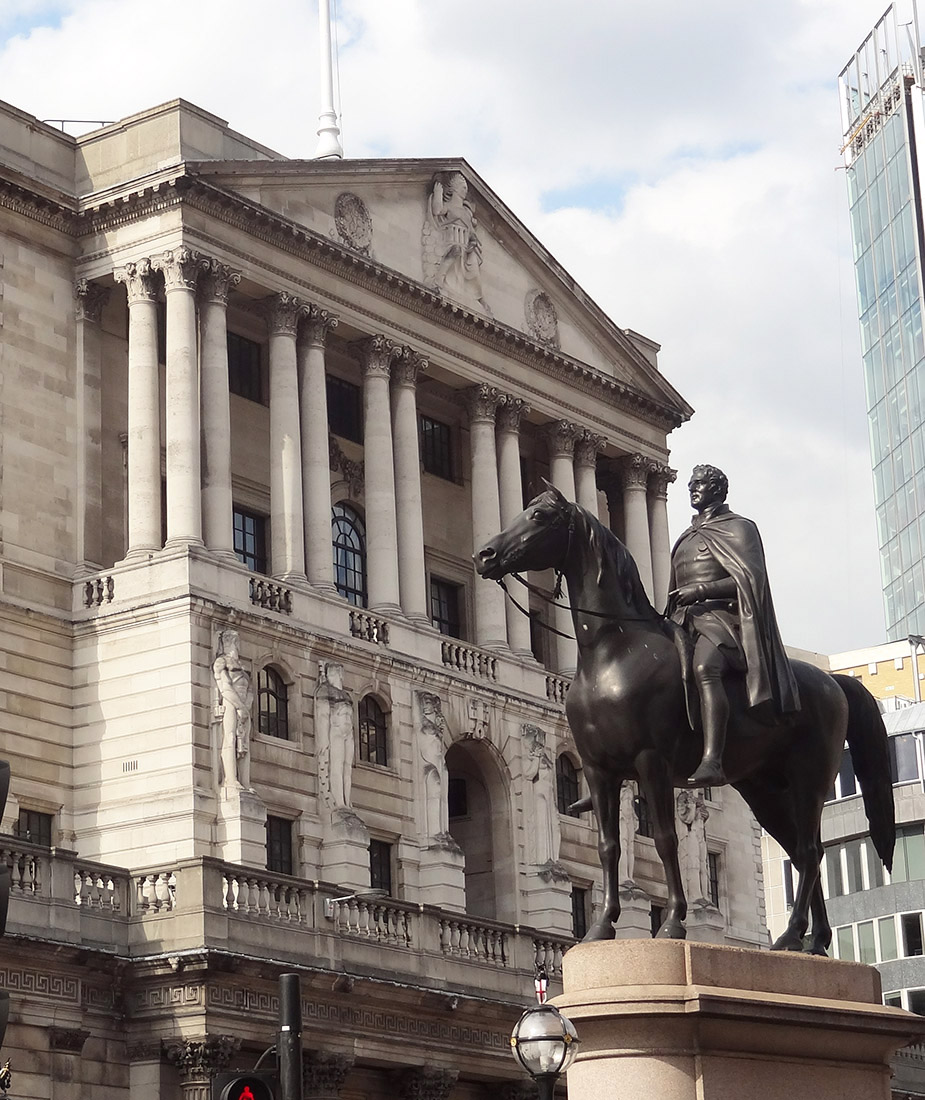 In early August, the Bank of England announced its biggest increase in interest rates in 27 years, taking the UK base rate from 1.25% to 1.75%, a 13-year high. This rise in the base rate, which has a knock-on effect on other interest rates, was an attempt to control rising inflation as energy and food prices soared.
Then, on Thursday 22nd September, the Bank of England announced a further 0.5 percentage point rise in the base rate to 2.25%. This is now the highest level for 14 years, but this is unlikely to be the peak as it is expected that the Bank will continue raising rates into next year.
The government’s mini-Budget on 23 September involved a price cap on energy prices, estimated to cost around £150 billion, and various tax cuts. The package would be funded largely by borrowing. This is likely to drive interest rates up further. Indeed, in response to the package, the interest rate on new government bonds soared and price of existing bonds (which pay a fixed amount per annum) correspondingly fell, thereby increasing their yield. Yields rose above 4%; they were just 1.3% rate at the start of the year.
These further increases in interest rates will have a negative impact on the market as they feed through to mortgage rates, which have already increased noticeably recently. Indeed, following the mini-Budget and the rise in bond prices, around half the mortgage products on offer to new buyers or those re-mortgaging were withdrawn. Many households with mortgages will thus see their costs rise. Experts have warned that borrowers in the UK are especially exposed, with many people having mortgages tracking central bank rates or having short-term fixed deals set to expire. Those on fixed-rate deals will not be immediately affected, although their costs could jump when their deals come up for renewal.
The impact of a recession
Even though the housing market is slowing, it is nowhere near a crash. But, with the Bank of England predicting a recession, there is concern about the impact on the housing market. In August, the Bank had warned that Britain was likely to enter into a recession by December this year and predicted it to last 15 months. However, with the announcement of higher interest rates, the Bank now warns that the UK may already be in a recession. The central bank had previously expected the economy to grow between July and September, but it now believes it will have shrunk by 0.1%. This comes after the economy already shrank slightly between April and June.
A recession is defined as when an economy shrinks for two consecutive quarters. During a recession, house prices typically flatline or decrease but it all depends on how severe the recession is. Historically, when there is a deep and prolonged contraction in the economy with rising unemployment, house prices tend to fall.
Finance experts have predicted that the UK will suffer its longest downturn since the 2008 financial crisis. The global financial crisis saw the availability of mortgage finance contract, making it much harder for people to borrow, thereby reducing the demand for homes. This, together with rising unemployment, resulted in average house prices falling by 12%. It was not until 2010 that the housing market in London began to recover and not until 2013 in the wider UK market.
The BoE’s Monetary Policy Committee (MPC) have warned:
Real household post-tax income is projected to fall sharply in 2022 and 2023, while consumption growth turns negative.
This will be the first recession in the UK since the height of the Covid crisis 2020. However, then the housing market didn’t behave in the typical way and property prices continued rising. This was fuelled by people working from home, which encouraged both house movers and first-time buyers to seek houses with sufficient space. The housing market has been rampant ever since as people have taken advantage of low interest rates and also of the stamp duty holiday between July 2020 and September 2021 (see the blog, The red hot housing market).
This time, however, the predicted recession could finally put the brakes on growing house prices as people’s real incomes fall. With people faced with higher mortgage rates and the cost-of-living squeeze, the growth in demand for property is likely to slow rapidly: to 5% in the second half of this year and then lower still in 2023. This could eventually match the supply of property. Supply may also increase as a result of an increase in repossessions as people struggle to pay their monthly mortgage bills.
Cuts to stamp duty
In his mini-Budget on 23 September, the new Chancellor, Kwasi Kwarteng, announced that stamp duty on house purchases would be cut. The threshold at which buyers have to start paying the duty would rise from £125 000 to £250 000 and first-time buyers would not pay any duty on the first £425 000.
This cut in tax on house purchase will go some way to offsetting the effect of rising mortgage interest rates and is likely to reduce the slowdown in house price rises.
First time buyers
A recession could actually help some people climb onto the property ladder if it pushes property prices down. That would lead to smaller deposits being needed and lower total amounts having to be borrowed.
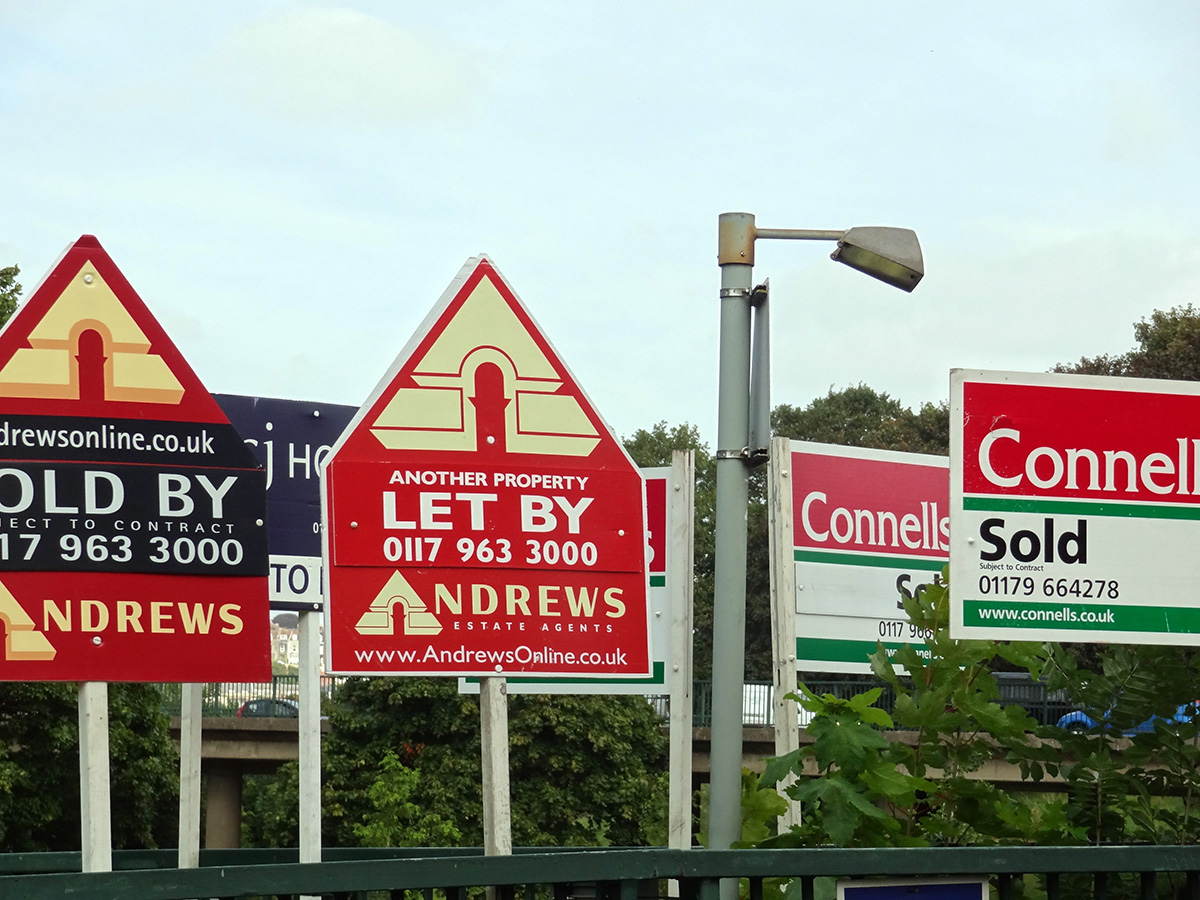 However, despite the prospect of falling house prices, it still remains tough for first-time buyers. The biggest risk for hopeful homebuyers in a recession is losing their job. At a time of increased uncertainty, some first-time buyers are likely to wait, hoping that homes will become cheaper. However, there have only been 31 months in the past 20 years when house prices have fallen, all of which occurred between 2008 and 2012. Myron Jobson, senior personal finance analyst at Interactive Investor said:
Fast-rising rents are not offering any relief and could keep some buyers in the hunt for a home for longer than they would like.
Also, prices are not yet actually falling, even though demand is slowing. Demand for homes is still outstripping the available housing inventory. This means that the market is still a difficult one for first-time buyers and those looking to climb up the property ladder.
At first sight, it may seem that cuts to stamp duty will help first-time buyers, especially as the duty is paid after a higher threshold than for other purchasers. However, the stamp duty cuts will stimulate demand, which, as we argued above, will reduce the slowdown in house price rises. Also, despite the threshold being higher for first-time buyers, by stimulating house price inflation, most if not all the gains in the duty cut could be offset and could risk pricing-out first-time buyers.
Conclusion
The economic outlook is uncertain. However, the rises in the energy price cap in October and beyond, and the general rise on the cost of living as prices rise faster than wages, are expected to increase pressure on household finances, which will limit the amount that prospective house buyers can afford to borrow. As a result, house price inflation is expected to fall across the majority of UK regions, as buyer demand eases. But just how much house price inflation will fall and whether it will turn negative (i.e. a fall in house prices) is hard to predict
Articles
- House price growth at 10% a year despite squeeze on finances
BBC News, Kevin Peachey (1/9/22)
- How will a recession hit the UK housing market?
BBC News, Simon Read (5/8/22)
- Could the UK see interest rates rise to 5%?
BBC News, Faisal Islam (22/9/22)
- UK may already be in recession – Bank of England
BBC News, Dearbail Jordan & Daniel Thomas (22/9/22)
- Mortgage rates: act fast as increases loom
Financial Times, James Pickford (16/9/22)
- Who escapes the great mortgage reset?
Financial Times, Tom Braithwaite (16/9/22)
- UK house prices: Halifax and Barratt warn of challenges ahead
The Guardian, Joanna Partridge (7/9/22)
- Annual rate of UK house price growth doubles to 15.5% in one month
The Guardian, Rupert Jones (14/9/22)
- After an autumn flurry, is the UK housing market going to fall at last?
The Observer, Julia Kollewe (17/9/22)
- Stamp duty cut will benefit UK’s wealthier and raise inflation, say experts
The Guardian, Richard Partington (21/9/22)
- What does Kwarteng’s stamp duty cut mean for UK homebuyers?
The Guardian, Jess Clark (23/9/22)
- What happens to house prices in a recession? A property expert explains
Metro, Jack Slater (13/8/22)
Questions
- With the aid of a diagram, explain the current demand and supply in the housing market.
- How does an expectation of a rise in interest rates affect the demand for housing?
- Define the term recession. Why is the UK likely to enter recession (if it has not already done so)?
- Describe the characteristics of the business cycle during a recession.
- How do expectations of house price increases affect actual house price increases?
For the majority of people, a house (or flat) is the most valuable thing they will ever own.
It is important to understand the role that house prices play in the economy and how much of an impact they have.
The Bank of England monitors changes in the housing market to assess the risks to the financial system and the wider economy. The housing market employs large numbers of people in construction, sales, furniture and fittings, and accounts for a sizeable percentage of the value of GDP. The market is closely linked to consumer spending and therefore is a crucially important sector of the economy.
The concepts of supply and demand can be applied to understand house price changes and the impacts on the economy.
What is the housing market?
The housing market brings together different stakeholders, such as homeowners who are selling their properties, people seeking to buy a property, renters, investors who buy and sell properties solely for investment purposes, contractors, renovators and estate agents, who act as facilitators in the process of buying or selling a property.
In the UK, two-thirds of households own the property in which they live, and the remaining third of households are renters, split fairly equally between private and social renting. We can thus divide people into:
- Homeowners – either outright owners or with a mortgage;
- Private renters – people renting from private landlords;
- Social renters – people renting from local authorities and housing associations.
There are many determinants of demand and supply in the housing market, many of which are related to demographic factors. Such factors include the size of the market, rate of marriages, divorces, and deaths. However, factors such as income, availability of credit, interest rates and consumer preferences are also important.
Why is the housing market important for the economy?
 Changes in the housing market are always given such importance due to the relationship house prices have with consumer spending. Changes in house prices and the number of sales affect how much money people have to spend. Given that household spending accounts for two-thirds of Britain’s total economic activity, any changes in consumption is likely to have a major impact on the wider economy. Observing the housing market helps us to assess the overall demand for goods and services.
When house prices increase, those consumers who own their own homes have now become better off as their houses are worth more. This ‘wealth effect’ increases the confidence of homeowners, which in turn increases consumption. Some of these homeowners will decide to acquire additional borrowing against the value of their home. The borrowing is then spent in the economy on goods and services, thereby increasing aggregate demand and GDP.
However, when house prices decline, homeowners lose confidence as their home is now worth less than before. This becomes a major issue if prices have decreased enough to make their house worth less than the remainder of the unpaid mortgage – known as ‘negative equity’. Homeowners will therefore reduce their consumption and will be less likely to undertake any new borrowing.
The vast majority of homeowners will have taken out a mortgage in order to purchase their home. Mortgages are the largest source of debt for households in the UK. More than 70% of household borrowing is mortgage debt. Half of all homeowners who live in the house they own are still paying off their mortgage. Therefore, households might suddenly hold back on their spending during times of uncertainty because they start to worry about repaying their debts. This has a knock-on effect on the rest of economy, and a small problem can suddenly become a big one.
In addition to affecting overall household spending, the buying and selling of houses also affects the economy directly. Housing investment is a small but unpredictable part of total output in the economy. There are two different ways in which the buying and selling of houses impacts GDP.
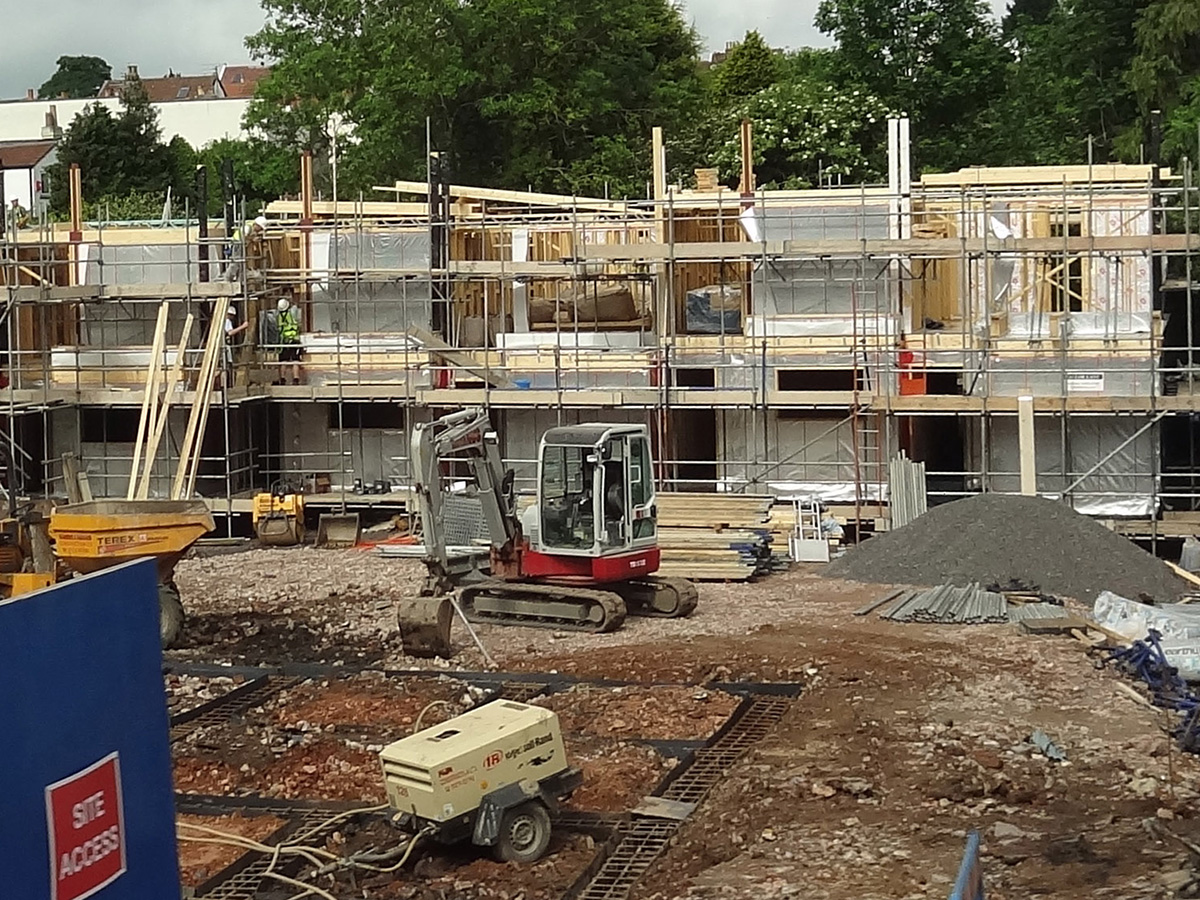 The first is when a new build is purchased. This directly contributes to GDP through the investment in the land to build the house on, the purchase of materials and the creation of jobs. Once the homeowners move in they also contribute to the local economy: i.e. shopping at local shops.
The second is when an existing home is bought or sold. The purchase of an existing home does not have the same impact on GDP. However, it does still contribute to GDP: i.e. from estate agents’ and solicitors’ fees and removal costs to the purchase of new furniture.
Why house prices change: demand and supply
Demand: the demand for housing can be defined as the quantity of properties that homebuyers are willing and able to buy at a given price in a given time period. Factors affecting the demand for housing include:
- Real incomes: If real incomes increase the demand for housing increases due to a rise in the standard of living.
- The cost of a mortgage: If there is a rise in interest rates in the economy, mortgage interest rates are likely to rise too. This makes the cost of financing a loan more expensive and therefore will see a decline in demand.
- Availability of credit: The more lending banks and building societies are willing to provide, the more people will borrow and spend on housing and hence the higher house prices will be.
- Economic growth: When the economy is in the recovery and boom stages of the business cycle, wages rise. This will increase the demand for houses.
- Population: When the population increases or if there is an increase in single-person households, demand for housing increases.
- Employment/unemployment: The higher the level of unemployment in an economy, the less people will able to afford housing.
- Confidence: If consumers feel optimistic about the future state of the economy, they will be more likely to go ahead with purchasing a house, thereby increasing demand. House prices tend to rise if people expect to be richer in the future.
Supply: The supply of housing can be defined as the flow of properties available at a given price in a given time period. The supply of housing includes both new-build homes and existing properties. Factors affecting the supply for housing include:
- Costs of production: The higher the cost of production, the fewer houses are built, reducing the supply of housese coming to the market. Example of costs include: labour costs, land for development and building materials.
- Government policy: If the government increases taxation and/or reduces subsidies for new house developments, there will be fewer new houses built.
- Number of construction companies: Depending on their objectives, the more construction companies there are, the more likely there is to be an increase in the supply of housing. The construction industry accounts for around 7% of UK GDP.
- Technology and innovation: With improved technology and innovation in the construction industry, houses become cheaper and easier to build, thus increasing the supply.
- Government spending on building new social housing: The government has the ability to influence the supply of housing by increasing spending on new social housing.
Price elasticity of supply
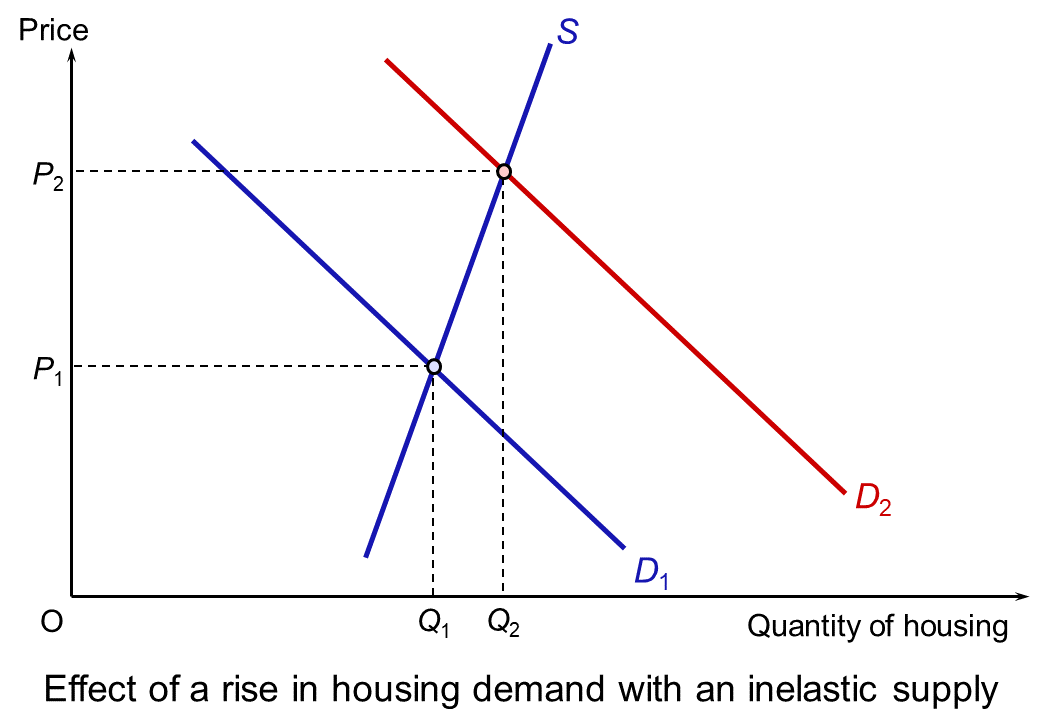 The supply of new housing in the short run is price inelastic. The main reason for this is the time it takes to build a new home. The production of a house can take many months, from the planning process to the project’s completion. Supply also relies on access to a skilled labour force and the availability of certain construction materials.
Because of the inelastic supply, any changes in demand are likely to have a significant effect on price. This is illustrated by the diagram, which shows a larger proportionate increase in price than quantity when demand increases from D1 to D2.
The current UK housing market
Despite the current economic climate and the effects of the lockdown restrictions on consumers, house prices have increased, and sales have now resumed. Rightmove, which advertises 95% of homes for sale, states that the housing market has seen its busiest month in more than 10 years in July. During the summer, the housing market usually sees a lull in activity. However, since the easing of lockdown, there has been a flurry of activity from buyers and sellers. Since July 2019, house prices have increased by 1.7%, according to the Nationwide Building Society.
 London estate agency, Hamptons, states that homeowners are now bringing forward their moving plans as the experience of lockdown has encouraged them to seek more space. The mortgage market is also very favourable right now in terms of interest rates, and rental demand is continuing to surge across the UK.
The increase in activity in the market has also been helped by the announcement of a stamp duty ‘holiday’ until March 2021. This sees the threshold above which stamp duty is paid rising from £125 000 to £500 000. Estate agency, Savills, has also seen an increase in the number of new buyers registering with its service, more than double the number registered in July 2019. It is thought that, along with the tax savings from stamp duty, people’s experiences in lockdown have made them evaluate their current living space and reconsider their housing needs.
However, given the that the economy is experiencing its deepest recession on record, there is concern about just how long the market can resist the economic forces pulling prices down.
Historically, a drop in house prices has been both a cause and a consequence of economic recessions. During the 2008 financial crisis, house prices fell by about 30%. As previously mentioned, for the majority of people, a house is the most valuable thing they will ever own and therefore consumers are extremely interested in its value. Consumer confidence is one of the key factors affecting the demand for housing. If consumers feel pessimistic about the future state of the economy, they will be less likely to go ahead with purchasing a house, thereby decreasing demand. Britain’s Office for Budget Responsibility, the country’s fiscal watchdog, forecasts that during this downturn prices will fall 5% this year and 11% in 2021.
Various government schemes put in place to help during lockdown are starting to come to an end. The main one – the furlough scheme, which replaced 80% of eligible workers’ incomes – comes to an end in October. It is forecast that labour market conditions will weaken significantly in the quarters ahead, with unemployment predicted to rise for the rest of the year. If these predictions materialise, it would likely dampen housing activity once again.
Conclusion
Fluctuations in house prices and transactions tend to amplify the volatility of the economic cycle. Therefore, it is crucial that we understand what influences such changes. Understanding how supply and demand factors influence the housing market can enable key stakeholders to make better predictions about future activity and plan accordingly. The current market has seen a growth since the easing of restrictions but there is concern that this has been powered by pent-up demand. Therefore, the outlook for house prices is uncertain and the full effects of an economic downturn are yet to be realised.
Articles
Questions
- Explain why the supply of housing is inelastic in the short-term.
- Given that the elasticity of housing supply in the UK is low, what policies could be introduced to ensure that house building is more responsive to changes in market demand?
- If unemployment does increase as predicted, explain what impact this would have on the demand in the housing market and house prices? Use a supply and demand diagram to aid your answer.
- Explain how changes in house prices affect the government’s key macroeconomic objectives.
 The latest UK house price index reveals that annual house price growth in the UK slowed to just 1.2 per cent in May. This is the lowest rate of growth since January 2013. This is being driven, in part, by the London market where annual house price inflation rates have now been negative for 15 consecutive months. In May the annual rate of house price inflation in London fell to -4.4 per cent, it lowest since August 2009 as the financial crisis was unfolding. However, closer inspection of the figures show that while many other parts of the country continue to experience positive rates of annual house price inflation, once general inflation is accounted for, there is widespread evidence of widespread real house price deflation.
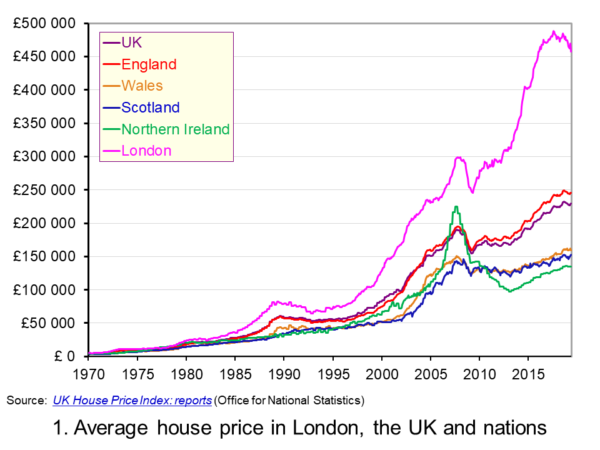 The average UK house price in May 2019 was £229,000. As Chart 1 shows, this masks considerable differences across the UK. In England the average price was £246,000 (an annual increase of 1.0 per cent), in Scotland it was £153,000 (an increase of 2.8 per cent), in Wales £159,000 (an increase of 3.0 per cent) and in Northern Ireland it was £137,000 (an increase of 2.1 per cent). (Click here to download a PowerPoint copy of the chart.)
The London market distorts considerably the English house price figures. In London the average house price in May 2019 was £457,000 (an annual decrease of 4.4 per cent). House prices were lowest in the North East region of England at £128,000. The North East was the only other English region alongside London to witness a negative rate of annual house price inflation, with house prices falling in the year to May 2019 by 0.7 per cent.
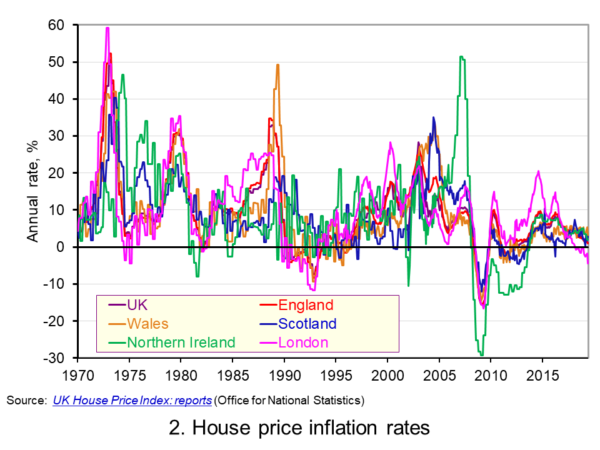 Chart 2 allows us to see more readily the rates of house price growth. It plots the annual rates of house price inflation across London, the UK and its nations. What is readily apparent is the volatility of house price growth. This is evidence of frequent imbalances between the flows of property on to the market to sell (instructions to sell) and the number of people looking to buy (instructions to buy). An increase in instructions to buy relative to those to sell puts upwards pressure on prices whereas an increase in the relative number of instructions to sell puts downward pressure on prices. (Click here to download a PowerPoint copy of the chart.)
Despite the volatility in house prices, the longer-term trend in house prices is positive. The average annual rate of growth in house prices between January 1970 and May 2019 in the UK is 9.1 per cent. For England the figure is 9.4 per cent, for Wales 8.8 per cent, for Scotland 8.5 per cent and for Northern Ireland 8.3 per cent. In London the average rate of growth is 10.4 per cent per annum.
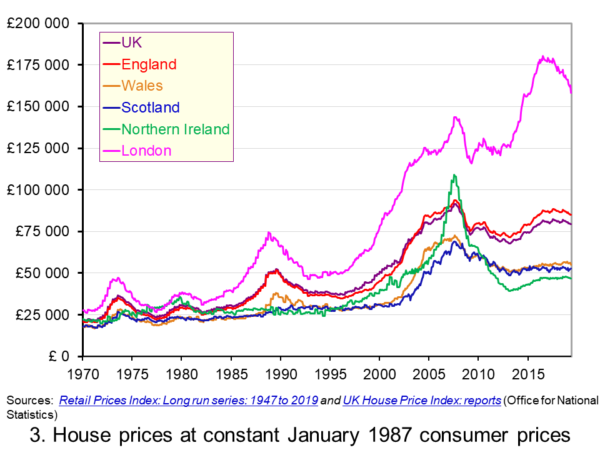 As Chart 3 illustrates, the longer-term growth in actual house prices cannot be fully explained by the growth in consumer prices. It shows house price values as if consumer prices, as measured by the Retail Prices Index (RPI), were fixed at their January 1987 levels. We see real increases in house prices or, expressed differently, in house prices relative to consumer prices. In real terms, UK house prices were 3.6 times higher in May 2019 compared to January 1970. For England the figure is 4.1 times, for Wales 3.1 times, for Scotland 2.9 times and for Northern Ireland 2.1 times. In London inflation-adjusted house prices were 5.7 times higher. (Click here to download a PowerPoint copy of the chart.)
The volatility in house prices continues to be evident when adjusted for changes in consumer prices. The UK’s annual rate of real house price inflation was as high as 40 per in January 1973, yet, on the other hand, in June 1975 inflation-adjusted house prices were 16 per cent lower than a year earlier. Over the period from January 1970 to May 2019, the average annual rate of real house price inflation was 3.2 per cent. Hence house prices have, on average, grown at an annual rate of consumer price inflation plus 3.2 per cent.
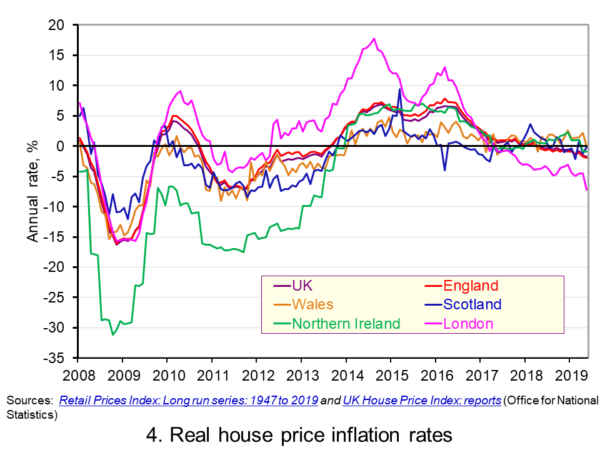 Chart 4 shows annual rates of real house price inflation since 2008 and, hence, from around the time the financial crisis began to unfold. The period is characterised by acute volatility and with real house prices across the UK falling at an annual rate of 16 per cent in 2009 and by as much 29 per cent in Northern Ireland. (Click here to download a PowerPoint copy of the chart.)
The UK saw a rebound in nominal and real house price growth in the period from 2013, driven by a strong surge in prices in London and the South East, and supported by government initiatives such as Help to Buy designed to help people afford to buy property. But house price growth then began to ease from early/mid 2016. Some of the easing may be partly due to any excessive fizz ebbing from the market, especially in London, and the impact on the demand for buy-to-let investments resulting from reductions in tax relief on interest payments on buy-to-let mortgages.
However, the housing market is notoriously sensitive to uncertainty, which is not surprising when you think of the size of the investment people are making when they enter the market. The uncertainty surrounding Brexit and the UK’s future trading relationships will have been a drag on demand and hence on house prices.
Chart 4 shows that by May 2019 all the UK nations were experiencing negative rates of real house price inflation, despite still experiencing positive rates of nominal house price inflation. In Wales the real annual house price inflation rate was -0.1 per cent, in Scotland -0.2 per cent, in Northern Ireland -0.9 per cent and in England -2.0 per cent. Meanwhile in London, where annual house price deflation has been evident for 15 consecutive months, real house prices in May 2019 were falling at an annual rate of 7.2 per cent.
Going forward the OBR’s Fiscal Risks Report predicts that, in the event of a no-deal, no-transition exit of the UK from the European Union, nominal UK house prices would fall by almost 10 per cent between the start of 2019 and mid-2021. This forecast is driven by the assumption that the UK would enter a year-long recession from the final quarter of 2019. It argues that property transactions and prices ‘move disproportionately’ during recessions. (See John’s blog The costs of a no-deal Brexit for a fuller discussion of the economics of a no-deal Brexit). The danger therefore is that the housing market becomes characterised by both nominal and real house price falls.
Articles
Questions
- Explain the difference between a rise in the rate of house price inflation a rise in the level of house prices.
- Explain the difference between nominal and real house prices.
- If nominal house prices rise can real house price fall? Explain your answer.
- What do you understand by the terms instructions to buy and instructions to sell?
- What factors are likely to affect the levels of instructions to buy and instructions to sell?
- How does the balance between instructions to buy and instructions to sell affect house prices?
- How can we differentiate between different housing markets? Illustrate your answer with examples.
The latest UK house price index continues to show an easing in the rate of house price inflation. In the year to January 2019 the average UK house price rose by 1.7 per cent, the lowest rate since June 2013 when it was 1.5 per cent. This is significantly below the recent peak in house price inflation when in May 2016 house prices were growing at 8.2 per cent year-on-year. In this blog we consider how recent patterns in UK house prices compare with those over the past 50 years and also how the growth of house prices compares to that in consumer prices.
The UK and its nations
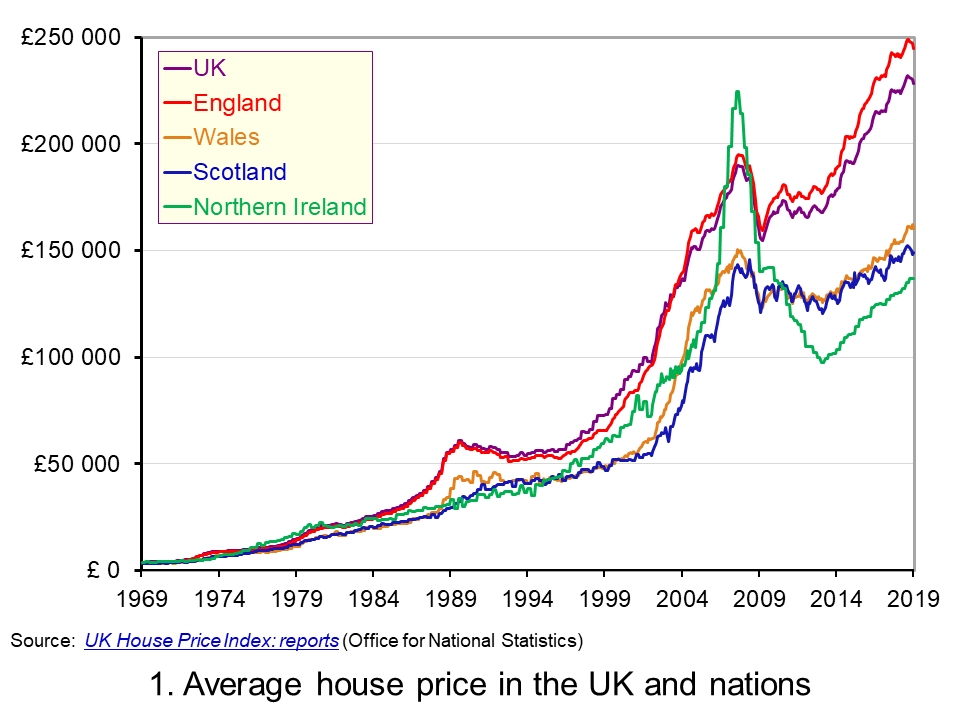 The average UK house price in January 2019 was £228,000. As Chart 1 shows, this masks considerable differences across the UK. In England the average price was £245,000 (an annual increase of 1.5 per cent), while in Scotland it was £149,000 (an increase of 1.3 per cent), Wales £160,000 (an increase of 4.6 per cent) and £137,000 in Northern Ireland (an increase of 5.5 per cent). (Click here to download a PowerPoint copy of the chart.)
Within England there too are considerable differences in house prices, with London massively distorting the English average. In January 2019 the average house price in inner London was recorded at £568,000, a fall of 1.9 per cent on January 2018. In Outer London the average price was £426,000, a fall of 0.2 per cent. Across London as a whole the average price was £472,000, a fall of 1.6 per cent. House prices were lowest in the North East at £125,000, having experienced an annual increase of 0.9 per cent.
The Midlands can be used as a reference point for English house prices outside of the capital. In January 2019 the average house price in the West Midlands was £195,000 while in the East Midlands it was £193,000. While the annual rate of house price inflation in London is now negative, the annual rate of increase in the Midlands was the highest in England. In the West Midlands the annual increase was 4 per cent while in the East Midlands it was 4.4 per cent. These rates of increase are currently on par with those across Wales.
Long-term UK house price trends
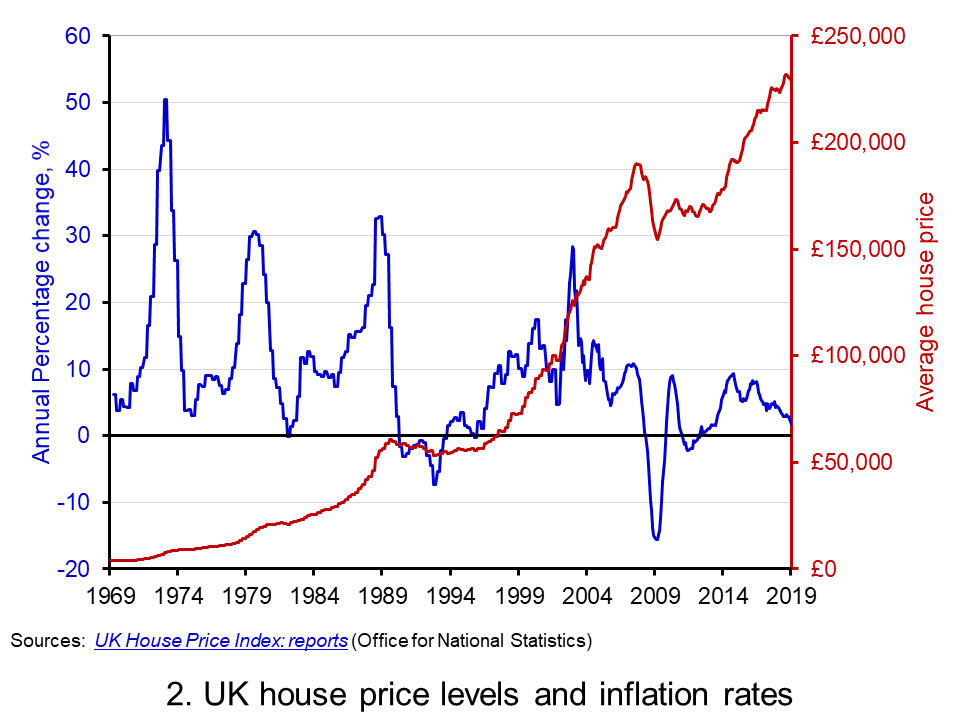 Chart 2 shows the average house price for the UK since 1969 alongside the annual rate of house price inflation, i.e. the annual percentage change in the level of house prices. The average UK house price in January 1969 was £3,750. By January 2019, as we have seen, it had risen to around £228,000. This is an increase of nearly 6,000 per cent. Over this period, the average annual rate of house price inflation was 9 per cent. However, if we measure it to the end of 2007 it was 11 per cent. (Click here to download a PowerPoint copy of the chart.)
The significant effect of the financial crisis on UK house prices is evident from Charts 1 and 2. In February 2009 house prices nationally were 16 per cent lower than a year earlier. Furthermore, it was not until August 2014 that the average UK house rose above the level of September 2007. Indeed, some parts of the UK, such as Northern Ireland and the North East of England, remain below their pre-financial crisis level even today.
Nominal and real UK house prices
But how do house price patterns compare to those in consumer prices? In other words, what has happened to inflation-adjusted or real house prices? One index of general prices is the Retail Prices Index (RPI). This index measures the cost of a representative basket of consumer goods and services. Since January 1969 the RPI has increased by nearly 1,600 per cent. While substantial in its own right, it does mean that house prices have increased considerably more rapidly than consumer prices.
If we eliminate the increase in consumer prices from the actual (nominal) house price figures what is left is the increase in house prices relative to consumer prices. To do this we estimate house prices as if consumer prices had remained at their January 1987 level. This creates a series of average UK house prices at constant January 1987 consumer prices.
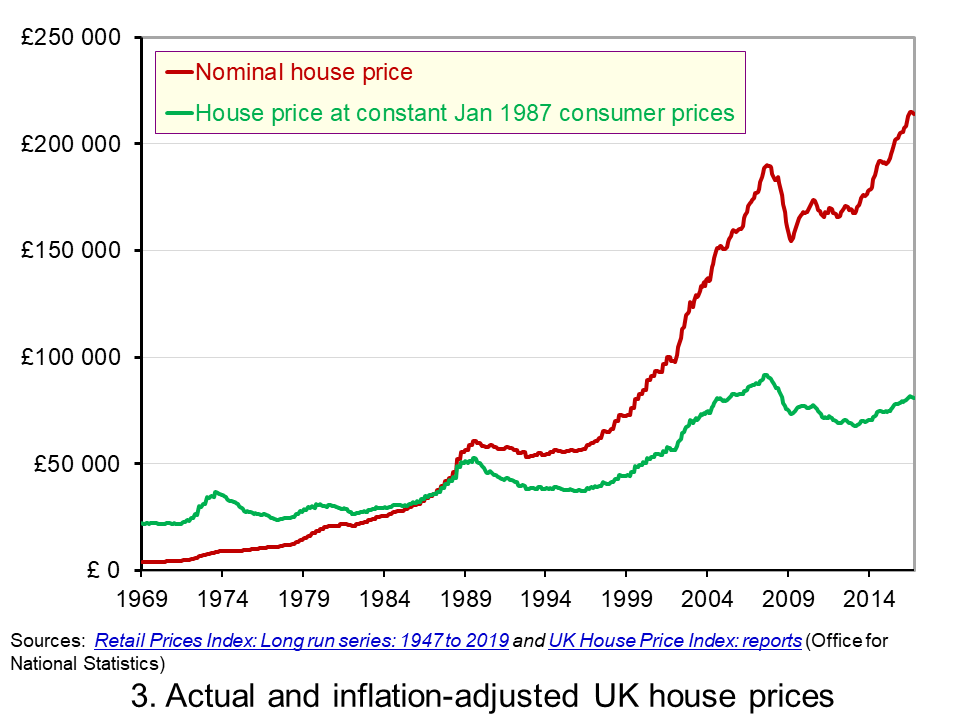 Chart 3 shows the average nominal and real UK house price since 1969. It shows that in real terms the average UK house price increased by around 266 per cent between January 1969 and January 2019. Therefore, the average real UK house price was 3.7 times more expensive in 2019 compared with 1969. This is important because it means that general price inflation cannot explain all the long-term growth seen in average house prices. (Click here to download a PowerPoint copy of the chart.)
Real UK house price cycles
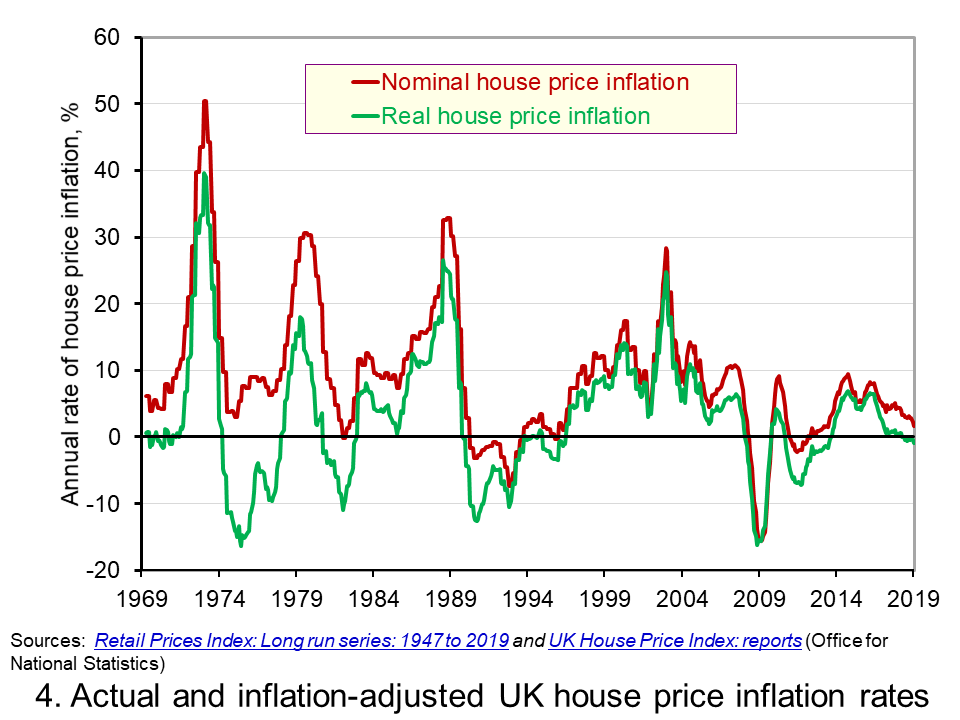 Chart 4 shows that annual rates of nominal and real house price inflation. As we saw earlier, the average nominal house price inflation rate since 1969 has been 9 per cent. The average real rate of increase in house prices has been 3.1 per cent per annum. In other words, house prices have on average each each year increased by the annual rate of RPI inflation plus 3.1 percentage points. (Click here to download a PowerPoint copy of the chart.)
Chart 4 shows how, in addition to the long-term relative increase in house prices, there are also cycles in the relative price of houses. This is evidence of a volatility in house prices that cannot be explained by general prices. This volatility reflects frequent imbalances between the demand and supply of housing, i.e. between instructions to buy and sell property. Increasing levels of housing demand (instructions to buy) relative to housing supply (instructions to supply) will put upward pressure on house prices and vice versa.
In January 2019 the annual real house price inflation across the UK was -0.9 per cent. While the rate was slightly lower in Scotland at -1.2 per cent, the biggest drag on UK house price inflation was the London market where the real house price inflation rate was -4.0 per cent. In contrast, January saw annual real house price inflation rates of 2 per cent in Wales, 2.3 per cent in Northern Ireland and 1.8 per cent in the East Midlands.
Inflation-adjusted inflation rates in London have been negative consistently since June 2017. From their July 2016 peak, following the result of the referendum on UK membership of the EU, to January 2019 inflation-adjusted house prices fell by 7.6 per cent. This reflects, in part, the fact that the London housing market, like that of other European capitals, is a more international market than other parts of the country. Therefore, the current patterns in UK house prices are rather distinctive in that the easing is being led by London and southern England.
Articles
Questions
- What is meant by the annual rate of house price inflation?
- How is a rise in the rate of house price inflation different from a rise in the level of house prices?
- What factors are likely to determine housing demand (instructions to buy)?
- What factors are likely to affect housing supply (instructions to sell)?
- Explain the difference between nominal and real house prices.
- What does a decrease in real house prices mean? Can this occur even if actual house prices have risen?
- How might we explain the recent differences between house price inflation rates in London relative to other parts of the UK, like the Midlands and Wales?
- Why were house prices so affected by the financial crisis?
- Assume that you asked to measure the affordability of housing. What data might you collect?