 For all households, energy is considered an essential item. As electricity and gas prices rise and fall, many of us don’t think twice about turning on the lights, cooking a meal or turning on the heating. We may complain about the cost and want prices brought down, but we still pay the bills. But, is there anything that can be done about high energy prices? And if there is, should anything be done?
The worlds of politics and economics are closely linked and Ed Miliband’s announcement of his party’s plans to impose a 20-month freeze on energy prices if elected in 2015 showed this relationship to be as strong as ever. The price freeze would certainly help average households reduce their cost of living by around £120 and estimates suggest businesses would save £1800 over this 20 month period. The energy companies have come in for a lot of criticism, in particular relating to their control of the industry. The sector is dominated by six big companies – your typical oligopoly, and this makes it very difficult for new firms to enter. Thus competition is restricted. But is a price freeze a good policy?
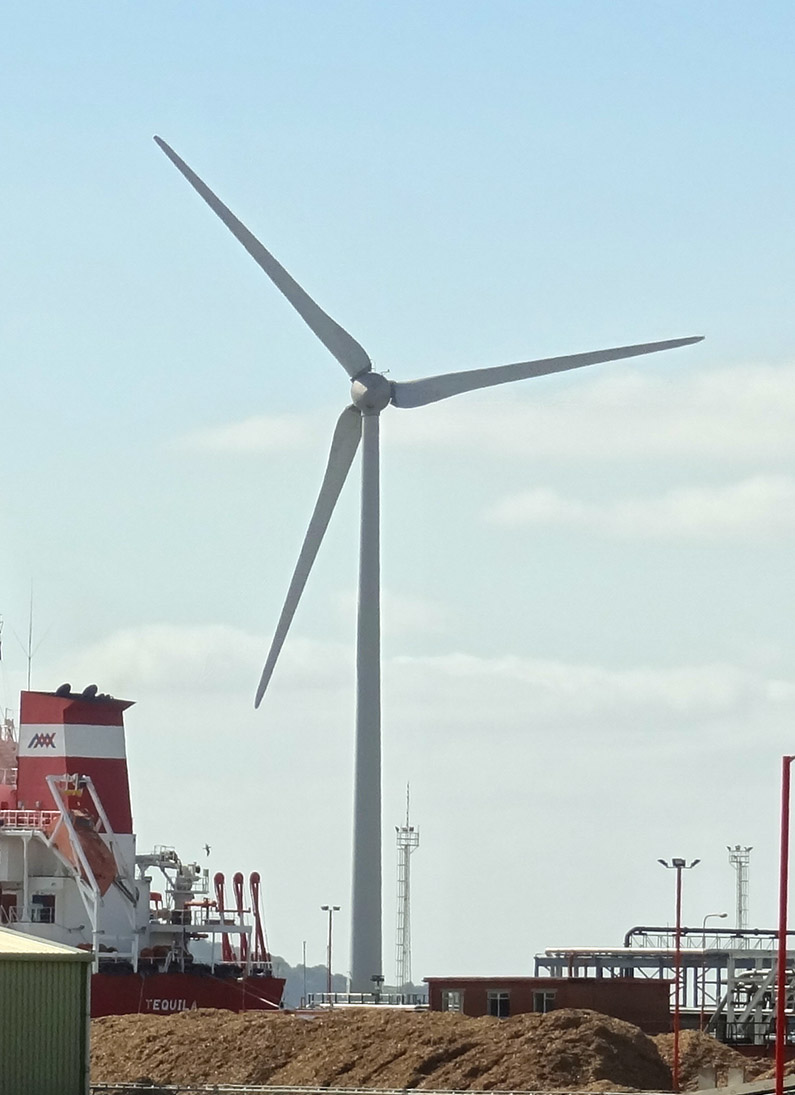
 Part of the prices we pay go towards investment in cleaner and more environmentally friendly sources of energy. Critics suggest that any price freeze would deprive the energy sector of much needed investment, meaning our energy bills will be higher in the future. Furthermore, some argue this price freeze suggests that Labour is abandoning its environmental policy. Energy shortages have been a concern, especially with the cold weather the UK experienced a few years ago. This issue may reappear with price freezes. As Angela Knight, from Energy UK, suggests:
Freezing the bill may be superficially attractive, but it will also freeze the money to build and renew power stations, freeze the jobs and livelihoods of the 600,000-plus people dependent on the energy industry and make the prospect of energy shortages a reality, pushing up the prices for everyone.
There is a further concern and that is that large energy companies will be driven from the UK. This thought was echoed by many companies, in particular the British Gas owner Centrica, commenting that:
If prices were to be controlled against a background of rising costs it would simply not be economically viable for Centrica to continue to operate and far less to meet the sizeable investment challenge that the industry is facing…The impact of such a policy would be damaging for the country’s long-term prosperity and for our customers.
Share prices naturally fluctuate with global events and a political announcement such as this was inevitably going to cause an effect. But, perhaps the effect was not expected to be as big as the one we saw. 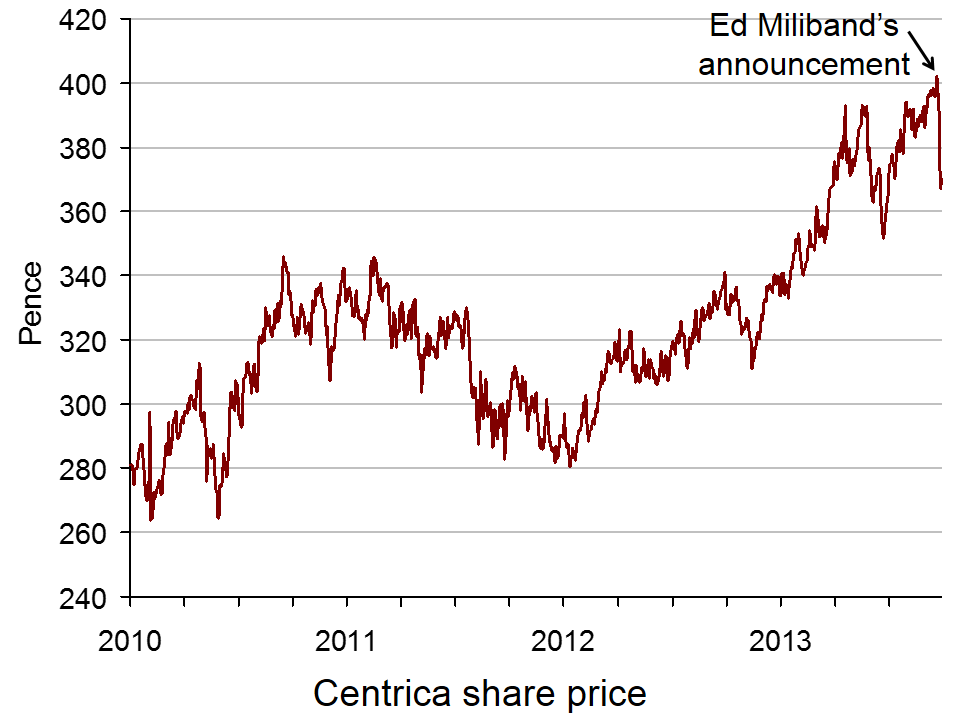 Share prices for Centrica and SSE fell following the announcement – perhaps no great shock – but then they continued to fall. The market value tumbled by 5% and share prices kept falling. This has led to Ed Miliband being accused of ‘economic vandalism’ by a major shareholder of Centrica, which is hardly surprising, given the estimated cost of such a price freeze would be £4.5 billion.
The economic implications of such a move are significant. The announcement itself has caused massive changes in the FTSE and if such a move were to go ahead if Labour were elected in 2015, there would be serious consequences. While families would benefit, at least in the short term, there would inevitably be serious implications for businesses, the environmental policy of the government, especially relating to investment and the overall state of the economy. The following articles consider the aftermath of Ed Miliband’s announcement.
Miliband stands firm in battle over fuel bills plan The Guardian, Patrick Wintour and Terry Macalister (25/9/13)
Michael Fallon calls Miliband’s energy prices pledge ‘dangerous’ Financial Times, Elizabeth Rigby and Jim Pickard (26/9/13)
Britain’s labour treads narrow path between populism and prudence Reuters (26/9/12)
Ed Miliband’s radical reforms will make the energy market work for the many Independent (26/9/13)
Has Labour fallen out of love with Business? BBC News (26/9/13)
Top Centrica shareholder Neil Woodford accuses Labour leader Ed Miliband of economic vandalism The Telegraph, Kamal Ahmed (25/9/13)
Centrica and SSE slide after Labour price freeze pledge The Guardian (26/9/13)
Ed Miliband’s energy price freeze pledge is a timely but risky move The Guardian, Rowena Mason (24/9/13)
Questions
- Why are energy prices such a controversial topic?
- How are energy prices currently determined? Use a diagram to illustrate your answer. By adapting this diagram, illustrate the effect of a price control being imposed. How could it create an energy shortage? What impact would this have after the 20-month price freeze
- Why would there be adverse effects on energy companies if prices were frozen and costs increased? Use a diagram to illustrate the problem and use your answer to explain why energy companies might leave the UK.
- How would frozen energy prices help households and businesses?
- Why were share prices in Centrica and SSE adversely affected?
- Is there an argument for regulating other markets with price controls?
- Why is there such little competition in the energy sector?
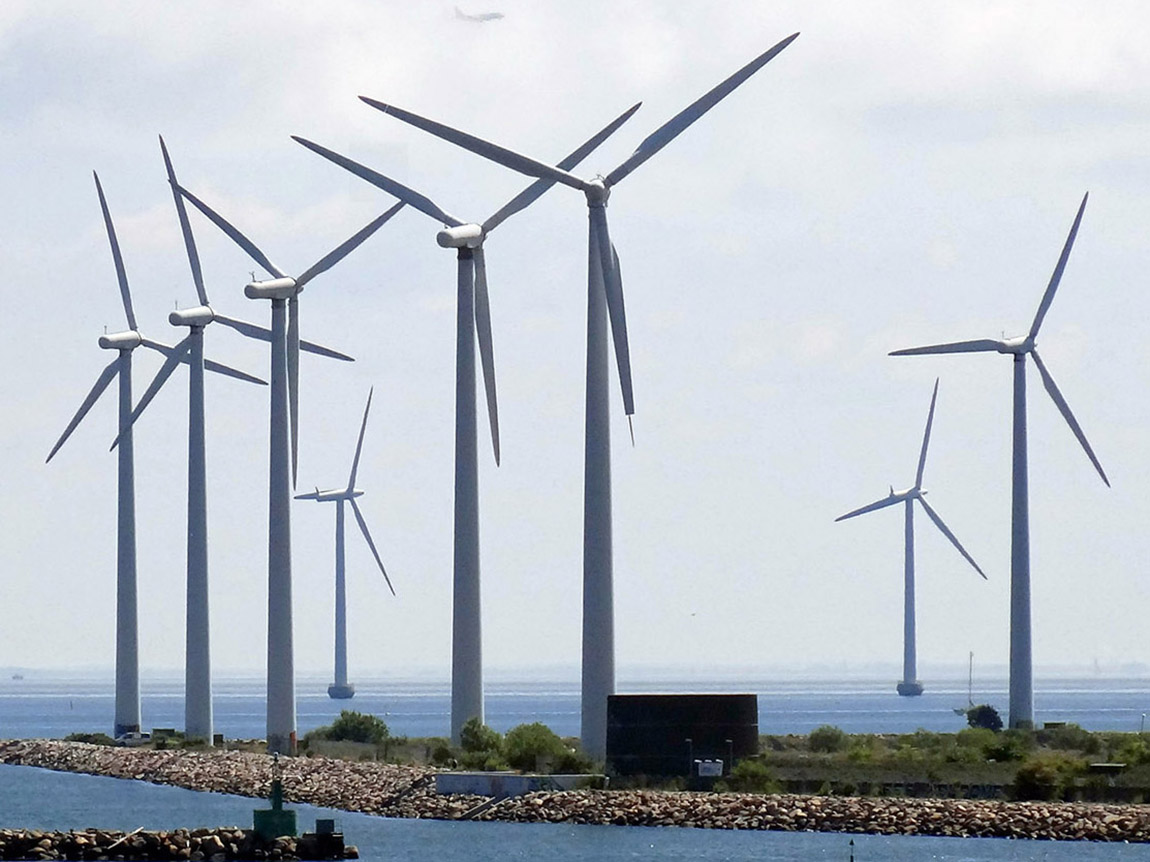 The Clean Energy Bill has been on the agenda for some time and not just in the UK. With climate change an ever growing global concern, investment in other cleaner energy sources has been essential. However, when it comes to investment in wind farms, developers have faced significant opposition. The balancing act for the government appears to be generating sufficient investment in wind farms, while minimising the negative externalities.
The phrase often thrown around with regards to wind farms, seems to be ‘not in my backyard’. That is, people recognise the need for them, but don’t want them to be built in the local areas. The reason is to do with the negative externalities. Not only are the wind farms several metres high and wide, creating a blight on the landscape, but they also create a noise, both of which impose a third party effect on the local communities. These factors, amongst others, have led to numerous protests whenever a new wind farm is suggested. The problem has been that with such challenging targets for energy, wind farms are essential and thus government regulation has been able to over-ride the protests of local communities.
However, planning guidance in the UK will now be changed to give local opposition the ability to override national energy targets. In some sense, more weight is being given to the negative externalities associated with a new wind farm. This doesn’t mean that the government is unwilling to let investment in wind farms stop. Instead, incentives are being used to try to encourage local communities to accept new wind farms. While acknowledging the existence of negative externalities, the government is perhaps trying to put a value on them. The benefits offered to local communities by developers will increase by a factor of five, thus aiming to compensate those affected accordingly. Unsurprisingly, there have been mixed opinions, summed up by Maria McCaffery, the Chief Executive of trade association RenewableUK:
Maria McCaffery, chief executive of trade association RenewableUK, said the proposals would signal the end of many planned developments and that was “disappointing”.
Developing wind farms requires a significant amount of investment to be made upfront. Adding to this cost, by following the government’s advice that we should pay substantially more into community funds for future projects, will unfortunately make some planned wind energy developments uneconomic in England.
That said, we recognise the need to ensure good practice across the industry and will continue to work with government and local authorities to benefit communities right across the country which are hosting our clean energy future.
The improved benefits package by the energy industry is expected to be in place towards the end of the year. The idea is that with greater use of wind farms, energy bills can be subsidised, thereby reducing the cost of living. Investment in wind farms (on-shore and off-shore) is essential. Current energy sources are non-renewable and as such new energy sources must be developed. However, many are focused on the short term cost and not the long term benefit that such investment will bring. The public appears to be in favour of investment in new energy sources, especially with the prospect of subsidised energy bills – but this positive outlook soon turns into protest when the developers pick ‘your back yard’ as the next site. The following articles consider this issue.
Residents to get more say over wind farms The Guardian, Fiona Harvey and Peter Walker (6/6/13)
Local communities offered more say over wind farms BBC News (6/6/13)
Locals to get veto power over wind farms The Telegraph, Robert Winnett (6/6/13)
Wind farms are a ‘complete scam’, claims the Environment Secretary who says turbines are causing ‘huge unhappiness’ Mail Online, Matt Chorley (7/6/13)
New planning guidance will make it harder to build wind farms Financial Times, Jim Pickard, Pilita Clark and Elizabeth Rigby (6/6/13)
Will more power to nimbys be the death of wind farms? Channel 4 News (6/6/13)
Locals given more ground to block wind farms Independent, Tom Bawden (6/6/13)
Questions
- What are the negative externalities associated with wind farms?
- Conduct a cost-benefit analysis as to whether a wind farm should be constructed in your local area. Which factors have you given greatest weight to?
- In question 2 above, were you concerned about the Pareto criterion or the Hicks-Kaldor criterion?
- If local communities can be compensated sufficiently, should wind farms go ahead?
- If the added cost to the development of wind farms means that some will no longer go ahead, is this efficient?
- Why is there a need to invest in new energy sources?
- To what extent is climate change a global problem requiring international (and not national) solution?
Families in the UK seemed to have been squeezed in all areas. With incomes flat, inflation rising, petrol and bills high, there seems to be a never ending cycle of price rises without the corresponding increase in incomes. This has been confirmed by the latest figures released from the big six energy companies, whose profit margins have risen from £15 per customer in June to £125 per customer per year. This is assuming that prices remain the same for the coming year.
The regulator, Ofgem has said that profit margins will fall by next year and that they are ensuring that price comparisons between the big energy companies become much easier to allow consumers to shop around. It is a competitive market and yet due to tariffs being so complicated to understand, many consumers are simply unable to determine which company is offering them the best deal. There is certainly not perfect knowledge in this market. Tim Yeo, the Chair of the Energy and Climate Change Committee said the profit margins were:
‘Evidence of absolutely crass behaviour by the energy companies, with a jump in prices announced in the last few months ahead of what will be a winter in which most families face their highest ever electricity and gas bills’
Ofgem will publish proposals later this year with suggestions of how to make the market more competitive. We have already seen in the blog “An energetic escape?” how Ofgem is hoping to reduce the power of the big six by forcing them to auction off some of the electricity they generate. The aim is to free up the market and allow more firms to enter. With the winter fast approaching and based on the past 2 years of snow and cold weather, it is no wonder that households are concerned with finding the best deals in a bid to reduce just one of their bills. The following articles consider this issue.
Energy price hikes see profits soar The Press Association (14/10/11)
Energy suppliers’ profit margins eight times higher, says regulator Ofgem Telegraph (14/10/11)
Energy firms’ profit margins soar, Ofgem says BBC News (14/10/11)
Energy firms’ profits per customer rise 733%, says Ofgem Guardian, Dan Milmo and Lisa Bachelor (14/10/11)
Regulator proposes radical change to energy market Associated Press (14/10/11)
Energy bills face overhaul in first wave of reform Reuters, Paul Hoskins (14/10/11)
Ofgem tells energy companies to simplify tariffs Financial Times, Michael Kavanagh (14/10/11)
You can’t shop around in an oligopoly Financial Times, William Murray (13/10/11)
Questions
- What type of market structure best describes the energy market?
- Of the actions being taken by Ofgem, which do you think will have the largest effect on competition in the market?
- Are there any other reforms you think would be beneficial for competition?
- Why is transparency so important in a market?
- What barriers to entry are there for potential competitors in the energy market?
- Why do you think profit margins are so high in this sector?
Following a 38% increase in profit margins made by energy companies towards the end of 2010, Ofgem (the energy and gas regulator) began an investigation into the activities of energy companies. The review by Ofgem was aimed at determining whether or not consumers should be better protected from the powerful energy companies, many of whom had previously raised prices, forcing some consumers to pay an extra £138 per year. At the time, it was believed that Ofgem might request support from the Competition Commission, but it seems as though the big size energy companies have had a lucky escape. They will not be referred to the Competition Commission, even though critics, in particular First Utility – Britain’s largest independent energy supplier – suggest that Ofgem’s proposals are unlikely to be effective. It seems that the big six have shown sufficient co-operation with Ofgem.
A key reform that Ofgem hope to implement will try to reduce the power of this oligopoly by making it easier for new entrants to gain market share. One such proposal would see the big six auctioning off up to a fifth of the electricity they generate. As the owners of Britain’s power stations, new companies cannot buy gas and electricity on the open market and this reform aims to change that. However, there are concerns that this will be ineffective, as the big six may simply outbid the smaller companies or even just buy and sell electricity from each other, thereby keeping their dominant positions in the market. Although the big six have received constant criticism from all sides, the lack of government support for a Competition Commission inquiry may be related to the need for these companies to invest £200bn in Britain by 2020 to help create and build new energy sources, including wind farms and nuclear power. Without this investment, Britain’s energy supply could be in jeopardy. The following articles consider this energetic debate.
Articles
Ofgem may be blown away by the power of the ‘Big Six’ energy companies Telegraph, Rowena Mason (23/6/11)
Ofgem pledges to get tough with ‘big six’ energy companies Guardian, Miles Brignall (22/6/11)
Scottish power investigated over ‘misleading’ marketing campaign Independent, Sarah Arnott (23/6/11)
Ofgem and ‘Big Six’ need to put some energy into cleaning up their acts Telegraph, Richard Fletcher (23/6/11)
In search of a coherent energy policy Independent, David Prosser (23/6/11)
UK suppliers face tough power auction reforms Reuters (22/6/11)
 Ofgem: ‘We are watching energy companies closely’ BBC News (22/6/11)
Data
Energy price statistics Department of Energy & Climate Change
Energy statistics publications Department of Energy & Climate Change
Questions
- What is the role of Ofgem? How does it relate to the Competition Commission?
- What factors have contributed to the investigation by Ofgem into the ‘big six’ energy companies?
- How much power does Ofgem actually have to implement reforms?
- What are the characteristics of an oligopoly? To what extent does the energy market fit into this market structure?
- What are the main barriers to entry that prevent new companies from competing with the ‘big six’? Are the reforms likely to help them?
- What other proposals have been suggested by parties other than Ofgem in bid to help new competitors and customers? Are any likely to be more effective than those proposed by Ofgem?
It is widely acknowledged that the supply of oil and gas will eventually run out. As these resources are depleted, prices will inevitably rise. However, with heating and energy bills at extremely high levels, a new ‘resource’ in Sweden has been used to heat buildings: Body Heat!
Hundreds of thousands of people pass through Stockholm Central Station every day and rather than letting the body heat these people generate go to waste, a Swedish firm, Jernhusen, is now ‘collecting’ their heat, converting it into hot water and then using this as a new heating resource. Klass Johnasson, one of the creators of the system said:
This is old technology being used in a new way. The only difference here is that we’ve shifted energy between two different buildings.
The Swedish firm has found that the system is not only environmentally friendly, but it is also good business practice, as it has reduced the energy costs of the block by some 25%, which, during a recession and with high energy prices, is no small thing!
The costs and benefits of such a system will inevitably vary from country to country, but in Sweden’s case, it is a viable method of heating, given their high energy prices and low winter temperatures. They are not stealing the heat from anyone, but are simply converting the excess heat that is already there. Obviously, the fact that the firm owns the station, and also the land between the station and their building, is helpful in ‘transferring’ the energy, but the firm argues that even if this wasn’t the case, it’s nothing co-operation wouldn’t solve. Is this the future of low-cost and low-carbon heating?
Harvesting energy: body heat to warm buildings BBC News, Xanthe Hinchey (9/1/11)
How Sweden turns human body heat into useful energy BBC News (19/4/10)
Passengers passing by Stockholm Central Station reduce 25% of used heating energy The Green Optimistic, Mihai Sandru (12/1/11)
Body heat: the new energy source ecPulse (11/1/11)
Questions
- Think about how we define abundance. Is body heat an abundant resource?
- Why are energy and oil prices so high? How does scarcity affect their price?
- Could this source of heating be described as a market failure? If so, how could we illustrate this on a diagram?
- Consider the Swedish firm’s profit-maximising price and output. The new heating method is said to reduce their costs – will it affect their average and/or marginal costs? Show the impact on a diagram. What happens to the firm’s profits?
- Is this heating method something other firms could benefit from? How could they decide whether it is cost-effective?
- Is there a role for the government to encourage more firms to use this method? Explain your answer.
 Part of the prices we pay go towards investment in cleaner and more environmentally friendly sources of energy. Critics suggest that any price freeze would deprive the energy sector of much needed investment, meaning our energy bills will be higher in the future. Furthermore, some argue this price freeze suggests that Labour is abandoning its environmental policy. Energy shortages have been a concern, especially with the cold weather the UK experienced a few years ago. This issue may reappear with price freezes. As Angela Knight, from Energy UK, suggests: